Entoloma prunuloides carries a distinctive mealy smell strong enough to have shaped its recommended English name, the Mealy Pinkgill. It is a gilled mushroom (agaric) in the family Entolomataceae, found mainly across Europe in old, agriculturally unimproved grassland such as pastures and lawns.
Listed as Vulnerable on the IUCN Red List, this species is a marker of grassland health worth watching as its habitat continues to disappear.
Fruiting Body and Identification
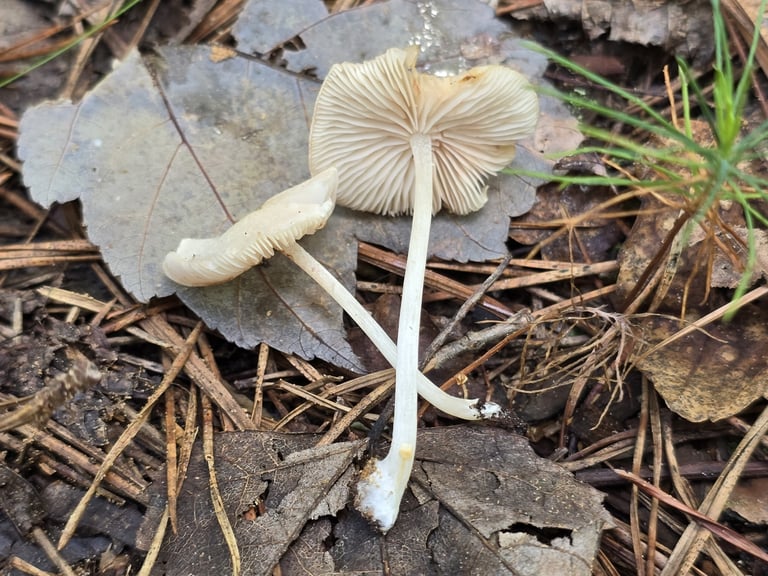
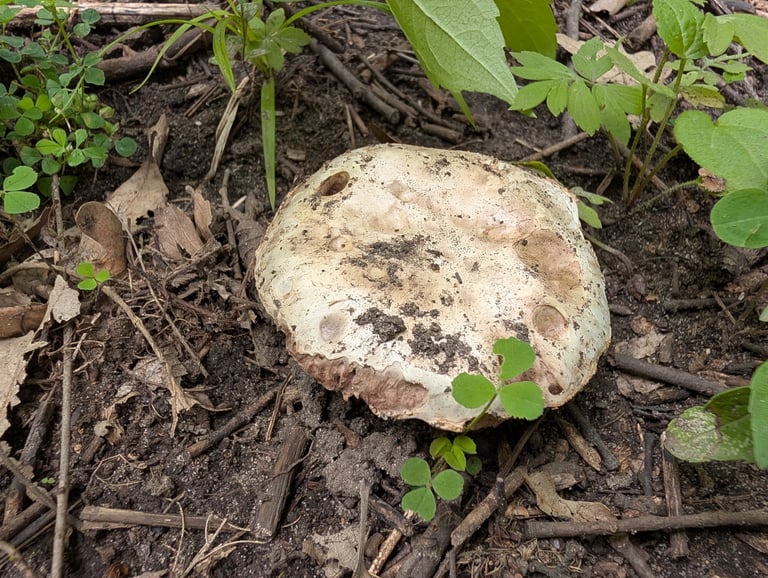
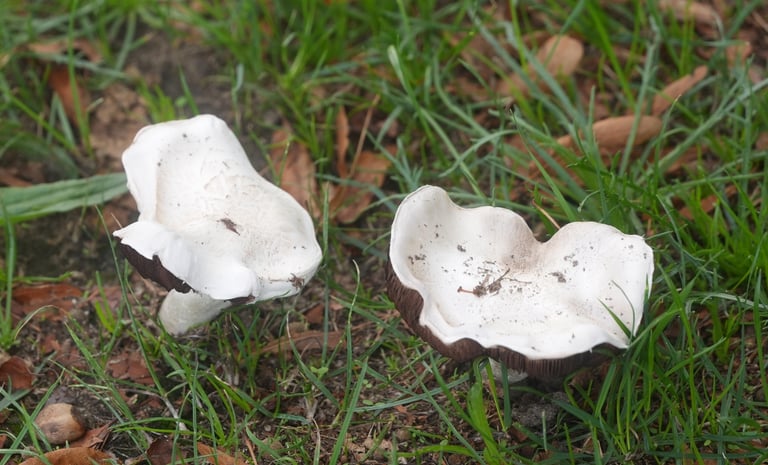
The most distinctive identifying feature of Entoloma prunuloides is its mealy smell, present throughout the whole fungus. The cap is convex to flat with a broad umbo, up to 70 mm (2.75 in) across, smooth to finely fibrillose, and colored cream to ochraceous grey.
The gills start white and turn pink as the spores mature, a typical trait of pinkgills. The stipe reaches up to 80 mm (3 in) tall, is smooth and finely fibrillose, white, and lacks a ring. The spore print is pink, and under a microscope the spores appear multi-angled and inamyloid, measuring about 6.5 to 8 by 6.5 to 8 μm.
Distribution and Habitat
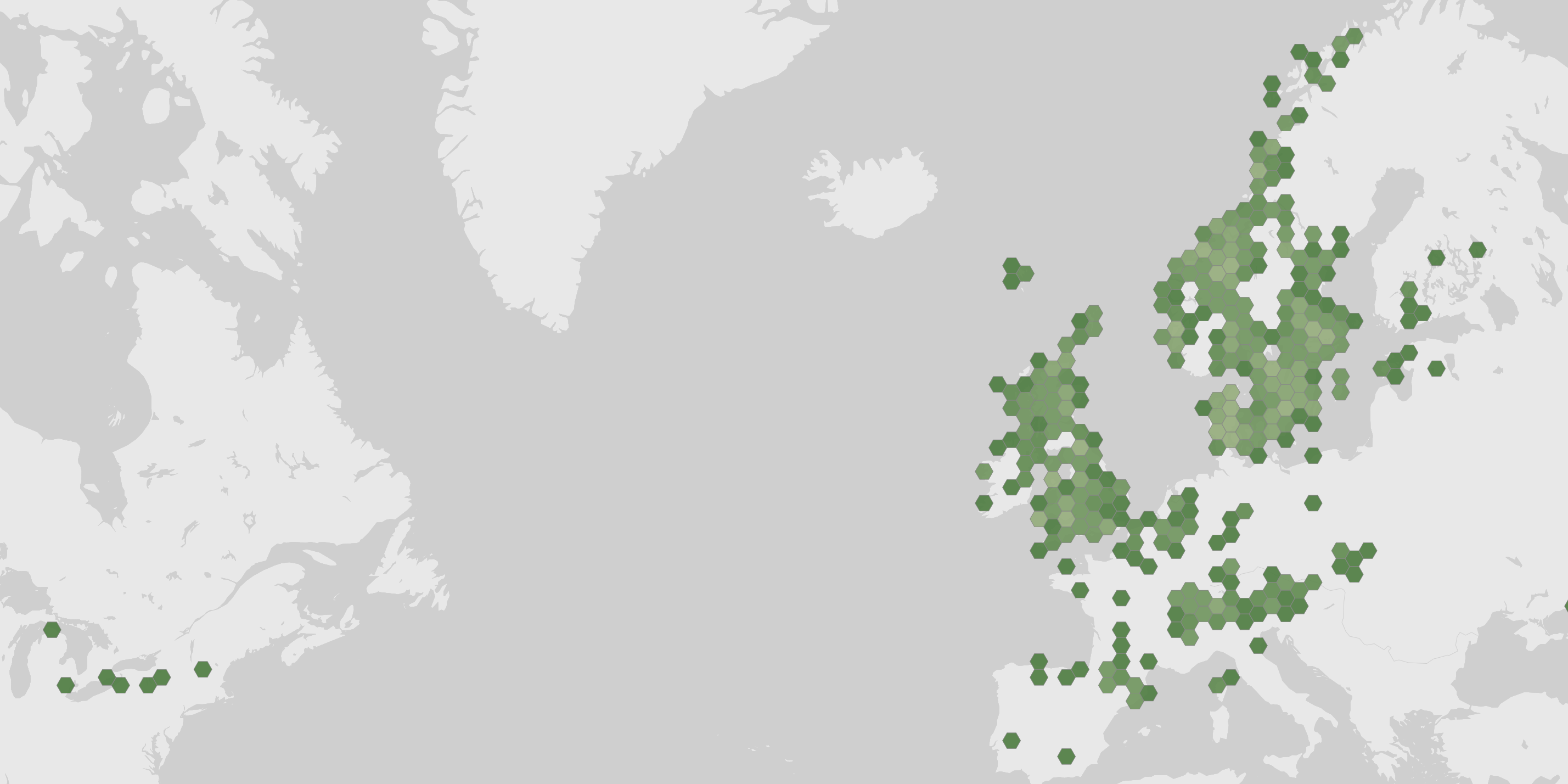
Entoloma prunuloides is rare but widespread across Europe. It favors old, agriculturally unimproved grassland with a short sward, including traditional pastures and lawns that have escaped intensive management.
Observation records show a strong seasonal pattern, with most sightings clustered in the warmer months and a pronounced peak in late summer, suggesting this is when fruiting bodies are most often seen above ground.
Conservation and Threats
Entoloma prunuloides is assessed as Vulnerable on the IUCN Red List, reflecting genuine concern for its long-term survival. The species is typical of waxcap grasslands, a habitat that has been declining across Europe as agricultural practices shift toward more intensive management.
This loss of old, unimproved pastureland is the main threat identified for the species, since it depends on exactly the kind of long-established, low-input grassland that is increasingly rare.
Fun Facts
- The Mealy Pinkgill's recommended English name comes directly from its distinctive mealy odor, a trait shared with only a few related species.
- It belongs to a group of European fungi collectively known as "pinkgills," named for their pink spore prints rather than any pink coloring on the cap or stem.
Photos
Photographs from via iNaturalist, licensed under CC0 1.0., by Owen and Carol Fawcett. via iNaturalist, licensed under CC BY 4.0., by ionafraser via iNaturalist, licensed under CC BY 4.0., by Ben Deed via iNaturalist, licensed under CC BY 4.0., by Dave via iNaturalist, licensed under CC BY 4.0., by ikelman via iNaturalist, licensed under CC BY 4.0., by ade sills via iNaturalist, licensed under CC BY 4.0., by Skjold Søndergaard via iNaturalist, licensed under CC BY 4.0., by Colibri via iNaturalist, licensed under CC BY-SA 4.0., and by This image was created by user zaca at Mushroom Observer, a source for mycological images. You can contact this user here. via Wikimedia Commons, licensed under CC BY-SA 4.0., credited on each photo.
Ecology and classification
Habitat
Classification
- Phylum
- Basidiomycota
- Class
- Agaricomycetes
- Order
- Agaricales
- Family
- Entolomataceae
- Genus
- Entoloma
- Species
- Entoloma prunuloides
Sources
- GBIF Species names and classification
- iNaturalist Photos
- Wikidata Common names and conservation status
- Wikipedia Summary extract
- Wikimedia Commons Photos