Despite looking like a small, ground-hugging thistle, Eryngium campestre actually belongs to the carrot family, Apiaceae. Its common names, field eryngo and Watling Street thistle, hint at both its favored open habitats and its long association with old roadways in Britain.
This hairless, greenish-grey perennial is armed with tough, spiny, complexly divided leaves and forms low, wiry clumps in dry, open ground across much of Europe, North Africa, and into western Asia. It has also long been valued medicinally, a use that stretches back to classical antiquity.
What makes the plant worth a closer look is the combination of its tenacious, weedy resilience and the depth of folklore and traditional use built up around it over centuries.
Identification and Appearance
The clearest field mark is the plant's structure: small greenish flower heads, each ringed by a whorl of five to six large, spine-like bracts, with every individual flower inside further guarded by its own small spine. The overall plant is stiff, hairless, and colored grayish-green to greenish, with complexly divided, prickly leaves; the basal leaves are long-stalked and pinnate.
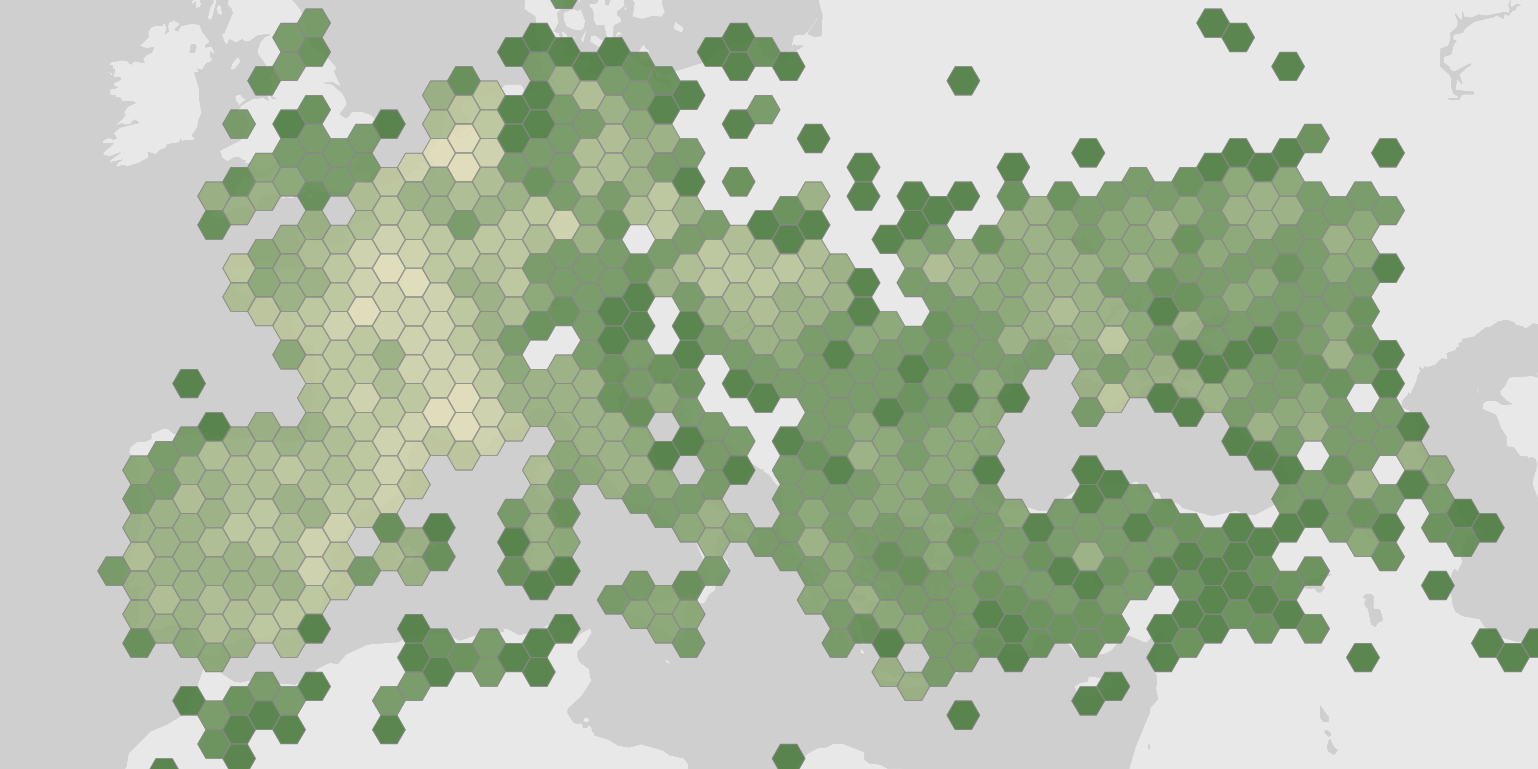
Two natural varieties are recognized. Variety campestre is more blueish-grey-green, with the bracts widest near their middle, and occurs from Portugal to Germany and on east to Turkey and Central European Russia, with a limited North African presence in Algeria and Morocco. Variety virens is yellower-green, more drought-tolerant, and has bracts widest near their base; it ranges along the southern Mediterranean from Morocco to Iran, with patchy occurrence on the northern shore.
In Britain, field eryngo is often confused with the better-known sea holly, Eryngium maritimum, but the two are readily told apart: field eryngo is taller and looser in habit, greener overall, and the whorls beneath its flower heads are not leaf-like as in sea holly, while its heads are noticeably smaller.
Flowering runs from July through September, when the small greenish heads are most conspicuous against the plant's spiny foliage.
Distribution and Habitat
Field eryngo favors open, dry, disturbed ground: barley fields, roadsides, and stony hillsides are typical settings. Its broader range spans much of Europe, North Africa, and western Asia, but its presence within that range is often patchy and tied closely to specific soil and moisture conditions.
In Germany, for example, it is restricted to dry habitats near the Rhine and Elbe rivers rather than being widespread. In the British Isles it is very uncommon, confined mainly to dry grassland on neutral or calcareous soils in the southeast; the naturalist John Ray first recorded it there in 1662, in Devon. It now has statutory protection in Somerset and Devon, where it persists at several sites, but elsewhere in Britain it behaves more as a short-lived casual of waste ground, road verges, and rough pastures.
Monthly observation counts show a strong seasonal pattern, rising from a low in December and January to a sharp peak in May and June before declining again through the autumn. This pattern likely reflects when the plant is most visible and identifiable to observers, such as during its July-to-September flowering period, rather than any true change in population size.
Uses and Human Relationships
Field eryngo has a long history of medicinal use. Herbalists have employed it as an infusion to treat coughs, whooping cough, and urinary infections, drawing on the plant's essential oils, saponins, and tannins. Its roots were once candied as sweets or boiled and roasted as a vegetable, and in Iran's Mazandaran Province the plant has been used in local dishes for centuries.
The species also carries a rich cultural weight beyond the kitchen and apothecary. In Greek mythology, the eryngium flower was believed to hold medicinal power strong enough to treat soldiers wounded in battle.
Across parts of Europe, folklore held that planting eryngo near a home could ward off evil spirits, and some cultures treated it as a charm against witches as well.
Fun Facts
- Field eryngo belongs to the carrot family, Apiaceae, even though its spiny look mimics a thistle.
- The name Watling Street thistle references the ancient Roman road in Britain, reflecting where the plant was historically noted growing.
- In Greek mythology, the plant was thought to have medicinal properties powerful enough to treat soldiers injured in battle.
- European folk tradition held that planting eryngo near a home could ward off evil spirits and witches.
- Each tiny flower inside the plant's greenish heads is protected by its own small spine, in addition to the larger spiny bracts that ring the whole head.
Photos
Photographs from via iNaturalist, licensed under CC0 1.0., by Dorte Stokholm via iNaturalist, licensed under CC BY 4.0., by Roderick Cameron via iNaturalist, licensed under CC BY 4.0., by marbib via iNaturalist, licensed under CC BY 4.0., by Gonzalo Ganda Álvarez via iNaturalist, licensed under CC BY 4.0., by Bobo-X via iNaturalist, licensed under CC BY 4.0., by Ondřej Křivan via iNaturalist, licensed under CC BY 4.0., and by Vladimír Fuka via iNaturalist, licensed under CC BY 4.0., credited on each photo.
Ecology and classification
Habitat
Growth habit
- Herb
Classification
- Phylum
- Tracheophyta
- Class
- Magnoliopsida
- Order
- Apiales
- Family
- Apiaceae
- Genus
- Eryngium
- Species
- Eryngium campestre
Sources
- GBIF Species names and classification
- iNaturalist Photos
- Wikidata Common names and conservation status
- Wikipedia Summary extract
- Encyclopedia of Life Habitat, diet and behavior traits