Nearly every bird called a "bullfinch" in Europe owes that name to one species: Pyrrhula pyrrhula was the original holder of the title in Anglophone Europe, and every other bullfinch borrows its name.
It is a small passerine in the finch family Fringillidae, order Passeriformes, found across much of the temperate world. The IUCN lists it as Least Concern, reflecting a population that remains widespread and stable.
Despite its familiar name, it is a quiet, tree-hugging bird that many people hear before they ever see, and its story offers a closer look at a finch that has managed to thrive even while facing centuries of human pressure.
Identification and Appearance
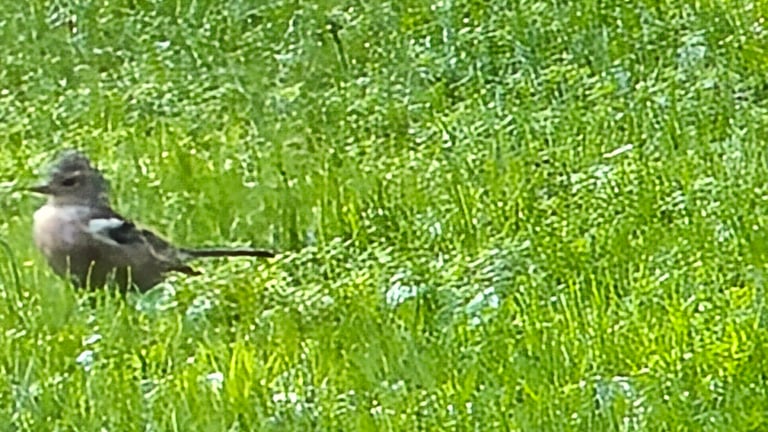
The single best field mark is its bulky, bull-headed silhouette paired with a short, thick black bill, a shape unlike almost any other European finch. Adults weigh only about 24.4 grams, a small body packed into a stocky frame.
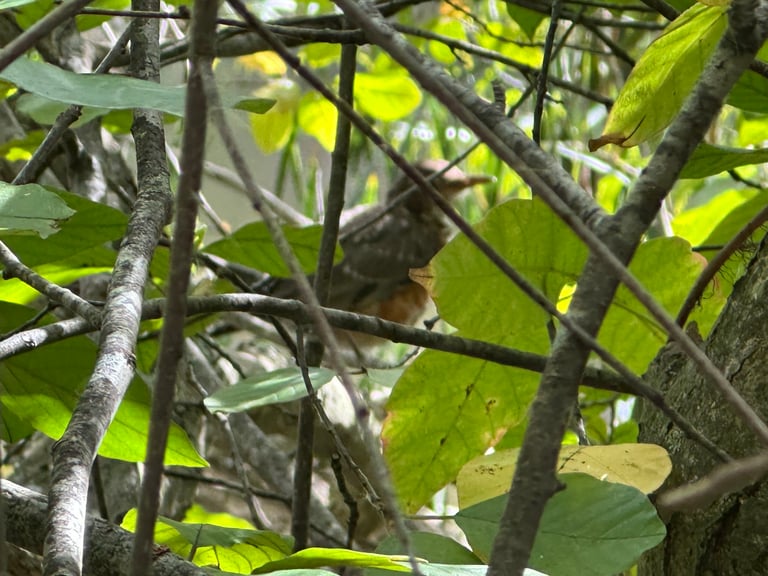
The upperparts are grey, the flight feathers and tail black, and in flight the white rump and white wing bars flash conspicuously against the darker plumage. Adult males carry a rich, rosy-red chest and underparts that make them unmistakable at close range, while females and juveniles wear muted grey-buff tones instead of red.
The black cap and face that mark adults are absent in juveniles, which show greyish-brown feathering there instead, an easy way to separate young birds from grown ones early in the season. Adults moult between July and October, and unlike many other finches, males keep their bold plumage year-round rather than fading into a duller autumn look.
These features together, the bull-headed shape, black cap, white rump, and red or buff underparts depending on sex and age, make the species straightforward to identify once seen clearly, even though its shy habits often limit views to fleeting glimpses.
Distribution and Habitat
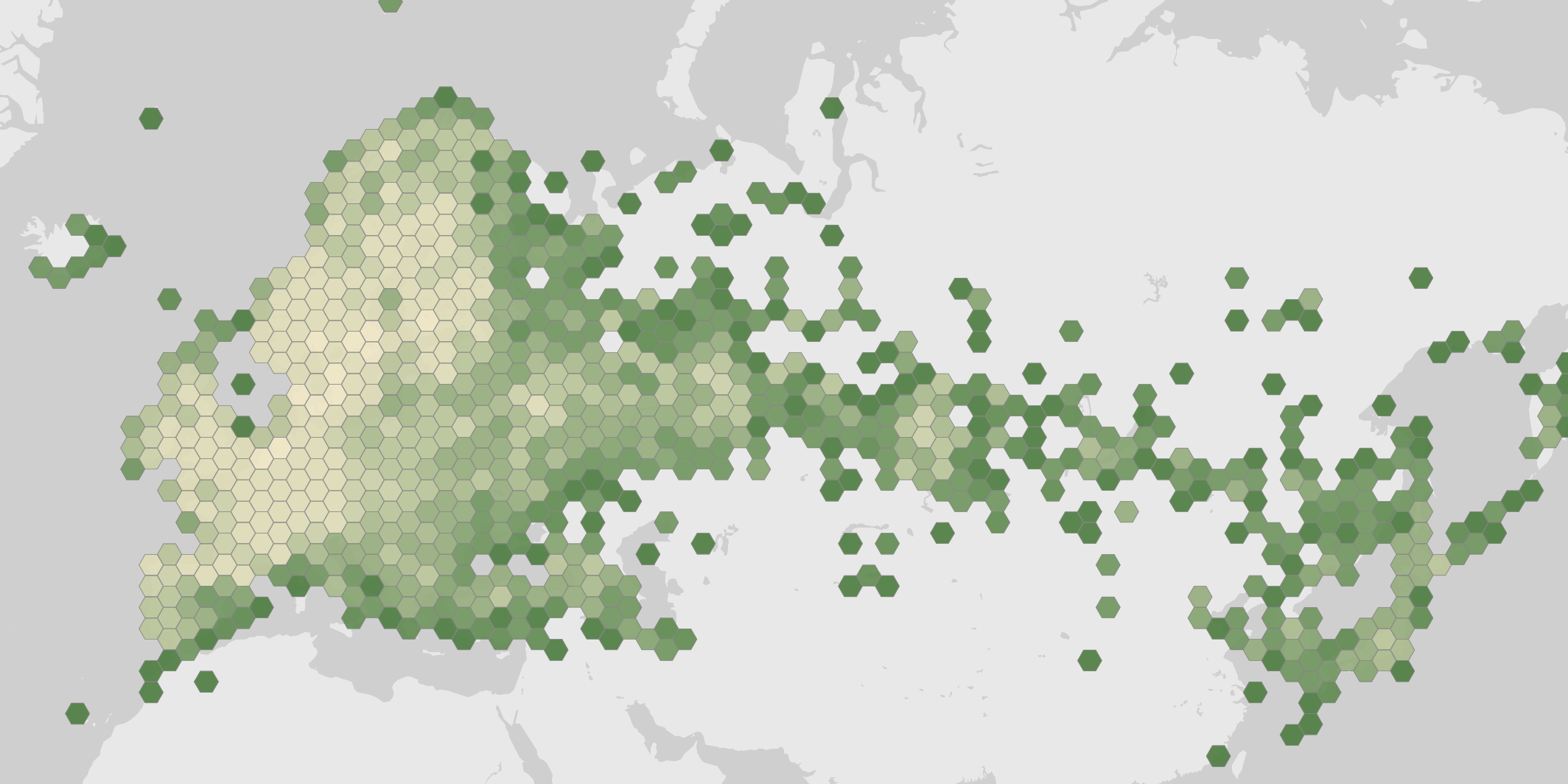
The species breeds across Europe and temperate Asia, favoring mixed woodland with a conifer component, along with parkland, gardens, and plantations. In Britain and Japan it shifts habitat somewhat, using deciduous woodland and cultivated ground rather than the coniferous or mixed forest preferred elsewhere.
Outside dense woodland it also turns up in farmland where scrub and untrimmed hedgerows persist, since these features provide both shelter and the wild seed sources it depends on. Most populations are resident, but birds from the northern part of the range migrate farther south for winter.
Monthly observation counts show a pronounced peak from November through February, topping out around 534,000 records in one winter month, and a clear dip through the summer months, with July as low as roughly 73,500. Because these figures reflect presence observations rather than true abundance, the pattern likely traces seasonal visibility, such as post-breeding movement and looser winter flocking, rather than a simple rise and fall in overall numbers.
Behavior and Lifestyle
Bullfinches are seen year-round in pairs or small family groups, a social pattern that holds outside the breeding season when they do not gather into large flocks. In spring, this changes temporarily as birds may join flocks of around fifty, occasionally exceeding a hundred individuals.
The species is notably shy, preferring to stay within the cover of trees rather than venture onto open ground. Much of the time its presence is given away not by sight but by sound, a penetrating, low, piping whistle that carries from within foliage.
This combination of secretive habits and a recognizable call means observers often locate the bird by ear well before they manage to see it, a pattern consistent with its preference for dense cover over exposed perches.
Communication
Sound is the bullfinch's most important channel, and its call is a quiet, low, melancholy whistled peeu or pew that carries even though the bird itself stays out of sight. The song built from these elements is often described as "mournful," a weak, scratchy warble alternating with soft fluted whistles, and it is only audible at close range.
Beyond calls and song, the species relies on visual, tactile, and chemical cues as well, consistent with typical passerine communication, though the whistled calls remain its most distinctive and well-documented signal.
Tamed individuals can even be taught to repeat specific melodies, a trainability that reflects how precisely the species controls and varies its whistled sounds.
Diet and Nutrition
The diet centers on buds and seeds, with the balance between the two shifting through the year. Buds from fruit trees, especially those in woodland, are eaten almost exclusively in spring, and only once the seed supplies left over from the previous summer and autumn have run low; the birds do not turn to buds simply because they are available, but because other food has become scarce.
When feeding on buds, a bullfinch lands at the tip of a branch and works steadily inward toward the trunk, stripping each bud as it moves along.
In deciduous woodland, the species shows a clear preference for the seeds of dock, nettle, privet, bramble, birch, and ash. These seeds make up the bulk of its diet through autumn and winter, remaining the primary food source right up until new buds begin to develop in spring.
Nesting and Breeding
Breeding runs from early May to mid-July, and pairs typically raise two to three broods within that span. Nests are built low, often only a few feet above ground, in a bush ideally more than four meters tall and wide, in mature scrub, or in a tree, using fine twigs woven with moss and lichen and lined with black roots.
Clutches contain four to seven pale blue eggs mottled with red-brown, though counts of four to five are also recorded. The male assists the female through incubation not by sitting on the eggs himself but by feeding her while she remains on the nest, a division of labor that continues once the chicks hatch after roughly two weeks.
Hatchlings are fed a mixture of seeds and insects, and the male helps the female gather food for the growing brood. Nesting success is not constant across the season: it rises progressively from the April-May nests through June-July and into August, meaning later clutches tend to fare better than the earliest ones.
Conservation and Threats
The IUCN lists Pyrrhula pyrrhula as Least Concern, meaning the species faces no immediate risk of extinction at a global scale. That status coexists with real local pressures, chiefly predation and a long history of human persecution.
Nest survival differs sharply by habitat: only about a third of clutches in woodland reach adulthood, compared with two-thirds in farmland settings. The eggs and chicks lost in both habitats are taken mainly by jays, magpies, stoats, and weasels, making predation the dominant natural threat to reproductive success.
Human persecution has a much longer history, dating back to the 16th century in England, driven by the bird's habit of stripping buds from fruit trees. Despite continued efforts to develop more effective ways of controlling the species, its numbers have kept increasing rather than declining, a sign of resilience against sustained pressure.
Conservation status
- LC
- NT
- VU
- EN
- CR
Least Concern
Cultural Significance
The genus name Pyrrhula echoes the name of Pyrrha, a figure from Greek mythology best known for her role in the flood story. She was the daughter of the Titan Epimetheus and of Pandora, the first mortal woman in Greek myth.
According to that mythology, all Greek women were said to trace their ancestry back to Pyrrha, making her a matriarchal figure in her own right beyond her connection to the flood narrative. Whether this naming echo was intentional on the part of early taxonomists or simply a linguistic coincidence, it links a modest European finch to one of Greek mythology's foundational women.
Fun Facts
- The species is unusual among passerines for producing spermatozoa with a rounded head and a blunt acrosome, an atypical reproductive trait for a songbird.
- The genus Pyrrhula is small and mostly Asian, with two species found only in the Himalayas.
- Tamed individuals can be trained to whistle specific melodies, a skill noted in historical accounts of caged birds.
- In England, the species has been targeted by control efforts since the 16th century for damaging fruit-tree buds, yet its population has continued to grow despite that pressure.
Ecology
Habitat
- Forest
- Woodland
- Shrubland
- Urban
Behavior
- Social
- Migratory
Diet
- Herbivore
Photos
SourcesGBIFiNaturalistWikidataWikipediaEncyclopedia of LifeAnimal Diversity WebAnAge