Eurasian red squirrels can leap between trees up to four meters apart, and they spend most of their lives in the canopy. The Eurasian red squirrel (Sciurus vulgaris) is a tree squirrel in the family Sciuridae, and it is common across much of Eurasia.
It is an arboreal, mainly herbivorous rodent. Adults are about long from head to rump, and the species is listed as Least Concern on the IUCN Red List.
The species is worth reading about because its story is two-sided. It is abundant in many European and Asian forests, yet it has disappeared from much of Britain since the arrival of the North American eastern grey squirrel.
Identification and Appearance
The tail is the easiest feature to notice, since it is long and bushy and helps the animal balance during leaps. The head-and-body length is typically 19 to 23 cm, and the tail adds another 15 to 20 cm. Males and females are the same size.
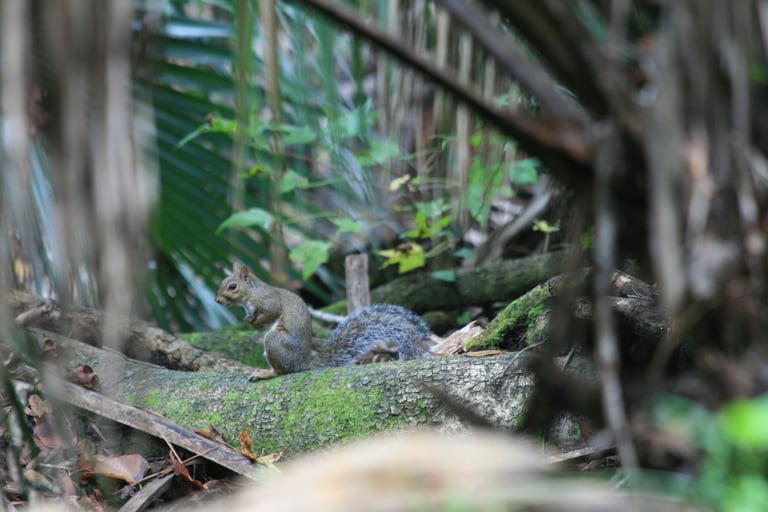
The coat is dark on the back but highly variable. Colour morphs range through red, reddish-brown, bright chestnut, brown, gray, black and bluish. Red coats are most common in Great Britain, while melanism is common in continental, boreal and mountain populations. The underside is always white-cream.
The coat changes twice a year. Between August and November the squirrel grows a thicker, darker winter coat with noticeably larger ear tufts, a prominent feature of this species. Adults with ear tufts, a lighter and redder coat and a smaller size can be separated from the eastern grey squirrel.
The skeleton is built for climbing and leaping. Its bones are relatively light, while the hind legs are disproportionately long and heavy.
Distribution and Habitat
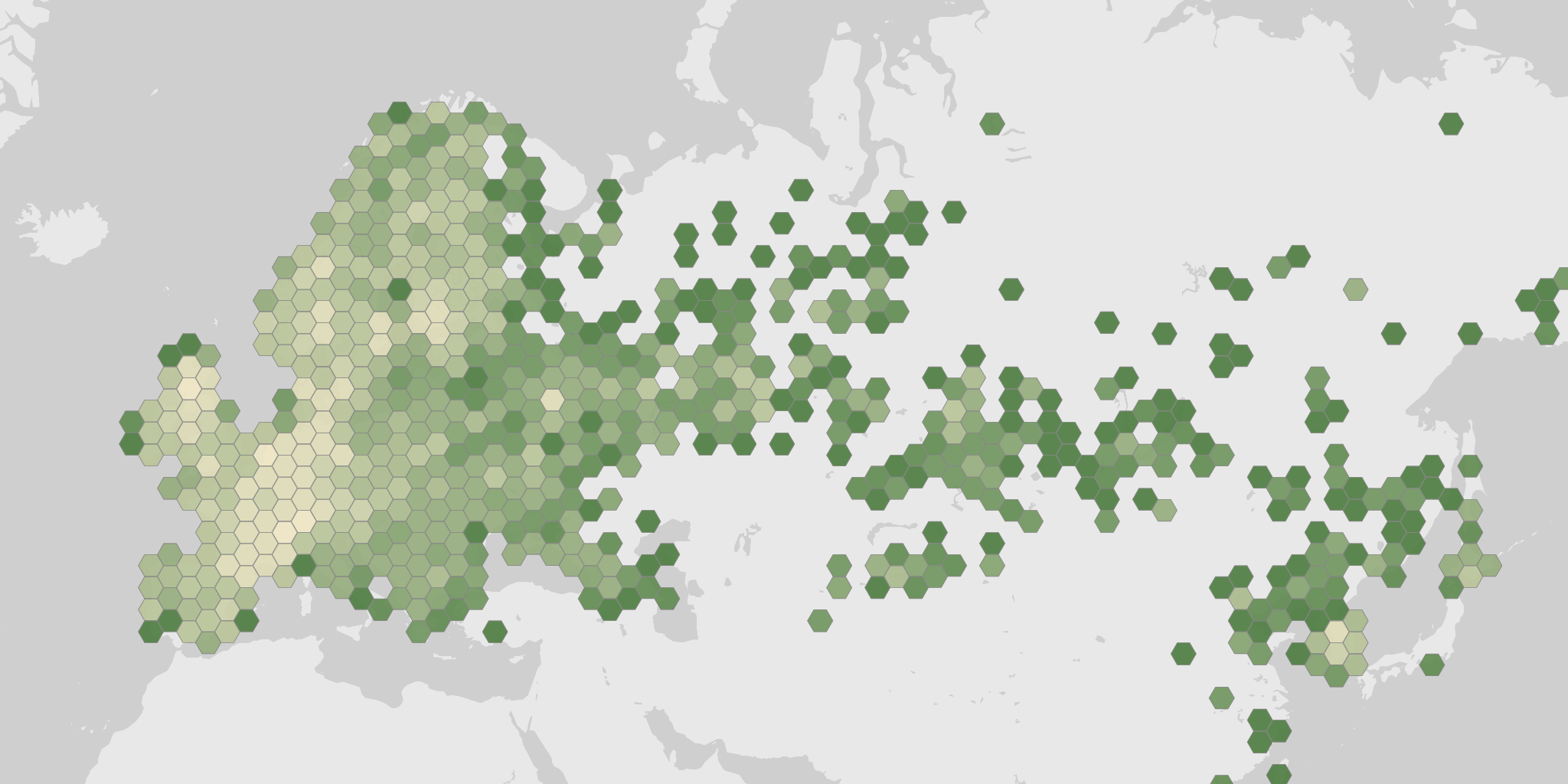
In northern Europe and Siberia the species lives in boreal coniferous woods, where Scots pine, Norway spruce and Siberian pine are preferred. Its densest populations are in large areas of coniferous forest, with lower densities in mixed, deciduous forests and parklands.
In western and southern Europe it is found mainly in broad-leaved woods, where a mix of tree and shrub species gives food through the year. It also lives in suburban areas and conifer plantations.
In most of the British Isles and in Italy, broad-leaved woodland is now less suitable, because introduced grey squirrels feed more competitively there.
Populations have fallen in Great Britain, Ireland and Italy in recent years. The decline is linked to the introduction of the eastern grey squirrel from North America, while the population in Scotland is stabilising through conservation work.
Behavior and Lifestyle
Eurasian red squirrels are diurnal. Activity usually begins at sunrise and continues after sunset, with peaks in the morning and late afternoon. Between 60% and 80% of active time may go to foraging and feeding.
In spring and summer the squirrel rests in its nest during the middle of the day to avoid the heat. In winter this midday rest may be very short or skipped. During strong winds or storms it stays in its nest, and it does not hibernate.
Most movement happens in the trees, where it is rapid and agile. On the ground the squirrel moves in short leaps, pausing to sit upright with erect ears and sniff the air. It descends trees head first, with frequent pauses.
The species is solitary and shy. Adults may share a drey in cold months, especially in winter and spring. Individuals often build several dreys and move between them on consecutive nights. Home ranges average about , and they overlap considerably, with males usually holding larger ranges than females.
Communication
Red squirrels rely on several channels. They use body signals, sounds such as warning calls, and chemical cues, and touch is important within family groups.
Scent marks are left on trees by rubbing with facial glands, usually at habitual sites, and urine is used for the same purpose. These marks signal occupied territory as well as the squirrel's social status and reproductive condition.
Aggressive encounters involve loud calls, foot stamping and tail flagging. These can escalate into rapid chases and tail-biting.
Recordings
alarm call, call · France · Tanguy Loïs · CC BY-SA
Diet and Nutrition
Red squirrels feed mainly on conifer seeds, beechnuts, acorns and other nuts. They open nuts with their lower incisors and, with practice, can open one in a few seconds.
Diet varies greatly by region and by what food is available. When staple foods are scarce, they eat mushrooms and other fungi, birds' eggs, and garden flowers and vegetables. They also peel bark from conifers and lick the sap.
Like most squirrels, they store food by burying it in the ground or hiding it in tree bark. Young squirrels learn which foods to eat from their mothers, and older animals become more reluctant to try unfamiliar foods.
Daily intake changes with the seasons. They eat the most in spring, about 80 g a day, and the least in winter, about 35 g a day.
Reproduction and Raising Young
Mating takes place in late winter, in February and March, and again in summer, between June and July. Females usually reach sexual maturity at about , and males at around a year.
When a female comes into oestrus for about one day, males follow her by scent and gather in her home range. Up to ten males may chase her until the dominant male, usually the largest, mates with her. Copulation lasts less than thirty seconds, and males take no part in rearing the young.
Gestation lasts . Females can have up to two litters a year, and the young are born hairless, blind and deaf, weighing about 8 to 15 g. The mother cares for them alone in the nest. Their eyes open after about 30 days, and they leave the nest for the first time after about 45 days. Weaning takes about , and the young then disperse from their birth area.
Population and Ecological Role
In the United Kingdom, the population fell to fewer than 140,000 individuals in 2013, and about 85% of them lived in Scotland. The Isle of Wight is the largest stronghold in England.
As a seed predator and cacher, the squirrel shapes forest regeneration. Forgotten caches can sprout and grow into new trees, so the species has an important impact on forest communities.
It is preyed on by the pine marten, the Eurasian lynx and the red fox, which hunt it on the ground. Predatory birds such as owls and goshawks also take it, and domestic cats are a main predator in suburban areas.
Conservation and Threats
The IUCN Red List rates the species as Least Concern. It is protected across most of Europe because it is listed in Appendix III of the Bern Convention.
In Great Britain the main threat is competition from the eastern grey squirrel, introduced from North America in the 1870s. Grey squirrels carry squirrel parapoxvirus, which does not seriously affect them but often kills red squirrels. Habitat fragmentation and loss of suitable forest are also serious threats across much of its range. In the former Soviet Union, overhunting for fur has reduced some populations.
Conservation in Britain depends largely on controlling grey squirrels. Eradication began on Anglesey in 1998, and reintroductions followed in Newborough Forest. Projects in Scotland, northern England and the Isle of Wight also rely on grey squirrel control.
Cultural Significance
The red squirrel is the national mammal of Denmark. The expression squirrel pelt is still widely understood there as a reference to money.
In the past, red squirrels were hunted both as game and for their fur, which was prized in medieval Europe. It has been suggested that the intensive fur trade may have contributed to the spread of leprosy in medieval Europe.
Red squirrels are valued as appealing wildlife in towns, but they are also seen as pests in orchards and gardens, where they strip bark to feed on the cambium.
Photos
Photographs from by Вячеслав Шуплецов via iNaturalist, licensed under CC BY 4.0., via iNaturalist, licensed under CC0 1.0., by Pedro Eça via iNaturalist, licensed under CC BY 4.0., by Andrejus Gaidamavičius via iNaturalist, licensed under CC BY 4.0., by Becky Hamilton via iNaturalist, licensed under CC BY 4.0., by Uliana Bogatyreva via iNaturalist, licensed under CC BY 4.0., by Полина Полежанкина via iNaturalist, licensed under CC BY 4.0., by Louis Aureglia via iNaturalist, licensed under CC BY 4.0., by Sinclair Laing via iNaturalist, licensed under CC BY 4.0., by Meng-Chi Hung via iNaturalist, licensed under CC BY 4.0., by Daniel K via iNaturalist, licensed under CC BY 4.0., by Buckelkopfcichlide via iNaturalist, licensed under CC BY 4.0., by Xavier Mas via iNaturalist, licensed under CC BY 4.0., by Jeremy Rogers via iNaturalist, licensed under CC BY 4.0., by Сергей Неклюдов via iNaturalist, licensed under CC BY 4.0., by Andrew Bazdyrev via iNaturalist, licensed under CC BY 4.0., by Reni via iNaturalist, licensed under CC BY 4.0., and by Artem Abdukakharov via iNaturalist, licensed under CC BY 4.0., credited on each photo.
Ecology and classification
Classification
- Phylum
- Chordata
- Class
- Mammalia
- Order
- Rodentia
- Family
- Sciuridae
- Genus
- Sciurus
- Species
- Sciurus vulgaris
Sources
- GBIF Species names and classification
- iNaturalist Photos
- Wikidata Common names and conservation status
- Wikipedia Summary extract
- Xeno-canto Audio recordings
- Animal Diversity Web Animal habitat, behavior and diet
- AnAge Longevity
- COMBINE Mammal size, lifespan, breeding, diet and activity
- GloBI What it eats, what eats it, parasites and pollinators
- trophiCH
- Wardeh et al. 2015 (EID2)
- MammalBase
- HWML Parasite Collection
- CarniDIET
- TETRA-EU