The European pond turtle occupies freshwater habitats across a strikingly wide stretch of the Western Palearctic, from North Africa through southern and central Europe into West Asia, making it one of the few turtle species native to such a broad part of the Old World. It is a species of long-living freshwater turtle in the family Emydidae, within the order Testudines, and it is endemic to this region.
The IUCN lists Emys orbicularis as Near Threatened, a status that reflects a slow, ongoing decline across much of its range even as it persists in ponds, lakes, and slow rivers from Iberia to the Caucasus.
Its unusually broad but increasingly fragmented distribution makes it one of Europe's last widespread native turtles, and a useful gauge of the health of the continent's freshwater habitats.
Identification and Appearance
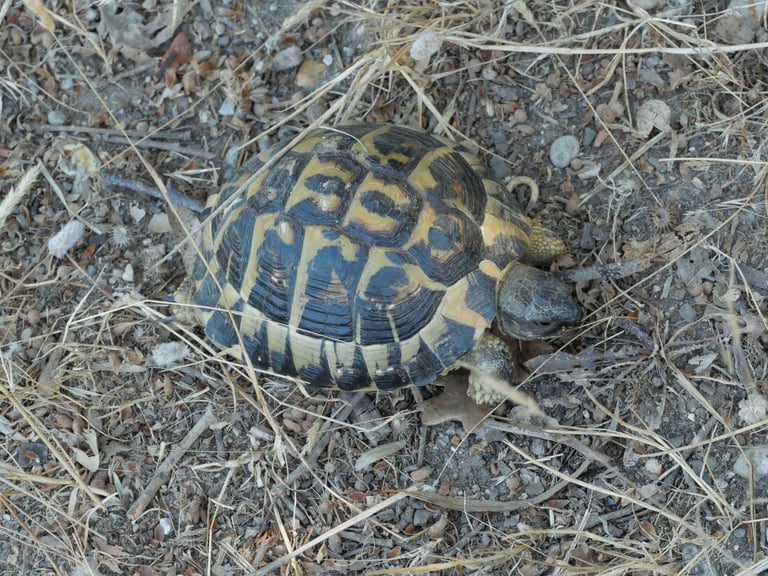
The most reliable field mark is the combination of a dark brown to blackish carapace with a faint greenish sheen, fine yellow spotting on the head and legs, and a plain yellowish plastron underneath.
Carapace length varies enormously across the species' range, from as little as 12 cm (4.7 in) in some populations to 38 cm (15 in) in others, one of the widest size ranges recorded for a single turtle species. This variation is driven largely by temperature and thermal conditions during growth, which also affect clutch size in different areas.
Sexual dimorphism is consistent across the range: adult males are always smaller than females. Males carry a smaller, less domed plastron, which gives them greater mobility on land, while females' distinct diet and foraging habits appear linked to subtle differences in skull and head shape.
Distribution and Habitat
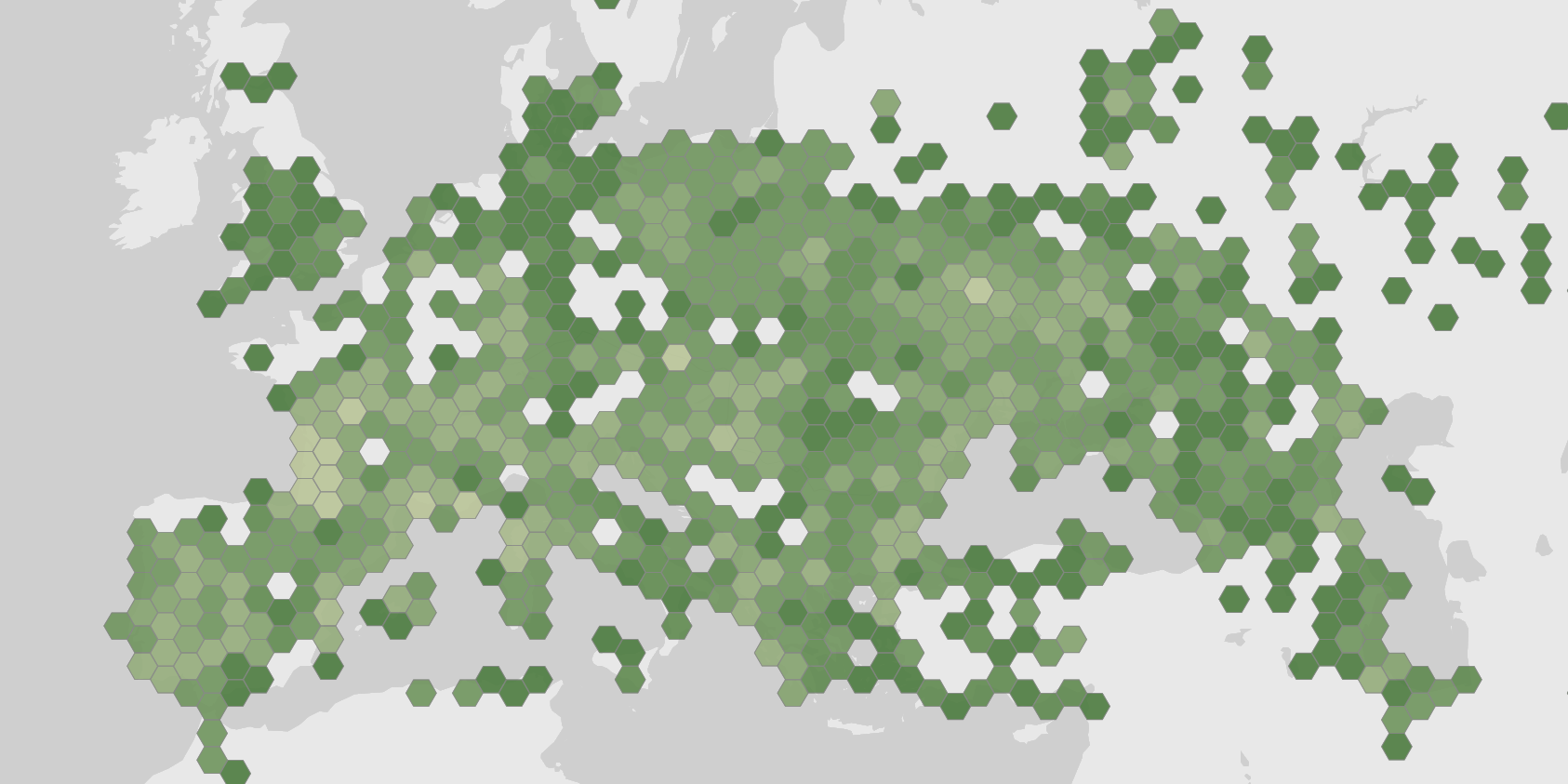
Emys orbicularis is found across southern, central, and eastern Europe, West Asia, and parts of Mediterranean North Africa. In the early post-glacial period its range reached much farther north, including southern Sweden and Great Britain, and a trial reintroduction is now underway to restore the species to its former range in England's East Anglian Fens, Brecks, and Broads.
The species uses a wide variety of freshwater habitats, including ponds, lakes, slow-moving streams, rivers, and drainage canals, some of which dry up completely in summer. It favors large bodies of slow-moving water with soft mud or sand bottoms, lush vegetation, and nearby sandy ground for nesting; juveniles prefer shallow water no more than 50 cm deep. Although classed as aquatic, the turtles are only semi-aquatic and regularly make terrestrial journeys of up to 1 km, occasionally as far as 4 km from water.
Regional populations vary greatly in status. France retains six sizeable but declining populations, and the species is considered the country's most endangered reptile. It went extinct in Switzerland in the early twentieth century but was reintroduced in 2010, and a population was documented in Estonia's Setomaa region in 2004. On Sardinia, fossil evidence places the species there in the Pleistocene, but molecular evidence suggests today's island populations were introduced by people in modern times.
Monthly observation counts rise sharply from a few hundred in winter to a peak near 11,648 in June, before tapering off through autumn. This pattern reflects when the turtles are most active and visible, basking and moving on warm days, rather than any measure of true population size.
Behavior and Lifestyle
During the day, the turtles bask for long stretches with their bodies stretched out on stones or banks, lying motionless. From the water they survey their surroundings and prey with only the nose and eyes breaking the surface, or hide behind and within floating vegetation, and they can remain submerged for hours before resurfacing.
When temperatures drop, the turtles hibernate buried in mud and do not reappear until late spring; feeding activity declines as the cold sets in.
Adults form pair-bonds and live in small groups, with male dominance hierarchies documented especially during the breeding season. They can be territorial and show agonistic behavior when competing for food, using head extension, bobbing, and biting, along with clear dominant and subordinate postures.
In the wild the species is extremely shy and cautious, though individuals become notably tame in captivity. Beyond hibernation, the turtles undertake regional migration and active foraging as conditions change through the year.
Communication
During the mating season, individuals emit short piping sounds, along with whistles, chirps, and groans that are often produced in stressful situations. Auditory signals appear to play a role in mating rituals.
Head movements serve as a visual signal alongside these sounds, likely tied to the dominance and territorial displays seen during the breeding season.
Overall, the species relies on a mix of visual, tactile, and acoustic channels to communicate, while also perceiving its environment through visual, tactile, acoustic, and chemical cues.
Hunting and Diet
Emys orbicularis hunts as an ambush predator, watching from the water with only its nose and eyes above the surface before striking. Prey generally must be moving to be seized; once caught, the turtle bites with a sideward turn of the head and tears the prey apart using the sharp claws on its forelimbs.
As a generalist carnivore, it feeds mainly on worms, insects, frogs, and fish, along with other small aquatic animals and non-insect arthropods such as mollusks. Its diet shifts as it grows, with larger individuals taking on bigger prey than juveniles can manage.
In captivity, where live moving prey is less available, the turtles may resort to eating fruits and vegetables, a departure from the strictly animal-based diet seen in the wild.
Nesting and Breeding
Courtship follows the formation of a pair-bond, with mating taking place in sandy areas or hidden within foliage. Most pairs cohabit peacefully, though some individuals are more aggressive toward one another. Turtles reach sexual maturity at 5 to 6 years old, breed from spring to early summer, and may mate repeatedly to produce multiple clutches in a single season.
A nesting female may search for a suitable site for several hours to several days, favoring hard soil free of grass and dense vegetation. She moistens the ground, bores a hole roughly five inches deep with her stiff tail, then finishes excavating with her hind limbs before laying the eggs and distributing them with her feet. She then covers the nest with the removed soil and stamps it firm and flat before leaving it permanently.
Each clutch holds roughly eight to ten white, hard-shelled, elongate eggs averaging 15 to 25 mm long. Incubation lasts about 90 to 100 days, varying with locality and season; some embryos overwinter inside the egg and do not hatch until the following spring.
Females show strong nest-site fidelity, returning to the same spot for future clutches as long as it remains unchanged, and shifting to a nearby site only if conditions decline. Because sex in this species is temperature-dependent, cooler, darker nest conditions favor male hatchlings, so females that keep nesting in the same increasingly shaded spot can skew offspring sex ratios toward males. Parental care ends the moment the nest is covered; males invest nothing in the offspring at any stage.
Population and Ecological Role
Emys orbicularis occupies a mid-level position in freshwater and riparian food webs. It preys on worms, insects, frogs, and fish, while itself falling prey to other reptiles, fish, predatory birds, and large mammals, linking aquatic invertebrate and vertebrate communities together.
The species also supports its own set of parasites, including the blood parasite Haemogregarina stepanovi, monogenean flatworms of the genus Polystomoides, trematode worms of the genus Spirhapalum, and a range of nematode species, underscoring its role as a host within its ecosystem's parasite life cycles.
Conservation and Threats
The IUCN classifies Emys orbicularis as Near Threatened, meaning it is close to qualifying for a more severe threat category. Populations have been declining over the past century, and the species' geographic range has already contracted and is likely to keep shrinking.
Habitat destruction is the leading pressure, compounded by hunting and egg collection, along with pollution and siltation degrading the still-water habitats the species depends on.
The species carries no special protections under the US Federal List or CITES, leaving its conservation largely dependent on regional and national action rather than international trade controls.
Conservation status
- LC
- NT
- VU
- EN
- CR
Near Threatened
Cultural Significance
Across parts of its range, Emys orbicularis has long been hunted as a food source, reflecting a practical relationship between people and freshwater turtles rather than a purely symbolic one.
The species has also been used as a source of traditional medicine, another use documented alongside its role as food.
Today it is additionally kept in the pet trade and used in research and education, and its predation on aquatic invertebrates gives it a recognized role in controlling pest populations.
Fun Facts
- Several subspecies are named after herpetologists: Emys orbicularis eiselti honors Josef Eiselt, E. o. fritzjuergenobsti honors Fritz Jürgen Obst, and E. o. lanzai honors Benedetto Lanza.
- Individuals can live up to 120 years, placing the species among the longest-lived turtles known.
- Sardinia's population was once assumed to be a natural relict of Pleistocene fossils found there, but molecular evidence now suggests it was introduced by people in modern times.
- The species disappeared from Switzerland in the early twentieth century and was only reintroduced in 2010.
- A trial reintroduction project is underway in England, aiming to restore the turtle to the East Anglian Fens, Brecks, and Broads, habitats it occupied before the last glaciation.
- A population was documented in Estonia's Setomaa region in 2004, well outside the species' core range.
Ecology
Habitat
- Wetland
- Woodland
- Freshwater
Diet
- Carnivore
Behavior
- Predator
- Territorial
- Social
- Diurnal
Photos
SourcesGBIFiNaturalistWikidataWikipediaEncyclopedia of LifeAnimal Diversity WebAnAge