The familiar chat is a small passerine bird of the Old World flycatcher family Muscicapidae, and it is a common resident breeder across Africa south of the Sahara. It favors rocky and mountainous ground, and it also lives around human settlements.
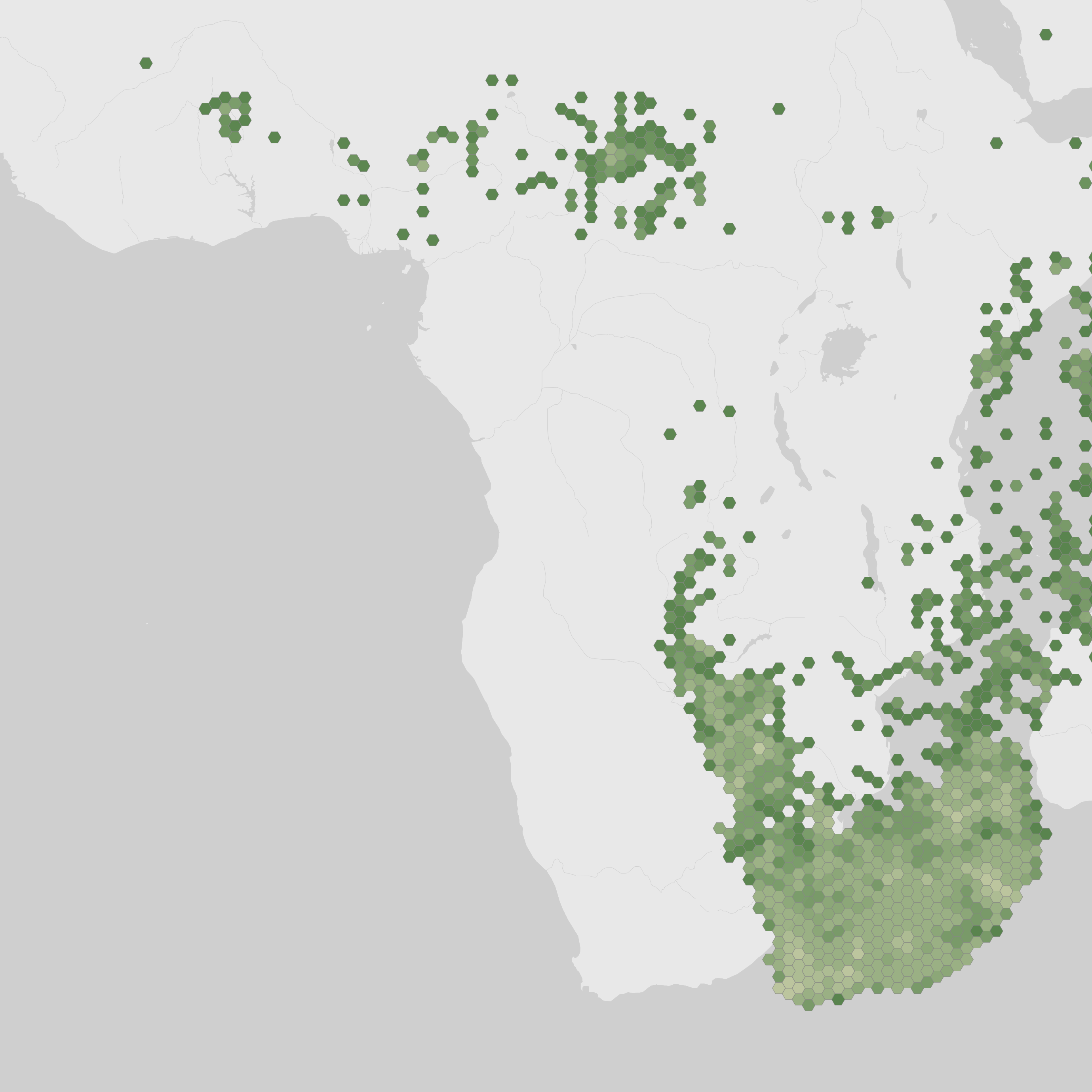
The species is rated Least Concern by the IUCN. Its range covers about 7,290,000 km² of Africa, where it has adapted to both wild and farmed landscapes.
The bird's habit of living close to people makes it an easy one to watch. Its tame behavior and wide range make it a useful example of how a small bird can thrive alongside humans.
Identification and Appearance
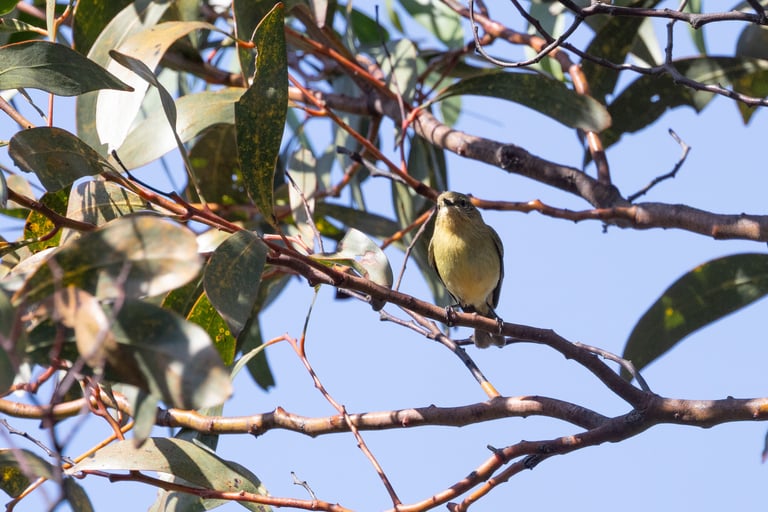
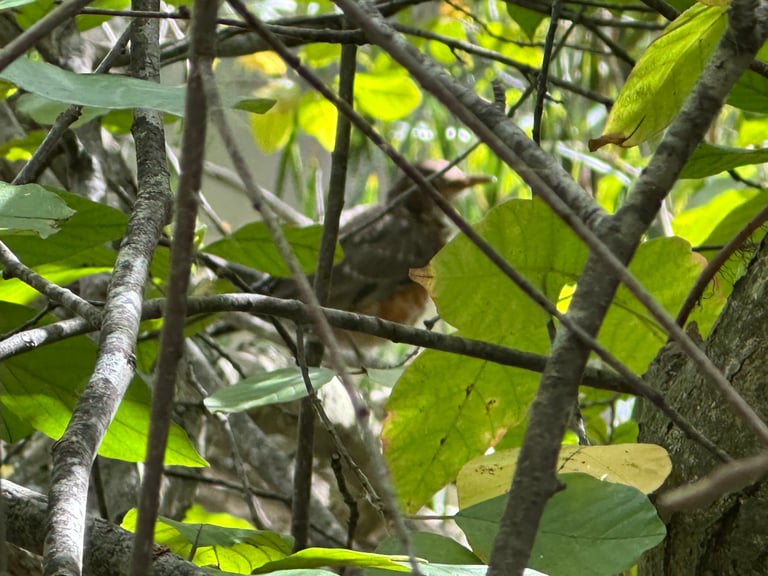
The most useful field mark is the warm rufous rump and outer tail feathers, each tipped with dark brown. The rest of the bird is dull brown above, with warmer brown ear coverts behind the eye.
The familiar chat is a dumpy, short-tailed bird about 14–15 cm (5.5–5.9 in) long, and it weighs about 19.5 g. Its short, straight bill and its legs and feet are black.
The underparts range from off-white to pale grey-brown. The central tail feathers are dark brown. The sexes look alike.
Juveniles resemble adults but have buff spots on the upperparts and a scaly pattern on the breast.
Distribution and Habitat
The familiar chat is a resident breeder across Africa south of the Sahara. Its range covers about 7,290,000 km², and it occurs in both rocky and mountainous terrain.
It is found in semi-open shrubland, where it perches on rocks and hops over bare patches of soil. It also uses habitat around human settlements.
Observations of the species are spread through the year, with a slight rise from mid-year through the final months.
Nesting and Breeding
The familiar chat is monogamous. Breeding timing varies by region: December to March across most of West Africa, March to May in Nigeria, and mainly October to November in South Africa.
The nest is a thick cup of plant material lined with hair, wool and feathers. It is usually placed in a hole in the ground, though rock faces and buildings are also used. The bird will also use nest boxes or an abandoned sociable weaver nest.
The clutch holds 2-4 greenish-blue eggs with reddish-brown speckling. The eggs hatch after about 13–15 days. Both parents feed the nestlings, which fledge after a similar 13–15 days.
Only one brood is usually raised each year.
Photos
Photographs from via iNaturalist, licensed under CC0 1.0., by Stefan Wolmarans via iNaturalist, licensed under CC BY 4.0., by Cricket Raspet via iNaturalist, licensed under CC BY 4.0., by Bruno - Yolande Zanette via iNaturalist, licensed under CC BY 4.0., by Liezl van der Merwe via iNaturalist, licensed under CC BY 4.0., by Jean Jacques Godon via iNaturalist, licensed under CC BY 4.0., and by Chris D Thomas via iNaturalist, licensed under CC BY 4.0., credited on each photo.
Ecology and classification
Habitat
Classification
- Phylum
- Chordata
- Class
- Aves
- Order
- Passeriformes
- Family
- Muscicapidae
- Genus
- Oenanthe
- Species
- Oenanthe familiaris
Sources
- GBIF Species names and classification
- iNaturalist Photos
- Wikidata Common names and conservation status
- Wikipedia Summary extract
- AVONET Bird mass, habitat, migration, diet and range size