Festuca heterophylla, known as the various-leaved fescue, is a perennial grass native to southern Europe that has since spread as far afield as Japan and the northeastern United States.
It belongs to the family Poaceae, within the order Poales, and grows as a clump-forming perennial across temperate grasslands and woodland edges. Its native range stretches across southern and central Europe into the Caucasus region.
The grass has proven adaptable enough to establish populations well outside its native range, appearing as an introduced species in places as distant from each other as Scandinavia, the British Isles, and the US states of New York and Virginia.
Identification and Appearance
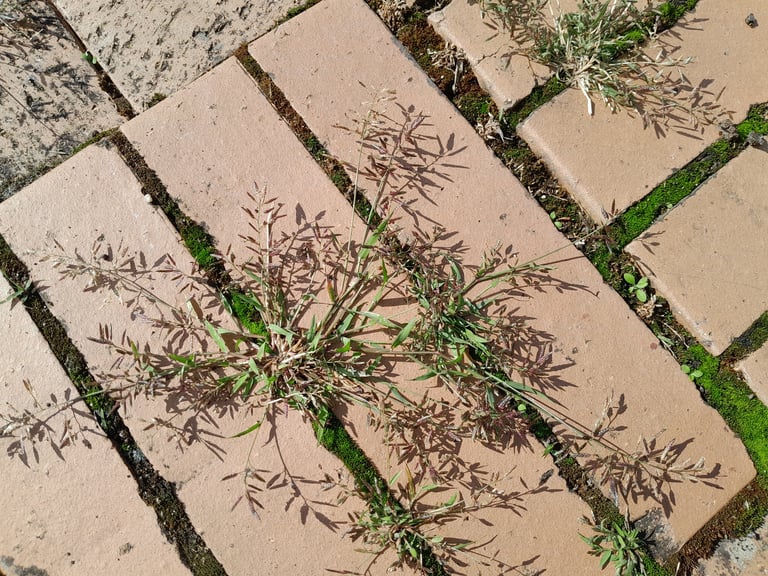
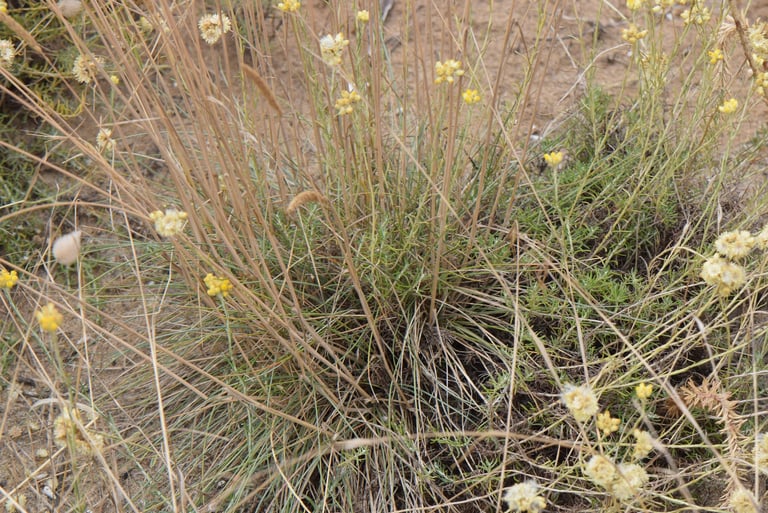
Festuca heterophylla is best recognized by the contrast between its two leaf types, a trait reflected directly in its species name, which means "different-leaved." The plant produces fine, thread-like, often rolled leaves near its base, forming a dense tuft, while the leaves along its taller flowering stems are noticeably flatter and broader.
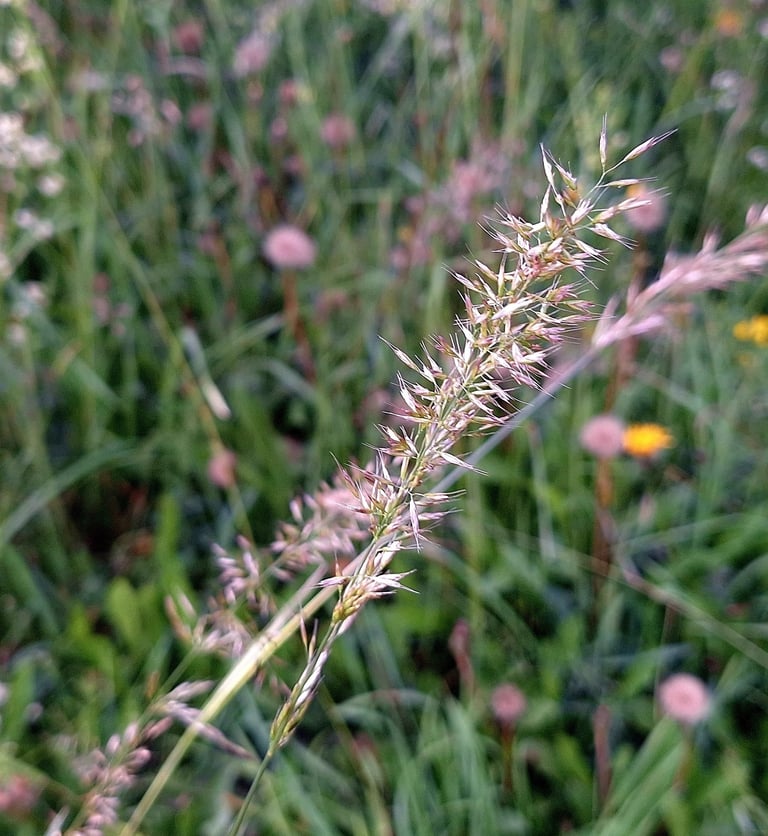
The flowering stems rise above the basal tuft, bearing narrow, elongated seed heads typical of fescue grasses. This division between a low cushion of hair-like foliage and upright, more open stems is the clearest way to distinguish this species from fescues with uniform leaf shape throughout the plant.
Distribution and Habitat
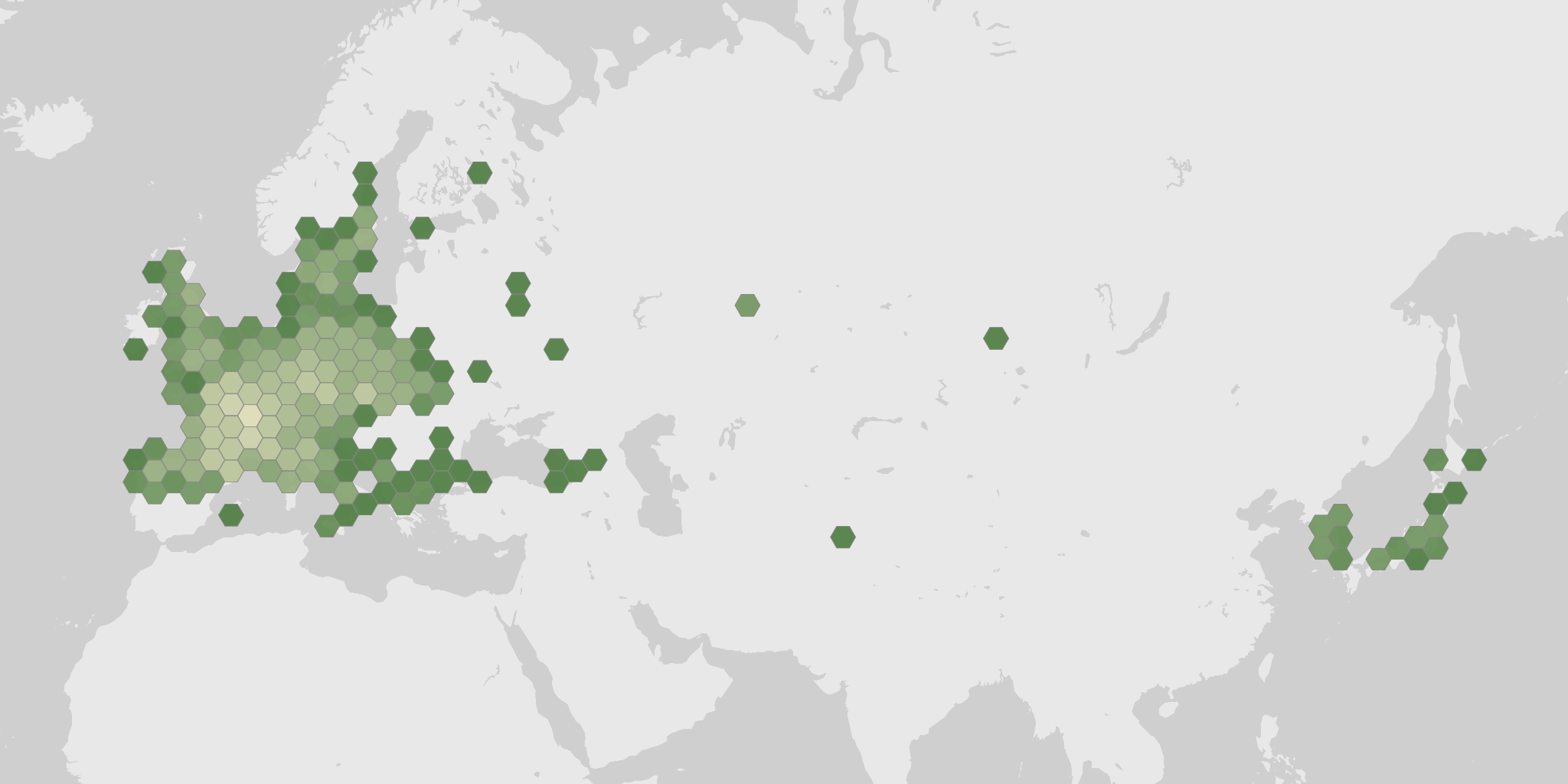
Festuca heterophylla is native to a broad swath of Europe, with its range extending from Iberia and France through the Balkans, Italy, and Central Europe into the Caucasus and Transcaucasus regions. Countries within its native distribution include France, Germany, Italy, Spain, Greece, Türkiye, Romania, Hungary, Poland, and Ukraine, among others, reflecting an origin centered on the temperate zones of southern and central Europe.
Beyond its native range, the species has become established as an introduced plant in several other regions, including Denmark, Great Britain, Ireland, and Sweden in Europe, as well as Japan in Asia and the US states of New York, Virginia, and Connecticut in North America.
Observation records for the species show a seasonal pattern, with counts rising through spring and peaking around late spring to early summer before declining through the autumn and winter months. This pattern likely reflects when the plant is most visible and easiest to identify, rather than indicating anything about its actual abundance or the full extent of its range.
Growth and Form
Festuca heterophylla is a perennial grass, meaning individual plants persist and regrow over multiple years rather than completing their life cycle in a single season.
Ecology and Relationships
Festuca heterophylla serves as a food plant for a range of grasshopper species, based on recorded feeding interactions. Species known to feed on it include several members of the genus Chorthippus, such as Chorthippus brunneus, Chorthippus dorsatus, Chorthippus mollis, and Chorthippus parallelus, alongside other grasshoppers like Euthystira brachyptera, Gomphocerippus rufus, Oedipoda caerulescens, and species of the genus Omocestus.
This pattern of feeding relationships suggests the grass forms part of the diet for a variety of orthopteran insects within the grassland and woodland-edge habitats it occupies, contributing to the food web supporting these plant-eating insects.
Fun Facts
- The various-leaved fescue's scientific name, Festuca heterophylla, references the variation in its leaves, a trait reflected in its common name.
- Despite its European origins, this fescue has quietly naturalized in locations as far apart as Japan and the northeastern United States.
Photos
Photographs from via iNaturalist, licensed under CC0 1.0., by gerardbertrand via iNaturalist, licensed under CC BY 4.0., by Paolo Zucca via iNaturalist, licensed under CC BY 4.0., by Наталья Пикалова via iNaturalist, licensed under CC BY 4.0., by Oleksandr Shynder via iNaturalist, licensed under CC BY 4.0., by marius via iNaturalist, licensed under CC BY 4.0., by Paul F via iNaturalist, licensed under CC BY 4.0., by Salza Palpurina via iNaturalist, licensed under CC BY 4.0., by J. Drzewiecka via iNaturalist, licensed under CC BY 4.0., and by jordi espar via iNaturalist, licensed under CC BY 4.0., credited on each photo.
Ecology and classification
Classification
- Phylum
- Tracheophyta
- Class
- Liliopsida
- Order
- Poales
- Family
- Poaceae
- Genus
- Festuca
- Species
- Festuca heterophylla
Sources
- GBIF Species names and classification
- iNaturalist Photos
- Wikidata Common names and conservation status
- Wikipedia Summary extract
- Plants of the World Online Native range, life form and climate (WCVP)
- GloBI What it eats, what eats it, parasites and pollinators
- trophiCH