Yellow oatgrass carries a hidden danger beneath its cheerful golden panicles: it is toxic to grazing livestock. Known botanically as Trisetum flavescens, this perennial bunchgrass belongs to the family Poaceae and is native to Europe, Asia, and North Africa.
Widespread across its native range and introduced in many other regions, this grass is easy to overlook in a pasture yet worth knowing, both for what it looks like and for what it can do to animals that graze on it.
Identification and Appearance
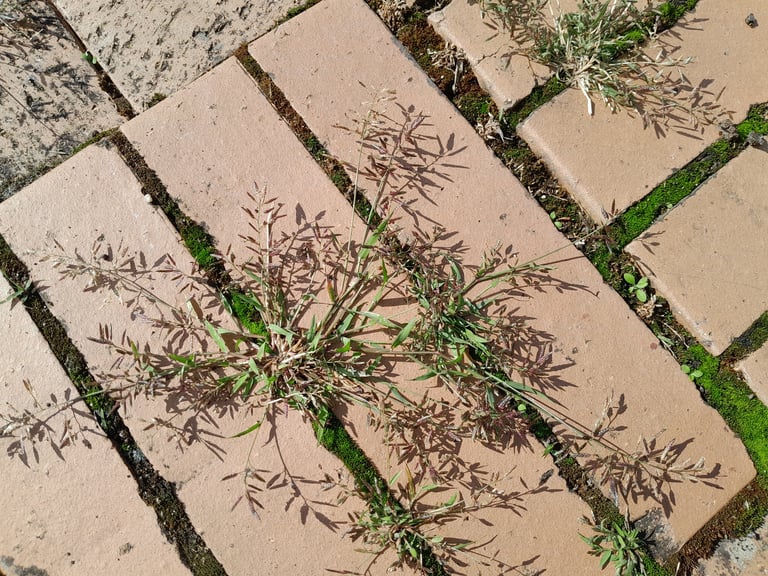
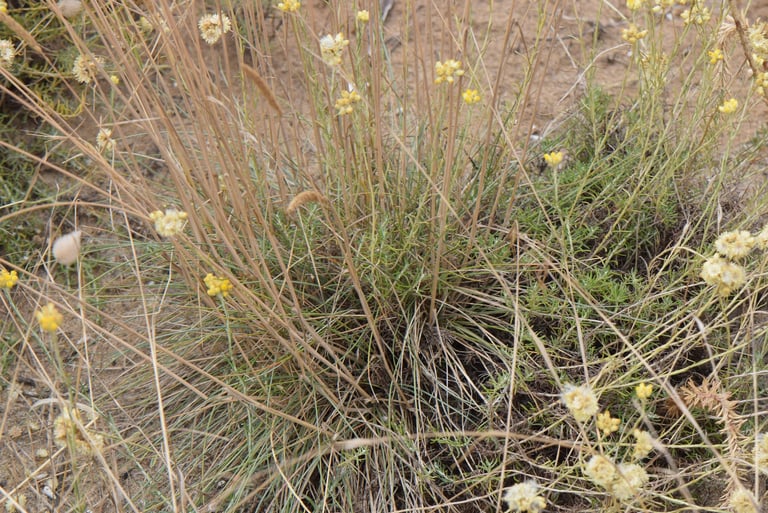
The most useful field mark of Trisetum flavescens is its narrow panicle, which opens greenish yellow to purple and matures into a bright golden yellow, giving the species its common names of yellow oatgrass and golden oat grass.
It grows as a perennial bunchgrass, forming clumps typically 60 to 80 centimeters tall, though some plants can exceed 1 meter. The overall shape is that of a slender, upright tussock grass with a fine-textured inflorescence held above the foliage.
The grass is also known to be susceptible to yellow oat grass mosaic virus (YOgMV), a virus in the genus Tritimovirus, which can affect its appearance and vigor where present.
Distribution and Habitat
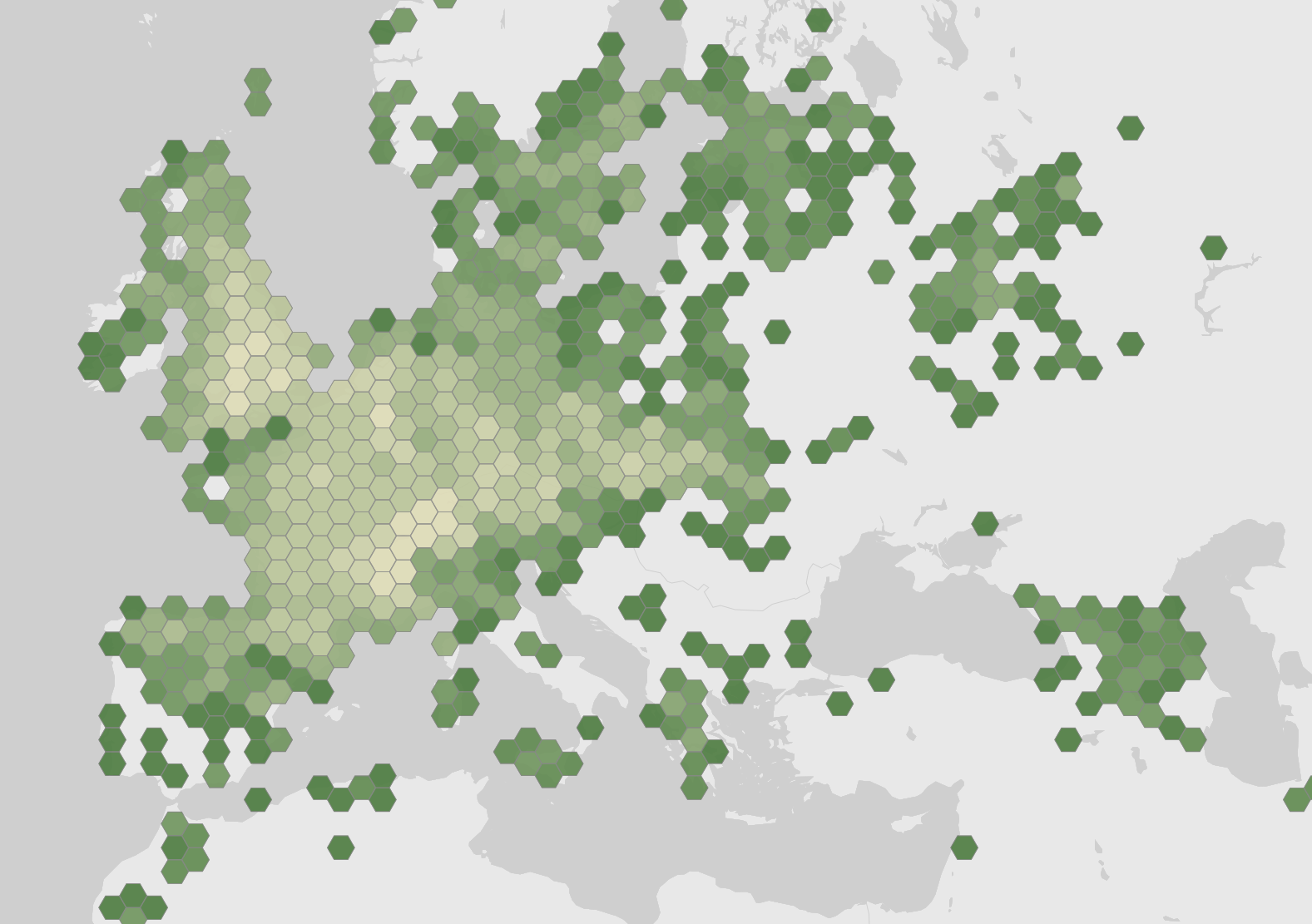
Yellow oatgrass has a broad native range stretching across Europe, into North Africa, and eastward to the Caucasus, Turkmenistan, and northern Iran. Countries within its native range include France, Germany, Great Britain, Italy, Spain, Greece, Türkiye, and much of the Balkans and Central European Russia, among many others, along with the Azores.
The species has also been introduced well beyond this native range, now found in parts of North America, including Alberta, British Columbia, California, Colorado, and several eastern provinces and states, as well as in Argentina, Chile, New Guinea, New South Wales, and Nepal.
It favors a temperate climate, consistent with its presence across so much of Europe and the Mediterranean. Observation records through the year show a strong peak in late spring and early summer, suggesting this is when the grass is most visibly present and likely flowering, though these records reflect observation activity rather than actual population size.
Growth and Form
Trisetum flavescens is a perennial grass, persisting and regrowing over multiple years rather than completing its life cycle in a single season. It grows as a bunchgrass, forming discrete clumps rather than spreading as a continuous turf.
Ecology and Relationships
Yellow oatgrass supports a range of grasshoppers and bush-crickets as food sources, including species such as Stenobothrus lineatus, Decticus albifrons, Euthystira brachyptera, and several others in the Omocestus and Stenobothrus genera, making it part of the diet for various Orthoptera in grassland habitats. It is also grazed by domestic sheep (Ovis aries).
Belowground, the species forms relationships with arbuscular mycorrhizal fungi, most notably Entrophospora lamellosa and Funneliformis caledonius, along with Diversispora epigaea, Rhizophagus intraradices, and Archaeospora trappei. These fungal partnerships likely assist the grass in nutrient uptake from the soil.
Uses and Human Relationships
Cattle that graze on this grass can develop difficulty moving and standing, along with reduced milk production. Goats affected by the toxin may suffer heart murmurs and arrhythmias, weight loss, and difficulty walking, kneeling, or rising, in addition to reduced milk output. Horses exposed to the grass show tenderness in tendons and ligaments, weight loss, and problems with movement.
Fun Facts
- The species' scientific authority traces to Linnaeus, later reclassified by Palisot de Beauvois, reflected in its full name Trisetum flavescens (L.) P.Beauv.
- Its native range extends as far east as Siberia and Western and Central Asia, in addition to the Euromediterranean region and the Caucasus.
Photos
Photographs from via iNaturalist, licensed under CC0 1.0., by Marc Riera via iNaturalist, licensed under CC BY 4.0., by Stephan Mende via iNaturalist, licensed under CC BY 4.0., by Susan Marley via iNaturalist, licensed under CC BY 4.0., by Jose Gutierrez Higa via iNaturalist, licensed under CC BY 4.0., by Matteo Martini via iNaturalist, licensed under CC BY 4.0., and by Ljaž via iNaturalist, licensed under CC BY 4.0., credited on each photo.
Ecology and classification
Habitat
Growth habit
- Graminoid
Classification
- Phylum
- Tracheophyta
- Class
- Liliopsida
- Order
- Poales
- Family
- Poaceae
- Genus
- Trisetum
- Species
- Trisetum flavescens
Sources
- GBIF Species names and classification
- iNaturalist Photos
- Wikidata Common names and conservation status
- Wikipedia Summary extract
- Plants of the World Online Native range, life form and climate (WCVP)
- GloBI What it eats, what eats it, parasites and pollinators
- trophiCH
- GlobalAMFungi