The fieldfare is a thrush that breeds across northern Europe and the Palearctic, yet only a handful of pairs breed in the British Isles, at the extreme edge of its range. Most of its population is strongly migratory, and large winter flocks gather in the United Kingdom, Southern Europe, North Africa and the Middle East.
The fieldfare belongs to the thrush family Turdidae and the order Passeriformes. Adults weigh about , and individuals can live up to .
Its diet changes with the seasons. It eats earthworms, snails and insects in summer, then turns to berries, grain and seeds in winter. The International Union for Conservation of Nature rates it as Least Concern.
Identification and Appearance
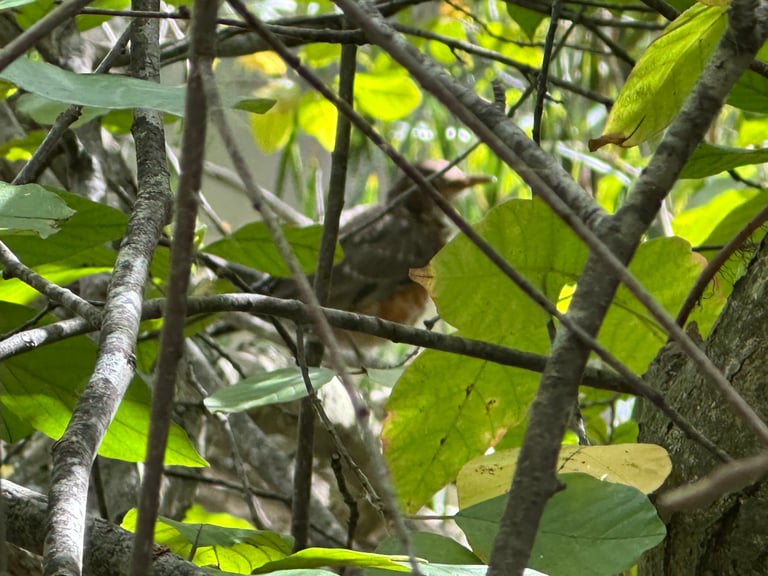
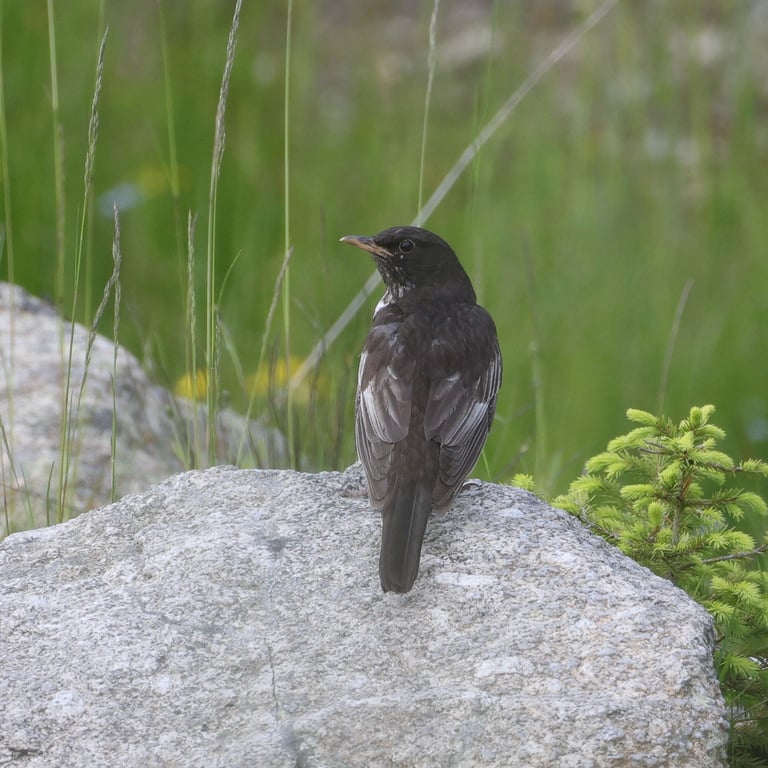
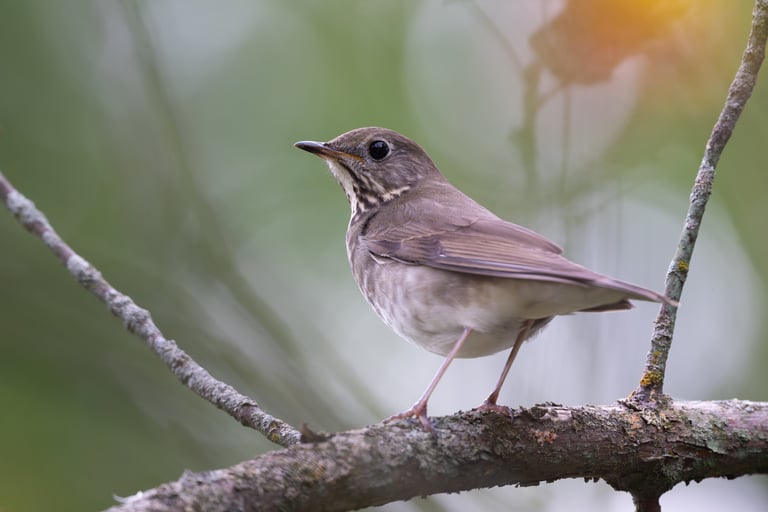
The fieldfare is easily recognized by its slate-grey head, nape and rump, dark brown back and boldly speckled breast. In flight, its white underwing coverts stand out clearly, and its harsh call, a repeated tsak tsak, is distinctive.
The average adult is about 25 cm long, with a wingspan of 39 to 42 cm and a weight of 80 to 140 g. The tail is blackish and slightly rounded, because the outer two feathers are a little shorter than the rest.
The male has bluish-grey forehead and crown, with black lores and dark chestnut-brown mantle feathers. Its chin, throat and upper breast are creamy-buff with bold brownish-black streaks, and its lower breast and belly are creamy-white. The female is similar but has more brownish upper parts, narrower black stripes on the crown, and a paler throat and breast with fewer, smaller markings.
Bill colour changes with the season. In winter both sexes have an orange-yellow bill with a brownish upper mandible and dark tips. In summer the male's whole bill is yellow. Juveniles are duller than adults, with pale streaks where adults have dark ones, and they take on adult plumage after their first autumn moult.
Distribution and Habitat
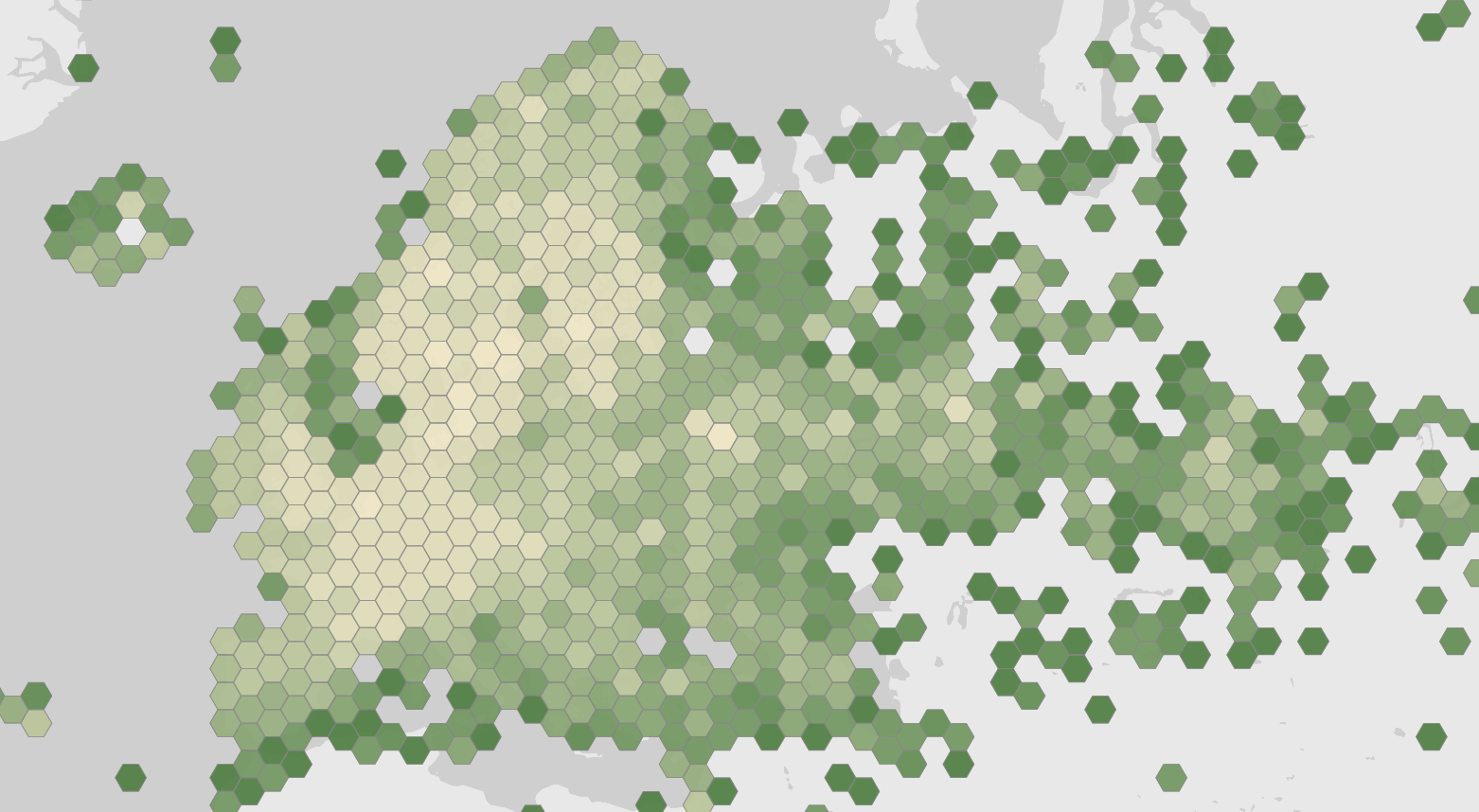
The fieldfare breeds from northern Norway, Sweden and Finland south through Germany, Poland, Austria and Hungary, and east across Siberia to Transbaikal, the Aldan River and the Tian Shan Mountains in northwest China. Its total range covers about .
In summer it favors mixed woodland of birch, alder, pine, spruce and fir, often near marshes and moorland. It does not avoid people, and it also uses open tundra and hillsides above the tree line. Outside the breeding season it frequents open country, farmland, orchards and open woodland, and later in the year it moves onto pastures and cultivated fields.
In winter its range extends through western and southern Europe to North Africa, though it is uncommon around the Mediterranean. Eastern populations travel to Anatolia, Lebanon, Iran and northwest India. Vagrants occasionally reach Iceland, Greenland, the Canary Islands and the United States.
Migration south begins in October, and most birds reach the United Kingdom in November. Passage birds return in April, and both passage and resident birds leave the United Kingdom mostly by early May. Observation records peak in January and are lowest in August.
Diet and Nutrition
The fieldfare is an omnivore, and its diet follows the seasons. In summer it feeds mainly on snails, slugs, earthworms, spiders and insects such as beetles, flies and grasshoppers, along with their larvae.
In autumn, ripening berries become the main food. Hawthorn, holly, rowan, yew, juniper, dog rose, cotoneaster, pyracantha and barberry are all eaten in large numbers.
Later in winter it turns to windfall apples, swedes pulled from fields, grain and seeds. In harsh weather, or when these run out, flocks move to marshes and even the shoreline to find molluscs.
Nesting and Breeding
The breeding season begins in May in Poland, but in Scandinavia it may not start until early July. The female builds a cup-shaped nest of dried grasses and weeds, with a few twigs and a little moss, lined with mud and fine grasses. It makes no attempt to conceal the nest.
Nests are often in woodland, but may be in a hedgerow, garden, rock crevice, log pile, hut or on the ground. Fieldfares usually nest close to others of their species. Adults defend the nest aggressively by dropping droppings on predators, and nesting in groups may offer some protection.
A clutch usually holds five or six eggs, and occasionally three, four, seven or eight. The eggs measure 28.8 by 20.9 to 33.5 by 23.4 millimetres and vary in colour. Many are pale blue with fine brown dots, similar to blackbird eggs, while others are bright blue, with or without larger red-brown splotches.
Incubation begins before the last egg is laid and lasts 13 to 14 days. The female does all or most of the incubating. The chicks hatch helpless, and both parents bring them food until they leave the nest after 14 to 16 days. Pairs may raise two broods in a season, especially in the south of the breeding range.
Population and Ecological Role
Europe holds an estimated 42 to 72 million fieldfares, and up to 20 million are thought to live in Russia. The global population is estimated at 44 to 96 million individuals, and it appears to be stable.
Its predators include carnivorous mammals such as the red fox and the European polecat's relatives, as well as crows, ravens, owls and several snakes. The fieldfare is an important food source for these animals, and it is itself a consumer of berries, invertebrates and seeds across its range.
Flies in the order Diptera are its main group of parasites.
Conservation and Threats
The International Union for Conservation of Nature rates the fieldfare as Least Concern. Its range is extensive, and its population is large and appears stable.
The bird is not believed to approach the IUCN thresholds for population decline, which are a fall of more than 30 percent in ten years or three generations.
The United Kingdom sits at the extreme edge of its breeding range, where only a handful of pairs breed. The Royal Society for the Protection of Birds placed it on its Red List in January 2013 because of this small breeding population.
Photos
Photographs from via iNaturalist, licensed under CC0 1.0., by Justin Philbois via iNaturalist, licensed under CC BY 4.0., by Георгий Виноградов (Georgy Vinogradov) via iNaturalist, licensed under CC BY 4.0., by Дмитрий Еременко via iNaturalist, licensed under CC BY 4.0., by Andrejus Gaidamavičius via iNaturalist, licensed under CC BY 4.0., by maria_is via iNaturalist, licensed under CC BY 4.0., by Edoardo Nardelli via iNaturalist, licensed under CC BY 4.0., by Bevan Weir via iNaturalist, licensed under CC BY 4.0., by Константин Селивёрстов via iNaturalist, licensed under CC BY 4.0., by cello caruso-turiello via iNaturalist, licensed under CC BY 4.0., by Юля и Ваня «Чай» via iNaturalist, licensed under CC BY 4.0., by Алексей Логинов via iNaturalist, licensed under CC BY 4.0., by Сергей Неклюдов via iNaturalist, licensed under CC BY 4.0., and by Tatiana Strus via iNaturalist, licensed under CC BY 4.0., credited on each photo.
Ecology and classification
Classification
- Phylum
- Chordata
- Class
- Aves
- Order
- Passeriformes
- Family
- Turdidae
- Genus
- Turdus
- Species
- Turdus pilaris