A single, unmistakable white crescent across an otherwise coal-black chest sets the ring ouzel apart from every other European thrush, yet this bird spends much of its life in some of the most rugged, wind-scoured terrain on the continent, from Scottish moorland to the treeline of the Alps and the high ridges of Iran.
The ring ouzel (Turdus torquatus) is a medium-sized member of the thrush family Turdidae, closely related to the common blackbird. It is currently assessed as Least Concern by the IUCN, though it breeds almost entirely at altitude and depends on open, shrubby mountain slopes that are increasingly hard to find undisturbed.
It is also a determined migrant, leaving its breeding grounds each autumn for winter quarters in southern Europe, North Africa and Turkey, often following the same juniper-studded routes generation after generation. That mix of alpine toughness and long-distance travel makes it one of the more distinctive thrushes to track through the year.
Identification and Appearance
The clearest field mark is the male's broad white crescent across an otherwise black breast, a feature that makes adult birds essentially unmistakable in the field. The species measures 23–24 centimetres in length and weighs around 90–138 grams, putting it in the same size class as the common blackbird.
Males of the nominate race are almost entirely black, with narrow greyish scaling on the upperparts and belly, pale edges to the wing feathers, a yellow bill and greyish-brown legs. Females look similar but are browner overall, with a duller, less crisp breast band. Juveniles resemble females but often show only a faint breast crescent, or none at all, which can make them harder to place at first glance.
The three subspecies differ subtly in the pattern of that breast band and wing panel. Males of T. t. alpestris show broader white scalloping on the underparts, giving a distinctly scaly look, along with a paler wing panel than the nominate form; females of this race have broad white fringes on the chin and throat. T. t. amicorum males carry the largest, whitest breast band of the three and a more obvious pale wing panel, while females show only narrow white fringing below.
Because it is close in size and shape to the common blackbird, young ring ouzels lacking a clear breast crescent are sometimes confused with that species. The giveaway is the wing panel, which is always paler in the ring ouzel than in any blackbird. Adults undergo a complete moult after breeding, from late June to early September, before setting off on autumn migration, while juveniles have only a partial moult of the head, body and wing coverts between July and September.
Distribution and Habitat
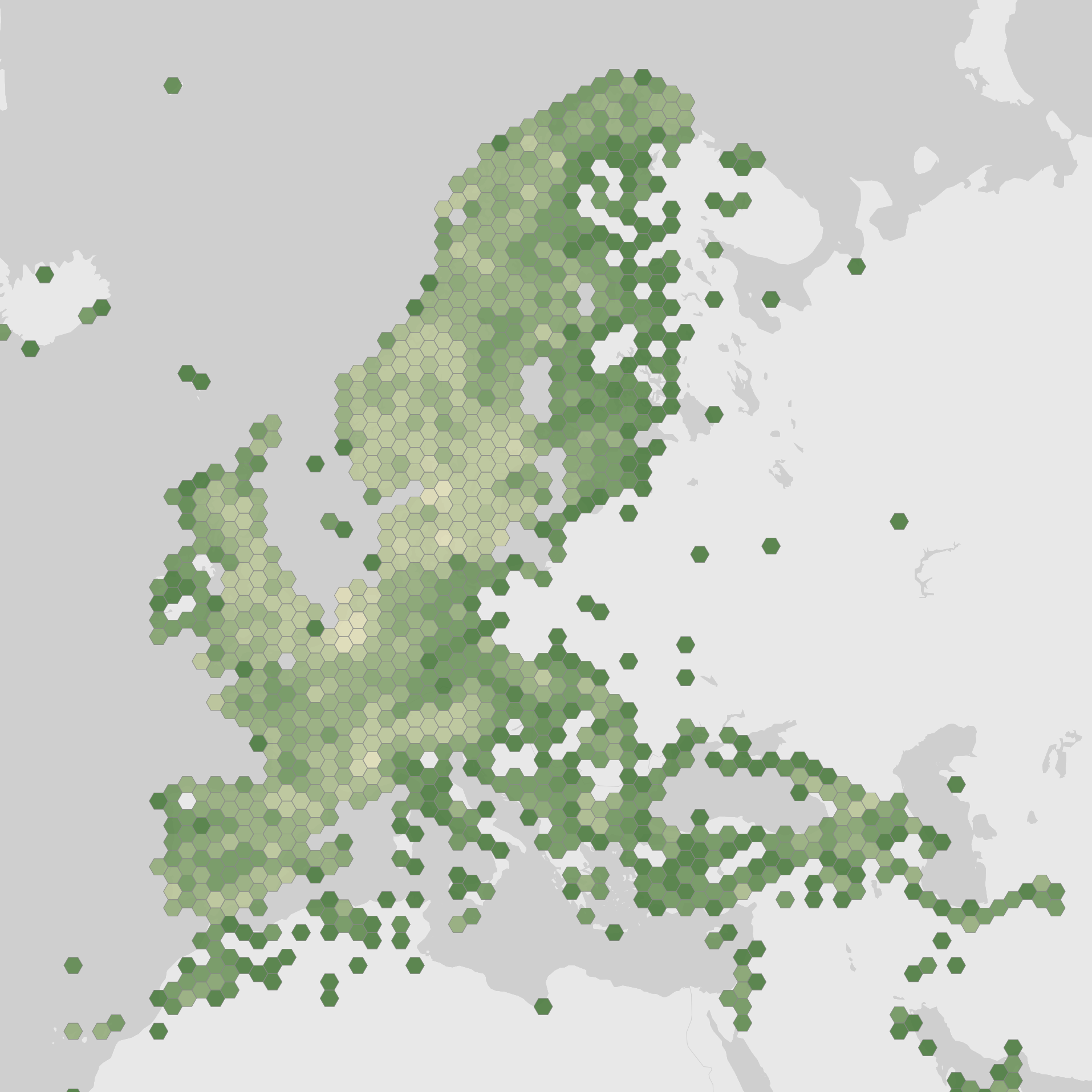
The ring ouzel breeds in a broken chain of mountain and upland areas stretching from northwest Ireland through Scandinavia to northwest Russia, and separately across the mountains of central and southern Europe, from the Pyrenees through the Alps, the Balkans, Greece and Turkey to Turkmenistan. In 2014 breeding was confirmed on the Timan Ridge in Arkhangelsk Oblast, about 300 kilometres further east than any previously known site in northern Russia.
Migration is a defining part of its yearly cycle. Birds leave the breeding grounds in September and October: nominate birds head for southern Spain and northwest Africa, central European T. t. alpestris first climb to higher elevations before pushing south or southwest through the Swiss Alps, eastern alpestris populations move through the Balkans and Turkey, and T. t. amicorum travels as far as Egypt. Return migration runs mainly through March and April, with males arriving several days ahead of females, and mountain birds sometimes ascending in stages as the snow retreats. Traditional, well-grazed grassland sites on steep slopes serve as stopover points in both spring and autumn.
Habitat use shifts with latitude. In the middle of its range the species is a bird of continental mountains, typically open moorland with scattered stunted trees above 250 metres, reaching 1,200 metres in Scotland and northern Europe; in the north it instead favors coastal uplands. Swiss breeding habitat sits at 1,100–1,300 metres among heather, conifers, beech or hairy alpenrose, while in Turkey birds occur from near sea level up to 1,500 metres, and in Armenia and the Caucasus from sea level to 2,000–3,000 metres among conifers, rhododendron thickets and juniper scrub. On the wintering grounds in northwest Africa, birds favor juniper forest at 1,800–2,200 metres, often near rivers or ponds.
Monthly observation counts peak sharply in March, a pattern consistent with the return migration described above, though these figures reflect presence records rather than true population size and should be read with that caveat in mind. The species is now extinct as a breeder in Latvia, occurs in Denmark only on migration, and turns up as a vagrant well beyond its core range, including Iceland, Jordan, Sudan and Svalbard.
Behavior and Lifestyle
The ring ouzel is territorial and usually encountered alone or in pairs rather than in groups. Its flight is direct, and it habitually perches on rocks or clumps of heather, using elevated vantage points typical of open, shrubby mountain terrain.
Outside the breeding season, birds loosen their territorial grip somewhat. Several individuals may gather loosely at good feeding sites, such as a fruiting tree, often alongside other thrushes like song thrushes and redwings. On migration, loose flocks can also form, a contrast to the more solitary pattern seen on the breeding grounds.
This combination of strict territoriality in summer and looser social tolerance in winter and on migration reflects the way food and habitat availability change through the year, concentrating birds around fruiting trees and stopover sites when territorial defense is no longer the priority.
Communication
Song is the male's main advertising signal, delivered from a low perch or occasionally in flight. It consists of a repeated series of 2–4 plaintive, fluty notes, rendered as tri-ríí, tri-ríí, ti-ríí, with distinct pauses between repetitions, and is given most often at dawn and sunset.
Alarm and contact are handled by separate calls. The alarm call is a loud, repeated tac-tac-tac that grows harsher when the bird is disturbed, while the contact call used in flight is a softer cherrr, likely helping birds keep track of mates or neighbors while moving through open terrain.
Diet and Nutrition
The ring ouzel is omnivorous, and its diet tracks the seasons closely. Most animal prey is taken on the ground, and during spring migration and the breeding season invertebrates dominate, including earthworms, beetles, flies, ants, spiders and snails.
As the year progresses, fruit takes over as the main food source. Bramble, strawberry, cherry, hawthorn, rowan and juniper berries all feature, and where common juniper is available it can make up more than 90% of the bird's winter diet, with arthropods filling most of the remainder.
Chicks are raised on a different menu almost entirely: invertebrates, with caterpillars and earthworms as major items wherever they are plentiful. Migrating adults in autumn use similar habitat to that of spring but shift their diet toward seasonal berries, particularly elder berries, haws and, where available, juniper.
This heavy reliance on juniper berries gives the ring ouzel an outsized ecological role: it is an important seed disperser for juniper generally, and specifically for the dispersal of the endemic Canary Islands juniper in the Canary Islands.
Nesting and Breeding
Breeding runs from mid-April to mid-July in the Alps and the British Isles, and from May to August in Scandinavia. Pairs hold territories that may be strung out along streams, roughly 160–200 metres apart, with some overlap between neighbors, though the species never forms true breeding colonies.
The female alone builds the nest, a cup of leaves, dry grass and other plant material bound together with mud. In the western part of the range nests are almost always placed on the ground, but T. t. alpestris sometimes nests in a small tree or shrub, at an average height of 3.5 metres.
Clutches consist of 3–6 pale blue or greenish-blue eggs flecked with reddish-brown, each about 30 by 22 millimetres and weighing 7.4 grams, of which shell accounts for only 6%. Incubation is carried out almost entirely by the female and typically lasts 13 days before hatching. The altricial, downy chicks fledge after a further 14 days and remain dependent on their parents for about 12 days afterward.
Birds first breed after their first year, and while the average lifespan is around two years, individuals as old as nine have been recorded. A second brood is possible, especially in the south of the range, with triple-brooding rare. The species is philopatric, returning to the same breeding area year after year; roughly 36% of juveniles survive their first year, and annual adult survival runs at 47% for males and 37% for females.
Population and Ecological Role
Predation and parasitism shape much of the ring ouzel's ecology outside the breeding cycle itself. Predators include the tawny owl, long-eared owl, common buzzard, common kestrel, Eurasian sparrowhawk, weasel and stoat, with most losses falling on young juveniles; chicks hatched early in the season have better odds of survival than those from later broods. A Scottish study found raptors responsible for 59% of deaths and mammals for 27%, while in Romania, red squirrels and spotted nutcrackers were recorded taking eggs.
Unlike some other small birds, the ring ouzel is rarely exploited by the common cuckoo as a brood-parasitism host, largely because its nest cup tends to be too deep for a cuckoo chick to evict its nest-mates successfully, and if it does manage to do so, the ouzel parents are reluctant to feed it either way.
Parasite loads are also notable: a study in the Carpathian Mountains found a significant proportion of ring ouzels carrying trombiculid mites, which can cause birds to lose condition and stop feeding when infestations are heavy. The hard-bodied tick Ixodes festai commonly parasitizes the species, and at least one record documents a Haemoproteus blood parasite in a ring ouzel.
Conservation and Threats
The ring ouzel is classified as Least Concern, reflecting an extensive breeding range of about 9.17 million square kilometres and a large overall population estimated at 600,000–2 million individuals across Europe, which holds roughly 95% of the global breeding range; the European breeding population was put at 299,000–598,000 pairs in 2019. The species does not currently approach the IUCN's decline thresholds of a 30% drop over ten years or three generations.
Regional declines are nonetheless real and, in places, severe. In Ireland the fall has been striking, with regular breeding now confined to a single county, Donegal, where only four to nine pairs remained in 2021. Suspected drivers include climate change, human disturbance, hunting and outdoor leisure activity. Loss of juniper is thought to be a factor in southern Spain and northwest Africa, upland afforestation may be affecting British populations, and competition from larger thrushes such as the common blackbird, mistle thrush and fieldfare could also play a role.
Habitat quality matters for persistence: a Scottish study found that breeding sites at higher altitude with good heather cover were less likely to be abandoned than lower, more open locations. Breeding densities vary widely across the range, from 60–80 pairs per square kilometre in parts of the Alps down to 37 per square kilometre in Haute-Savoie, 22 in the Jura Mountains, and just 8 per square kilometre in more open British habitats.
Cultural Significance
The genus name Turdus is simply Latin for "thrush." Within the wider Turdus lineage, the related epithet philomelos draws on the Greek philo, "loving," and melos, "song," a name traditionally linked to Philomela, a princess of Greek mythology who was transformed into a singing bird after having her tongue cut out.
That mythological thread around thrush naming runs through the whole genus, connecting the ring ouzel's own scientific name to a much older tradition of associating these birds with song and transformation in classical storytelling.
Fun Facts
- William Shakespeare's A Midsummer Night's Dream has Bottom refer to "The Woosell cocke, so blacke of hew, With Orenge-tawny bill," an old name for the blackbird whose usage survives today in the common name of its close relative, the ring ouzel.
- Despite being almost exactly the same size as the common blackbird, at around 24 centimetres, the ring ouzel's scaly-edged feathers and bold white breast crescent make the two species easy to separate at a glance.
Photos
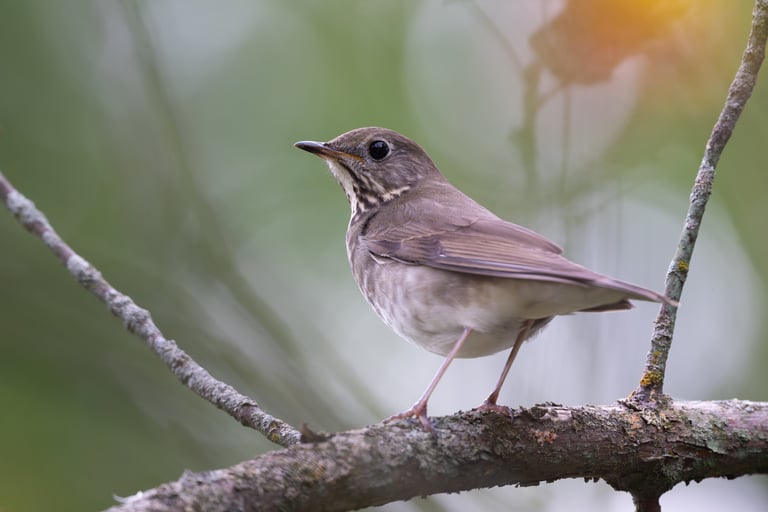
Photographs from via iNaturalist, licensed under CC0 1.0., by Jerzy Tomes via iNaturalist, licensed under CC BY 4.0., by Luca Fornasari via iNaturalist, licensed under CC BY 4.0., by gwynmwilliams via iNaturalist, licensed under CC BY 4.0., by agujaceratops via iNaturalist, licensed under CC BY 4.0., by Eddie via iNaturalist, licensed under CC BY 4.0., by James Heal via iNaturalist, licensed under CC BY 4.0., by Jeff Clark via iNaturalist, licensed under CC BY 4.0., by avocat via iNaturalist, licensed under CC BY 4.0., by Edoardo Nardelli via iNaturalist, licensed under CC BY 4.0., and by chrisdt via iNaturalist, licensed under CC BY 4.0., credited on each photo.
Ecology and classification
Classification
- Phylum
- Chordata
- Class
- Aves
- Order
- Passeriformes
- Family
- Turdidae
- Genus
- Turdus
- Species
- Turdus torquatus
Sources
- GBIF Species names and classification
- iNaturalist Photos
- Wikidata Common names and conservation status
- Wikipedia Summary extract
- AnAge Longevity