Most mushrooms vanish with the first hard frost, but Flammulina velutipes keeps fruiting straight through winter, often pushing new caps up through a dusting of snow. This habit has earned it the common names velvet foot, velvet stem, and velvet shank, and it is the wild ancestor of the cultivated enoki sold in grocery stores.
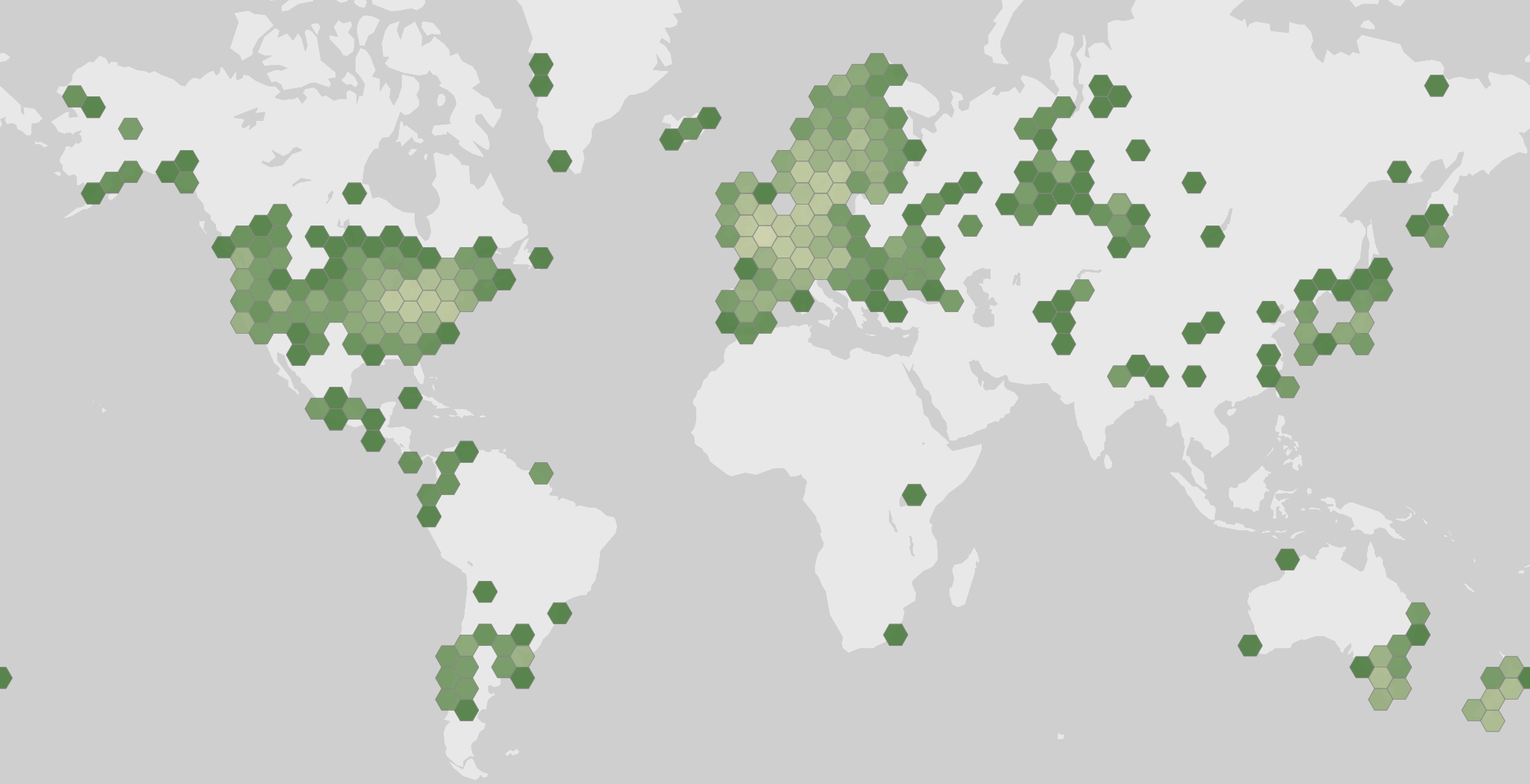
This gilled fungus belongs to the family Physalacriaceae and grows across Europe and North America. The IUCN lists it as Least Concern, reflecting a wide range and no known major threats. Its unusual timing, edible caps, and close link to a commercially important cultivated mushroom make it one of the more approachable fungi for anyone learning to forage in the cold months.
Fruiting Body and Identification
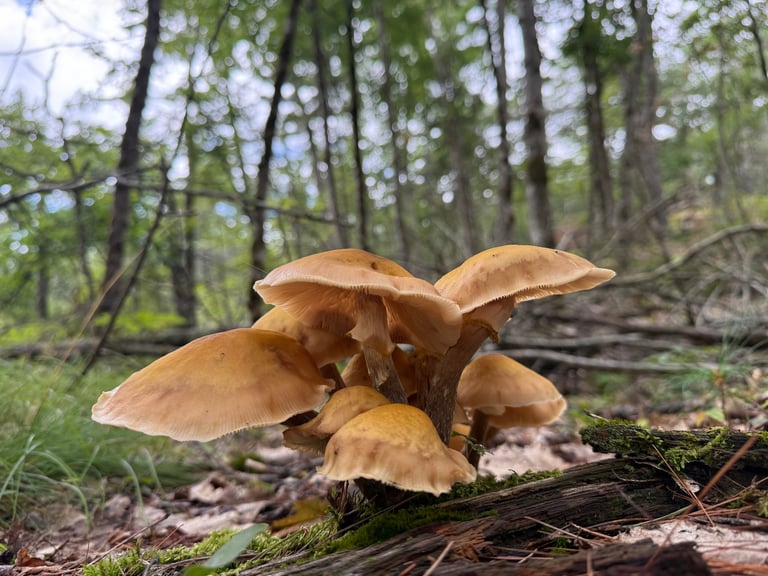
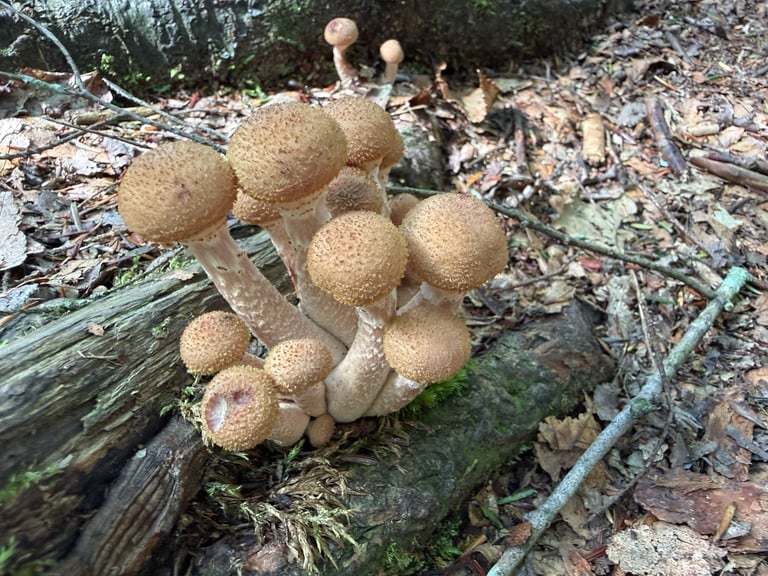
The clearest identifying feature of Flammulina velutipes is its stem: velvety in texture and fading from a pale tone at the top to a noticeably darker, almost blackish-brown shade toward the base. The cap grows up to 10 centimeters across and tall, colored light orange overall but deepening to a richer orange near the center.
Inside, the flesh differs by part: the cap flesh is yellow, while the stem flesh is brown. Both the odor and flavor are described as pleasant, and the spore print — a key identification tool obtained by letting spores fall onto paper — is white.
With age, the cap's color intensifies toward the center and the stem's velvety texture and dark base become more pronounced, helping distinguish mature specimens from young ones. Several other small mushrooms can resemble velvet shank, including Flammulina populicola and Flammulina lupinicola, as well as Marasmiellus dichrous and Xeromphalina tenuipes. Careful attention to stem texture, color gradient, and spore print helps separate these look-alikes, though field identification of small brown-capped mushrooms is notoriously difficult.
Distribution and Habitat
Flammulina velutipes occurs throughout Europe and in North America, fruiting on a distinct winter schedule: October to February in Europe, and extending as late as May in eastern North America. This pattern places it among the few common mushrooms that can be found reliably in cold weather.
The species is saprotrophic, meaning it feeds on dead organic matter rather than living tissue, and it shows a particular preference for dead or dying elm. It is also found on ash, beech, and oak, typically growing in clusters on standing dead wood, fallen trunks, or exposed roots.
Monthly observation records show a clear seasonal pattern, with counts rising sharply from September onward, peaking in January at over 7,500 recorded observations, and then dropping to a low point around June and July. Because these figures come from presence observations rather than systematic population surveys, they should be read as evidence of when people encounter the species, not as a measure of its true abundance. Even so, the pattern lines up closely with the cold-season fruiting behavior described for the species.
Uses and Cultural History
The fleshy caps of Flammulina velutipes are used as a table mushroom: they can be sliced and cooked, ideally after the skin is removed, or dried and ground into a seasoning powder. This straightforward preparation reflects the species' long-standing status as a foraged food in regions where it grows wild.
The wild form is also notable as the ancestor of the enoki mushroom widely cultivated and sold commercially, though the pale, thin-stemmed enoki familiar from supermarkets looks quite different from the orange-capped wild velvet shank found on dead wood in winter.
Fun Facts
- The species was first described in 1782 by English botanist William Curtis, who classified it as Agaricus velutipes; it was moved to its current genus, Flammulina, by mycologist Rolf Singer in 1951.
- In Traditional Chinese Medicine, Flammulina velutipes has reportedly been used for purposes described as detoxification, strengthening the liver, and promoting Qi, or vital energy.
- The wild mushroom's orange, velvety-stemmed appearance is strikingly different from the pale, slender enoki sold in supermarkets, even though both trace back to the same species.
Photos
Photographs from via iNaturalist, licensed under CC0 1.0., by sylbobaggins via iNaturalist, licensed under CC BY 4.0., by Gabriele Vaudano via iNaturalist, licensed under CC BY 4.0., by William Knee-Walden via iNaturalist, licensed under CC BY 4.0., by francis__ via iNaturalist, licensed under CC BY 4.0., by Александр Тихонов via iNaturalist, licensed under CC BY 4.0., and by Michael Berardozzi via iNaturalist, licensed under CC BY 4.0., credited on each photo.
Ecology and classification
Classification
- Phylum
- Basidiomycota
- Class
- Agaricomycetes
- Order
- Agaricales
- Family
- Physalacriaceae
- Genus
- Flammulina
- Species
- Flammulina velutipes
Sources
- GBIF Species names and classification
- iNaturalist Photos
- Wikidata Common names and conservation status
- Wikipedia Summary extract