Fomitopsis pinicola is a decay fungus with an outsized influence on the forests it grows in: by rotting living conifers from within, it acts as a small-scale disturbance agent that reshapes stand structure and drives succession in temperate rainforest ecosystems.
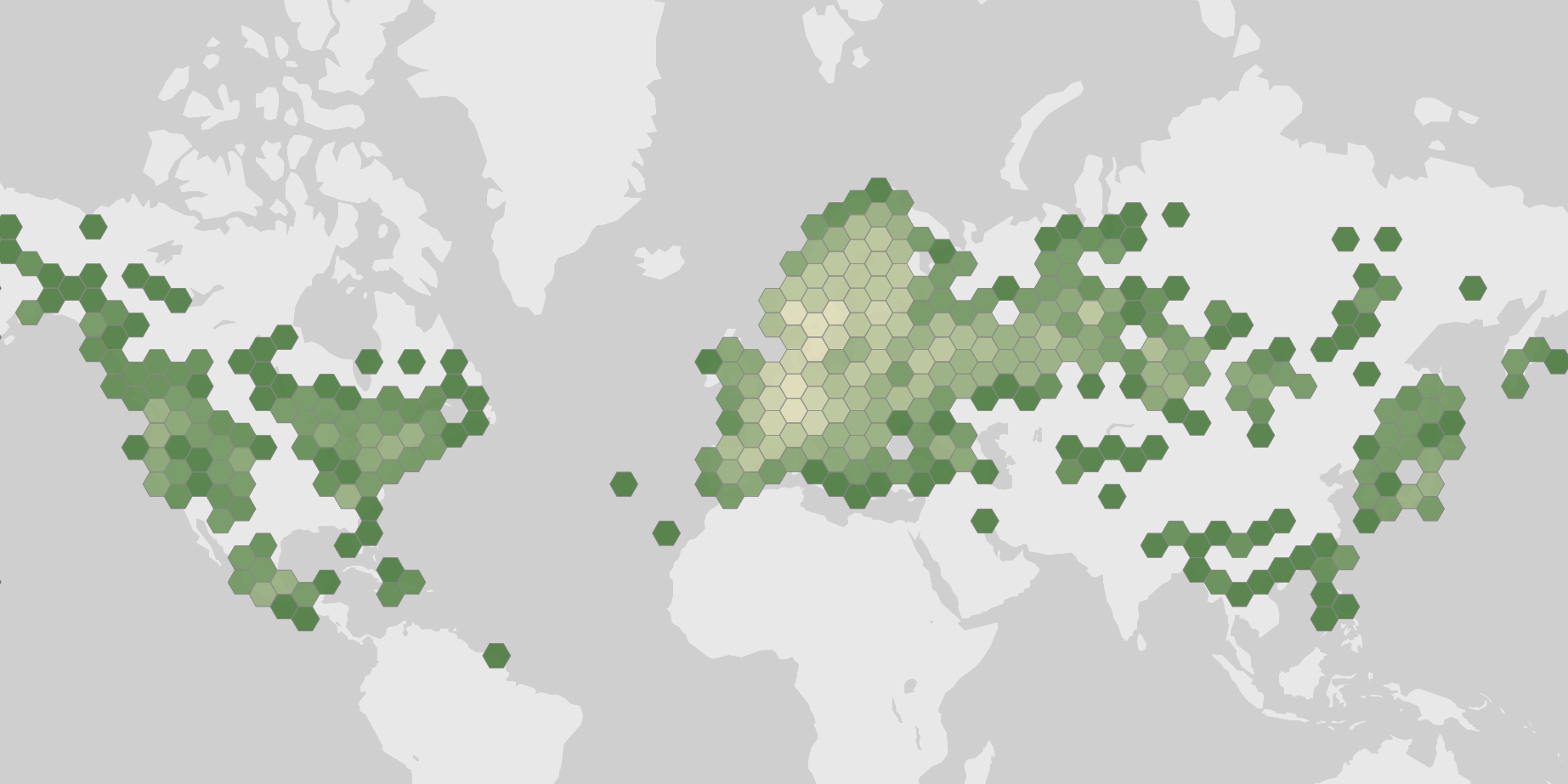
Known by the common name red-belted conk (or red-belted bracket) for the colored band along its cap edge, the species belongs to the family Fomitopsidaceae within the order Polyporales, a Basidiomycota lineage of wood-decaying fungi. It grows throughout temperate Eurasia, favoring coniferous trees and, less often, deciduous ones.
Beyond its striking bracket-shaped fruiting body, the fungus performs essential nutrient cycling in forests and produces brown rot residues that become stable, long-lasting components of forest soil, making it as much an engineer of its ecosystem as an inhabitant of it.
Fruiting Body and Identification
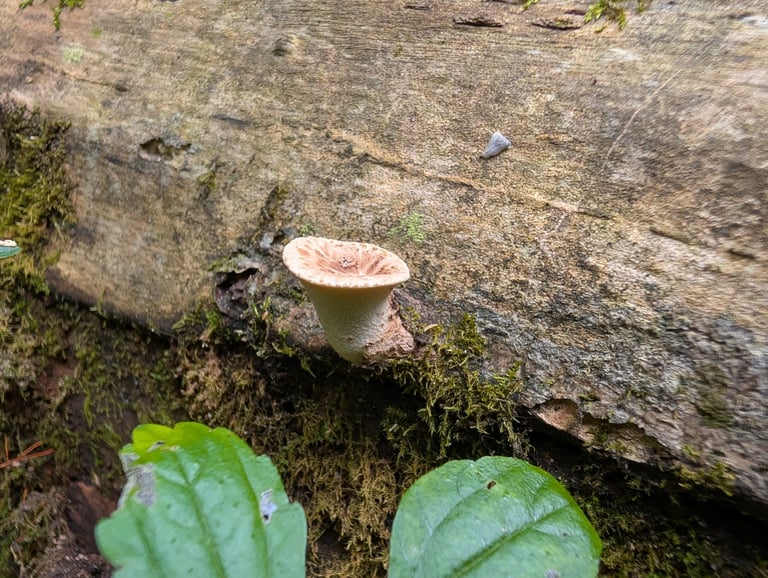
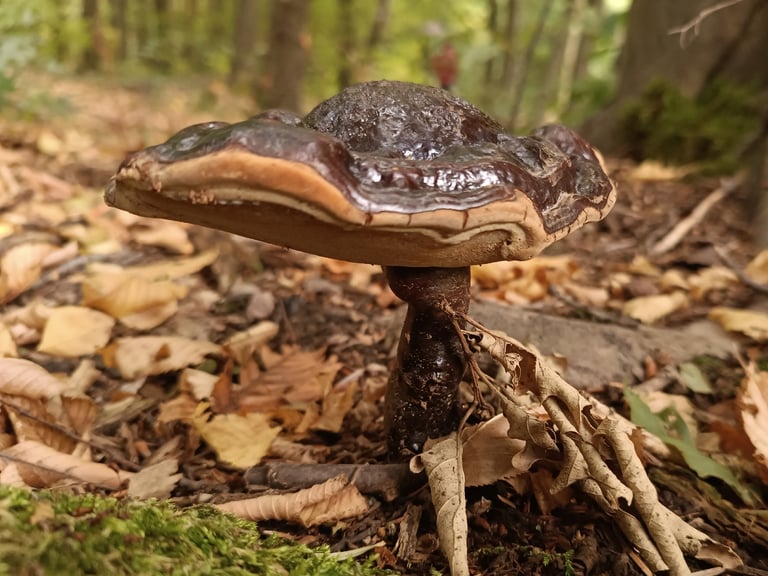
The most reliable way to recognize Fomitopsis pinicola is its hoof-shaped or triangular cap, sometimes shelflike, hard and woody, growing up to 30 centimeters or more across and 15 centimeters thick. Its surface starts smooth and orange-yellow with a white margin, then darkens with age to reddish-brown or brown, often keeping the orange band along the margin that gives the species its common name.
Underneath, the pore surface is pale yellow to leather-brown, with 3 to 4 pores per millimeter lined with basidia that produce pale yellow, smooth spores. As in other polypores, the fruiting body—called a conk—is perennial, adding a new layer of pores to the underside of the old ones each year, so the pores look whitish when young and turn brownish with age.
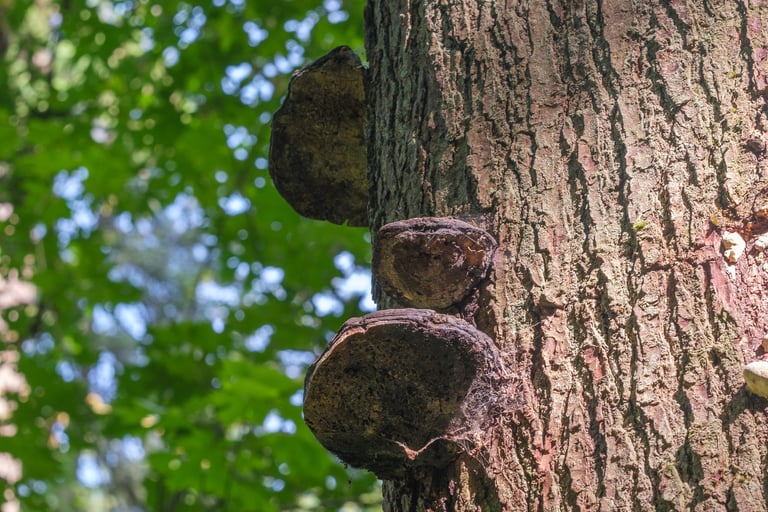
The fungus grows as thick shelves on both living and dead coniferous trees, occasionally on hardwoods, and can also form as a flat layer of tubes on the underside of fallen logs. It causes a brown rot that degrades cellulose while leaving lignin behind as a lighter but stable residue; early decay shows as yellowish-to-brown discoloration, while advanced decay leaves the wood brown, crumbly, and breaking into cubical pieces, making infected timber brittle and prone to breakage in high winds.
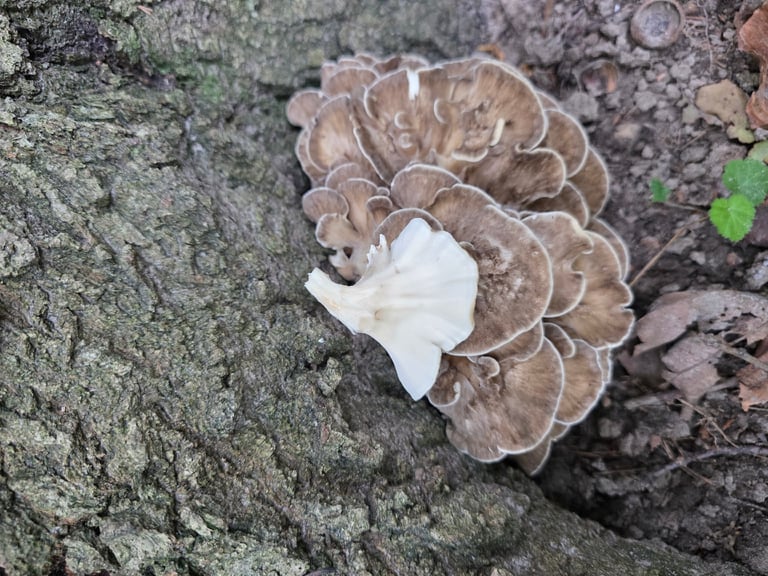
Fomitopsis pinicola can resemble Ganoderma lucidum, Laricifomes officinalis, and Heterobasidion annosum, all of which share a similarly woody, shelf-like growth habit on trees.
Distribution and Habitat
Fomitopsis pinicola occurs across temperate Eurasia and is common on both softwood and hardwood trees. In southeast Alaska, it has been documented on living conifers including Western hemlock, Mountain hemlock, White spruce, Lutz spruce, and Sitka spruce, entering through large wounds, broken tops, and other damaged tissue on live trees before continuing to decay the wood after the tree dies.
In mature Alaskan forests, this stem-decay activity causes substantial annual timber volume loss; roughly one-third of old-growth board-foot volume in southeast Alaska is defective, largely from decay caused by this and related fungi. Young stands without heavy wounding from thinning, wind damage, or animal feeding show comparatively little decay.
By predisposing large old trees to bole breakage and windthrow, the fungus acts as a small-scale disturbance regime in temperate rainforests where fire is rare, opening canopy gaps that shape stand structure, increase biodiversity, and create cavities used by bears, voles, squirrels, and several bird species.
Recorded observations show a strong seasonal pattern, climbing sharply from summer into a peak in September before declining toward winter. This likely reflects when the perennial conks are most visible and actively producing spores rather than any true measure of the fungus's abundance or population size.
Uses and Cultural History
Fomitopsis pinicola is inedible to humans because of its tough, woody texture, though it has practical value as tinder for starting fires. With considerable effort, it can reportedly be processed into a famine food, though this requires a laborious preparation.
In parts of Asia, the basidiocarps of this fungus have been reported to have medicinal uses, and some reports describe significant antioxidant activity in the mushroom.
Fun Facts
- The fungus has been known in European and Asian forest cultures since ancient times, holding modest but persistent cultural significance.
- Its common name element "conk" derives from old European roots referring to the fruiting body's perennial, conical form on trees.
- Unlike close relatives such as Fomes fomentarius and Fomitopsis betulina, which have been used widely across Eurasia, some other bracket fungi—like Haploporus odorus—were used only by specific groups, such as Plains Indians of North America or communities in northern Scandinavia.
- The population long called Fomitopsis pinicola in North America has since been reclassified as a separate species, Fomitopsis mounceae.
Photos
Photographs from via iNaturalist, licensed under CC0 1.0., by Марина Давлетшина via iNaturalist, licensed under CC BY 4.0., by Nicole Kearney via iNaturalist, licensed under CC BY 4.0., by Евгений Бологов via iNaturalist, licensed under CC BY 4.0., by Bobo-X via iNaturalist, licensed under CC BY 4.0., by Ondřej Křivan via iNaturalist, licensed under CC BY 4.0., by Полина Полежанкина via iNaturalist, licensed under CC BY 4.0., by Anne Heckmann via iNaturalist, licensed under CC BY 4.0., and by Виктория Билоус via iNaturalist, licensed under CC BY 4.0., credited on each photo.
Ecology and classification
Habitat
Classification
- Phylum
- Basidiomycota
- Class
- Agaricomycetes
- Order
- Polyporales
- Family
- Fomitopsidaceae
- Genus
- Fomitopsis
- Species
- Fomitopsis pinicola
Sources
- GBIF Species names and classification
- iNaturalist Photos
- Wikidata Common names and conservation status
- Wikipedia Summary extract