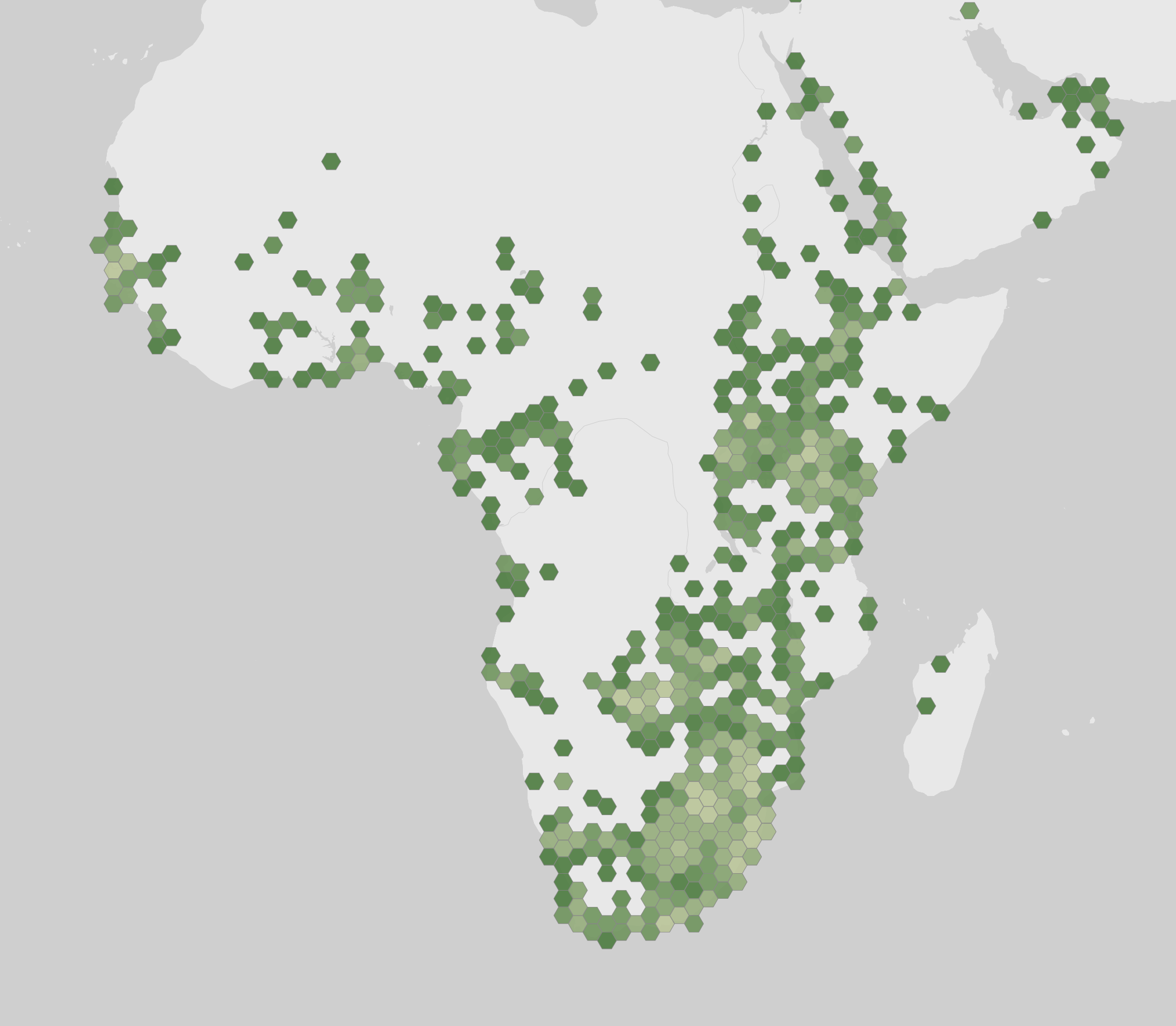
Standing up to 1.52 meters tall with a wingspan that can reach 2.3 meters, the Goliath Heron is the largest living heron in the world, rivaled in the fossil record only by the extinct Bennu Heron. It is a very large wading bird in the heron family, Ardeidae, found chiefly across sub-Saharan Africa, with a much smaller and now declining presence in Southwest and South Asia, where sightings have become rare. The IUCN lists it as Least Concern, thanks to its extensive range and generally stable numbers.
Beyond its sheer bulk, the bird is worth watching for how it hunts. Its patient, high-stakes approach to fishing, waiting motionless for a single large catch rather than settling for easy small prey, sets it apart from most other herons.
Identification and Appearance
The single best clue to identifying a Goliath Heron is its overwhelming size: no other heron in its range comes close. It stands 120 to 152 centimeters tall, spans 185 to 230 centimeters across the wings, and weighs 4 to 5 kilograms, with a tarsus measuring up to 25.5 centimeters and a bill reaching about 24 centimeters from the gape. In flight it looks slow and ponderous, with its legs not held horizontally as in many other herons.
Adults of both sexes look alike, covered in a mix of slate-grey and chestnut plumage. The head, bushy crest, face, and sides of the neck are chestnut, while the chin, throat, and upper breast are white, marked with black streaks across the fore neck and upper breast. The lower breast and belly are buff with black streaking, the back and upper wings are slate-grey, and a chestnut patch shows at the bend of the closed wing. The bill's upper mandible is black, the lores and orbital skin are yellow with a greenish tinge, the eyes are yellow, and the legs and feet are black.
Juveniles resemble adults but appear paler overall. The only bird with broadly similar coloring, the purple heron, is much smaller and shows a strongly striped neck pattern, making confusion unlikely once size is taken into account.
Despite sharing plumage tones with the purple heron, the Goliath Heron's closest living relatives are the great-billed heron and the white-bellied heron of southern Asia. Because all three species are unusually large, they are sometimes grouped informally as the "giant herons."
Distribution and Habitat
The Goliath Heron occurs across large rivers, lakes, estuaries, swamps, and marshes in freshwater and shallow saltwater habitats, generally favoring places with large fish to support its feeding style. It has been recorded at elevations up to 2,100 meters, though it typically stays close to sea level in wetlands, mangroves, brackish lagoons, and river deltas.
The species is highly aquatic, even by heron standards, rarely moving far from water and preferring to fly along waterways rather than cross open land. It uses shallow margins most often but can also be found near deep water where dense aquatic vegetation offers cover, and it will even visit small isolated watering holes. It shows a strong preference for pristine wetlands and tends to avoid areas with regular human disturbance.
Monthly observation data show the species present year-round with counts ranging from roughly 4,500 to nearly 9,000 sightings per month, and a modest peak in September through November. Because these figures reflect presence records rather than actual abundance, they should be read only as a rough seasonal pattern rather than a population count.
Behavior and Lifestyle
Ardea goliath spends most of its day standing motionless on its long legs in shallow water, waiting for prey to approach, and is a nocturnal feeder that shows its strongest activity after dark. It is non-migratory, though it may relocate to better hunting grounds when local conditions decline, giving it a somewhat nomadic pattern of movement rather than fixed seasonal migration.
The species is usually solitary outside the breeding season, occasionally seen in pairs, and population densities are generally too low to cause serious competition between individuals. It defends territory mainly against predators rather than against other herons, since crowding is rarely an issue.
When it does take flight, typically to escape a perceived threat, it moves with slow, deliberate wingbeats rather than quick, agile flapping. The bird is notably skittish and will abandon a spot readily if anything it judges dangerous draws near, despite its otherwise ponderous, deliberate manner.
Communication
Goliath Herons rely mainly on loud squawks, which vary by context: a deep "kowoork" under normal circumstances, a sharper, higher "arrk" in response to disturbance, and a "kroo" or "huh-huh" given while stretching. These calls can carry up to 2 kilometers, letting birds signal across open wetlands.
At nest sites, mated pairs are reported to perform an organ-like duet, thought to reinforce the bond between partners, though this behavior has not been fully confirmed by researchers.
Vision is the bird's dominant sense, used both for detecting prey and for picking up visual signals from other herons, while its sense of smell is poorly developed and plays little role in its daily life.
Hunting and Diet
Ardea goliath hunts using what researchers call a "jackpot" strategy: rather than snapping up every small fish that passes, it deliberately passes over easy, minor opportunities in a gamble to land a single large prize without disturbing the water. A 1980 study on its feeding ecology found that the average prey item measured around 30 centimeters, with catches under 15 centimeters rare.
To improve its odds, the heron often lands directly on floating mats of vegetation rather than open shoreline, since these mats attract fish while dampening the ripples and noise of the hunter's own movements, making it easier to detect a large fish swimming nearby before striking.
While fish are clearly preferred, the species feeds opportunistically on a range of animal prey, including amphibians, reptiles, mollusks, aquatic crustaceans, and even carrion, when the chance arises.
Nesting and Breeding
Goliath Herons form monogamous pairs that often reunite at the same nest site year after year, which may explain why elaborate courtship displays have rarely been documented. During the breeding season, plumage brightens and pairs perform a distinctive duet at the nest.
Breeding timing varies by location, most commonly starting with the rainy season, though in some regions breeding occurs year-round, and in places like South Africa it may happen only once every two years or less. Nests are built from sticks and twigs, at least a meter in diameter, and are usually placed low, below 3 meters, in vegetation on islands, reeds, bushes, or even rocks and tree stumps; pairs will abandon a site if the island becomes connected to the mainland. Nesting can be solitary or in mixed colonies alongside cormorants, darters, ibises, and gulls.
A clutch holds 2 to 5 pale blue eggs, averaging 72 by 54 millimeters and about 108 grams, with 3 or 4 being typical. Incubation lasts 24 to 30 days, but often only around a quarter of eggs successfully hatch due to environmental conditions or predation. Chicks hatch altricial, downy and blind, and are fed by regurgitation twice daily.
Young leave the nest at around five weeks old but remain dependent on their parents for another 40 to 80 days. Sibling rivalry, including bill-jabbing and defensive posturing, is common, and typically only one or two chicks from each clutch survive to independence; around 62 percent of fledglings that do leave the nest go on to reach adulthood.
Population and Ecological Role
The Goliath Heron functions as a dominant predator of large fish across its range, occupying a position with few natural predators of its own once fully grown; only the white-tailed eagle and African fish eagle are noted as occasional threats at breeding colonies. Its size and formidable bill leave adults largely free from regular predation.
Like most birds, it carries a typical burden of parasites and pathogens, including bird lice, flatworms, and various disease-causing viruses and bacteria, which shape its role within the wider wetland food web without threatening the species at a population level.
Conservation and Threats
The IUCN classifies the Goliath Heron as Least Concern, reflecting its vast geographic range and a population that remains large and relatively stable overall. This assessment does not mean the species is free of risk everywhere it occurs.
In parts of the Middle East and South Asia, populations are already small and patchy, and habitat destruction or hunting could push these fragmented groups toward greater vulnerability even while the global picture stays secure. Preserving nesting islands is identified as especially important in these areas, since colonies have been known to abandon sites once an island becomes connected to the mainland and loses its protective isolation.
Conservation status
- LC
- NT
- VU
- EN
- CR
Least Concern
Cultural Significance
The genus name Ardea traces back to Roman mythology and the ancient city of Ardea in Lazio, once the capital of the Rutuli before it was destroyed by Aeneas. This same mythological thread connects to the extinct Bennu Heron, whose scientific name draws directly on the association, though whether real sightings or cultural exchange along ancient trade routes shaped the myth remains uncertain.
Today the Goliath Heron holds economic value through birdwatching tourism, drawing visitors to the wetlands where it occurs thanks to its imposing size and striking appearance. In India, it was once considered a delicacy and prized as a royal gamebird, said to taste similar to pheasant, but hunting it there has become effectively nonexistent as its range and habitat in the region have shrunk.
Fun Facts
- The genus name Ardea comes from the ancient Roman city of Ardea, destroyed by Aeneas according to legend, a name also echoed in the extinct Bennu Heron.
- The extinct Bennu Heron, a relative known only from fossils, may have exceeded even the Goliath Heron in size.
- Its closest living relatives are the great-billed heron and white-bellied heron of southern Asia; together the three are sometimes called the "giant herons."
- Its call, a deep "kowoork," can carry up to 2 kilometers across open wetlands.
- Average prey size runs around 30 centimeters, since the heron often skips smaller fish while waiting for a bigger catch.
- In India, it was once hunted as a royal gamebird said to taste like pheasant, a practice now essentially abandoned.
Ecology
Habitat
- Wetland
- Marine
- Coastal
- Freshwater
Behavior
- Nocturnal
- Predator
- Solitary
- Territorial
Diet
- Piscivore
Photos
SourcesGBIFiNaturalistWikidataWikipediaEncyclopedia of LifeAnimal Diversity WebAnAge