Grey herons can live up to 37.5 years, a long life for a bird that spends much of its day standing still in shallow water. The Ardea cinerea is a long-legged wading bird of the heron family, Ardeidae, found throughout Europe, Asia and most of Africa.
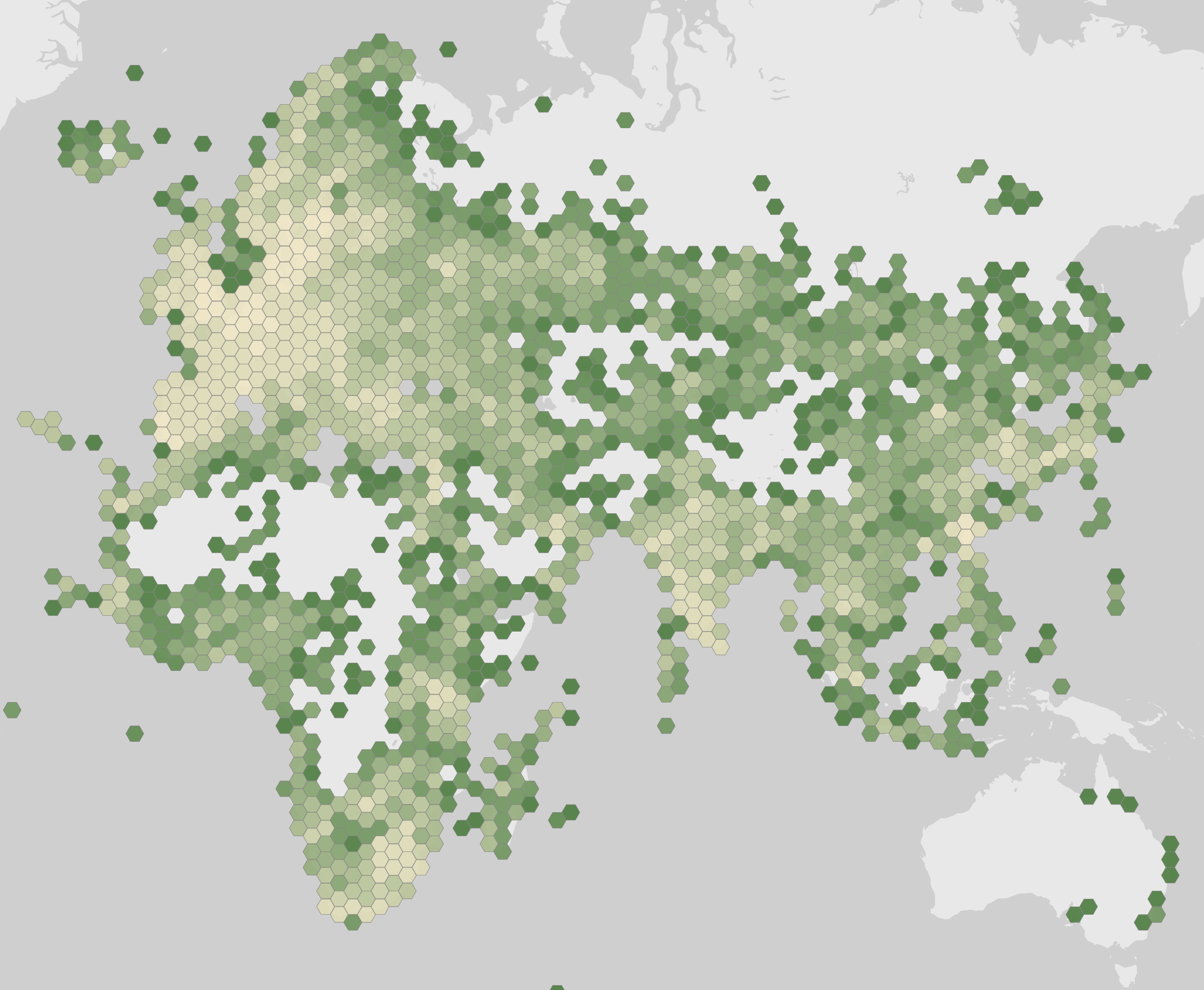
It is resident across much of its range, but birds from the more northern parts migrate southwards in autumn. It is most often seen around lakes, rivers, ponds, marshes and sea coasts, where it hunts in shallow water. Its wide range covers about 46,400,000 square kilometers.
The grey heron is rated Least Concern by the IUCN, and it is one of the most familiar large waders in the Old World.
Identification and Appearance
The most useful field mark is the black stripe over the eye, which runs back into a slender, dangling crest. Adults also have a white head and neck with bluish-black streaks on the front of the neck.
The grey heron is a large bird, standing up to 100 cm tall and measuring 84 to 102 cm long, with a wingspan of 155 to 195 cm. Adults weigh about 1.44 kg on average, and the range runs from 1.02 to 2.08 kg.
The plumage is ashy-grey above and greyish-white below, with some black on the flanks. The long, straight, powerful bill is pinkish-yellow and brighter in breeding adults, and the iris is yellow. The legs are brown and very long.
Immature birds are duller. The black head stripe is grey, the white face is paler, and the crest is small and dark grey.
Distribution and Habitat
The grey heron has an extensive range across most of the Palearctic. Northern populations reach 70° N in Norway and 66° N in Sweden, and elsewhere in Europe and Asia the northern limit is around 60° N, as far east as the Ural Mountains.
To the south, it reaches northern Spain, France, central Italy, the Balkans, the Caucasus, Iraq, Iran, India and Myanmar. It also lives across Africa south of the Sahara, in the Canary Islands, and on many Mediterranean islands. Eastern populations in Siberia, Mongolia, China and Japan belong to a different subspecies.
The grey heron needs shallow water to hunt, such as lakes, rivers, ponds, marshes, estuaries, coastal lagoons and the seashore. It also forages in pasture away from water, and it lives in mountain tarns and lowland areas alike, though it is most common in the lowlands.
Breeding colonies are usually close to feeding areas, though some lie up to 8 km away. Birds may forage as far as 20 km from the nest.
Behavior and Lifestyle
Grey herons are generally solitary birds, but they gather in colonies during the breeding season. They are active by day and at dusk, and at dusk they move into trees to roost, which helps them escape predators when light is poor. They roost on the ground during the day.
In flight, the neck is held in an S-shape, which separates herons from storks and cranes. Grey herons fly with slow wingbeats and sometimes glide for short distances. In spring they soar high above the heronry and chase one another.
Hunting depends on waiting until prey comes within striking range. Tides shape their feeding; when tides are especially high, grey herons search for new feeding locations. Sleep lengthens in cold weather.
Grey herons have adapted to cities. In Amsterdam they visit street markets and snack bars, and some take food from people or from recreational fishermen. Garden ponds stocked with ornamental fish also attract them.
Siblicide can occur in the nest when food is scarce, and the smallest or weakest chicks may be killed.
Communication
Grey herons communicate mostly with their necks and crests. When a threat or nuisance approaches, a bird thrusts its head in a stabbing motion and raises its crest.
During the breeding season, the male gives a loud croaking call that sounds like "fraaank" to attract a female. Both sexes use greeting calls after a pair bond forms, and males give a loud, harsh "schaah" to drive rivals from the nest. A soft "gogogo" signals anxiety, such as when a predator is near.
The chicks make loud chattering or ticking sounds. Grey herons rely mainly on visual, tactile and acoustic signals, and they also use chemical cues.
Recordings
flight call, nocturnal flight call · France · Lionel Triboulin · Public domain
nocturnal flight call · France · Philippe Grange · Public domain
nocturnal flight call · France · Philippe Grange · Public domain
Hunting and Diet
Grey herons are carnivores, and they feed mainly on fish. Their diet also includes insects, crustaceans, frogs, small mammals and occasionally tiny birds.
The herons hunt by standing still beside or in the water and waiting for prey to approach. In deeper water, they stand on one leg and wait, sometimes for long periods. They also stalk prey through the shallows and move on land to find food.
The bird grabs prey with its bill and usually swallows it whole in one gulp. Rodents, frogs and newts are among the main prey groups, and fish make up the bulk of the diet.
Grey herons sometimes attempt to catch larger birds, including white-throated rails on the Aldabra Islands. Injuries have been noted after these attempts.
Nesting and Breeding
Breeding begins as early as February and continues through May or early June. Males choose nest sites, most often in the top branches of tall trees, and call from them to attract females. Both birds must consent before they pair.
Courtship includes neck stretching, bowing and bill snapping, sometimes repeated 20 to 40 times. Once paired, the birds preen each other. The male may offer a stick, which the female builds into the nest.
The nest is a large platform of sticks and grasses, and it is reused year after year, growing larger each season. Females usually lay three to five eggs at two-day intervals. Eggs are greenish-blue, and both parents incubate them for about 25 days.
The chicks fledge at about 50 days, but they stay with their parents for 9 to 10 weeks. Males reach breeding age at about one year. Only about a third of young birds survive into their second year.
Population and Ecological Role
The world population is estimated at between 790,000 and 3,700,000 adults, and the overall population appears to be stable.
Grey herons help limit fish populations in estuaries, rivers and other waters. Their nests also shelter rodents and insects. Large colonies change soil chemistry, and one colony in Tatarstan altered local soil nutrients through droppings and food remains.
Adults have few predators, though white-tailed eagles and golden eagles take them. Eggs and chicks are more vulnerable to crows and kites.
Conservation and Threats
The grey heron is listed as Least Concern by the IUCN. It is widely distributed and relatively abundant, and its overall population appears to be stable.
The main future threats are shooting and poisoning by fish farmers, because herons take fish from ponds. Pollution may also cause calcium problems, thinner eggshells, reproductive problems and weaker immune systems.
In Estonia, a colony at Vandu village was protected in 1990, but its trees were cut down in 2001. The national heron protection project "The Heron Seeker" then mapped all nesting colonies and feeding grounds from 2007 to 2014.
Cultural Significance
Grey herons have no known economic benefits to humans. Their role in human life is limited to the wetlands they share with people.
Photos
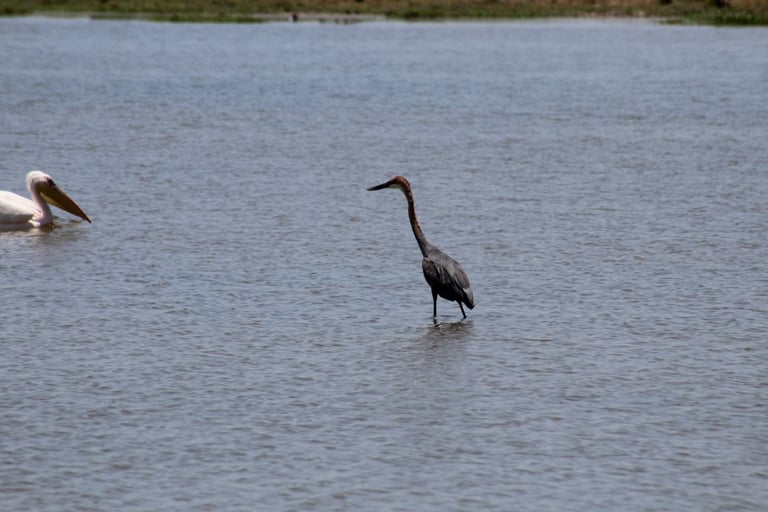
Photographs from via iNaturalist, licensed under CC0 1.0., by Liem Malarney via iNaturalist, licensed under CC BY 4.0., by Pedro Eça via iNaturalist, licensed under CC BY 4.0., by Ross McCallum via iNaturalist, licensed under CC BY 4.0., and by Guillaume Petit via iNaturalist, licensed under CC BY 4.0., credited on each photo.
Ecology and classification
Classification
- Phylum
- Chordata
- Class
- Aves
- Order
- Pelecaniformes
- Family
- Ardeidae
- Genus
- Ardea
- Species
- Ardea cinerea
Sources
- GBIF Species names and classification
- iNaturalist Photos
- Wikidata Common names and conservation status
- Wikipedia Summary extract
- Xeno-canto Audio recordings
- Animal Diversity Web Animal habitat, behavior and diet
- AnAge Longevity
- AVONET Bird mass, habitat, migration, diet and range size
- GloBI What it eats, what eats it, parasites and pollinators
- trophiCH
- Wardeh et al. 2015 (EID2)
- HWML Parasite Collection
- TETRA-EU