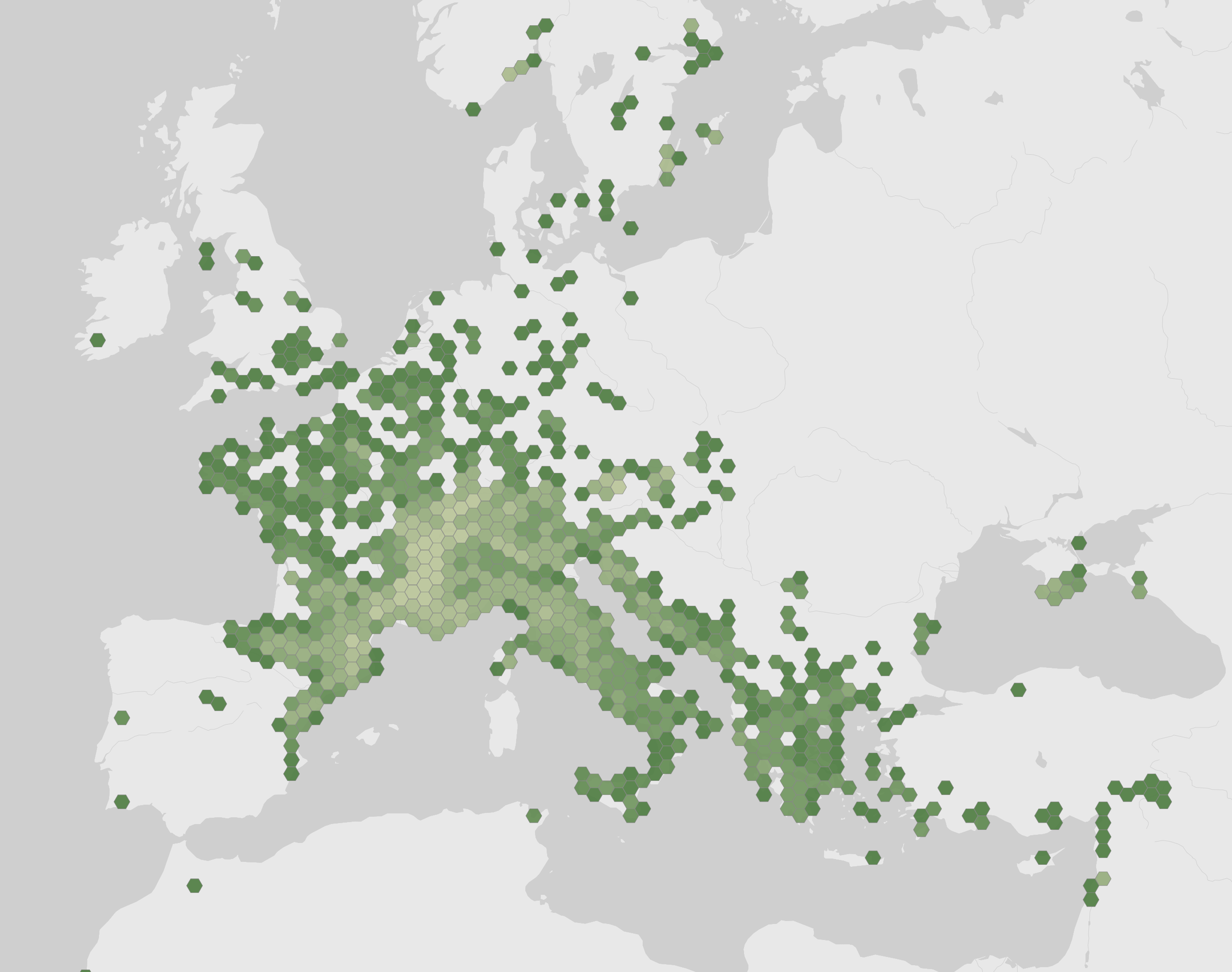
Scorpion senna, Hippocrepis emerus, is a perennial plant of the pea family, Fabaceae. It grows in the Mediterranean region and across central and southern Europe, reaching northern Europe and Asia Minor.
The species is native to northeastern Spain and many central Mediterranean countries, and it has also been introduced to California, Denmark and Great Britain. Its wide spread across varied warm regions makes it a useful example of a Mediterranean shrub that grows well beyond its core area.
Identification and Appearance
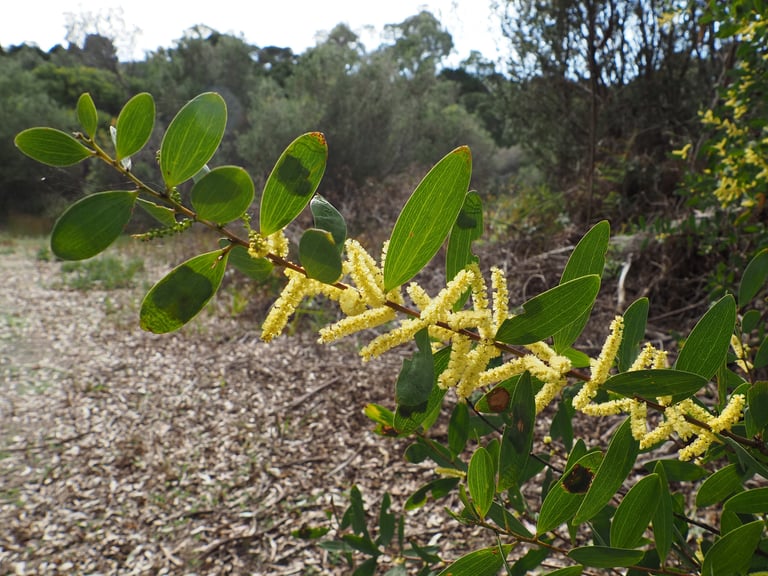
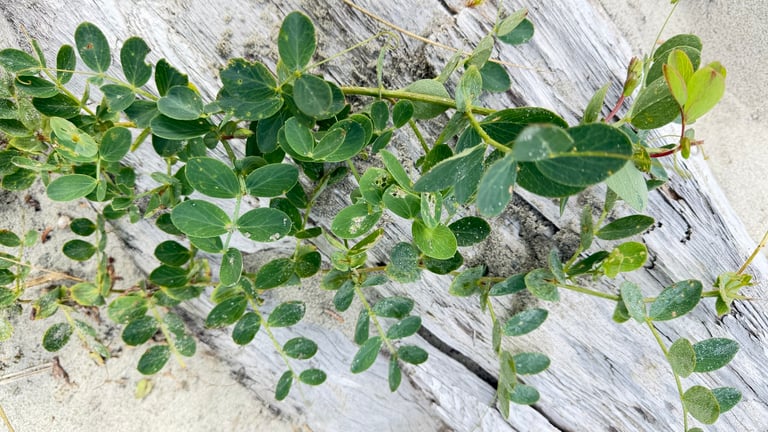
The most useful field mark is the leaf: each leaf is imparipinnate, with five to nine glossy, obovate leaflets that are widest above the middle. The plant forms a woody, branching shrub, and its green branches carry these leaves.
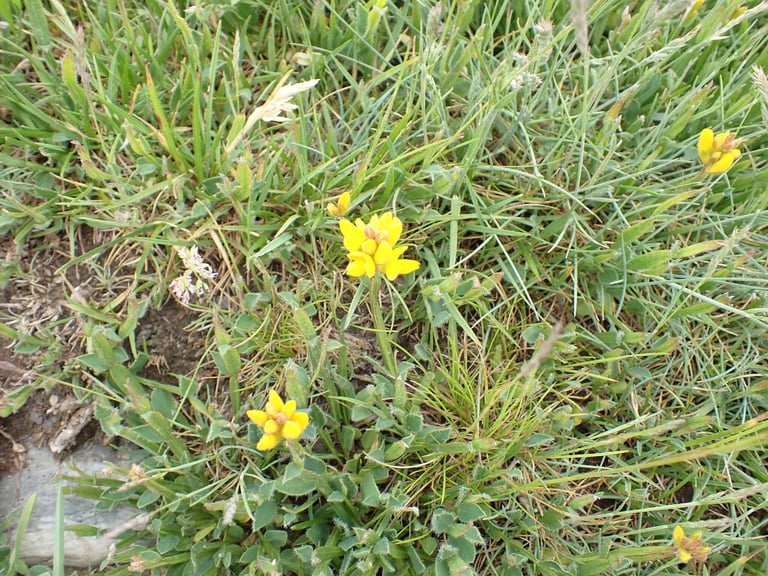
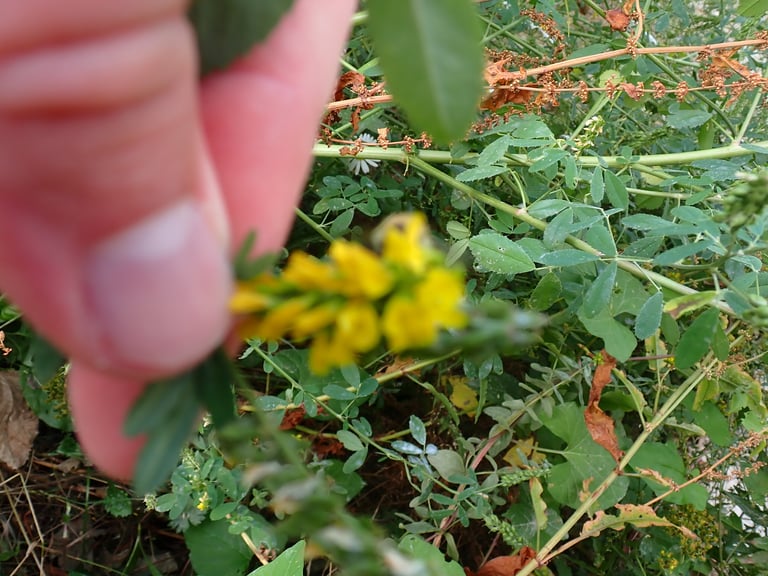
The pale yellow flowers grow in groups of one to five and measure 14 to 20 millimeters long. Each petal has a long narrow base, called the nail, and a broader plate. The nails are two to three times longer than the calyx, which helps separate the flowers from those of similar legumes.
The mature plant stands 50 to 150 centimeters tall and can reach 200 centimeters. Its legumes, or seed pods, are oblong-cylindrical and 5 to 11 centimeters long, with three to twelve segments.
Distribution and Habitat
Scorpion senna grows in northeastern Spain and across central Mediterranean countries, extending north to Norway and Sweden and east to Asia Minor, Cyprus, Lebanon-Syria and the North Caucasus. It also occurs in Tunisia and Libya in North Africa.
The shrub favors wooded and bushy areas, where it grows on sunny, warm and dry slopes and around forest edges. It can be found from sea level up to 1,850 meters, or 6,070 feet.
Outside its native range, the species has been introduced to California, Denmark, Great Britain and Transcaucasus.
Growth and Form
Scorpion senna is a shrub with a lignified stem, so its woody framework persists from year to year. Its green branches carry the leaves and flowers, and the plant is perennial, returning season after season.
Because it grows on sunny slopes and forest edges, its shape is shaped by light, and it forms a bushy, spreading canopy rather than a single trunk.
Ecology and Relationships
The flowers of scorpion senna are visited mainly by bees. Solitary mining bees of the genus Andrena are among the most frequent visitors, along with Anthidium loti, Anthophora aestivalis, and bumblebees such as Bombus argillaceus.
The leaves and seed pods are eaten by birds and insects. Passerine birds, including finches and buntings such as Carduelis citrinella and Chloris chloris, feed on the plant, and caterpillars of moths (Lepidoptera) are also among its main consumers. Pigeons, grouse-like birds and waterfowl take it less often.
The seeds are attacked by seed beetles. Bruchidius pusillus is a main parasite, and Bruchidius seminarius attacks it less commonly.
Photos
Photographs from via iNaturalist, licensed under CC0 1.0., by Milan Chytrý via iNaturalist, licensed under CC BY 4.0., by Claude Kolwelter via iNaturalist, licensed under CC BY 4.0., by Daniel Cahen via iNaturalist, licensed under CC BY 4.0., by Thierry Helminger via iNaturalist, licensed under CC BY 4.0., by Martin Scheidleder via iNaturalist, licensed under CC BY 4.0., by Codrin Bucur via iNaturalist, licensed under CC BY 4.0., by mycoroco via iNaturalist, licensed under CC BY 4.0., by Matteo Martini via iNaturalist, licensed under CC BY 4.0., and by Bernd De Bosscher via iNaturalist, licensed under CC BY 4.0., credited on each photo.
Ecology and classification
Classification
- Phylum
- Tracheophyta
- Class
- Magnoliopsida
- Order
- Fabales
- Family
- Fabaceae
- Genus
- Hippocrepis
- Species
- Hippocrepis emerus
Sources
- GBIF Species names and classification
- iNaturalist Photos
- Wikidata Common names and conservation status
- Wikipedia Summary extract
- Plants of the World Online Native range, life form and climate (WCVP)
- GloBI What it eats, what eats it, parasites and pollinators
- trophiCH
- Wardeh et al. 2015 (EID2)