Few mushrooms double as predators, but the leaflike oyster does exactly that. Like most members of its family, the Pleurotaceae, it traps and kills microscopic nematodes in its tissue, using them as an extra source of nutrition alongside the wood it decomposes.
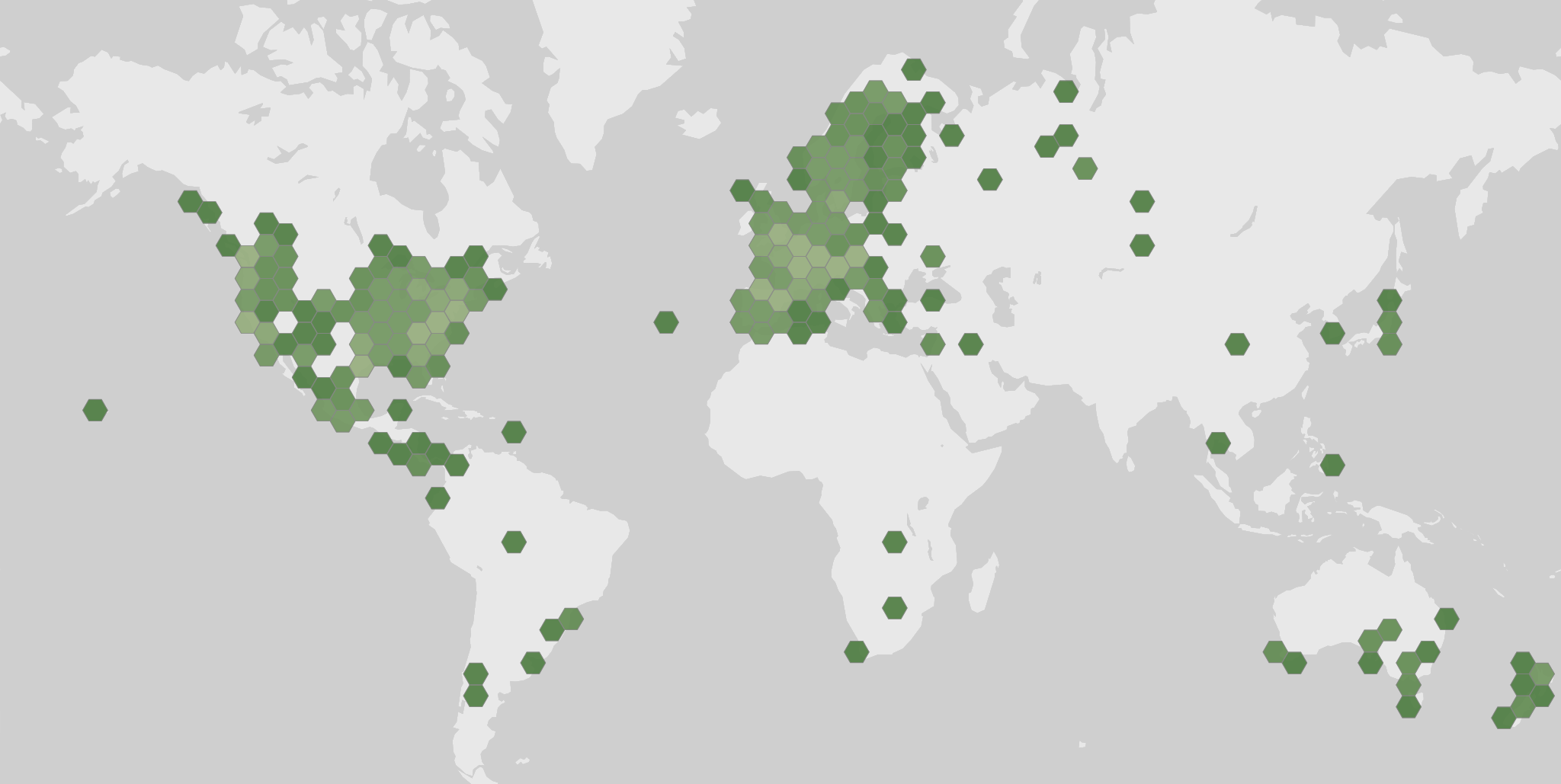
Hohenbuehelia petaloides, also called the leaflike oyster or shoehorn oyster mushroom, is an agaric fungus in the order Agaricales. Its fruit bodies form pale to brown, funnel-shaped caps with decurrent gills, and the species grows directly on decaying wood. It has a cosmopolitan distribution, having been recorded in North America, Venezuela, Europe, Japan, and New Zealand.
Beyond its unusual worm-trapping habit, the species is notable for its wide global range and its place as a wood-decaying relative of the true oyster mushrooms, making it a useful example of how varied the ecological strategies within a single fungal family can be.
Fruiting Body and Identification
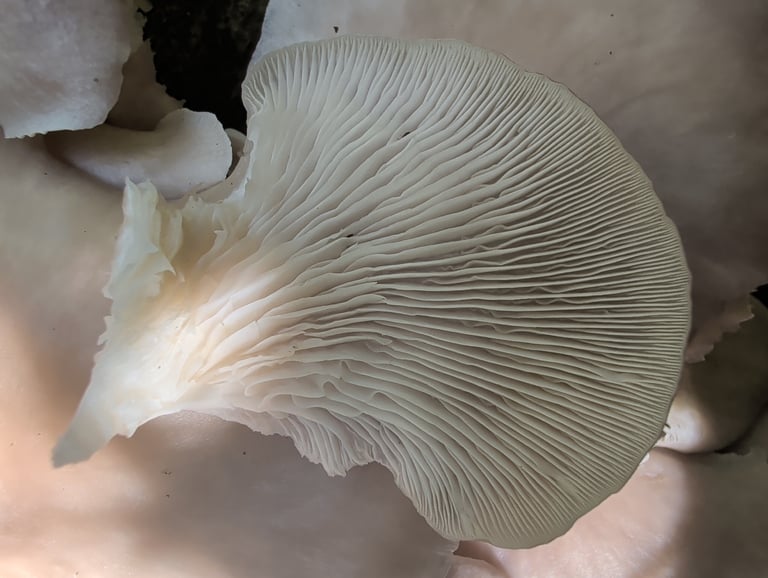
The most reliable identifying feature of Hohenbuehelia petaloides is its fan- to funnel-shaped cap combined with a tough, rubbery texture unusual for a gilled mushroom. The cap grows up to 10 centimeters (4 inches) wide, with a surface that is smooth or microscopically hairy. Color ranges from pale or whitish, often in young specimens, to brown as the fruit body matures.
The gills are decurrent, running down onto the stem area, and are typically crowded and narrow. A true stem is often absent altogether; when present, it is short and attached laterally rather than centrally, giving the fruit body its shoehorn-like profile. Beneath the cap's cuticle lies a gelatinous layer that accounts for the mushroom's tough or rubbery feel, distinguishing it by touch from many softer-fleshed agarics.
The taste and odor are mild to mealy, without strong distinguishing notes. Outside its own genus, Hohenbuehelia petaloides can resemble members of the genus Crepidotus, another group of small, laterally attached, wood-inhabiting mushrooms.
Distribution and Habitat
Hohenbuehelia petaloides has a cosmopolitan distribution, with records spanning North America, Venezuela, Europe, Japan, and New Zealand. It is saprobic, feeding on decaying wood, and is typically found growing alone or in small clustered groups on woody debris or the occasional stump.
Monthly observation data show counts rising sharply through the year, from just 43 in March to a peak of 677 in October, before falling off to 179 by December. This pattern suggests the species is most frequently observed in late summer and autumn, though these figures reflect presence records rather than actual abundance or a complete picture of its range.
As a nematophagous fungus, it shares this ecological role with other members of the Pleurotaceae, trapping nematodes near the same woody substrate it decomposes.
Uses and Cultural History
The leaflike oyster is considered edible, though its tough, rubbery texture makes it far from a prized table mushroom. Foragers who have tried it note the flesh does not soften appealingly even when cooked, which limits its culinary appeal compared to its more tender relatives in the oyster mushroom group.
Fun Facts
- The genus name honors Ludwig Samuel Joseph David Alexander von Hohenbühel-Heufler (1817-1885), an Austrian statesman and botanist-mycologist.
- The species carries two common names in English, the "leaflike oyster" and the "shoehorn oyster mushroom," both describing its flattened, laterally attached shape.
- Despite its cosmopolitan range across continents as distant as North America, Japan, and New Zealand, it is described as reputedly edible but not a choice mushroom.
- Outside its own genus, it can be confused with species of Crepidotus, another group of small, wood-loving mushrooms with a similar growth form.
Ecology
Behavior
- Predator
Habitat
- Forest