Hydra vulgaris, the freshwater polyp, is a small hydroid that lives in fresh water. Adults measure 10 to 30 millimeters long and are about 1 millimeter wide.
It belongs to the phylum Cnidaria and the class Hydrozoa. Within that class it sits in the family Hydridae and the order Anthoathecata.
This species can reproduce in three different ways, which makes its life cycle worth a closer look.
Identification and Appearance
The most useful field mark is the ring of four to twelve tentacles that protrude from just outside the mouth. Adults are small, about 10 to 30 millimeters long, and roughly 1 millimeter wide.
The hydra feeds by extending its tentacles and waiting for food to touch them. It then brings the food to its mouth, ingests it and digests it. Anything that cannot be digested is egested through the mouth.
At its base, the hydra has a disk-shaped "foot" pad that it uses to cling to objects.
The hydra can move in several ways. It can release its grip and be carried away by the current. It can also bend over, grab a surface with its tentacles, release its foot and flip over itself.
Distribution and Habitat
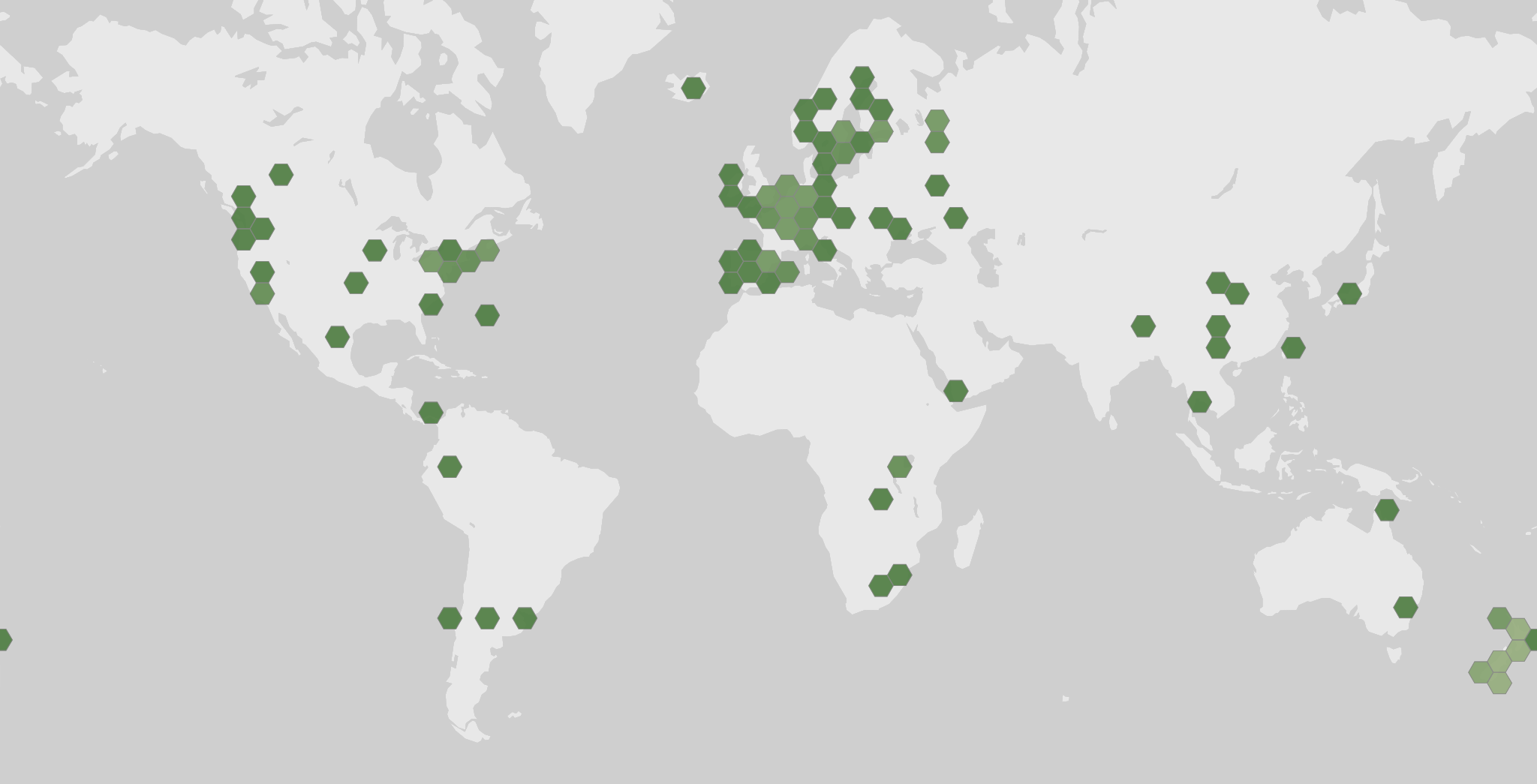
Hydra vulgaris lives in fresh water. It is a freshwater species, and its body plan suits attachment to submerged surfaces.
It holds on to base objects with its foot pad, which lets it stay in one spot in flowing or still water.
Sightings of the species are most frequent in March and tend to be fewer in the middle of the year.
Reproduction and Life Cycle
Hydra vulgaris reproduces in three ways: sexually, by budding, and through regeneration. The third method works more as a survival mechanism than as ordinary reproduction.
In sexual reproduction, simple testes, ovaries or both develop on the body of an individual. Sperm released by the testes enters an egg within the ovary. The fertilized egg forms a chitinous shell and waits for favorable conditions before the young hydra emerges.
Budding happens when conditions are favorable, mainly when the water temperature is suitable and there is enough food. A miniature adult grows out of the parent's body, and once it is fully developed it separates and continues the life cycle. Hydras use budding more often than the other methods because it is easier and produces more hydras.
When a hydra is cut into segments, each segment that is large enough grows into an individual hydra sized to match the segment. This also happens in other animals, such as the starfish.
Photos
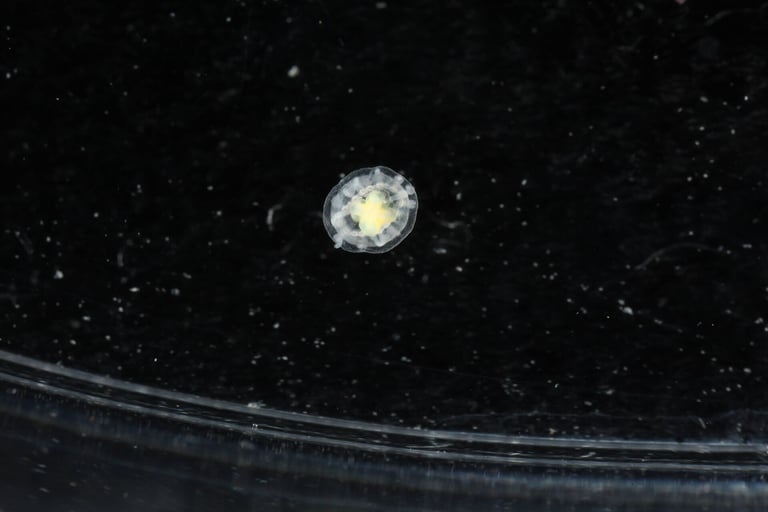
Photographs from via iNaturalist, licensed under CC0 1.0., by Thomas Gyselinck via iNaturalist, licensed under CC BY 4.0., by Don Bosan-Bruno via iNaturalist, licensed under CC BY 4.0., by carnifex via iNaturalist, licensed under CC BY 4.0., by Catharine Johnston via Wikimedia Commons, licensed under Public Domain., by Samantha Makrocka via Wikimedia Commons, licensed under CC BY 4.0., by Kamil Kulawik via Wikimedia Commons, licensed under CC BY 4.0., and by Corvana via Wikimedia Commons, licensed under CC BY-SA 4.0., credited on each photo.
Ecology and classification
Habitat
Classification
- Phylum
- Cnidaria
- Class
- Hydrozoa
- Order
- Anthoathecata
- Family
- Hydridae
- Genus
- Hydra
- Species
- Hydra vulgaris
Sources
- GBIF Species names and classification
- iNaturalist Photos
- Wikidata Common names and conservation status
- Wikipedia Summary extract
- Wikimedia Commons Photos