Sharp-flowered rush gets its name from the pointed, sharp-looking flowers that appear between July and September, setting it apart at a glance from many other wetland grasses.
Juncus acutiflorus is a rush in the family Juncaceae, a grassy flowering plant found in wet habitats across much of Europe and beyond. It grows as a perennial with a distinctive jointed structure to its leaves.
Its combination of jointed foliage and warm-toned flower clusters make it a useful plant for naturalists learning to distinguish rushes from true grasses and sedges.
Identification and Appearance
The single best field mark is the jointed feel of the leaves: running a finger along the smooth, hollow, circular leaf reveals transverse septa that create a distinct jointed sensation, much like in the related jointed rush.
The plant grows straight and upright to about 3 feet (roughly 1 meter) tall. Leaves are round or elliptical in cross-section, and darker horizontal lines are visible against the light at intervals, marking the internal septa.
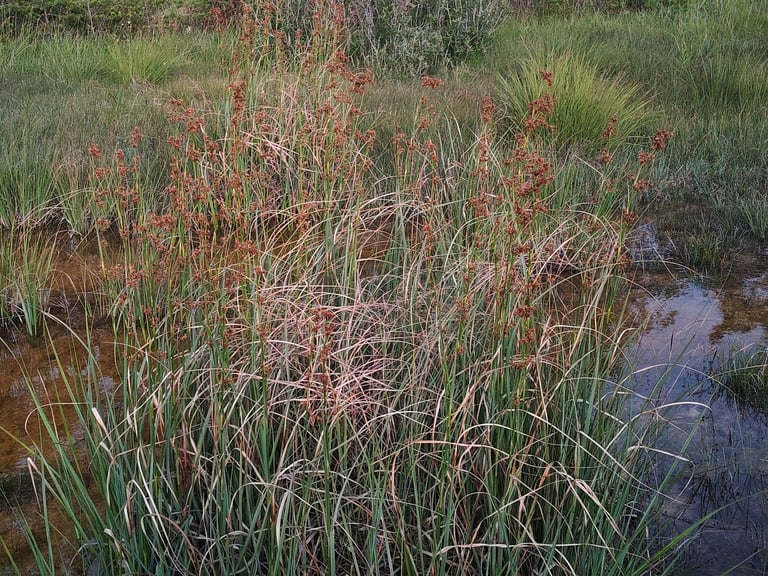
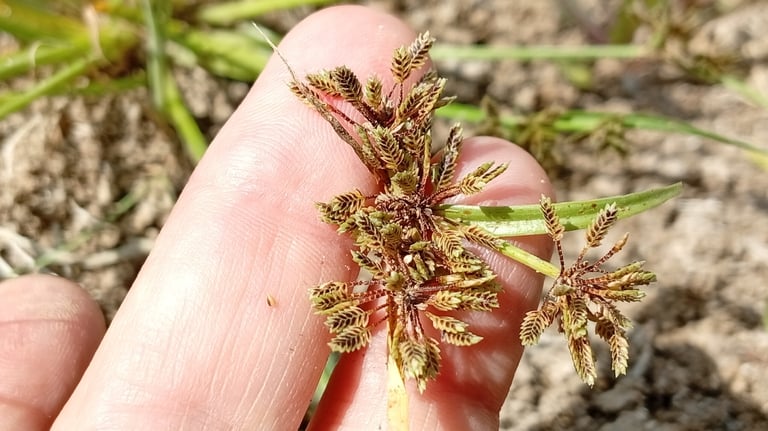
During pollination, new branches emerge from older ones and multiply, giving the flowering head a small bush-like appearance. The flowers themselves show various shades of warm brown and maroon, followed by small, pointed capsule fruits.
Juncus acutiflorus closely resembles Juncus articulatus, the jointed rush, which shares the same jointed leaf structure. The two can be told apart by their flowers: the jointed rush has tepals that are almost blackish-brown, and its main branches are often held nearly horizontal, unlike the more erect, warmer-toned inflorescence of sharp-flowered rush.
Distribution and Habitat
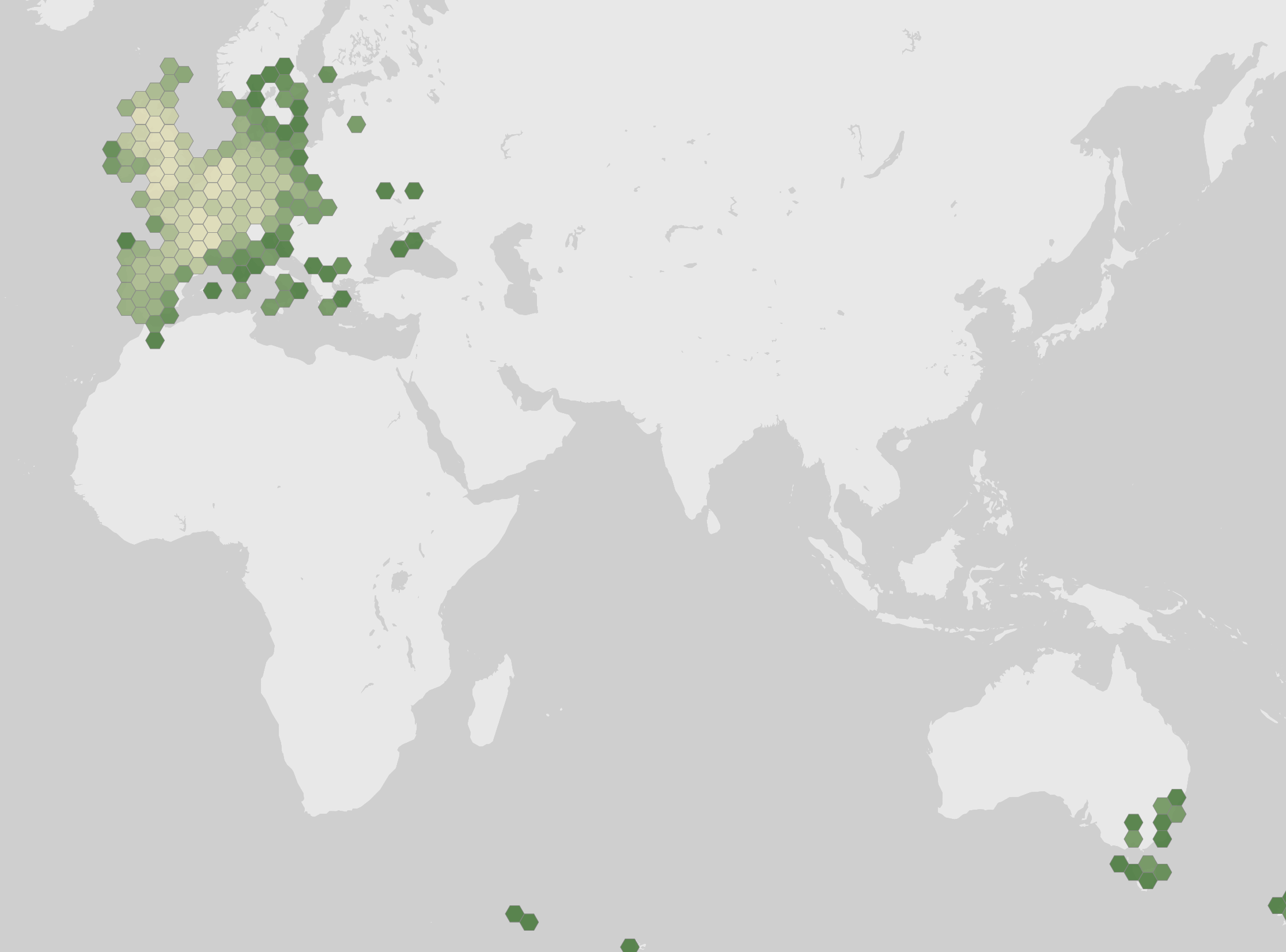
Sharp-flowered rush is native across much of Europe, from the British Isles and Scandinavia south to the Mediterranean, and eastward to Iraq, with a range summarized as spanning Europe and the Mediterranean to Iraq. It has also been introduced to places including Newfoundland, Labrador, New Zealand's South Island, Tasmania, New South Wales, Crozet Island, and Kerguelen.
The species favors acid soils in swampy wetlands, wet heathland, and wet woodlands. It is notably sensitive to nitrate levels in groundwater; in a Dutch rich-fen, stands growing where nitrate-laden groundwater surfaced showed chlorosis linked to iron deficiency, even though iron levels in the shoots remained above typical deficiency thresholds.
Monthly observation counts peak sharply in the summer months, climbing from low numbers in winter to a high point around July, consistent with its known flowering period between July and September, before declining again through autumn.
Two forms are recognized within the species: Juncus acutiflorus subsp. acutiflorus and Juncus acutiflorus ssp. rugosus, the latter arising from hybridization with the smaller jointed rush.
Growth and Form
Juncus acutiflorus grows as a perennial or rhizomatous geophyte, spreading and persisting via underground rhizomes rather than relying solely on seed.
Ecology and Relationships
Sharp-flowered rush grows on acid soils in swampy wetlands, wet heathland, and wet woodland, and is notably sensitive to nitrate pollution in groundwater, which can trigger iron-deficiency chlorosis even when iron levels in the plant remain adequate.
A range of bird species have been recorded feeding on the plant, including finches and buntings such as the common redpoll (Acanthis flammea), Eurasian skylark (Alauda arvensis), citril finch (Carduelis citrinella), and common rosefinch (Carpodacus erythrinus), alongside gamebirds like the rock partridge (Alectoris graeca), waterfowl such as mallard (Anas platyrhynchos) and greylag goose (Anser anser), and beetles including Aphanisticus pusillus and flea beetles of the genus Chaetocnema.
Uses and Human Relationships
Rushes, including this species, carry a long history as symbols of resilience, often representing strength in folklore and mythology.
Beyond symbolism, sharp-flowered rush provides essential food sources and nesting materials for many bird species, linking it closely to the wetland bird communities that share its habitat.
Fun Facts
- The plant's rhizomes measure about 5 to 6 millimeters in diameter, with nodes that are not swollen, and its erect, smooth culms reach roughly 3 millimeters across.
- Each plant typically bears a single basal leaf alongside two leaves along the stem, with leaf blades ranging from about 7 to 45 centimeters long.
Photos
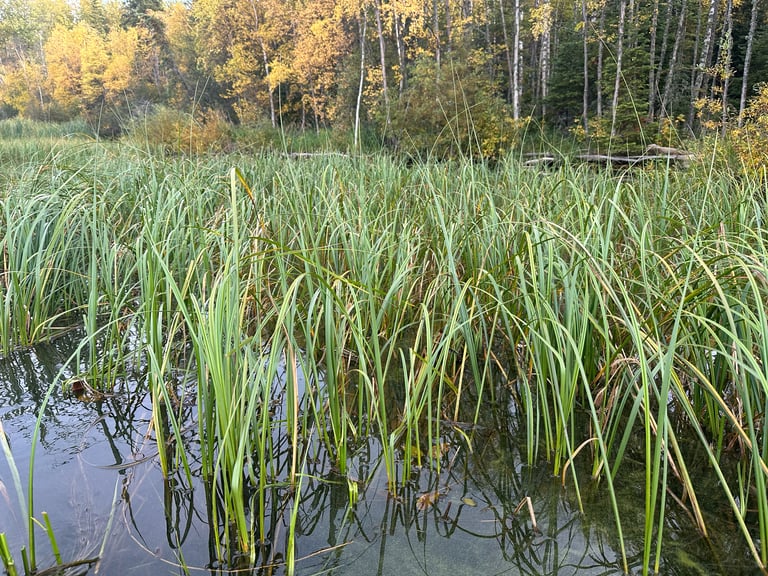
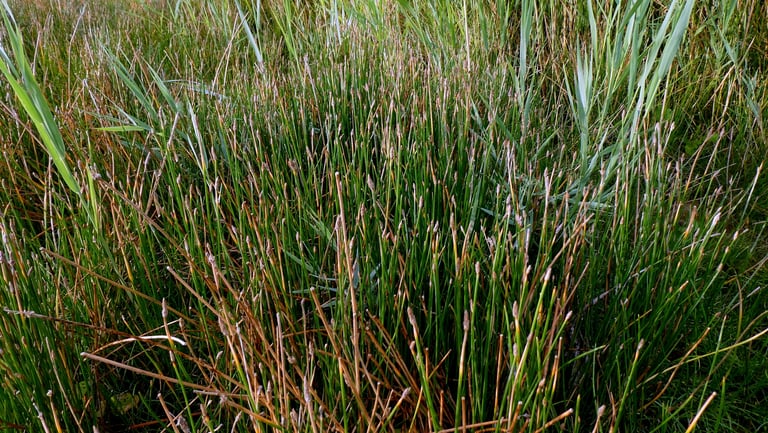
Photographs from via iNaturalist, licensed under CC0 1.0., by Matt Berger via iNaturalist, licensed under CC BY 4.0., by Natalia Kazakova via iNaturalist, licensed under CC BY 4.0., by WF_MI via iNaturalist, licensed under CC BY 4.0., and by Ida B D Jacobsen via iNaturalist, licensed under CC BY 4.0., credited on each photo.
Ecology and classification
Classification
- Phylum
- Tracheophyta
- Class
- Liliopsida
- Order
- Poales
- Family
- Juncaceae
- Genus
- Juncus
- Species
- Juncus acutiflorus
Sources
- GBIF Species names and classification
- iNaturalist Photos
- Wikidata Common names and conservation status
- Wikipedia Summary extract
- Plants of the World Online Native range, life form and climate (WCVP)
- GloBI What it eats, what eats it, parasites and pollinators
- trophiCH