The narrow-leaved everlasting-pea is a perennial climber in the pea and bean family, Fabaceae. Its native range covers parts of Africa, Europe and Asia, from Madeira and Spain to western Siberia and the Caucasus.
The plant grows at forest edges, in hedgerows, on embankments and on waste ground. Its tendrils let it scramble over neighboring plants, shrubs and the lower branches of trees. It is listed by the IUCN as Least Concern.
The species is also known as the flat pea. Its winged stems and long-stalked clusters of pink flowers make it one of the more distinctive pea relatives in temperate Europe.
Identification and Appearance
The most useful field mark is the stem, which is floppy, flat and carries wide wings. The leaves are alternate, with short winged stalks and small stipules.
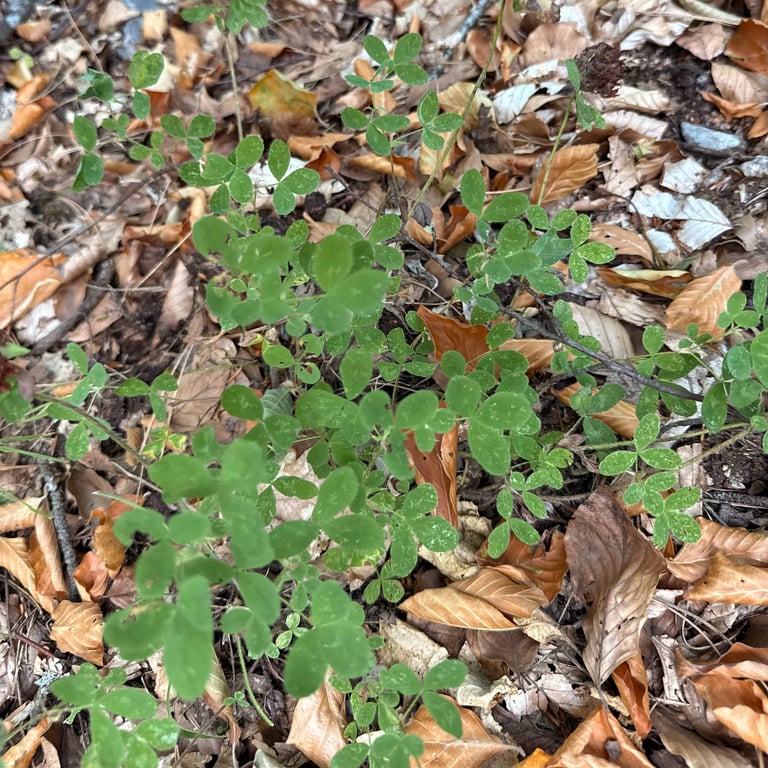
Each leaf ends in three tendrils and carries a single pair of narrow, lance-shaped leaflets with smooth edges. The leaflets and tendrils together give the plant a slender, grass-like look.
The flowers sit on a long stalk, with three to ten pinkish-red blooms in each cluster. Like other peas, each flower is irregular. The uppermost petal is the 'standard', the two side petals are the 'wings', and the two lowest petals join to form the 'keel'.
The plant can climb to about 200 cm (79 in) when it has support. Without support, it sprawls to about 75 cm (30 in) tall. The fruit is a long pod holding five to fifteen seeds.
Distribution and Habitat
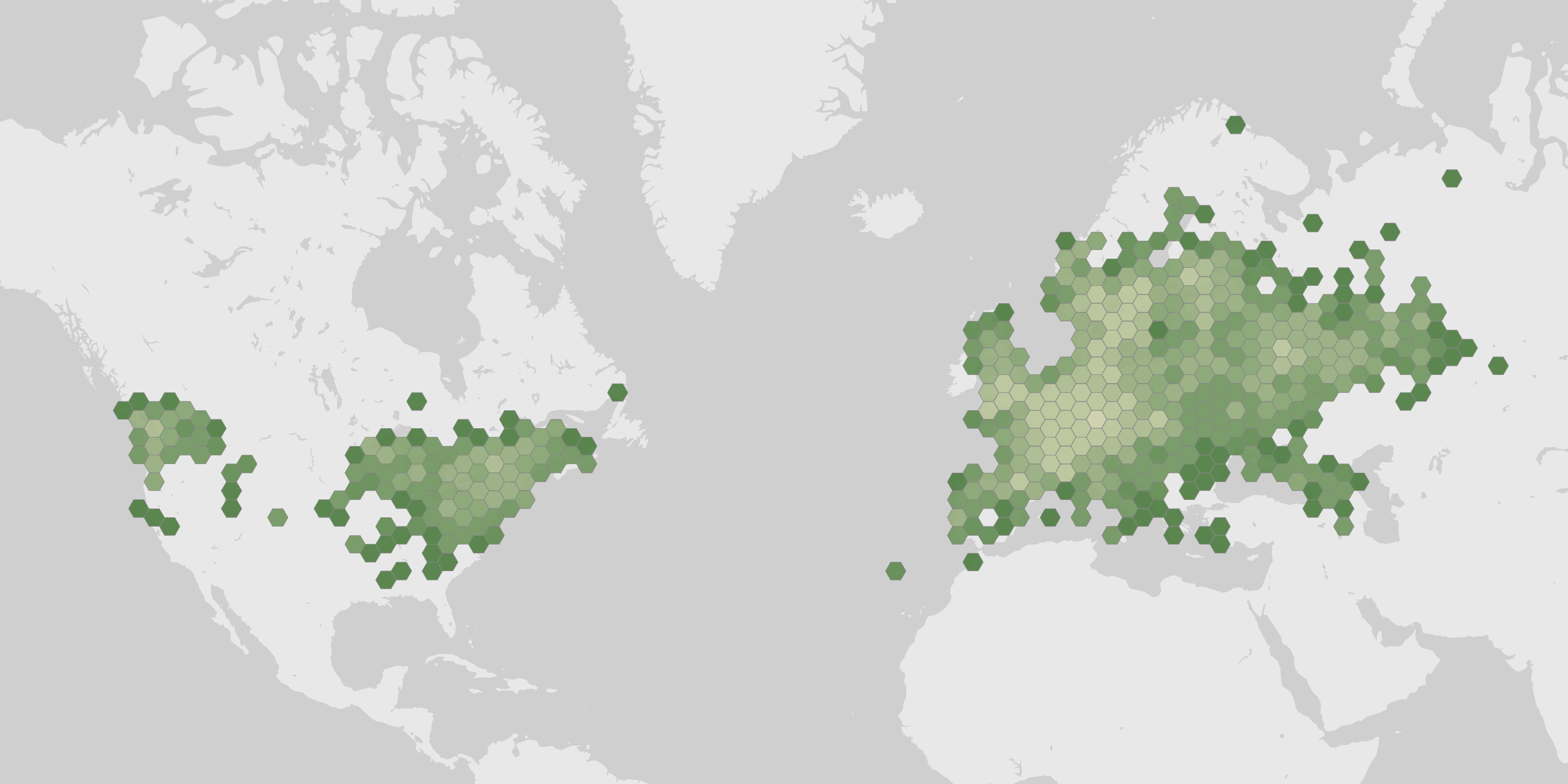
The species is native to parts of Africa, Europe and Asia. Its native range runs from Madeira and Portugal through much of central and northern Europe, south to Greece and Italy, and east across European Russia and the Caucasus to western Siberia.
It grows in forest edges, sparse broad-leaved forests on hillsides, dry hillside meadows, hedgerows, embankments and waste ground. Its tendrils allow it to scramble over other vegetation, so it often grows in tangles along these margins.
Outside its native range, the narrow-leaved everlasting-pea has become established in many parts of North America, including numerous US states and Canadian provinces. It is also present in the South Island of New Zealand and the Windward Islands.
Observations cluster strongly in the middle of the year, with the peak in July and most sightings falling between June and August.
Growth and Form
The narrow-leaved everlasting-pea is a perennial herb that also grows as a climber. It returns year after year from the same root system.
Its stems are floppy and flat, and they can reach about 200 cm (79 in) when they climb through other plants. Without support, the plant forms a sprawling mound about 75 cm (30 in) tall.
The tendrils at the leaf tips are the main way the plant gains height, as they hook onto nearby stems and branches.
Ecology and Relationships
Several insects feed on the plant, and its leaves and seeds are eaten by a range of animals. Bush-crickets and other grasshoppers are among the main insect feeders, along with caterpillars, beetles and true bugs. Passerine birds such as the skylark are among the main bird eaters, and gamebirds and waterfowl also eat it at lower levels.
Bumblebees are the most frequent flower visitors, with the common carder bee, Bombus pascuorum, standing out. Honeybees, mason bees and other bumblebees visit the flowers less often.
The plant has a close relationship with Rhizobium leguminosarum, a bacterium that lives in the roots of peas and beans. Seed beetles of the genus Bruchus also attack the plant as one of its main parasites.
Uses and Human Relationships
People sometimes use the narrow-leaved everlasting-pea to control soil erosion. For this purpose it is usually planted together with a grass species, which helps hold the soil in place.
The plant can do well in highly disturbed ground, which makes it useful on sites that other plants struggle to colonize. A cultivar called 'Lathco' is available for growers.
Photos
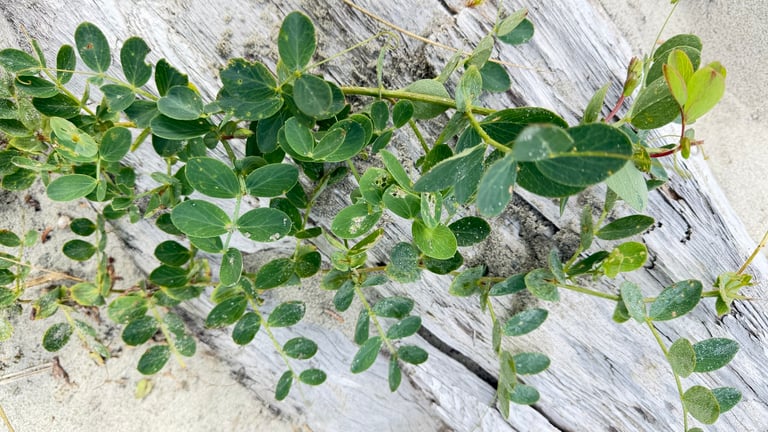
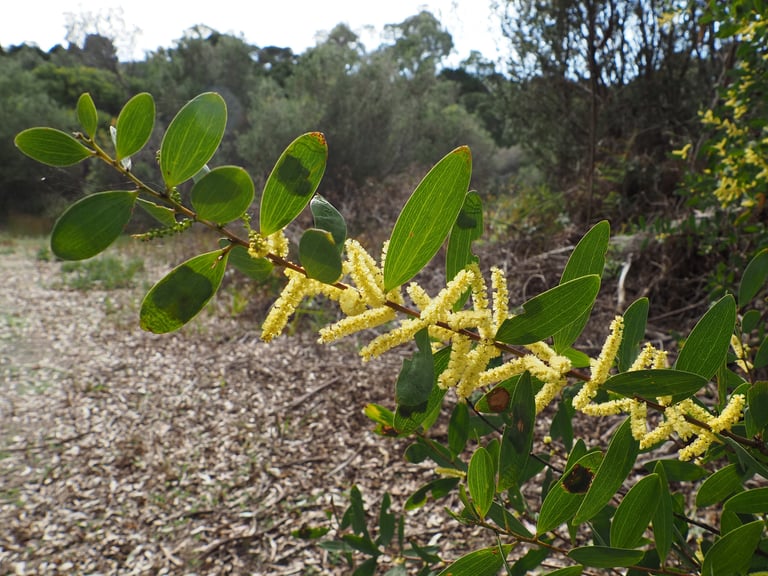
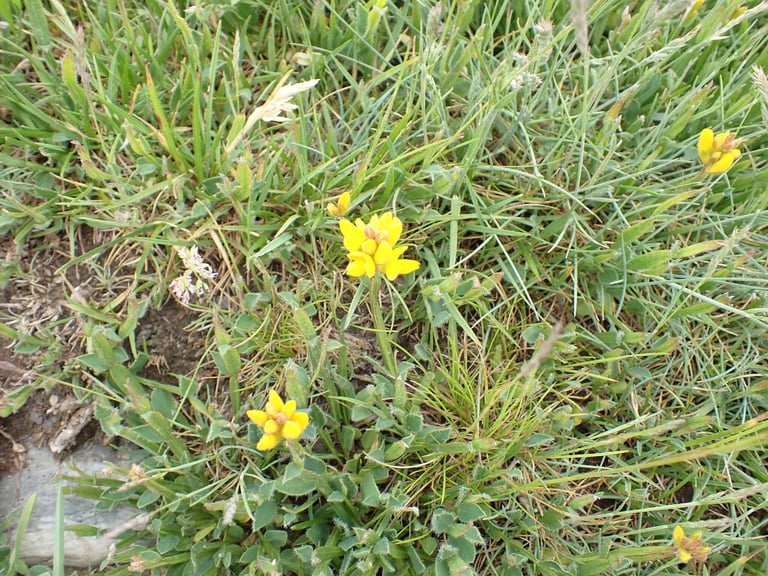
Photographs from via iNaturalist, licensed under CC0 1.0., by guywallbanks via iNaturalist, licensed under CC BY 4.0., by Arnim Littek via iNaturalist, licensed under CC BY 4.0., by Pavel Kacl via iNaturalist, licensed under CC BY 4.0., by Marc Riera via iNaturalist, licensed under CC BY 4.0., and by Ben Babcock via iNaturalist, licensed under CC BY 4.0., credited on each photo.
Ecology and classification
Growth habit
- Herb
Classification
- Phylum
- Tracheophyta
- Class
- Magnoliopsida
- Order
- Fabales
- Family
- Fabaceae
- Genus
- Lathyrus
- Species
- Lathyrus sylvestris
Sources
- GBIF Species names and classification
- iNaturalist Photos
- Wikidata Common names and conservation status
- Wikipedia Summary extract
- Plants of the World Online Native range, life form and climate (WCVP)
- USDA Plants US plants: growth habit and growing conditions
- GloBI What it eats, what eats it, parasites and pollinators
- trophiCH
- Wardeh et al. 2015 (EID2)
- DoPI
- EuPPollNet