Few plants have clothed and fed humanity as long as flax. Fibers from wild Linum usitatissimum found in Dzudzuana Cave in the Republic of Georgia were spun, dyed, and knotted some 30,000 years ago, making it one of the oldest textile plants known.
Flax is a slender, annual flowering plant in the family Linaceae, grown across temperate regions of the world for both its fiber and its oil-rich seeds. It has no recognized conservation concern, since it exists almost entirely as a cultivated crop rather than a wild population needing protection.
What makes flax worth a closer look is the sheer breadth of its legacy: it built the linen trade of ancient Egypt and Rome, still yields linseed oil today, and carries a genetic history debated by botanists for over a century.
Identification and Appearance
The clearest way to recognize cultivated flax is its combination of thin, upright stems and delicate, five-petaled blue flowers. Plants reach up to 1.2 m (4 ft) tall, with glaucous green, narrow lance-shaped leaves 2 to 4 cm long and only about 3 mm wide.
The flowers measure 15 to 25 mm across and, in L. usitatissimum, are typically blue, though other species in the genus Linum bear similar flowers in white, yellow, or red. After flowering, the plant produces a small round, dry capsule 5 to 9 mm in diameter, holding several glossy brown seeds shaped like apple pips, 4 to 7 mm long.
Several wild relatives in the genus Linum closely resemble cultivated flax, including some with matching blue blossoms. The key distinction is life cycle: L. usitatissimum is strictly an annual plant, while many of its lookalike relatives are perennials that persist and regrow year after year.
Distribution and Habitat
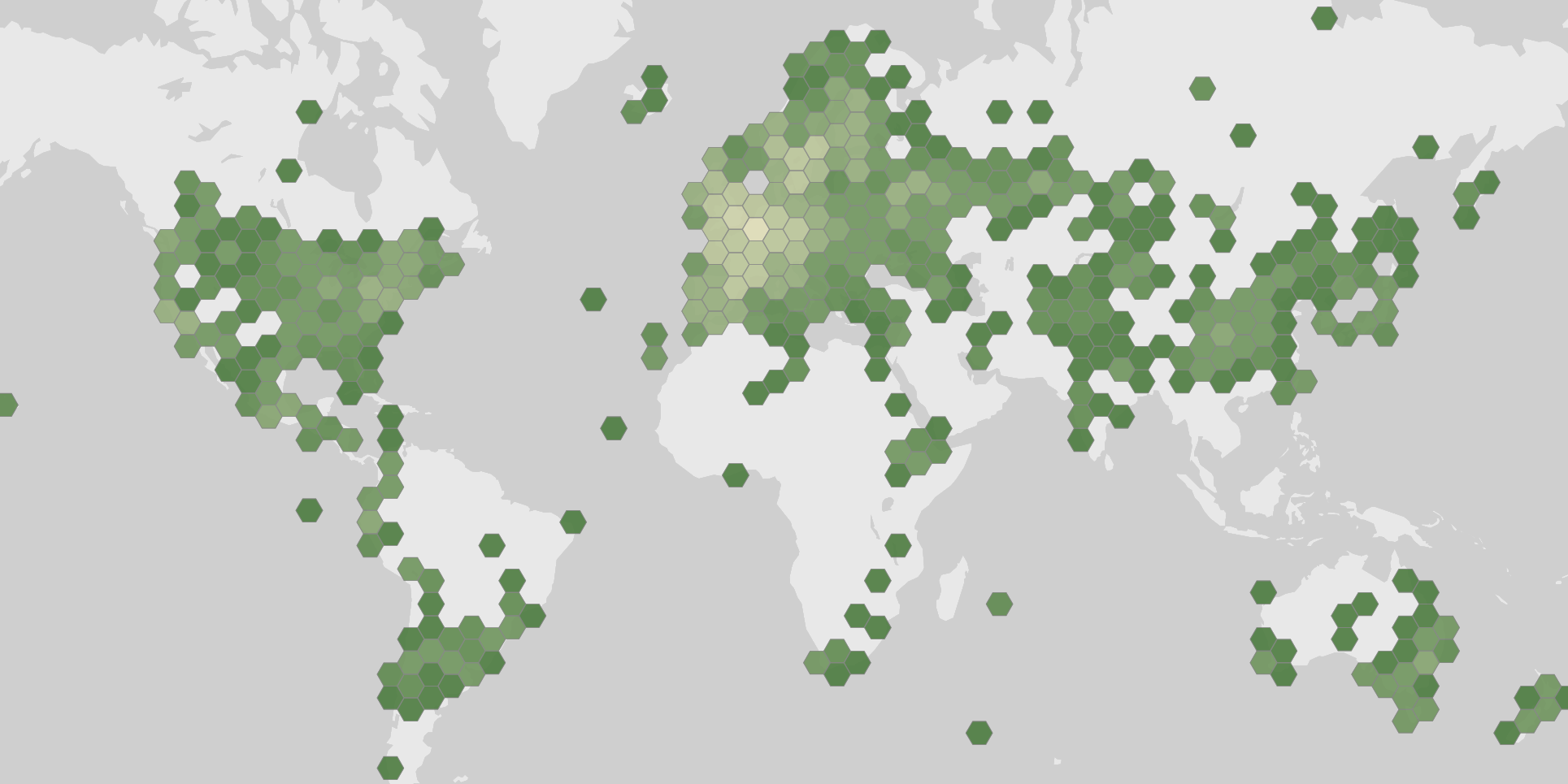
Flax is grown across temperate regions worldwide and is cultivated throughout China, with the notable exceptions of Hainan and Taiwan. Its precise natural origin remains uncertain, but botanists point to the Mediterranean region and parts of western Asia and western Europe as likely sources, and it occasionally naturalizes outside cultivation.
Monthly observation records show a strong seasonal pattern, with counts climbing sharply from a low in February to a pronounced peak in June, before tapering off again by December. This pattern most likely reflects flax's flowering and active growth period in the Northern Hemisphere summer rather than any measure of how much flax actually grows in a given area, since these figures are presence observations only, not population counts.
Uses and Human Relationships
Flax has served human needs for an extraordinarily long span of time. Its earliest known use as a textile fiber dates to roughly 30,000 years ago in what is now the Republic of Georgia, while true domestication took place later in the Fertile Crescent. Evidence from Tell Ramad in Syria shows a domesticated oilseed variety with enlarged seeds, and fabric fragments from Çatalhöyük in Turkey date to about 9,000 years ago. The crop reached China and India at least 5,000 years ago and spread to Switzerland and Germany around the same time.
In ancient Egypt, flax held deep cultural and even religious meaning: temple walls were painted with flowering flax, mummies were wrapped in linen, and priests wore only linen because the fiber symbolized purity. Phoenician traders carried Egyptian linen across the Mediterranean, and the Romans used flax fiber for ship sails. In Rome, linen cloth became a marker of wealth and status, a theme that echoes in Greek mythology, where garments made from fine linen appear in numerous tales.
Flax production declined with the fall of the Roman Empire but was revived by Charlemagne in the eighth century CE through laws promoting linen's hygiene and the health benefits of linseed oil. Flanders became Europe's linen-industry hub during the Middle Ages, and colonists later introduced the crop to North America. By the early twentieth century, cheap cotton and rising farm wages had shifted flax production to northern Russia, which once supplied 90% of global output; synthetic fibers have since eroded its commercial importance, though in 2022 world production of raw or retted flax still reached 875,995 tonnes, three-quarters of it from France, with Normandy alone responsible for nearly a third of global output. Fiber-grade flax is harvested about 100 days after sowing, roughly a month after flowering, using specialized flax pullers, while seed-grade flax is left until capsules turn yellow and begin to split before combine harvesting.
Fun Facts
- Two competing theories explain flax's origin: one holds that it was selectively bred by humans from the wild species L. angustifolium, which readily crosses with L. usitatissimum; the other proposes a more complex, polyphyletic origin.
- The plant's contribution to human culture stretches back more than 8,000 years, based on archaeological evidence from the Near East.
- In Hinduism, Linum usitatissimum is known by an alternate name, Kshom (Atsee), and is classified as a dravya, or drug.
- Flax farming requires relatively few fertilizers or pesticides, and the plant is often found growing naturally just above the waterline in cranberry bogs.
Photos
Photographs from via iNaturalist, licensed under CC0 1.0., by zebedeugalinha via iNaturalist, licensed under CC BY 4.0., by dorian via iNaturalist, licensed under CC BY 4.0., by Jean-Silouane Rebours via iNaturalist, licensed under CC BY 4.0., by Irina Mitine via iNaturalist, licensed under CC BY 4.0., by Jared Shorma via iNaturalist, licensed under CC BY 4.0., by Corey Stafford via iNaturalist, licensed under CC BY 4.0., by Jessica Utrup via iNaturalist, licensed under CC BY 4.0., by Jose Gutierrez Higa via iNaturalist, licensed under CC BY 4.0., by Alice Shanks via iNaturalist, licensed under CC BY 4.0., by Barry Stewart via iNaturalist, licensed under CC BY 4.0., and by Lídia Carrera via iNaturalist, licensed under CC BY 4.0., credited on each photo.
Ecology and classification
Growth habit
- Herb
Classification
- Phylum
- Tracheophyta
- Class
- Magnoliopsida
- Order
- Malpighiales
- Family
- Linaceae
- Genus
- Linum
- Species
- Linum usitatissimum
Sources
- GBIF Species names and classification
- iNaturalist Photos
- Wikidata Common names and conservation status
- Wikipedia Summary extract
- Encyclopedia of Life Habitat, diet and behavior traits