The long-billed gnatwren is a very small bird that weighs about . It belongs to the gnatcatcher family, Polioptilidae, and its range runs from southeast Mexico south into Ecuador and Amazonia, covering about .
The species is listed as Least Concern by the IUCN. It is worth a closer look for its trilled call and its tail, which is frequently wagged while the bird forages.
Identification and Appearance
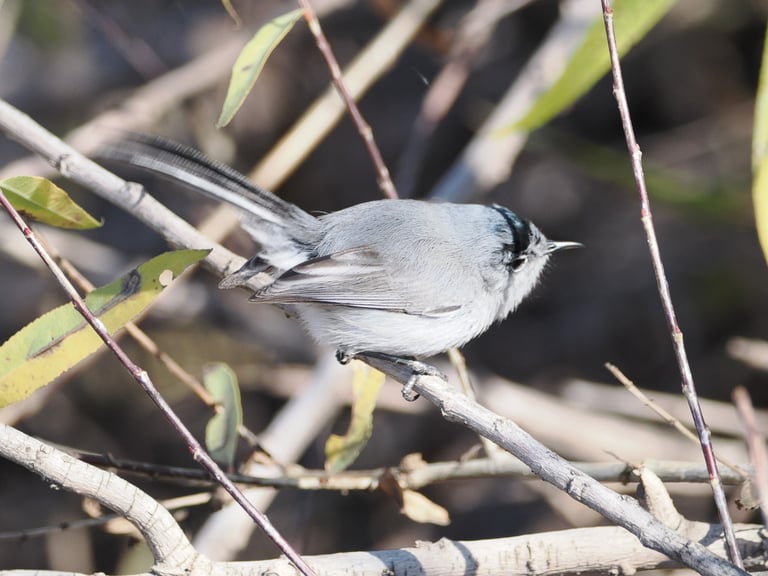
The most useful field mark is the long, thin bill, paired with a short cocked tail. The tail is black with white tips on all but the central feathers, and it is frequently wagged.
Adults are 12–13 cm (4.7–5.1 in) long and weigh about . The upperparts are grey-brown, with rufous on the sides of the head. The throat is white and shades to buff on the rest of the underparts.
The subspecies R. m. trinitatis, found in eastern Colombia, Venezuela and Trinidad, has paler underparts and buff flanks and head sides.
The call is a rapid trill, written as drdrdrdrdrdrdrdrdrdr.
Distribution and Habitat
The long-billed gnatwren lives in the undergrowth and vines of dry forest and secondary woodland. Its range runs from Mexico south to Peru and Brazil, and includes Trinidad.
The species covers about , a range that spans a wide band of Central and South America.
It favors semi-open habitats, where vegetation is thick enough to offer cover near the ground.
Diet and Nutrition
The long-billed gnatwren forages actively in vegetation. It eats mainly insects, insect eggs and spiders, which it takes from foliage and vines as it moves through the undergrowth.
Its diet is almost entirely animal prey, so it fills the role of an insect-eating bird in its woodland habitat.
It usually occurs in pairs or family groups while it feeds.
Nesting and Breeding
The long-billed gnatwren builds a deep cup nest very low in a small plant or sapling, keeping it close to the ground.
The nest usually holds two white eggs. Both parents incubate them for 16–17 days until they hatch.
The young take a further 11–12 days to fledge, and both parents share the work of feeding them during this period.
Ecology and classification
Classification
- Phylum
- Chordata
- Class
- Aves
- Order
- Passeriformes
- Family
- Polioptilidae
- Genus
- Ramphocaenus
- Species
- Ramphocaenus melanurus