Although blow flies have a reputation as carrion feeders, adult Lucilia caesar spend most of their time visiting flowers, where they feed on pollen and nectar; it is only the larvae that develop on carrion.
Lucilia caesar is a blow fly in the family Calliphoridae, order Diptera. It is widely known as the common greenbottle, though that name is also applied to its close relative Lucilia sericata, so the two species are frequently confused in everyday use.
The split between a nectar-feeding adult stage and a carrion-feeding larval stage makes this small metallic fly a link between plant pollination and the breakdown of animal remains in the ecosystems it inhabits.
Identification and Appearance
The clearest practical note on identifying Lucilia caesar is that its common name, common greenbottle, is shared with Lucilia sericata, meaning the two species cannot be reliably told apart by name alone and are often lumped together in casual observation.
Beyond this naming overlap, no further morphological detail—size, color pattern, or differences between sexes or ages—is documented here, so field identification of Lucilia caesar against its look-alike relative requires closer examination than color or common name alone can provide.
Distribution and Habitat
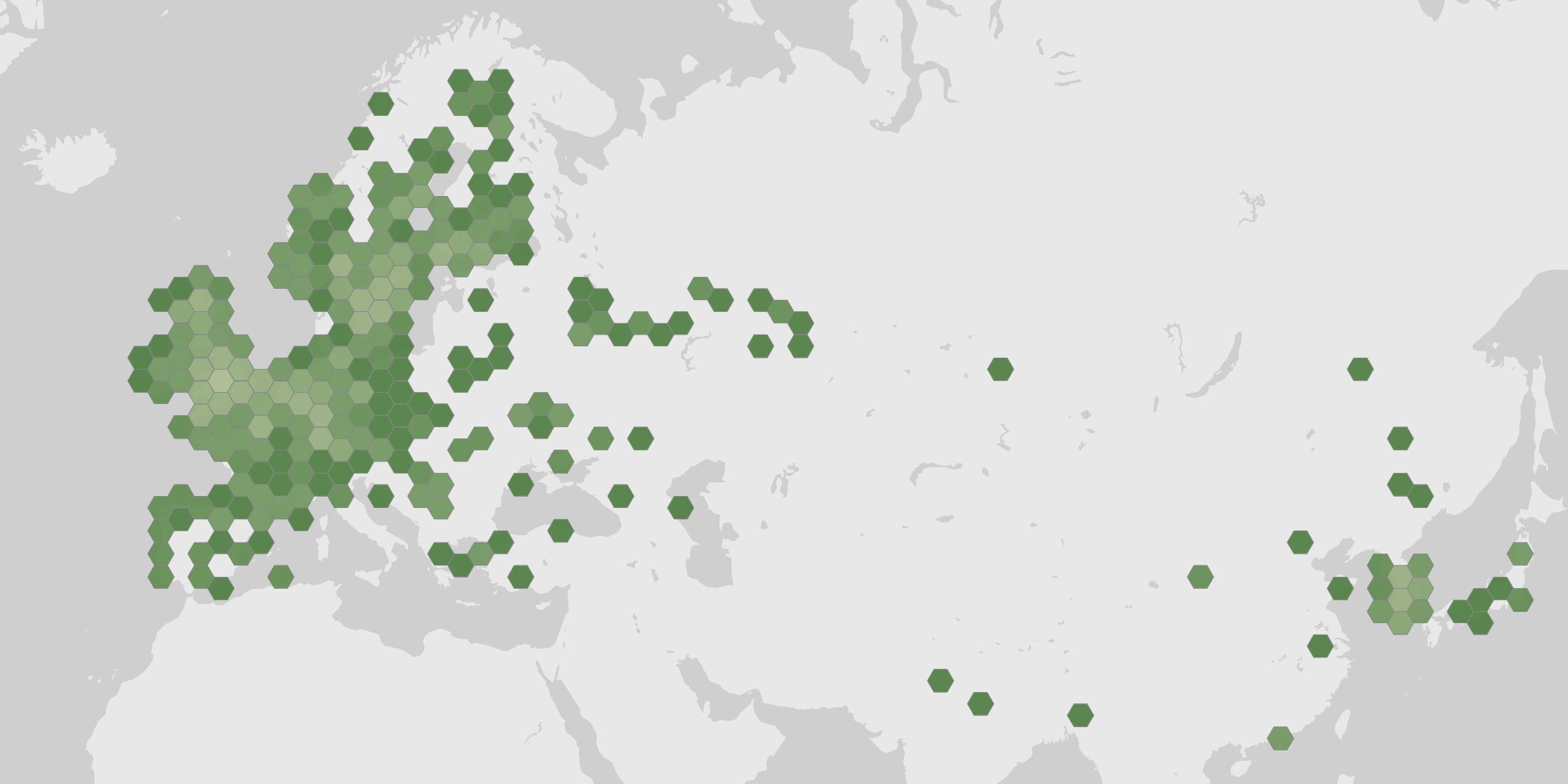
GBIF observation records for Lucilia caesar show a strong seasonal pattern, with sightings climbing sharply from a low in February (3 records) to a peak in July (1,394 records), before falling away again by November and December.
The monthly count rises through spring, from 160 records in April to 752 in May, stays high through the summer months of June, July and August (1,172, 1,394 and 1,272 records respectively), then declines through September (559) and October (173) to near-absence in winter.
This pattern points to the fly being active and most easily observed in the warmer months, likely as adults rather than during earlier immature stages, but the counts record only where and when people have logged sightings, not the species' true abundance or the full extent of its range.
Cultural Significance
Documented cultural material specific to Lucilia caesar is scarce. The species is best known to the public, when known at all, through its shared common name with Lucilia sericata as the common greenbottle, a name used loosely rather than tied to any particular folklore or symbolism.
No mythology, art, or culinary or trade use is recorded for this species in the sources available here.
Fun Facts
- The genus name Lucilia is a Latin-derived feminine name linked to the word lux ("light"), the same root behind Lucifer, meaning "light-bringer."
- The name Lucilia is said to evoke associations of intelligence, grace, and luminosity, drawn from its Latin root.
- In fuller classification, Lucilia caesar falls under the grouping Cyclorrhapha and the subfamily Luciliinae within Calliphoridae.
- The common name "common greenbottle" is applied to both Lucilia caesar and Lucilia sericata, so the same name can refer to either species.
Ecology
Diet
- Omnivore
Behavior
- Scavenger