Macrolepiota mastoidea can be mistaken for deadly toxic relatives, making it one of the more risky mushrooms to identify by sight alone. It belongs to the fungal family Agaricaceae, within the order Agaricales and class Agaricomycetes, part of the kingdom Fungi.
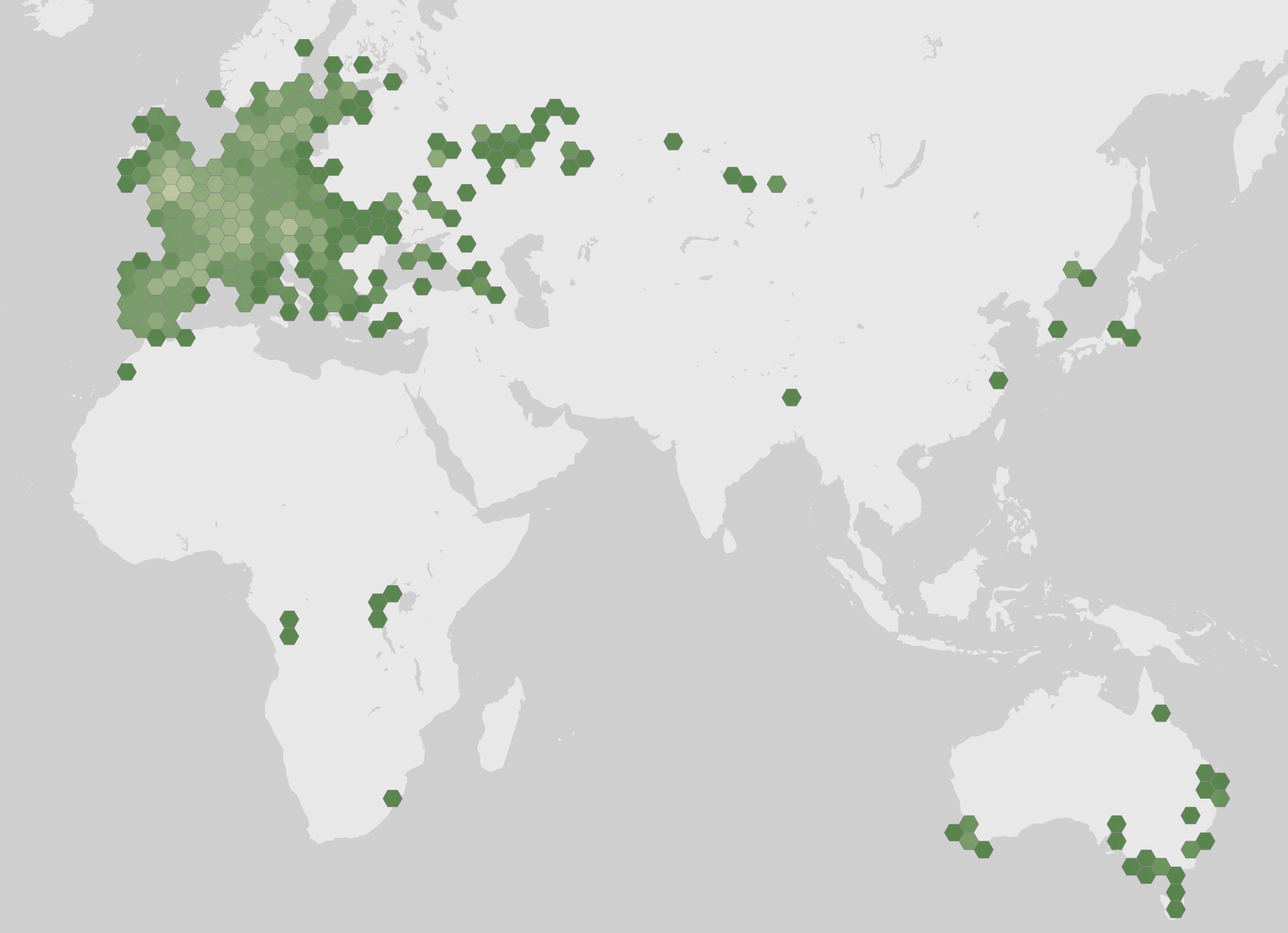
Found across Europe, this mushroom is a striking example of how closely related fungi can diverge in toxicity while looking nearly identical on the outside.
Fruiting Body and Identification
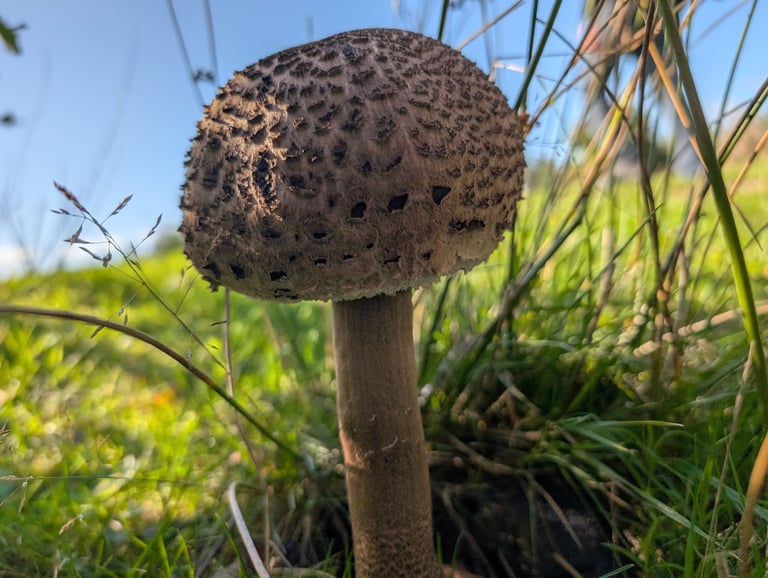
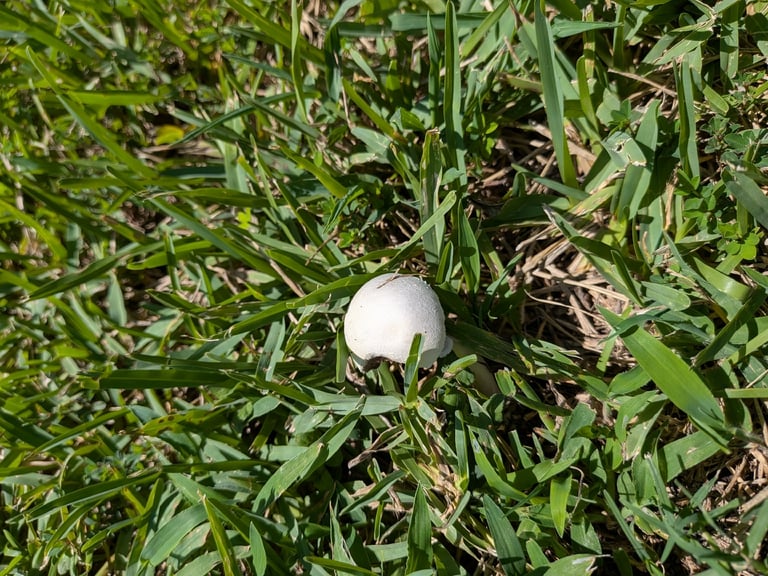
The most useful identifying features are the combination of a scaly cap, a ringed and swollen-based stem, and substantial size: Macrolepiota mastoidea grows up to 15 centimeters (6 inches) both wide and tall. The cap is white overall, with brown scales concentrated toward the center, giving it a mottled, textured appearance against the pale background.
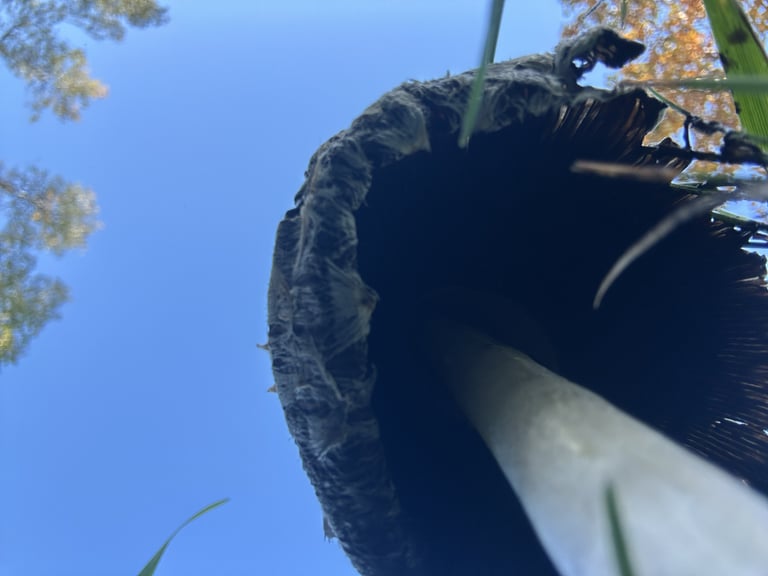
The stem carries a ring, a feature typical of many Macrolepiota species, and is enlarged at the base, tapering upward toward the cap. This basal swelling is a helpful field character when distinguishing it from similarly sized mushrooms.
Distribution and Habitat
Macrolepiota mastoidea is recorded across Europe, with observations concentrated from August through November. This window points to a distinctly autumn-focused fruiting pattern, typical of many large terrestrial Agaricaceae.
Monthly observation counts, drawn from presence records rather than abundance data, show a sharp rise beginning in August and peaking in October, with elevated numbers continuing into November before dropping off through winter and spring. This pattern lines up closely with the stated European fruiting season of August to November, suggesting that autumn is when the species is most reliably encountered, though these figures reflect observation frequency rather than true population size or the full extent of its range.
Fun Facts
- The species has a tangled naming history: nineteenth-century mycologists classified it under several different names, including Agaricus gracilentus, Agaricus mastoideus, and Agaricus umbonatus, each of which went through its own separate reclassification.
- It did not receive its current name, Macrolepiota mastoidea, until 1951, more than a century after its earliest descriptions.
- One historical synonym, Lepiota excoriata subsp. mastoidea, reflects how closely this species was once linked to other large scaly Lepiota-type mushrooms before Macrolepiota was recognized as a distinct genus.