With a cap that can spread to 25 centimeters across atop a stem reaching up to 40 centimeters tall, Macrolepiota procera is one of the largest and most instantly recognizable mushrooms found on the ground rather than growing from wood. Commonly known as the parasol mushroom, it belongs to the family Agaricaceae within the order Agaricales, a group of gilled fungi in the class Agaricomycetes.
The species is widespread across temperate Eurasia and is thought, though not yet confirmed, to occur in North America as well. Its imposing size and distinctive shape make it a favorite subject for foragers and naturalists alike, but its resemblance to several toxic species means it rewards careful, informed observation rather than a quick glance.
Fruiting Body and Identification
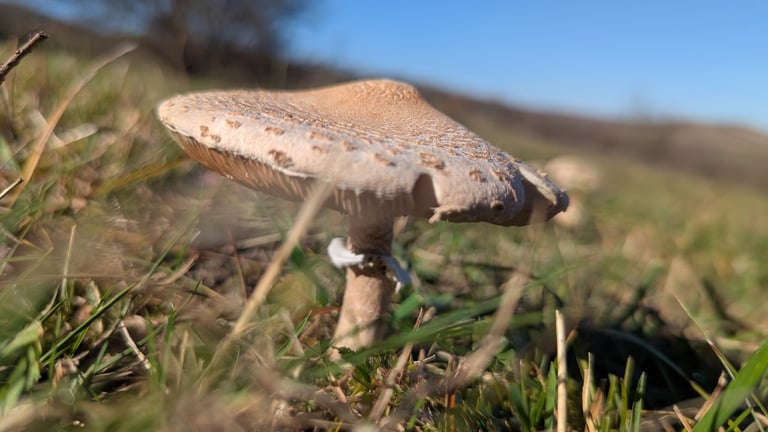
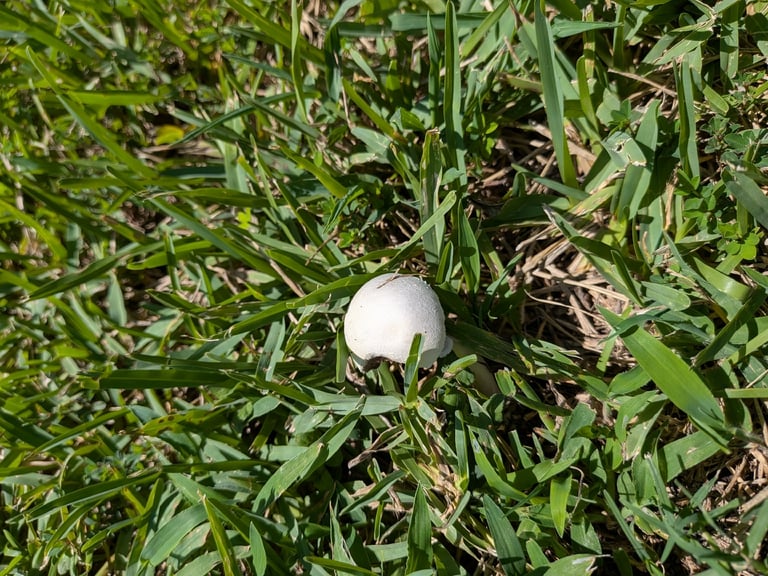
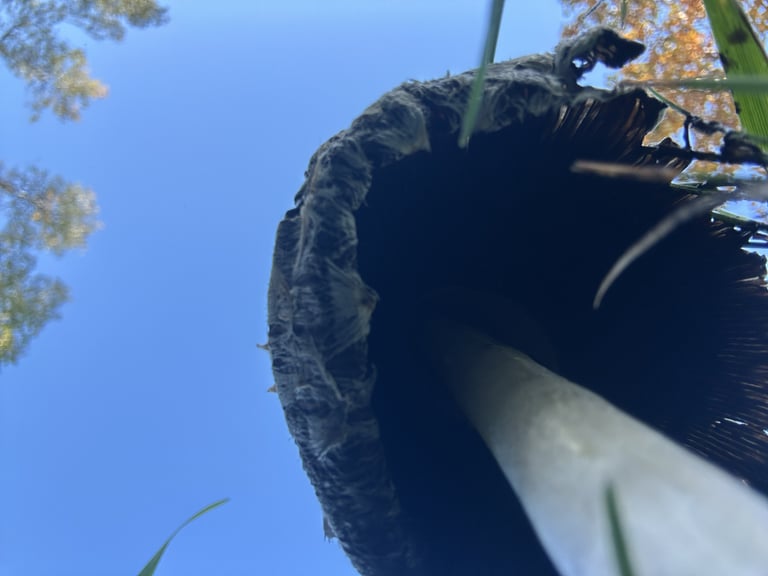
The most dependable identifying feature of Macrolepiota procera is the combination of its large, flaky cap and the snakeskin-patterned stipe beneath it. The immature cap begins compact and egg-shaped, its margin wrapped tightly around the stem and sealing an inner chamber. As the mushroom grows, this margin tears free and settles as a fleshy, movable ring on the stipe. At full maturity the cap flattens out, reaching up to 25 centimeters wide, with a smooth, dark umbo at its center surrounded by dark, cap-colored flakes that can be rubbed off easily.
The stipe is comparatively thin for such a large mushroom, growing 12 to 40 centimeters long and about 1.5 centimeters thick. It reaches its full height before the cap has even expanded. Below the ring, scaly growths give the stem a snakeskin-like texture, a key feature for identification. The gills are crowded and free from the stem, white at first and taking on a pale pink tone with age. The spore print is white, and the whitish flesh, sometimes faintly pink, does not stain when cut. The mushroom has a pleasant, nutty smell.
Although M. procera is generally considered hard to confuse with other species once past the button stage, several look-alikes warrant caution.
Other similar species include the much smaller Cystoderma amianthinum (saffron parasol), the smaller Chlorophyllum rhacodes (shaggy parasol) which lacks the snakeskin stem pattern, and Macrolepiota mastoidea, a rarer, smaller European edible with far less obvious stipe markings. Agaricus species can be ruled out by their brown spores and gills that never turn fully white.
Distribution and Habitat
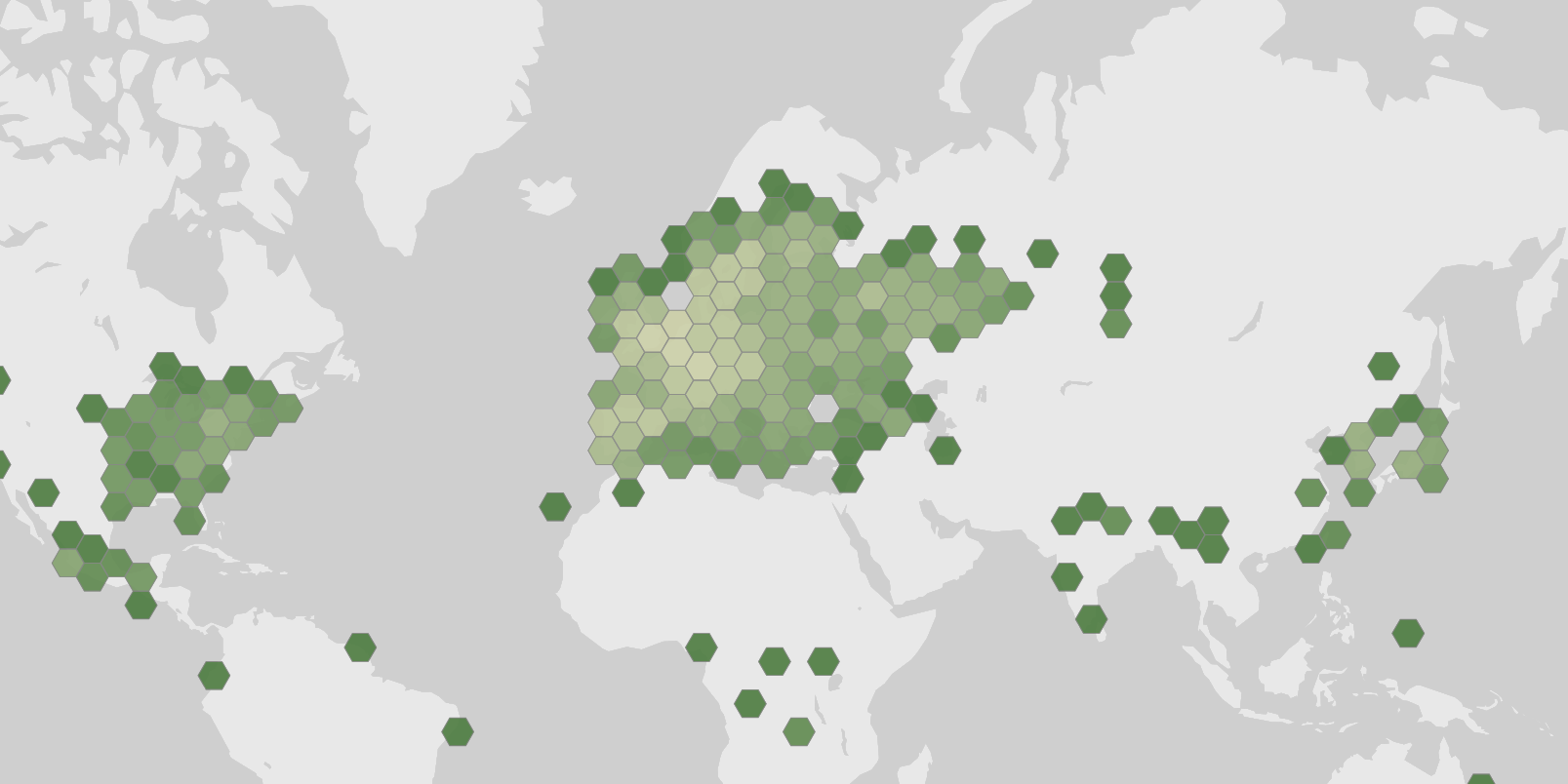
Macrolepiota procera is a fairly common species on well-drained soils across temperate Eurasia, and it possibly occurs in North America as well, though this has not been confirmed and requires further research. It grows solitary, in groups, or in fairy rings, most often in open pastures and occasionally in woodland settings.
Monthly observation data show a pronounced seasonal pattern, with counts climbing sharply from a few hundred in early summer to a peak of over 23,000 in the ninth and tenth months before falling away by late autumn. This pattern points to a late-summer and early-autumn fruiting season, consistent with foraging reports in places like the United Kingdom, where the mushroom appears from July through November. These figures are presence observations rather than a measure of abundance or population size, so they should be read only as a rough seasonal signal, not as a complete picture of the species' range or numbers.
Uses and Cultural History
Macrolepiota procera is considered a choice edible mushroom, sought after and popular across Europe thanks to its large size, its seasonal frequency, and its versatility in the kitchen. In the United Kingdom it can be gathered from July through November. The cap is the prized part; the stipe is too fibrous to eat unless it is dried and ground into a powder.
Cooks commonly sauté the caps in melted butter, but preparation varies by region. In central and eastern European countries the mushroom is often treated like a cutlet: dipped in egg and breadcrumbs, then fried in oil or butter. A Slovak recipe bakes the caps stuffed with ground pork, oregano, and garlic, while Italian and Austrian cooks stuff the young, still-spherical caps with seasoned minced beef and bake them much like stuffed peppers.
Beyond the kitchen, the mushroom's majestic, imposing appearance has long fascinated people, contributing to the legends and symbolism that mushrooms in general have inspired across different cultures.
Fun Facts
- In many cultures the species has long been called the "parasol mushroom," a name inspired by both its shape and its imagined role as a whimsical object in folktales.
- In Slavic countries such as Poland and the Czech Republic, generations of foragers have passed down knowledge of gathering this mushroom.
- Its large, majestic fruiting body has helped make it a recurring figure in folklore and cultural symbolism surrounding mushrooms more broadly.
Ecology
Habitat
- Woodland
- Grassland