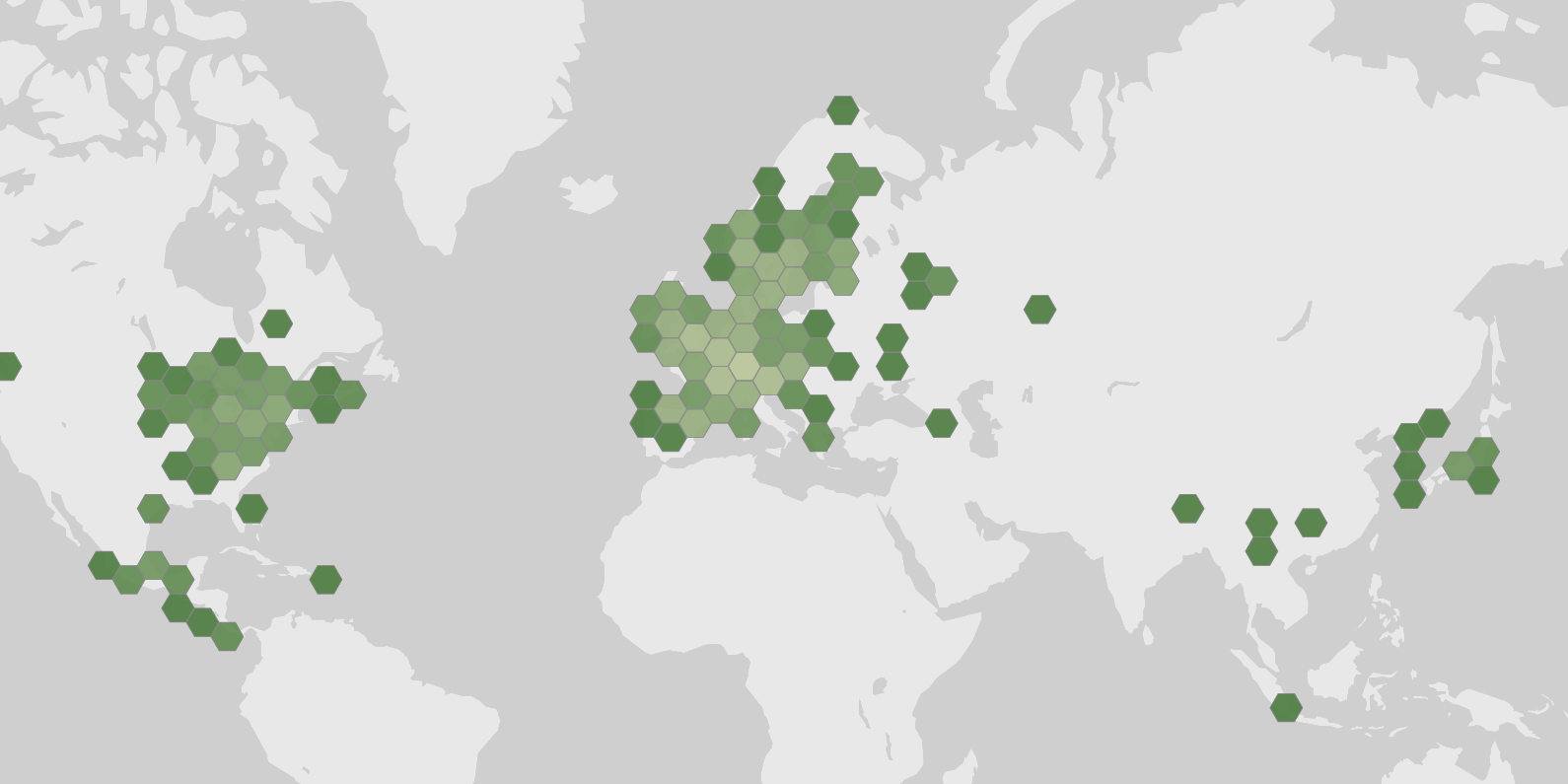
Marasmius cohaerens is a gilled mushroom notable for the shiny, almost horny texture of its stem, a feature that sets it apart from many other small woodland fungi. It belongs to the Marasmiaceae family within the Basidiomycota phylum, and grows fairly commonly across European woods, with a wider presence in eastern Asia and rare occurrences in North America.
This species thrives among leaf litter and humus, most often in beech forests but also with other deciduous trees, and occasionally in coniferous stands. Its widespread distribution across two continents, paired with its distinctive appearance, makes it a recognizable presence for those who spend time examining forest floors.
Fruiting Body and Identification
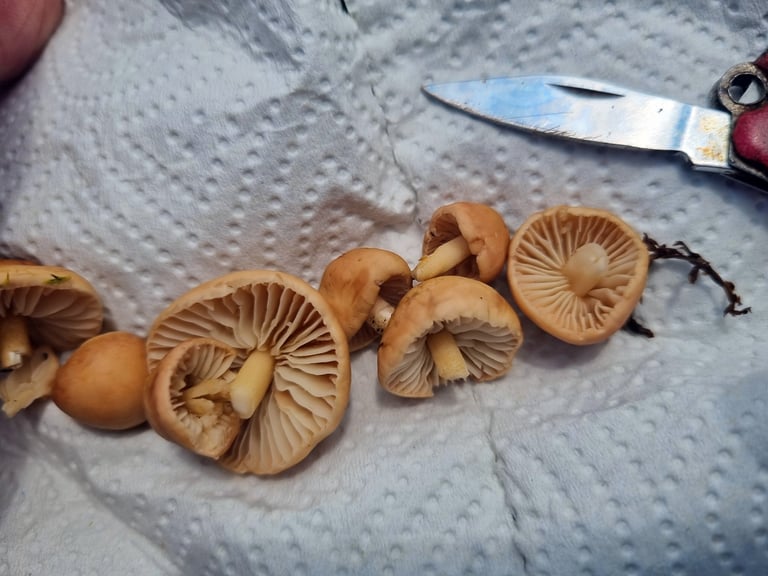
The stem's shiny, horny consistency is the most distinctive identifying feature of Marasmius cohaerens. It runs about 5 to 9 centimeters long and up to 0.5 centimeters in diameter, shifting in color from dark brown at the base to whitish near the top, with ochraceous to reddish tones in between. No ring or veil remnant is present.
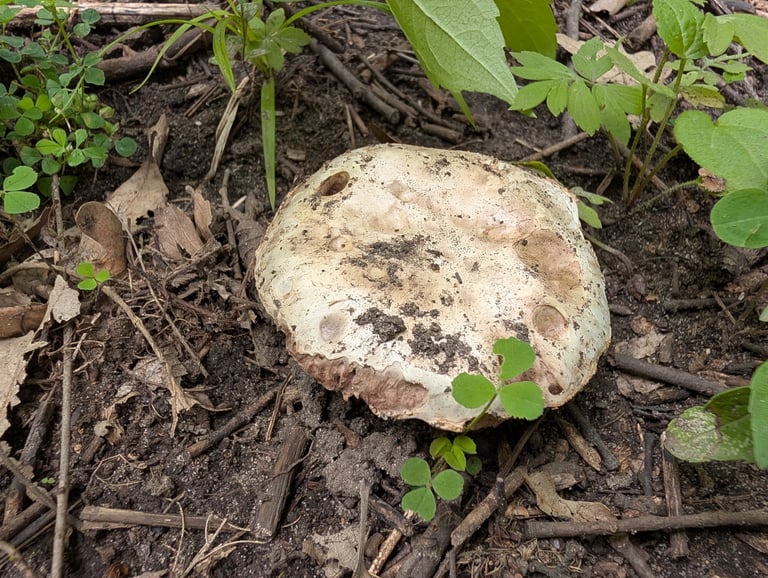
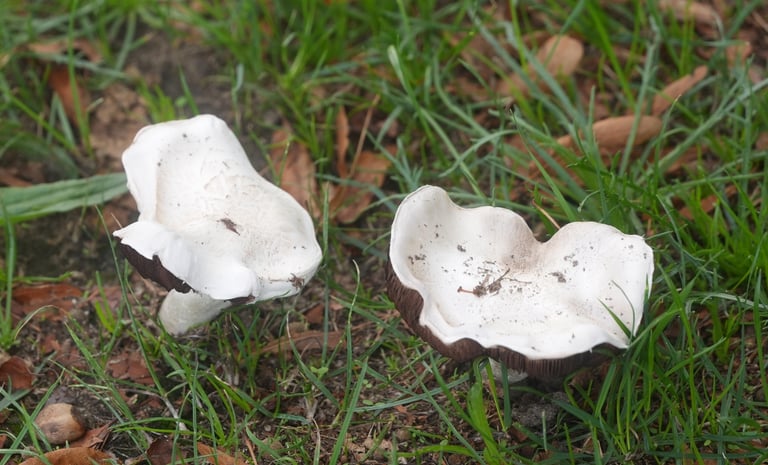
The cap is matt or slightly felted, measuring roughly 1 to 3.5 centimeters across. Its color ranges from pale brown to yellow brown or chocolate brown, sometimes with a pink tinge, and its shape develops from bell-like (campanulate) in youth to flat with age.
The gills are adnate to almost free, quite distant from one another, and cream to brownish in color with a darker brown edge. Tiny hairs along the gill edge become visible under a hand lens. The taste is mild, with little discernible smell.
Microscopically, the spores are ellipsoid to almond-shaped, measuring around 8 to 10.5 by 4 to 5.5 micrometers. Cheilocystidia take a broadly club-shaped form with finger-like protrusions at the tip, known as "broom cells of the siccus type," a feature shared with Marasmius siccus.
Distribution and Habitat
Marasmius cohaerens grows singly or in small groups on humus and litter, most characteristically in beech forests or alongside other deciduous trees, and only occasionally in coniferous woodland. This saprobic habit ties it closely to the decaying organic matter of the forest floor.
The species is widely distributed and fairly common across Europe and eastern Asia. It occurs only rarely in North America, where distinct varieties have been identified separate from the European form, M. cohaerens var. cohaerens.
Observation records suggest the mushroom is encountered mostly in the warmer months, with a pronounced rise from early summer into late summer, tapering off by autumn. This pattern likely reflects when fruiting bodies are most visible and actively sought out, rather than year-round presence.
Fun Facts
- The cheilocystidia of Marasmius cohaerens are called "broom cells of the siccus type," a microscopic feature it shares with the related species Marasmius siccus.
- Although widespread and fairly common across Europe and eastern Asia, this mushroom is only rarely found in North America, where separate varieties distinct from the European form have been recognized.
Photos
Photographs from via iNaturalist, licensed under CC0 1.0., by Kevin Popowich via iNaturalist, licensed under CC BY 4.0., by Alexis Williams via iNaturalist, licensed under CC BY 4.0., by delognut via iNaturalist, licensed under CC BY 4.0., by Jeff via iNaturalist, licensed under CC BY 4.0., by Ulises Emmanuel Martínez Burgos via iNaturalist, licensed under CC BY 4.0., by adam1420 via iNaturalist, licensed under CC BY 4.0., and by Sundari Masters via iNaturalist, licensed under CC BY 4.0., credited on each photo.
Ecology and classification
Classification
- Phylum
- Basidiomycota
- Class
- Agaricomycetes
- Order
- Agaricales
- Family
- Marasmiaceae
- Genus
- Marasmius
- Species
- Marasmius cohaerens
Sources
- GBIF Species names and classification
- iNaturalist Photos
- Wikidata Common names and conservation status
- Wikipedia Summary extract