The fairy ring mushroom owes its name to a habit few fungi can match: it grows in expanding arcs and rings that make the grass beneath them noticeably greener and lusher, a so-called type II fairy ring. This pattern has made Marasmius oreades one of the most recognizable mushrooms in lawns, meadows, and even coastal dunes.
Native to both North America and Europe, this species belongs to the family Marasmiaceae within the order Agaricales. Its common names, including fairy ring champignon and Scotch bonnet, can cause confusion, since several other mushrooms also grow in rings, among them the edible Agaricus campestris and the toxic Chlorophyllum molybdites. What makes Marasmius oreades worth a closer look is not just its ring-forming habit but its resemblance to genuinely dangerous species, making careful identification essential before any other consideration.
Fruiting Body and Identification
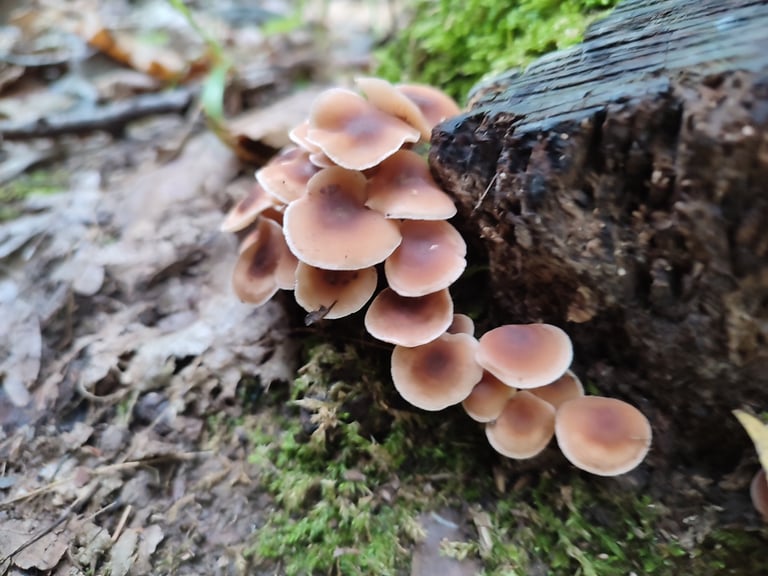
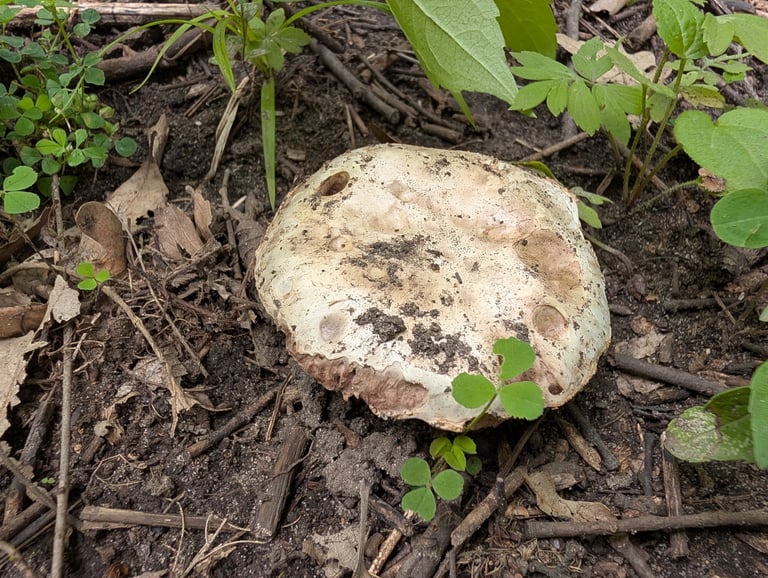
The most reliable identifying trait of Marasmius oreades is its unusual resilience to drying: the cap and gills can shrivel in dry weather and then rehydrate and resume normal appearance when moisture returns, a property called marescence. The cap itself is small, only 1 to 5 centimeters across, starting bell-shaped with an inrolled margin before flattening into a broad convex shape, often keeping a slight central bump. It is dry, smooth, and pale tan or buff, sometimes reddish tan or white, and its color shifts noticeably as it dries.
The stem is bare, pale, and notably tough, growing 2 to 6 centimeters tall and only 2 to 6 millimeters thick. The gills are white to pale tan, fairly thick, and widely spaced, either attached to the stem or free from it, and they give off a faint cyanide-like odor. The spore print is white, and the spores themselves measure 7–10 by 4–6 micrometers, smooth and elliptical, with no cystidia present.
As the mushroom ages, the cap flattens further and the margin may become uplifted or faintly lined, while the coloring fades or intensifies depending on moisture.
Distribution and Habitat
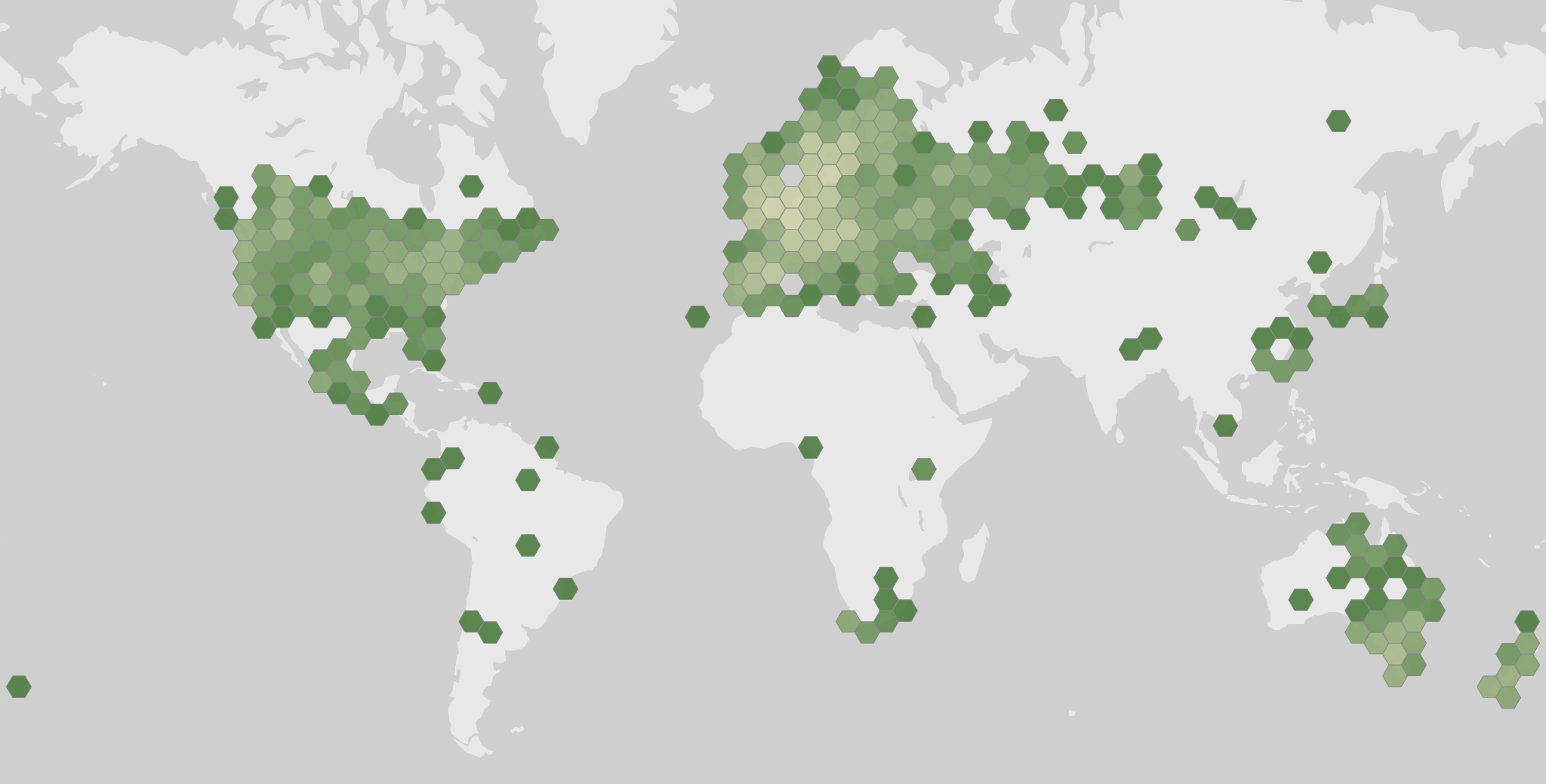
Marasmius oreades grows extensively across North America, especially in the east where it is more diverse, and throughout Europe. It fruits in summer and autumn, typically May through November in the UK, though in warmer climates it can appear year-round.
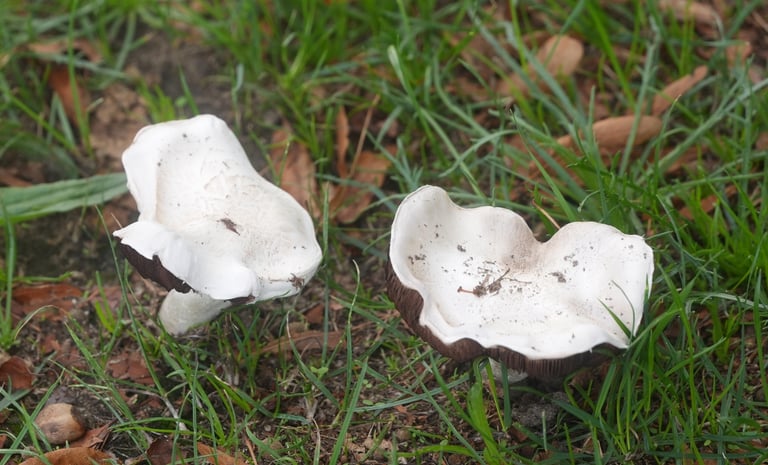
The species favors grassy areas: lawns, meadows, and even coastal dunes, growing gregariously in troops, arcs, or the characteristic rings that also thicken and green the surrounding grass. This tolerance for open, mown, or otherwise disturbed grassland helps explain its frequent appearance in urban and suburban settings as well as more natural meadows.
Monthly observation records show a strong seasonal pattern, with counts climbing sharply from spring lows into a pronounced peak between August and October before tapering off by winter. This pattern lines up with the reported May–November fruiting window, though these figures reflect presence records rather than actual abundance or a complete picture of the species' range.
Uses and Cultural History
The specific epithet oreades comes from Greek mythology, referring to the Oreads, nymphs of mountains, valleys, and ravines said to hold magical powers and to promote fertility in nature. The association fits loosely with where fairy ring champignons are found, though the mushroom is by no means confined to mountainous terrain.
The mycologist Elias Magnus Fries used Marasmius oreades to help separate the genus Marasmius from the similar white-spored genus Collybia, relying on the mushroom's ability to recover after drying out and rehydrating, a trait he termed marescence. This distinction became a lasting part of how the genus is defined.
More recently, the species has taken on symbolic weight as an emblem of ecological succession and sustainability, prized for its capacity to break down organic material in low-nutrient conditions and to survive extended dry periods.
Fun Facts
- The specific epithet oreades refers to the Oreads of Greek mythology, mountain and valley nymphs believed to hold magical powers and to promote fertility in nature.
- Elias Magnus Fries used this species to help define the genus Marasmius, based on its unusual ability to rehydrate and recover after drying out, a trait he named marescence.
- Marasmius oreades has become a modern symbol of ecological succession and sustainability, admired for digesting organic matter in low-nutrient conditions and enduring dry spells.
- Among fungi, this species carries one of the richest cultural associations, largely due to its iconic fairy ring growth pattern.
Photos
Photographs from via iNaturalist, licensed under CC0 1.0., by Cara Ennis via iNaturalist, licensed under CC BY 4.0., by Emil Jantke via iNaturalist, licensed under CC BY 4.0., by Tomos Hughes via iNaturalist, licensed under CC BY 4.0., by Henry Van T. Cotter via iNaturalist, licensed under CC BY 4.0., by Owen and Carol Fawcett. via iNaturalist, licensed under CC BY 4.0., by Kathryn J. Fegan via iNaturalist, licensed under CC BY 4.0., by Tristan Haab via iNaturalist, licensed under CC BY 4.0., by Emily Turteltaub Nelson via iNaturalist, licensed under CC BY 4.0., by J Castillo via iNaturalist, licensed under CC BY 4.0., and by Robert Hoard via iNaturalist, licensed under CC BY 4.0., credited on each photo.
Ecology and classification
Classification
- Phylum
- Basidiomycota
- Class
- Agaricomycetes
- Order
- Agaricales
- Family
- Marasmiaceae
- Genus
- Marasmius
- Species
- Marasmius oreades
Sources
- GBIF Species names and classification
- iNaturalist Photos
- Wikidata Common names and conservation status
- Wikipedia Summary extract