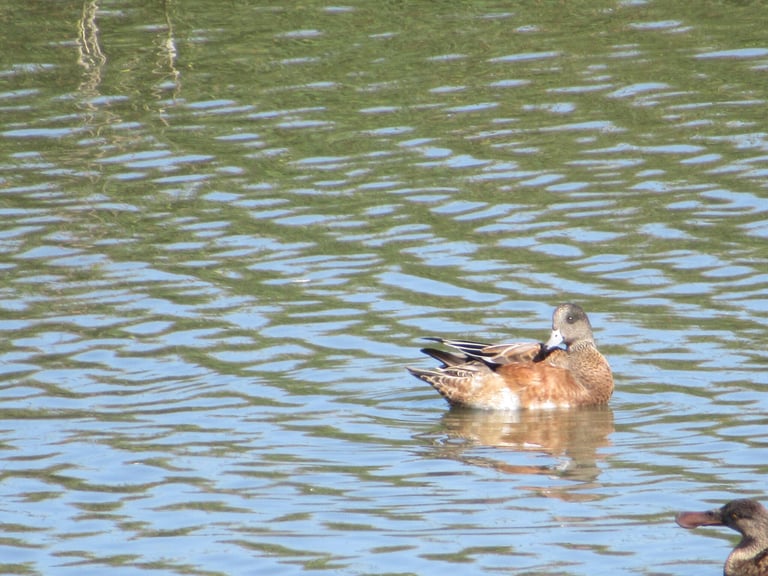
The Mexican duck is a dabbling duck of the family Anatidae that breeds in Mexico and the southwestern United States. It is a close relative of the mallard, and the two species interbreed where their ranges meet. Its conservation status is Least Concern, yet the population is declining slowly but markedly, which makes it an unusual case of a bird that is common enough to avoid listing but still under pressure.
Identification and Appearance
The Mexican duck is mainly brown, and its most useful field mark is a blue speculum edged with white, which shows clearly in flight and while the bird rests. Adults measure 45–55 cm in length and weigh 849–1,243 g. The male has a brighter yellow bill than the female, so bill color is the easiest way to separate the sexes in good light.
Distribution and Habitat
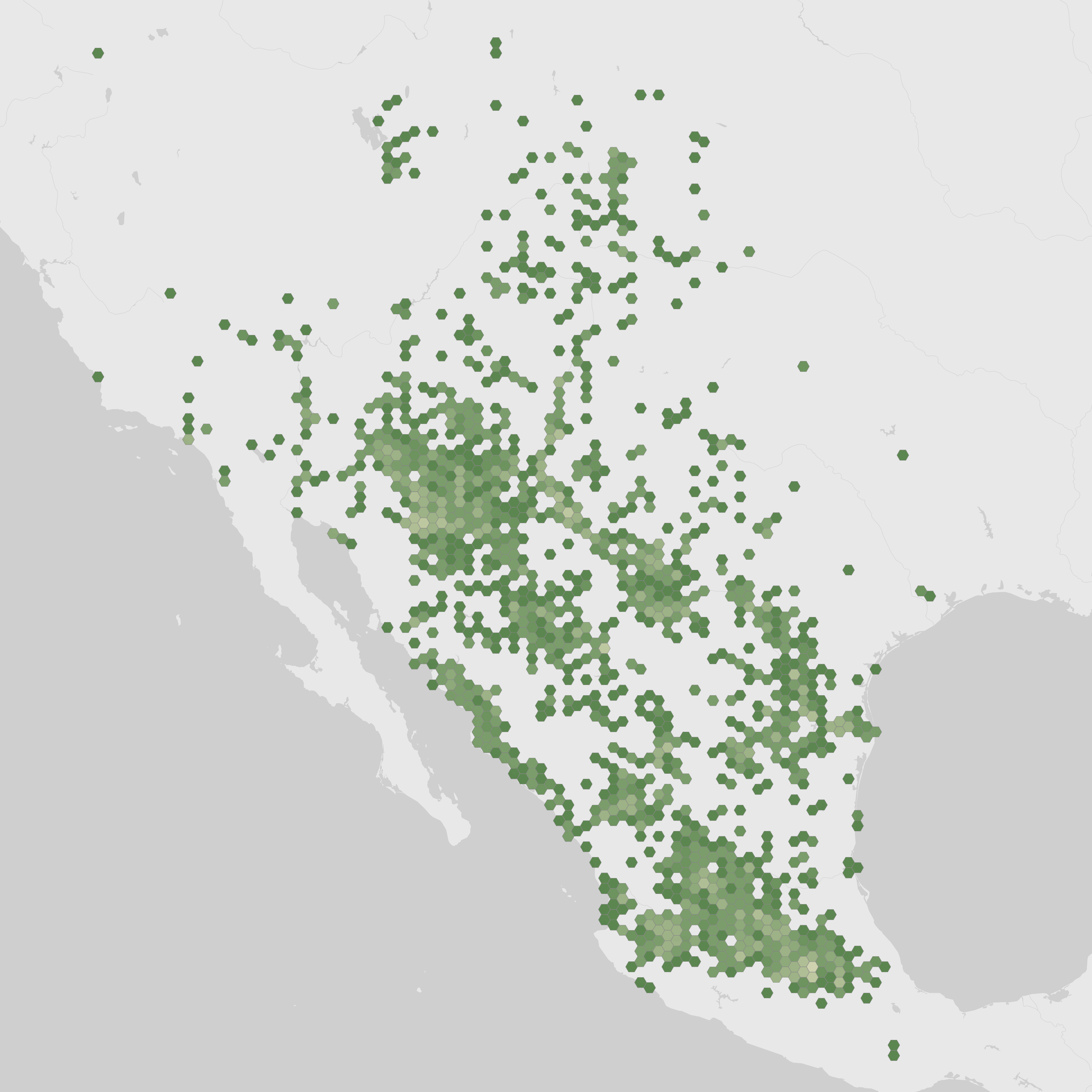
The Mexican duck breeds in Mexico and the southwestern United States. Most of the population stays resident all year, but some northern birds migrate south to Mexico in winter. The species also occurs in limited numbers in Colorado in every season, and photographs of birds of this form exist from Utah, Wyoming, Nebraska and Montana. It lives in almost all aquatic habitats, from wetlands to freshwater, and observation records peak in April and dip in June.
Behavior and Lifestyle
The Mexican duck feeds mainly on seeds and aquatic plants. The male gives a nasal call, while the female has the familiar quack associated with ducks. Females lay two to ten eggs per clutch, and the eggs take 26 days to incubate.
Conservation and Threats
The Mexican duck is listed as Least Concern, but it is undergoing a slow yet marked decline. Habitat destruction and overhunting drive the decline. The species hybridizes with mallards, which handle human-altered habitat better and are spreading across its range. Researchers have raised concern that these combined pressures could eventually lead to the disappearance of the Mexican duck as a recognizable taxonomic entity. Wetland preservation and preferential hunting of drake mallards would prevent this outcome, and the United States Fish and Wildlife Service listed the species as endangered in 1967 and removed it from the list in 1978.
Photos
Photographs from by Alberto Sánchez via iNaturalist, licensed under CC BY 4.0., by Mauricio Calderón via iNaturalist, licensed under CC BY 4.0., by Court Harding via iNaturalist, licensed under CC BY 4.0., by Karla M. Benítez via iNaturalist, licensed under CC BY 4.0., by Norma Piedra via iNaturalist, licensed under CC BY 4.0., by Carlos Martínez via iNaturalist, licensed under CC BY 4.0., by Alexis López Hernández via iNaturalist, licensed under CC BY 4.0., by Claudia Ramírez via iNaturalist, licensed under CC BY-SA 4.0., by ALAN SCHMIERER via Wikimedia Commons, licensed under CC0 1.0., by Ron Knight from Seaford, East Sussex, United Kingdom via Wikimedia Commons, licensed under CC BY 4.0., by Andy Reago & Chrissy McClarren via Wikimedia Commons, licensed under CC BY 4.0., by Bettina Arrigoni via Wikimedia Commons, licensed under CC BY 4.0., by Secretaría de Cultura CDMX via Wikimedia Commons, licensed under CC BY 4.0., and by ProtoplasmaKid via Wikimedia Commons, licensed under CC BY 4.0., credited on each photo.
Ecology and classification
Classification
- Phylum
- Chordata
- Class
- Aves
- Order
- Anseriformes
- Family
- Anatidae
- Genus
- Anas
- Species
- Anas diazi
Sources
- GBIF Species names and classification
- iNaturalist Photos
- Wikidata Common names and conservation status
- Wikipedia Summary extract
- Wikimedia Commons Photos