Few flying birds weigh as much as the mute swan, which is among the heaviest birds able to take to the air. It belongs to the family Anatidae, the waterfowl family, within the order Anseriformes.
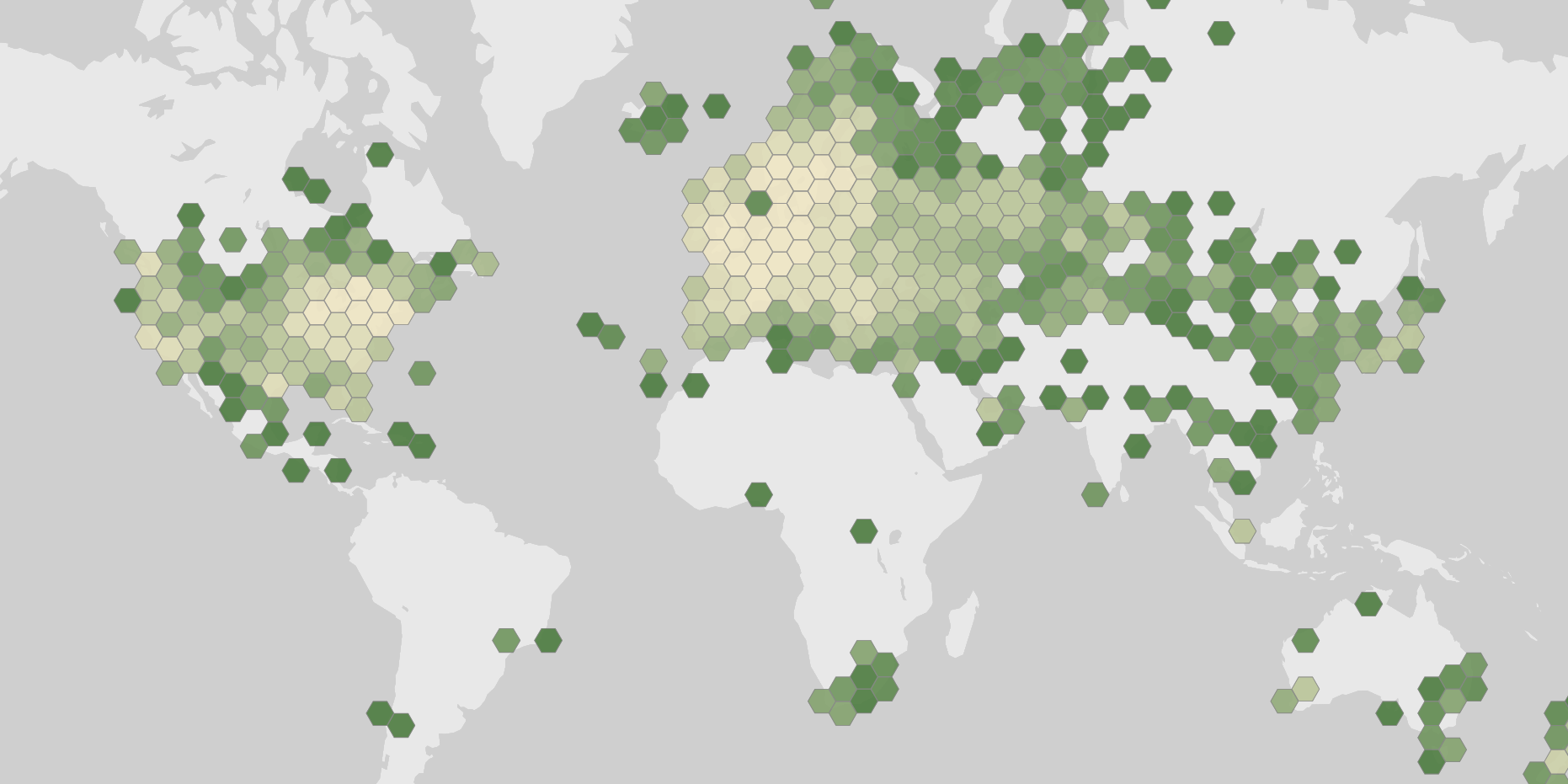
The species is native to much of Europe and parts of Asia, and it reaches the far north of Africa. It has also been introduced to North America, where it has the largest populations outside its native range, with smaller introductions in Australasia and Southern Africa. Adults can live up to about , and the species occupies a range of about .
The IUCN lists the mute swan as Least Concern. Its large size, its striking white plumage and its growing role in North American wetlands make it a species worth knowing.
Identification and Appearance
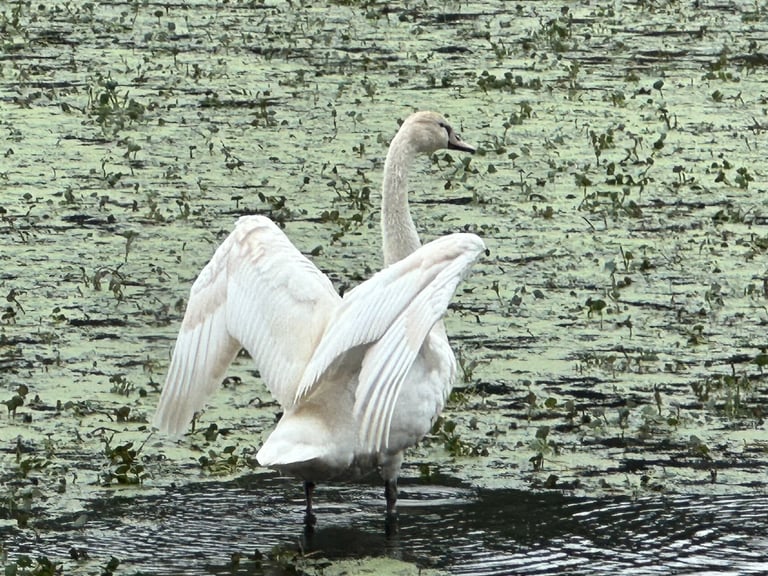
The adult mute swan is wholly white, with a bright orange bill that has black around the nostrils and a black nail. Its legs are dark grey. The most useful field mark is the pronounced knob at the base of the bill, which is larger in males.
Adults typically measure 140 to 160 cm (55 to 63 in) in length, and they have a wingspan of 200 to 240 cm (79 to 94 in). Males, called cobs, are larger than females, called pens. In Great Britain, cobs averaged about 10.6 to 11.87 kg, while pens averaged about 8.5 to 9.67 kg.
The feathers, especially on the head and neck, are often stained orange-brown by iron and tannins in the water, so a swan that looks rusty is still a mature mute swan. When swimming, it holds its neck in a graceful curve with the bill pointing downward. Other swans carry their bills level and their necks erect.
Young birds, called cygnets, are not white. Their bill is dull greyish-black for the first year, and their down ranges from white to grey to buff, with grey or buff the most common. Cygnets keep their grey feathers until they are at least one year old.
Distribution and Habitat
The mute swan is found naturally mainly in temperate areas of Europe and across the Palearctic, reaching east to Primorsky Krai. It generally inhabits freshwater areas, including lagoons, lakes and slow-flowing rivers, and it favors medium to large bodies of water.
Outside the breeding season, the swan also uses terrestrial habitats, particularly those near water. Parks and country estates in its native range often hold swans, and in winter the birds are more common on marine waters, in well-sheltered bays, open marshes, lakes and ponds.
Seasonal movement varies by population. Birds breeding in Mongolia, eastern Russia and China migrate thousands of kilometers south-east to winter along the lower Yellow River, the western Yellow Sea and the east coast of North Korea. This journey takes 30 to 32 days. Many birds in West and Central Asia move south to the shores of the Caspian Sea, as far as Iran and Afghanistan, and more move in harsher winters.
Birds in Britain, Ireland and northwestern and central Europe usually stay put, though short movements may occur in severe weather. In North America, the mute swan is largely sedentary or makes short movements shaped by the weather.
Behavior and Lifestyle
Mute swans are usually strongly territorial. A single pair typically holds a territory of 4 to 10 acres, which can include an entire small lake or pond. Unlike black swans, they rarely share water, except where a large area of good feeding habitat exists.
In a few places, mute swans nest in colonies. The largest colonies have over 100 pairs, such as at Abbotsbury Swannery in southern England and at Ottenby Preserve on the southern tip of Öland in the Baltic Sea. Nests there can be as little as 2 m (7 ft) apart.
Non-mated juveniles up to 3 to 4 years old form larger flocks, sometimes totaling several hundred birds, often at regular traditional sites. In winter, gatherings of more than 100 individuals occur on open salt water. Mute swans do not make mass migrations.
When they feel threatened, mute swans use a busking display, with the neck curved back and the wings half raised, while both feet paddle in unison. They can also use this posture to sail over several hundred meters with the wind.
Communication
Mute swans have keen vision and hearing, and they rely on visible signals more than sound. In an aggressive posture, males often arch their secondary wing feathers over their backs, and a threatened swan may hold a busking display.
The species is usually silent. Adults sometimes snort, hiss, or make puppy-like barking notes and whistles, but these sounds do not carry far because of the straight trachea. During courtship, a pair utters a rhythmic song that helps synchronize their head and neck movements.
The most audible sound is the throbbing or humming of the wings in flight. It can be heard from 1 to 2 km (0.6 to 1 mi) away, and it works as a contact sound between birds in flight. Cygnets whistle and chirp when content and give a harsher chirp when distressed or lost.
Recordings
wingbeats · Netherlands · Joost van Bruggen · CC BY-SA
Diet and Nutrition
Mute swans feed mainly on aquatic vegetation, and they also take small amounts of aquatic insects, fish and frogs. Their diet is largely herbivorous, with leaves, roots, tubers and algae among the plant foods.
The swans do not dive. Instead, they plunge their heads and long necks below the surface. They feed in deeper water than ducks and other waterfowl that share their habitat, so they do not compete with those birds directly. Parts of the plants they uproot float to the surface, which makes food available to other birds. Mute swans do compete with other swans, because they feed in similar ways.
Among animal prey, frogs and toads are the main group, including water frogs, toads, spadefoots and tree frogs. Insects, mollusks and aquatic worms are taken in small amounts.
Nesting and Breeding
Mute swans form monogamous pairs for at least one season, though they are not paired for life. Established pairs are more successful breeders than newly formed ones, and some individuals change mates after a failed season.
Breeding begins in March or early April. Pairs build a large nest of aquatic vegetation, lined with feathers and down, well above the normal water level in swampy places near a pond or lake. They may also use an existing mound, such as a muskrat house, and they often reuse the same nest each year, restoring it as needed. Clutches are typically 5 to 7 eggs, and 5 to 12 is possible. The pale grey to pale blue-green eggs are incubated for 36 to 38 days, and the female sits most of the time while the male stands guard. Cygnets normally hatch between May and July, weighing 180 to 248 g (6.3 to 8.7 oz) each.
The first-hatched cygnet is often led to the water by the male while the female keeps incubating. Cygnets can ride on the backs of their parents or shelter under their wings, especially during heavy rain. They can fly about 60 days after hatching but fledge after 120 to 150 days, and they reach about 70 to 75% of adult mass at fledging.
By the following breeding season, the parents drive the young away. The young join flocks of non-breeding swans and molt their flight feathers, becoming flightless for a short time. Mute swans begin breeding at about three years old.
Population and Ecological Role
The native population is about 500,000 birds at the end of the breeding season, including adults and young. Up to 350,000 of them live in Russia, and the largest single breeding concentration is about 11,000 pairs in the Volga Delta.
In the United Kingdom, the population is about 22,000 birds, down slightly from a peak of about 26,000 to 27,000 in 1990. This includes about 5,300 breeding pairs. Germany holds about 6,800 to 8,300 breeding pairs, and Poland about 4,000 to 4,200.
Mute swans shape wetland plant communities through their grazing. In North America, where the species is now widespread, studies have concluded that mute swans severely reduce the density of submerged vegetation. Predators such as carnivores and birds of prey take cygnets, while healthy adults are rarely preyed upon.
Conservation and Threats
The IUCN classifies the mute swan as Least Concern, so the species is not considered at risk across its native range. Its numbers recovered after 19th and early 20th century hunting, and the population later expanded again.
Lead poisoning was once a serious threat. From about 1960 to the early 1980s, numbers fell in many parts of England, mainly because birds swallowed lead shot and discarded fishing weights. After lead weights were largely replaced, numbers increased rapidly.
The main threats today include collisions with power lines and attacks by out-of-control dogs, which are treated as a crime in British law. Dogs and people attack swans in some parks where the birds are less territorial.
In North America, the mute swan is regarded as invasive. Its numbers rose at an average rate of at least 10% per year in the lower Great Lakes between 1971 and 2000, and its aggression can drive off native species such as trumpeter swans and common loons. Wildlife managers seek to control it where native wildlife is threatened. In 2005 the United States Department of the Interior declared it a non-native, unprotected species.
Cultural Significance
Mute swans were domesticated for food in Britain for many centuries. Owners marked the birds by nicking their webs or beaks, and the marks were registered with the Crown. Unmarked birds became property of the Crown, which is why the swan is called the 'Royal Bird'. Domestication also saved the species from being hunted to extinction there.
The mute swan has been the national bird of Denmark since 1984. Hans Christian Andersen's fairy tale 'The Ugly Duckling' tells the story of a cygnet that matures into a graceful swan.
The Sydney Swans Football Club adopted the mute swan as its symbol because it matched the team's red and white colors. The swan's plumage on the logo is designed to replicate the sails of the Sydney Opera House.
Photos
Photographs from via iNaturalist, licensed under CC0 1.0., by Liem Malarney via iNaturalist, licensed under CC BY 4.0., by Ксения Волянская via iNaturalist, licensed under CC BY 4.0., by Ross McCallum via iNaturalist, licensed under CC BY 4.0., by Holly Hodges via iNaturalist, licensed under CC BY 4.0., by Bernd De Bosscher via iNaturalist, licensed under CC BY 4.0., by Coralie via iNaturalist, licensed under CC BY 4.0., by Karen Offereins via iNaturalist, licensed under CC BY 4.0., and by Nigel Bentley via iNaturalist, licensed under CC BY 4.0., credited on each photo.
Ecology and classification
Classification
- Phylum
- Chordata
- Class
- Aves
- Order
- Anseriformes
- Family
- Anatidae
- Genus
- Cygnus
- Species
- Cygnus olor
Sources
- GBIF Species names and classification
- iNaturalist Photos
- Wikidata Common names and conservation status
- Wikipedia Summary extract
- Xeno-canto Audio recordings
- Animal Diversity Web Animal habitat, behavior and diet
- AnAge Longevity
- AVONET Bird mass, habitat, migration, diet and range size
- GloBI What it eats, what eats it, parasites and pollinators
- trophiCH
- Wardeh et al. 2015 (EID2)
- HWML Parasite Collection
- TETRA-EU