Mycena galericulata is the type species of the entire genus Mycena, yet mycologists spent nearly fifty years unsure it even belonged there: first described in 1772, it was not classified as a Mycena until 1821.
Known by several common names, including the common bonnet, toque mycena, and rosy-gill fairy helmet, this small mushroom belongs to the family Mycenaceae within the order Agaricales. It grows on decaying wood across the temperate Northern Hemisphere, appearing in small clusters on logs and stumps from late spring through early winter.
Its abundance and wide range make it one of the most frequently encountered wood-decay mushrooms in temperate forests, while its cluster of similar-looking relatives gives it an outsized role in testing the skills of anyone trying to tell one small brown mushroom from another.
Fruiting Body and Identification
The most reliable field mark is the cap's transformation with age: starting roughly conical, it expands into a broad bell shape or develops a wide umbo, reaching 2–5 cm across. Radial grooves run almost to the center, giving the surface a greasy but never sticky feel. Coloring fades from buff-brown at the margin to a pale, dirty tan or cinnamon-brown, and the margin itself often splits radially as the cap ages.
The gills are narrowly to broadly attached, sometimes sinuate, with 26 to 36 gills reaching the stem plus several tiers of shorter lamellulae. They are moderately broad at 5–7 mm, marked by conspicuous cross-veins (intervenose), and begin white to grayish white before flushing pale pink as the mushroom matures.
The stem measures 5–9 cm long and only 2–4 mm thick, staying equal in width along its length and hollow inside, with a cartilage-like texture. It is pale grayish white above and pale grayish black below, often extending into a long underground pseudorrhiza at the base; in age the base turns dirty brown but never stains reddish. The flesh is watery gray and cartilaginous, with an odor and taste that is mildly to strongly farinaceous, similar to fresh flour, sometimes shading toward radish.
The spore print is whitish, and the amyloid spores measure 8–10 by 5.5–7 μm. Several similar Mycena species overlap in range, but all are smaller: M. tintinnabulum has a brown cap under 2.6 cm with a hairy base, M. maculata develops pink-staining gills, M. inclinata shows reddish spots and threadlike stem flecks, and M. haematopus bleeds reddish-brown juice when its stem is cut. M. excisa looks nearly identical but can only be separated using microscopic cystidia features.
Distribution and Habitat
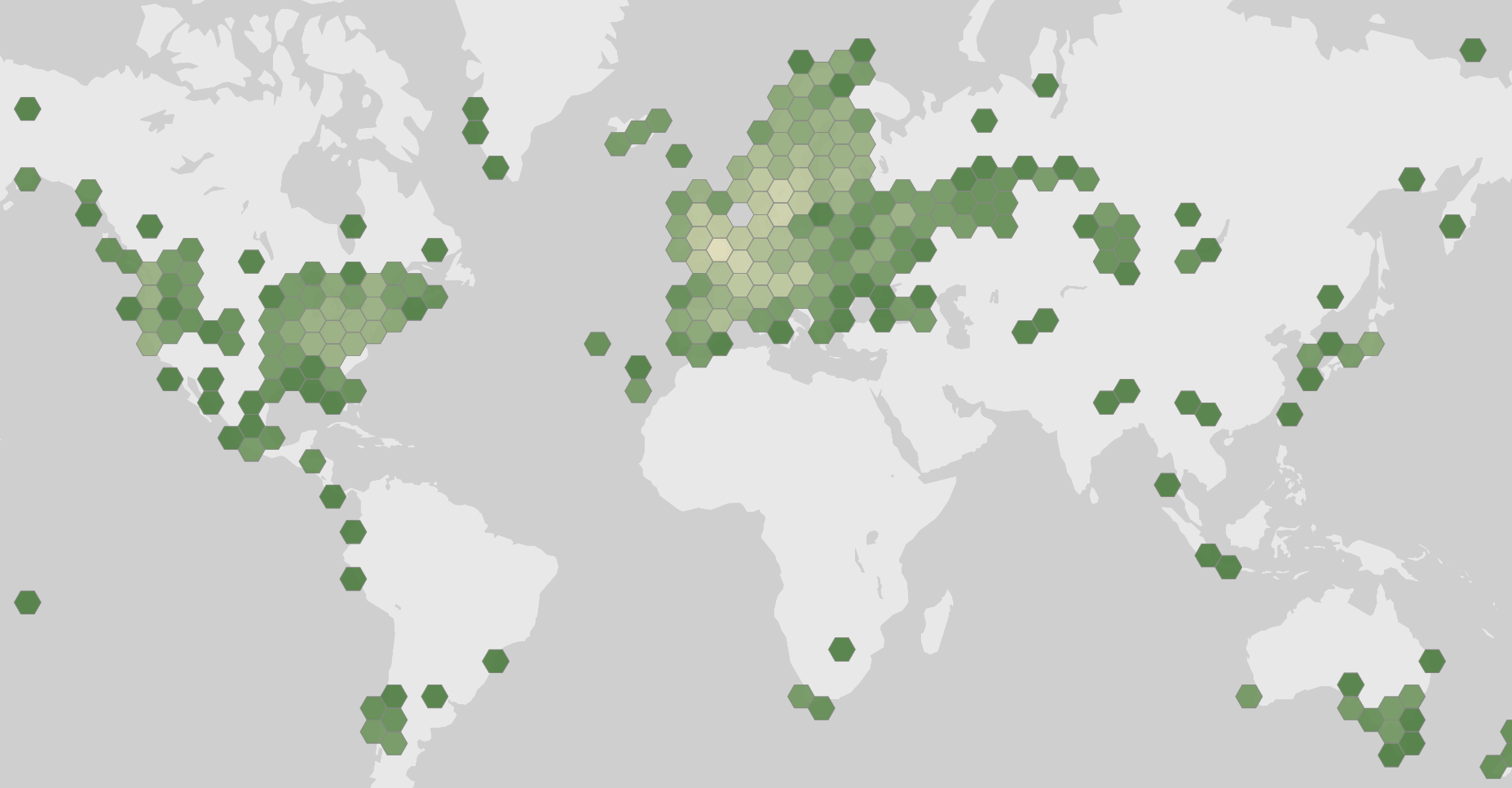
Mycena galericulata occurs across the entire temperate zone of the Northern Hemisphere, from eastern North America and the Pacific Coast of the United States to Europe and, as of a 2025 collection, Inner Mongolia and central and northeast China. It has also been recorded in Edo State, Nigeria. Reports from Australia are probably based on misidentification.
The fungus is saprobic, growing on decaying hardwood and softwood in the form of sticks, chips, logs, and stumps, typically in small clusters or occasionally alone. It can also emerge from wood buried underground, which sometimes gives it a misleadingly terrestrial appearance. Fruiting runs from late spring to early winter.
In a Finnish coniferous forest study, M. galericulata was shown to produce extracellular enzymes such as β-glucosidase, β-xylosidase, α-glucosidase, butyrate esterase, and sulphatase in the humus and eluvial soil layers, breaking down cellulose, hemicellulose, and starch as part of nutrient cycling. Lead contamination in soil reduces both the fungus's growth and its enzyme activity.
GBIF observation records, which reflect where the species has been reported rather than its actual abundance, show a sharp rise in sightings from August through October, with the highest counts in September; this pattern likely tracks peak fruiting season rather than any change in the fungus's underlying range.
Uses and Cultural History
Mycena galericulata carries little documented cultural weight of its own, but it belongs to a genus long tied to the folklore of glowing forest lights known as foxfire, a phenomenon attributed to the bioluminescent properties found in some Mycena mushrooms.
Unlike psilocybin mushrooms or reishi, this species has no recorded connection to medicinal or shamanic traditions, and it was not revered within any specific indigenous or religious cultural system known to modern mycology.
Fun Facts
- The genus name Mycena references the hats of the ancient Mycenaeans, while galericulata derives from the Latin galer, meaning 'with a small hat'.
- Mycena galericulata is the type species of the entire genus Mycena, the reference point against which other species in the genus are compared.
- Some Mycena mushrooms are bioluminescent, a trait behind old forest folklore about glowing lights known as foxfire.
- The adult pleasing fungus beetle Tritoma humeralis has been recorded occasionally feeding on this mushroom.
- Despite belonging to a genus with bioluminescent folklore ties, M. galericulata itself has no recorded medicinal or shamanic tradition.
Ecology
Habitat
- Forest