The bleeding bonnet, Mycena sanguinolenta, is a mushroom that bleeds. When fresh, its fruit bodies release a dark reddish-purple sap, and its caps are reddish-brown to reddish-purple, up to 1.5 cm wide.
The mushroom belongs to the family Mycenaceae and is common and widely distributed. It has been found in North America, Australia, and Eurasia, and it grows on the forest floor on slender stipes up to 6 cm high.
The fungus produces alkaloid pigments that are unique to the species and is bioluminescent, one of more than 30 Mycena species that glow. Its edibility has not been determined.
Fruiting Body and Identification
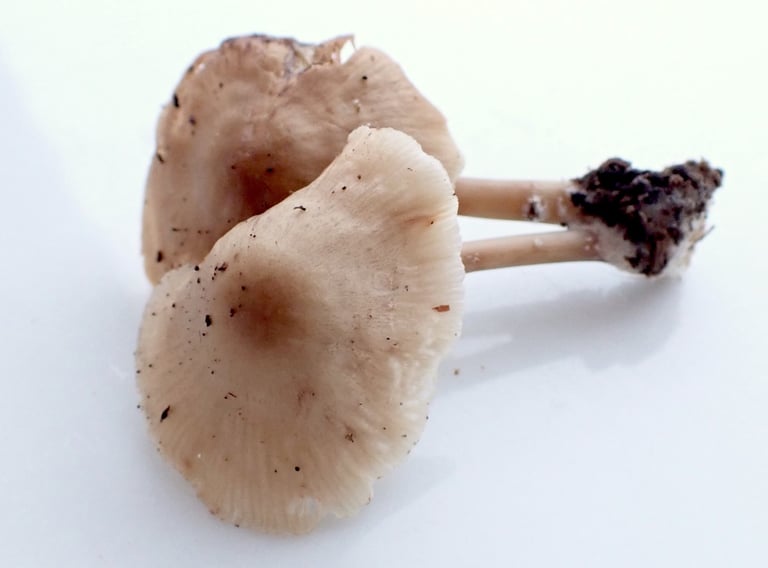
The most reliable feature is the reddish cap and stem combined with the red juice. The cap is conic to bell-shaped when young, then becomes broadly convex or bell-shaped, reaching 3–15 mm across. Its surface is moist and smooth once a whitish powder has collapsed, and the color is always some shade of bright or dull reddish brown with a dull grayish-brown margin.
The gills are adnate or slightly toothed and well spaced. They are sordid reddish to grayish with dark reddish-brown edges, and the gill edges are consistently red. The stipe is 2–6 cm long and only 1–1.5 mm thick, with coarse white hairs at the base. It exudes a bright or dull-red juice when cut or broken.
The flesh is thin and sordid reddish, and it releases a reddish latex when cut. The odor and taste are not distinctive. The spores measure 8–10 by 4–5 μm and are roughly ellipsoid.
The similar M. haematopus is larger, a different color, and grows on rotting wood, and it has a sterile band on the cap margin. M. subsanguinolenta has yellower tones with red to orange juice and lacks pleurocystidia. M. plicatus has a furrowed cap but a tough stipe that does not ooze liquid when injured.
Distribution and Habitat
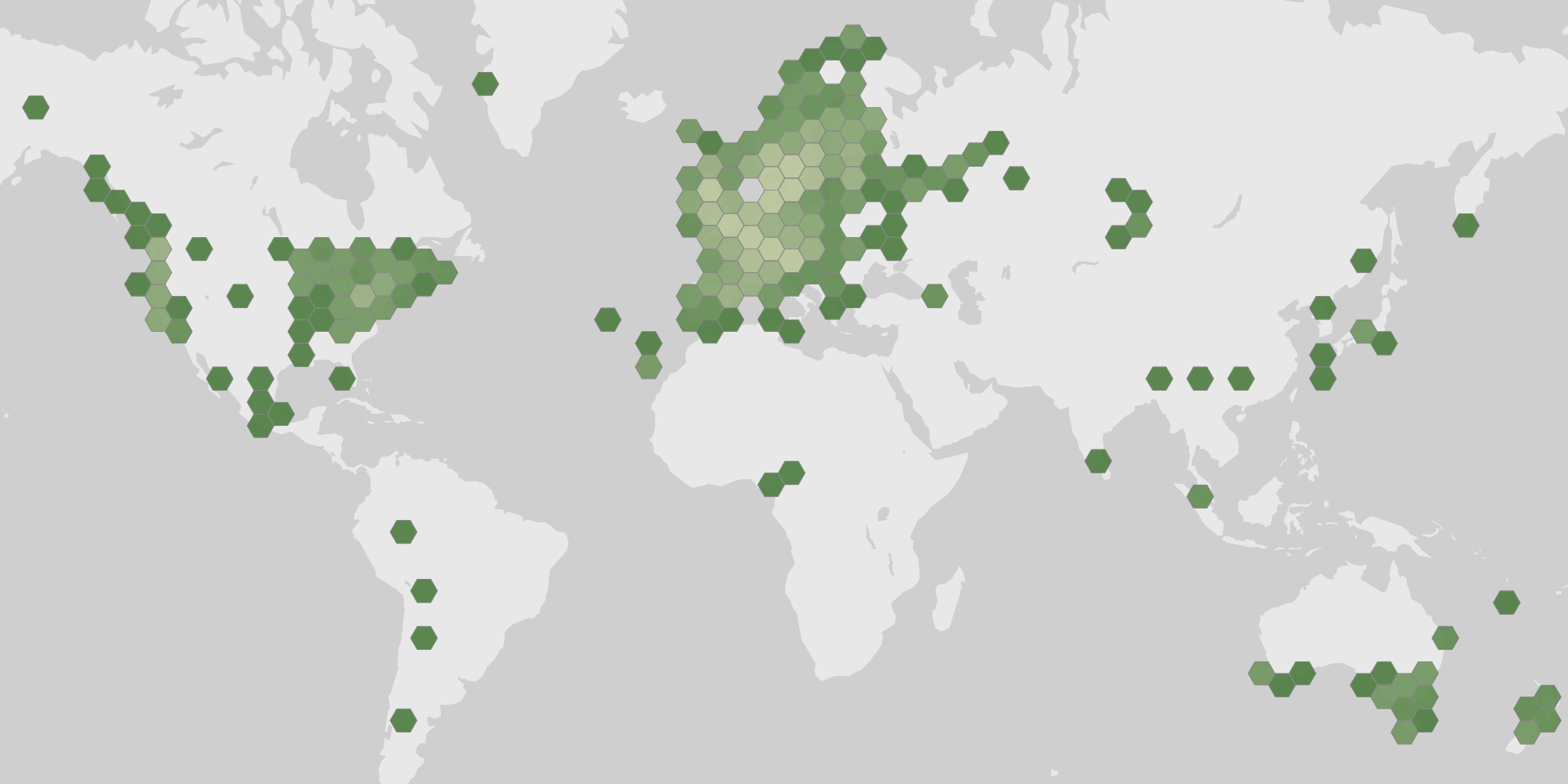
The species is common and widely distributed. In the United States it has been found from Maine to Washington and south to North Carolina and California, and in Canada from Nova Scotia to British Columbia.
It also occurs in Europe, including Britain, Germany, the Netherlands, Norway, Romania, and Sweden, and in Australia. In Asia it has been collected in the alpine zone of the Changbai Mountains in Jilin Province, China, and in the provinces of Ōmi and Yamashiro in Japan. In Jamaica it has been collected at an elevation of 1,800 m (5,900 ft).
The fruit bodies grow in groups on leaf mold, moss beds, or needle carpets. They appear in spring and fall and are common in fir and beech forests, where the soil is highly acidic. Observations peak in September.
Photos
Photographs from via iNaturalist, licensed under CC0 1.0., by Ondřej Křivan via iNaturalist, licensed under CC BY 4.0., by Jessica Williams via iNaturalist, licensed under CC BY 4.0., by Jacob Fauvelle via iNaturalist, licensed under CC BY 4.0., by Patrick Bayan via iNaturalist, licensed under CC BY 4.0., by Tomos Hughes via iNaturalist, licensed under CC BY 4.0., by Michel Langeveld via iNaturalist, licensed under CC BY 4.0., by Mark Breaks via iNaturalist, licensed under CC BY 4.0., by Daniel Ghyselinck via iNaturalist, licensed under CC BY 4.0., and by J Castillo via iNaturalist, licensed under CC BY 4.0., credited on each photo.
Ecology and classification
Classification
- Phylum
- Basidiomycota
- Class
- Agaricomycetes
- Order
- Agaricales
- Family
- Mycenaceae
- Genus
- Mycena
- Species
- Mycena sanguinolenta
Sources
- GBIF Species names and classification
- iNaturalist Photos
- Wikidata Common names and conservation status
- Wikipedia Summary extract