Unlike almost every other toad in Europe, the natterjack does not hop. Its unusually short legs give it a fast, mouse-like scuttle across open sand, a gait so distinctive that it is often the first clue to its identity before any marking is seen.
The Epidalea calamita is a member of the true toad family, Bufonidae, native to sandy and heathland habitats across Europe. Globally it is assessed as Least Concern, though it has vanished from large parts of its former range and survives today mostly in scattered coastal and heathland pockets. Its combination of loud nocturnal calls, temporary breeding pools, and a very particular habitat requirement makes it one of the more specialized amphibians of the European sand dune and heath landscape.
Identification and Appearance
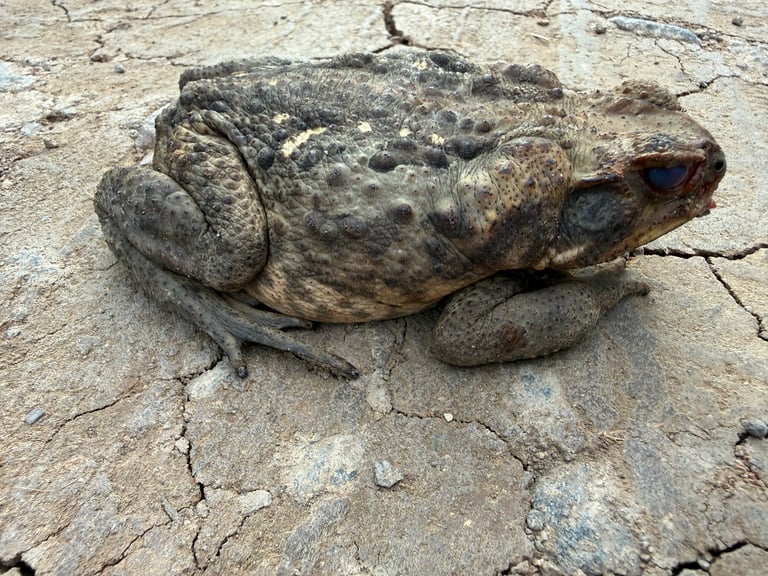
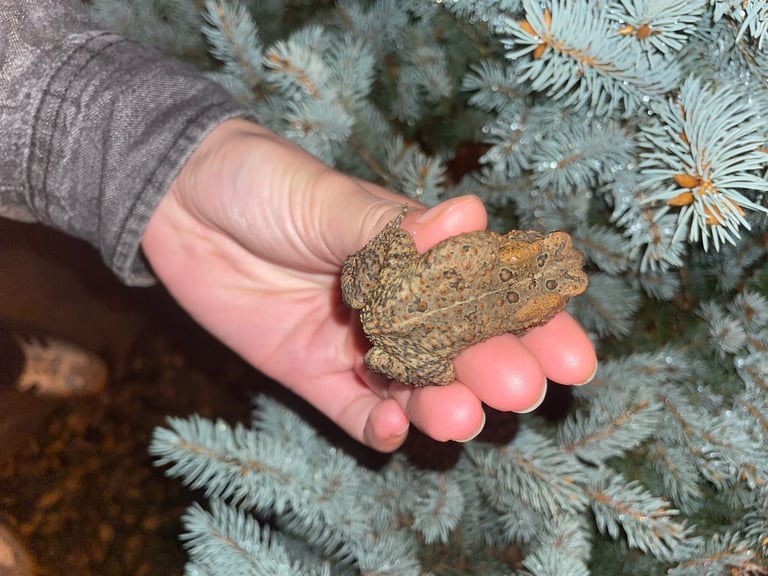
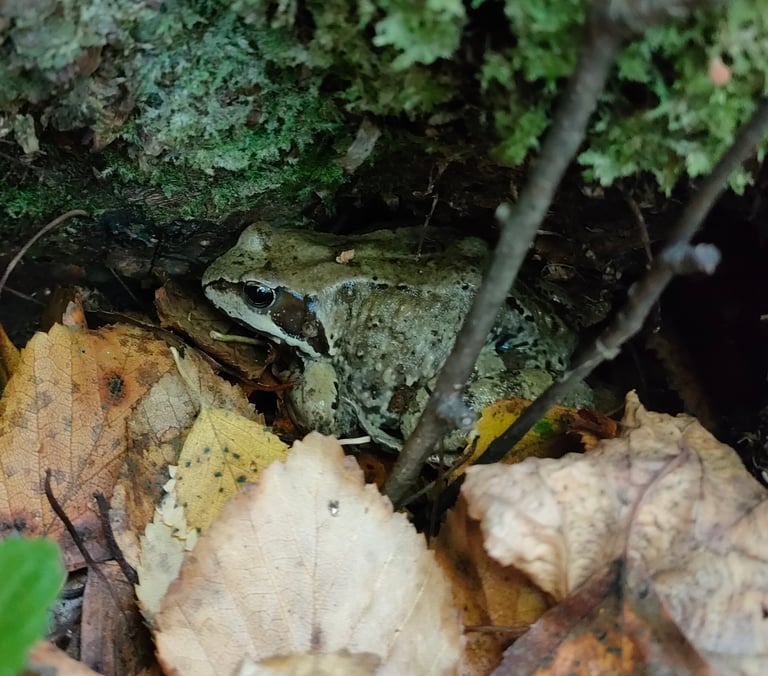
The clearest field mark is a narrow yellow stripe running down the middle of the back, a feature the common toad lacks entirely. This line, combined with parallel paratoid glands sitting behind the eyes, separates the natterjack from its more widespread relative at a glance.
Adults measure 60 to 70 millimeters (2.4 to 2.8 inches) in length, making them slightly smaller and squatter than the common toad. The body is broad and warty, typical of true toads, but the legs are noticeably shorter in proportion to the body.
That leg length is not just cosmetic. It changes how the animal moves: instead of the springing hops used by most toads and frogs, the natterjack walks or scurries in short, quick bursts, a gait unique enough among European amphibians to serve as a identification aid on its own.
The context does not detail differences between sexes, ages, or seasonal color changes, so no further distinctions can be drawn beyond the stripe, gland pattern, size, and gait described above.
Distribution and Habitat
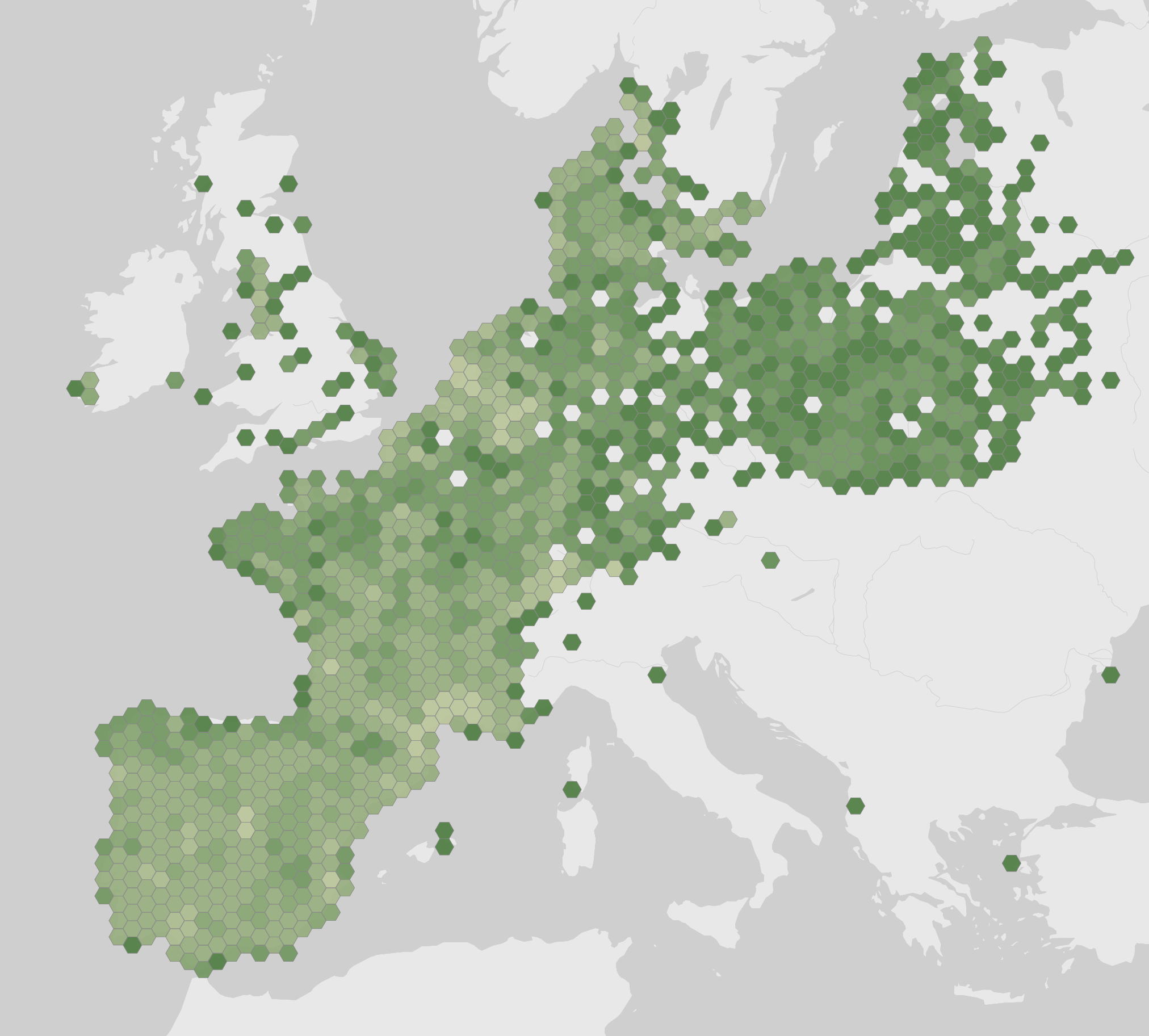
The natterjack toad occurs across 17 European countries, but its distribution within that range is patchy and closely tied to sandy or heathland ground. In Great Britain it has retreated almost entirely to coastal sites, a sign of how much inland heathland habitat has been lost. It is the only toad native to Ireland, where it survives in County Kerry, including the Dingle Peninsula and Derrynane, and in County Wexford, where it was introduced to a dune site rather than occurring naturally.
Further south and east on the European mainland, the species is less restricted to the coast. There it inhabits a broader range of inland habitats, reflecting milder climates and more available sandy or open ground away from the sea.
Monthly observation data show a sharp seasonal pattern, rising from around 2,000 records in January to a peak of over 40,000 in May before declining steadily through the second half of the year. This spike almost certainly reflects the spring breeding season, when adults gather at pools and become far easier to detect, rather than any real change in population size. As with all such observation counts, these figures record where and when the toad was seen, not how many exist or the full extent of its range.
Reproduction and Life Cycle
Breeding runs from late April through July, with strings of eggs laid in shallow pools that warm quickly in the sun. Because natterjacks often live at low density, their loud calls play a critical role: they are how scattered males and females manage to find one another across open ground.
The species has strict requirements for its spawning sites. Pools must have a very gently sloping bottom and only sparse vegetation, both on the banks and in the water itself. Such conditions are typically found in shallow, temporary pools that can dry out before tadpoles complete their development, a real risk for the species each year.
The natterjack offsets that risk by spreading its breeding effort over an extended season rather than a single short burst. As a result, juveniles found in September can range from one to three months old, having hatched from eggs laid at very different points in the summer. Toads that breed early in the season rarely breed again that year, though some females do manage to spawn twice.
Conservation and Threats
Globally the natterjack toad is listed as Least Concern, but that assessment masks serious regional declines, particularly in the United Kingdom and Ireland. In the UK its threatened status led to its inclusion in the national Biodiversity Action Plan as one of only three protected amphibian species.
The main pressures on the species stem from habitat loss and degradation. Human overpopulation has consumed the sandy, open ground the toad needs, while lowland heaths have deteriorated or disappeared outright. Coastal habitat has been further reduced by the construction of dykes and seawalls, and acid rain and other pollution have acidified the shallow pools the species depends on for breeding.
Protection efforts include a network of nature reserves across England, including Hoylake, Ainsdale Sand Dunes, North Walney, and Sandscale Haws, along with Caerlaverock in Scotland, where the species is confined to the Solway Firth. In Wales the natterjack went extinct during the 20th century but has since been reintroduced under the Biodiversity Action Plan. In Ireland, considered endangered, the National Parks and Wildlife Service has created new breeding ponds, and as of July 2021 a joint project with Fota Wildlife Park released 6,000 toadlets into natural habitat in County Kerry.
Conservation status
- LC
- NT
- VU
- EN
- CR
Least Concern
Fun Facts
- In parts of Europe, folk tradition held that a natterjack toad near a home was an omen about weather, luck, or household protection, an idea likely tied to its secretive, nocturnal habits and its sudden appearance after rain.
- The natterjack toad is used as a symbol by Dooks Golf Club in County Kerry, Ireland, a nod to one of the few places where the species survives in the wild.
Ecology
Habitat
- Wetland
- Coastal
- Shrubland
- Freshwater
Behavior
- Nocturnal