Few birds in South Asia are as common in city gardens as the pale-billed flowerpecker, a bird that weighs about and still thrives among houses and fruit trees. It is a member of the Dicaeidae, a family of tiny passerines that feed largely on nectar and fruit.
The species is found in India, Sri Lanka, Bangladesh and western Myanmar, across a range of about . It is listed as Least Concern by the IUCN.
Its bright, curved, pinkish bill sets it apart from other small birds in the region, and its loud, rapid chipping call is often heard before the bird is seen.
Identification and Appearance
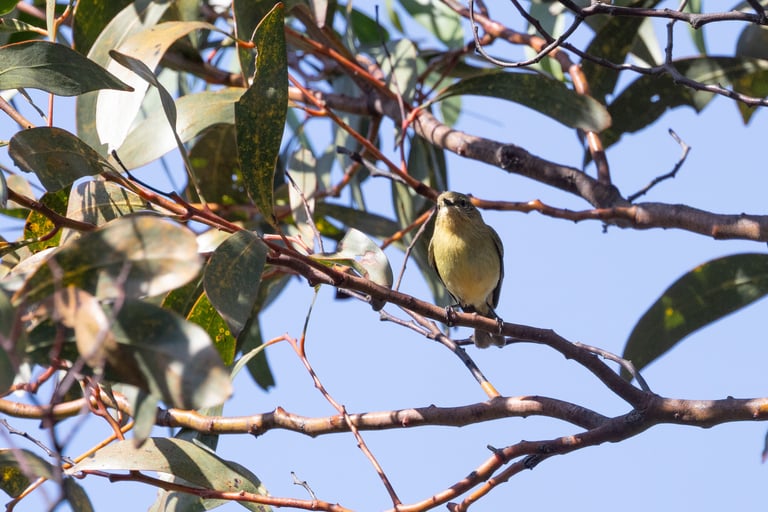
The easiest mark to note is the bill, which is pinkish and curved and separates this species from other flowerpeckers in the region. The plumage is otherwise plain, brownish to olive green, with no marking on the head.
At about 8 cm long and , it is one of the smallest birds in most parts of southern India and Sri Lanka.
The underparts are buff olive and do not contrast strongly with the upperparts. This separates it from the Nilgiri flowerpecker of the Western Ghats and Nilgiri Hills, which has whitish underparts and a pale eyebrow stripe, and from the thick-billed flowerpecker, whose underparts are streaked.
The Sri Lankan form, ceylonense, is greyer and smaller than the nominate race of peninsular India.
Distribution and Habitat
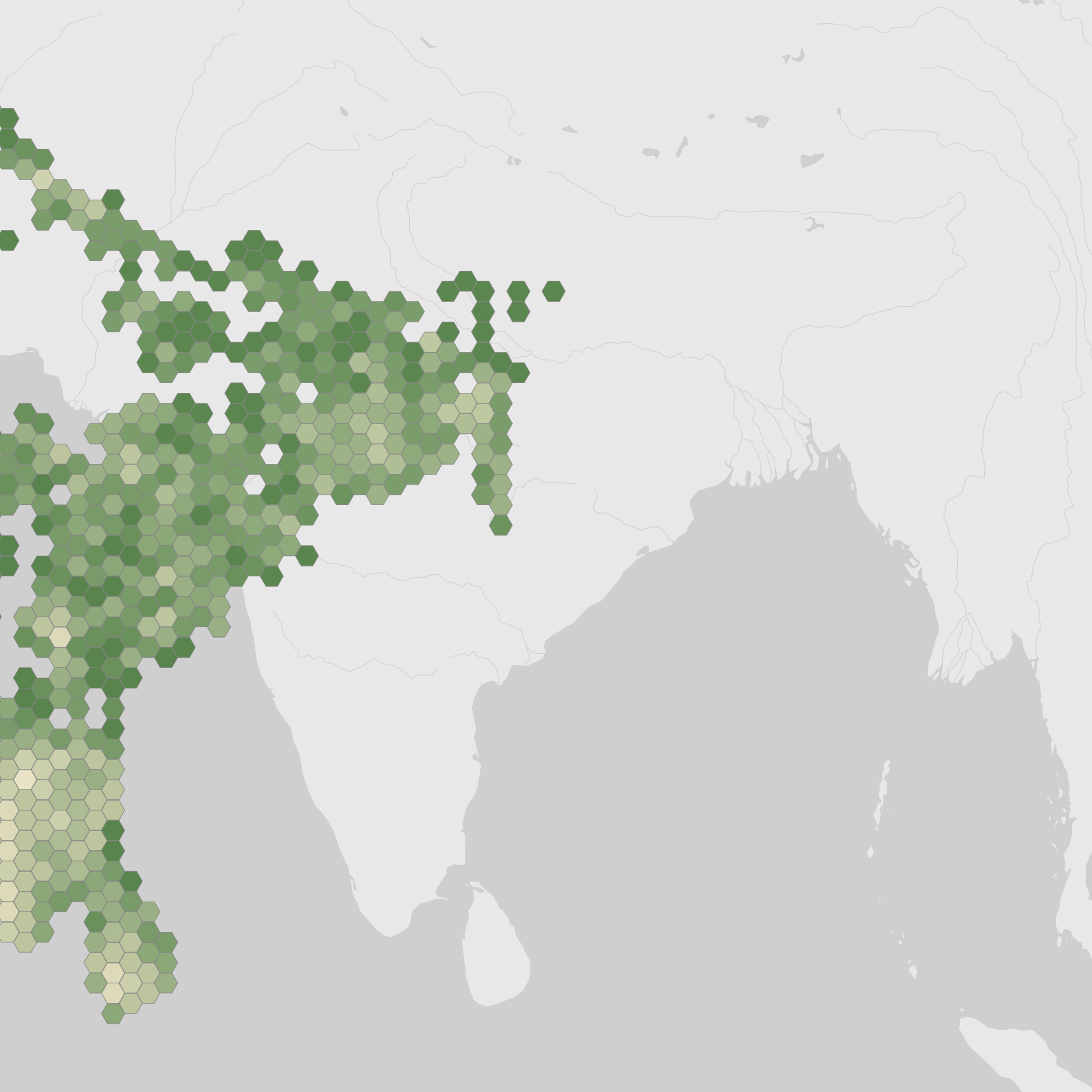
The pale-billed flowerpecker occurs in India, Sri Lanka, Bangladesh and western Myanmar, across a range of about . It is present in most parts of southern India and Sri Lanka.
It uses forest habitats and is usually found in semi-open woodland and forest edges. It is also common in towns and cities, where gardens with berry-bearing trees draw it in.
Sightings are most frequent in February and stay fairly high through the winter months, dropping somewhat during the middle of the year.
Behavior and Lifestyle
In forests, this flowerpecker often visits the flowers of Loranthus (Dendrophthoe) and Viscum, two groups of mistletoe-like parasitic plants. It swallows their berries whole, and the seeds pass through its gut in about three to four minutes. The seed comes out with a sticky coating, and the bird wipes its vent against a perch, sometimes turning around to do so. The seed then sticks to the branch, where it can germinate. Because of this, flowerpeckers are the main dispersers of these mistletoe seeds.
The birds also play a part in pollination. The flowers of Dendrophthoe falcata are pollinated by this species, and the flower buds release pollen in a sudden burst that coats the visiting bird's plumage.
In urban areas, it is drawn to introduced fruit trees such as Muntingia calabura. It swallows small fruits whole, but with ripe berries it often crushes the fruit and draws out the pulp with its tongue. It also sips nectar from flowers such as Sterculia colorata and Woodfordia floribunda, pollinating them as it feeds.
It is a perching bird that spends its time in the branches and does not migrate, staying in the same area through the year.
Recordings
uncertain · India · Jairam Vijayan · CC BY-SA
Nesting and Breeding
This species breeds from February to June, and some pairs raise a second brood in September. The timing lines up with the flowering and fruiting seasons of the trees it depends on.
The nest is a small, pendant, purse-like structure made of cobwebs, plant fibre, moss and down. It hangs from the tip of a twig high up in a tree, and its opening is a narrow slit.
The female lays a clutch of two or three eggs inside the nest.
Photos
Photographs from via iNaturalist, licensed under CC0 1.0., by Wolfgang Ahlmer via iNaturalist, licensed under CC BY 4.0., by sunnyjosef via iNaturalist, licensed under CC BY 4.0., by Paulmathi Vinod via iNaturalist, licensed under CC BY 4.0., by white_cheeked_barbet via iNaturalist, licensed under CC BY 4.0., by Dr. Chinchu C. via iNaturalist, licensed under CC BY 4.0., by Ajay via iNaturalist, licensed under CC BY 4.0., by Sameer Kulkarni via iNaturalist, licensed under CC BY 4.0., by Mitul and Vijul Singh via iNaturalist, licensed under CC BY 4.0., by Kesava Garimella via iNaturalist, licensed under CC BY 4.0., and by Ashwin A via iNaturalist, licensed under CC BY 4.0., credited on each photo.
Ecology and classification
Classification
- Phylum
- Chordata
- Class
- Aves
- Order
- Passeriformes
- Family
- Dicaeidae
- Genus
- Dicaeum
- Species
- Dicaeum erythrorhynchos
Sources
- GBIF Species names and classification
- iNaturalist Photos
- Wikidata Common names and conservation status
- Wikipedia Summary extract
- Xeno-canto Audio recordings
- AVONET Bird mass, habitat, migration, diet and range size