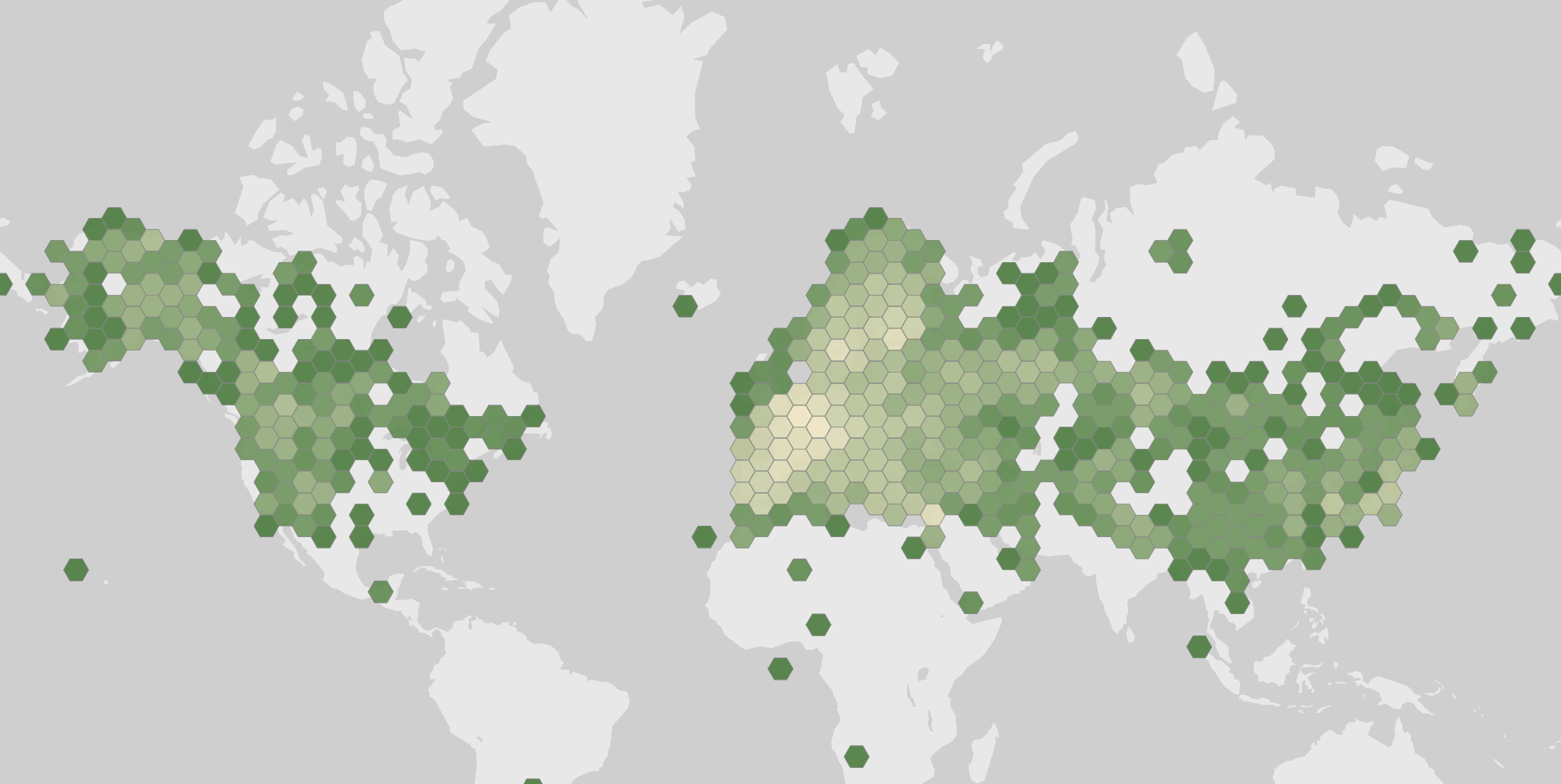
Despite its name, the Old World swallowtail is not confined to the Old World at all. Its range stretches from Europe and Asia across the Palearctic and into Alaska, Canada, and the United States, making Papilio machaon one of the most widely distributed butterflies on Earth.
Papilio machaon belongs to the family Papilionidae within the order Lepidoptera, and it is the type species of the entire genus Papilio — the reference point against which every other swallowtail is classified.
A butterfly this widespread, thriving from Arctic-adjacent tundra to warm temperate gardens, offers a striking window into how a single species can adapt to wildly different climates and elevations.
Identification and Appearance
The clearest field mark is the pair of tail-like extensions on each hindwing, the feature that gives this butterfly its common name from its resemblance to swallow birds. Just below each tail sits one red eyespot flanked by six blue ones, a combination that makes the species easy to confirm at rest or in flight.
Adults have a wingspan of 65 to 86 millimeters, with wings colored yellow and crossed by bold black vein markings. The overall pattern is consistent across the population, without strong differences described between sexes.
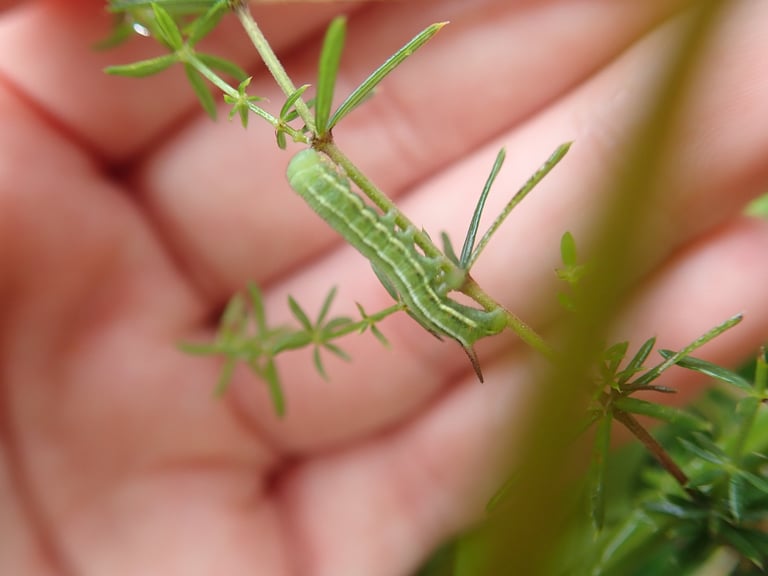
The caterpillar tells a different visual story across its life. It reaches 45 millimeters in length, and when young it resembles a bird dropping, an effective camouflage against predators. As it matures, it relies instead on a large orange fork that it can protrude from behind its head to startle attackers.
Where ranges overlap, close attention to detail matters. On Corsica and Sardinia, Papilio machaon shares habitat with Papilio hospiton, but it can be told apart by its distinctly longer hindwing tails. Separating it from the Algerian Papilio saharae is harder still, since the only reliable difference is the number of segments on the antennae.
Distribution and Habitat
This species occupies an unusually broad set of habitats for a butterfly, from grasslands and hilltops to mountains, forests, and even subarctic and Arctic tundra. It turns up at a wide range of elevations across temperate zones, with some populations pushing into savanna-like grassland edges as well.
Monthly observation counts rise sharply through the year, from just over a thousand records in January to a peak of more than 138,000 in July, before falling back below 2,000 by December. This pattern points to strong seasonal presence in the summer months, but the counts reflect where the species has been recorded, not its abundance or the full extent of its range.
Behavior and Lifestyle
Flight is the most conspicuous behavior of this species, marked by strong, fast wingbeats that are especially noticeable during May and June.
Activity follows a clear seasonal rhythm shaped by latitude. Populations in the north complete a single flight period sometime between May and July, while those farther south manage two separate flights in the same year.
Diet and Nutrition
Caterpillars feed on plants of the parsley family, with milk parsley serving as the main host in parts of Europe and a range of other umbellifers used elsewhere. Young caterpillars start out eating the leaves of whichever host plant they hatch on.
As the caterpillars grow larger, their preference shifts: they turn to eating the flowers of the same plants rather than the foliage.
Adults abandon solid food entirely. Once they emerge, butterflies feed only on the nectar of flowers, drawing energy from the same kinds of blooms that once fed them as caterpillars.
Reproduction and Life Cycle
Courtship begins with hilltopping, in which males gather near summits and use the vantage point to intercept females as they pass by. Breeding runs from May through July.
After mating, females lay spherical yellow eggs singly on milk parsley or other host plants. The species is gonochoristic with separate sexes, fertilization is internal, and development is oviparous. Beyond placing eggs on a suitable plant, parents provide no further care for their offspring.
Caterpillars grow quickly, alternating between bouts of feeding and rest. Once they reach sufficient size, they anchor themselves to a support with silk thread and settle into the pupal stage within about a day. How long the pupa takes to develop depends heavily on temperature: as little as one to two weeks in warm summer conditions, but potentially several months if conditions are cooler.
When the adult finally emerges, it releases a small amount of liquid, so a surface that can absorb moisture is important; on an impermeable surface the butterfly can end up wet and unable to fly properly.
Population and Ecological Role
Like most butterflies, Papilio machaon acts as a pollinator, and it is a frequent visitor to flowering herbs, pausing often to hover and sip nectar across alpine meadows and hillsides.
Males reinforce this ecological pattern through hilltopping, congregating near summits to intercept females, while the species as a whole occupies an unusually wide elevational niche. In Kashmir it ranges from about 610 meters in the valley floor up to 4,900 meters in the Garhwal Himalayas, though in Himachal Pradesh it stays above 1,200 meters and in Sikkim above 2,400 meters.
Elevation also sets the flight calendar: at lower elevations adults fly from March to September, while high-elevation populations are squeezed into a short summer window. Host plant use varies by region too, from wild carrot, wild angelica, fennel, and hogweed across much of Europe, Asia, and North America to a near-exclusive reliance on milk parsley by the British subspecies P. m. britannicus, which stays close to its fenland habitat rather than ranging widely like its continental relatives.
Conservation and Threats
Papilio machaon carries no special status on the IUCN Red List, the US Federal List, or CITES, and the Nature Conservancy ranks it G5, secure globally even though it can be locally rare. Past efforts to reintroduce the species to parts of England where it had disappeared were unsuccessful, though the notes suggest the attempt could be retried.
The picture looks different at a regional scale. The species is listed as vulnerable in the South Korean and Austrian Red Data Books and in the Red Data Book of the former Soviet Union, while in Armenia its population trend is stable and it is assessed as Least Concern.
Legal protection exists in several places: Papilio machaon machaon is protected by law in six Austrian provinces as well as in the Czech Republic, Slovakia, Hungary, Romania, and Moldova, and the species itself is protected in the United Kingdom. The subspecies verityi is protected in India.
In late 2017, the Estonian Society of Lepidopterists put the species forward as a contender for National Butterfly of Estonia. Nearly 5,000 members of the public voted, and Papilio machaon won decisively with 2,664 votes, later also being named Estonia's Butterfly of the Year for 2018.
Cultural Significance
Carl Linnaeus named this butterfly after Machaon, a healer in Greek mythology, son of Asclepius the god of medicine and brother of Podalirius. Machaon served as a physician at Troy, treating the wounds of heroes.
In ancient Greek mythology, the figure behind the name is associated with transformation and rebirth, a fitting connection for a butterfly whose own life cycle moves through such dramatic metamorphosis.
Among people today, the species draws interest through ecotourism, and despite its wide range it remains aesthetically distinctive and still rare in butterfly collections worldwide.
Fun Facts
- The species is named after Machaon, a mythological Greek physician-hero who treated wounded warriors at the siege of Troy.
- It is the type species of the genus Papilio, making it the taxonomic reference point for every other swallowtail Linnaeus and later scientists classified.
- In Greek myth, its namesake is linked to transformation and rebirth, an association that echoes the butterfly's own dramatic metamorphosis from egg to adult.
Ecology
Habitat
- Forest
- Mountain
- Grassland
- Tundra
Behavior
- Territorial
Diet
- Herbivore