Despite its name, the scarce swallowtail is actually a fairly common butterfly across much of its range; the "scarce" in its English name comes only from how rarely it strays into the United Kingdom.
This large, distinctive butterfly of the family Papilionidae is found across most of Europe, Asia Minor, Transcaucasia and eastward to Pakistan, India and western China. It is assessed as Least Concern by the IUCN. With its striped wings, trailing tails and deep roots in Greek mythology, it offers plenty to look for both in the field and in the stories behind its name.
Identification and Appearance
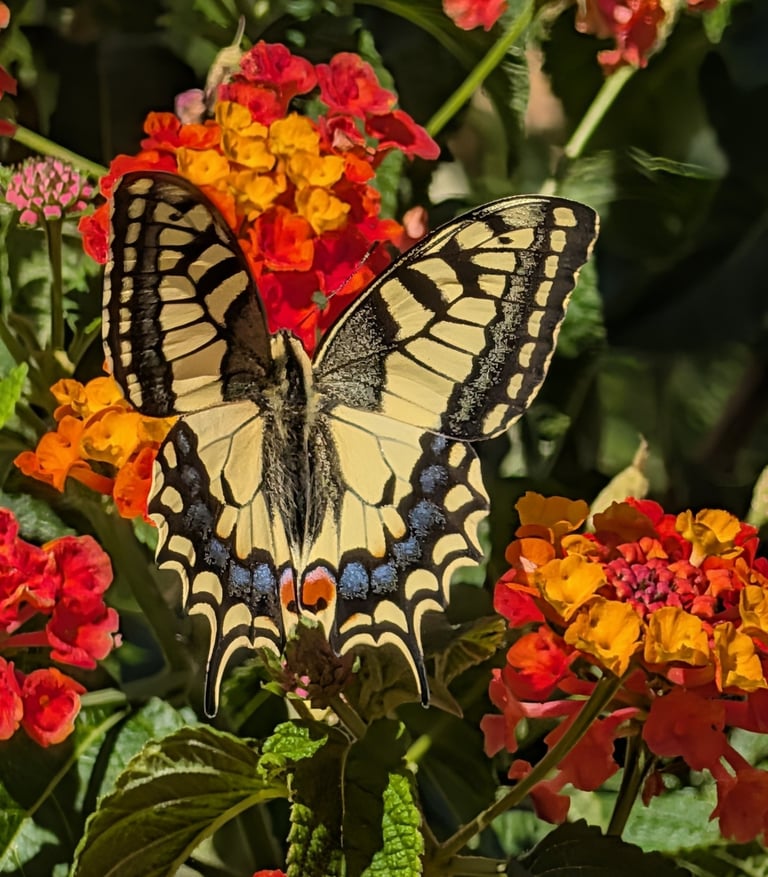
The most useful field mark is the pattern of six dark "tiger stripes" and wedge-shaped markings across pale creamy-white or pale yellow forewings, paired with long, slender tails on the hindwings.
It is a very large butterfly: males have a wingspan of 60 to 80 millimeters, while females are slightly larger at 62 to 90 millimeters. The hindwings carry blue crescent markings along their outer edge and an oblong orange spot near the rear corner, adding color to the otherwise black-and-cream pattern.
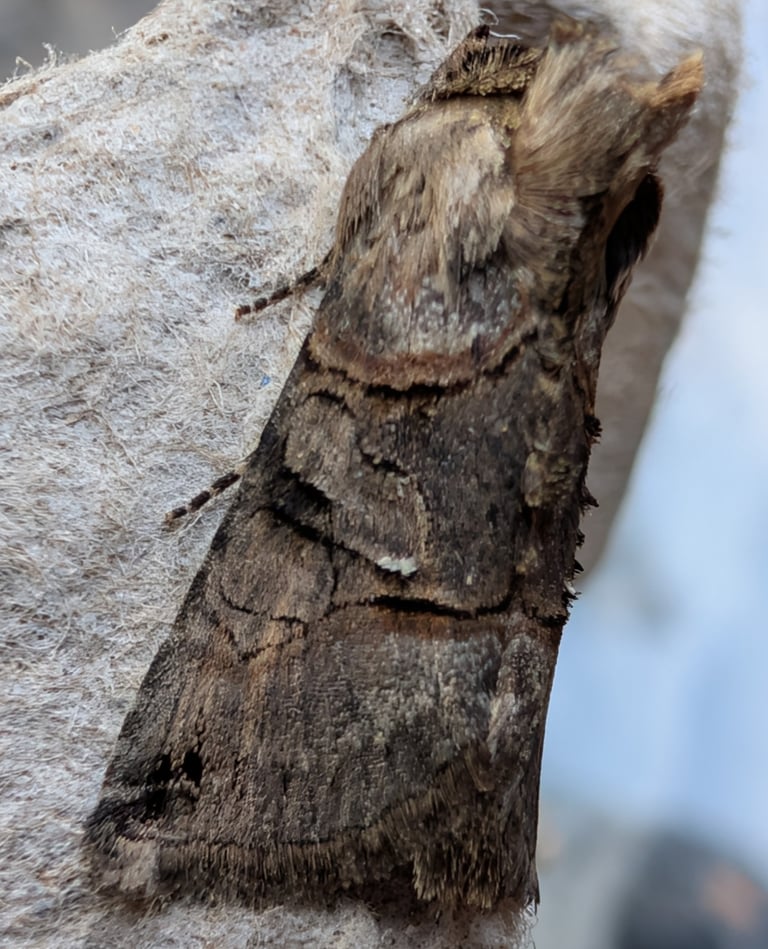
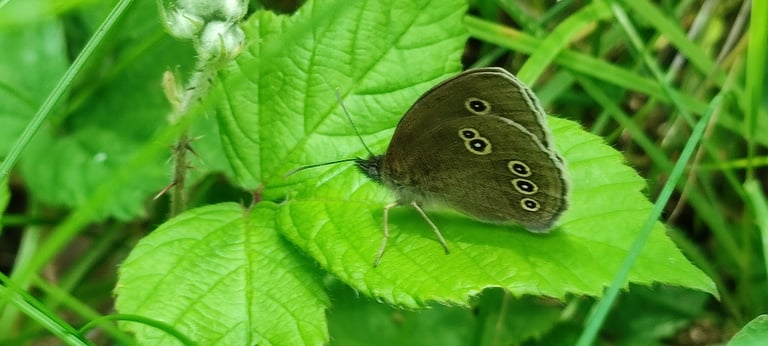
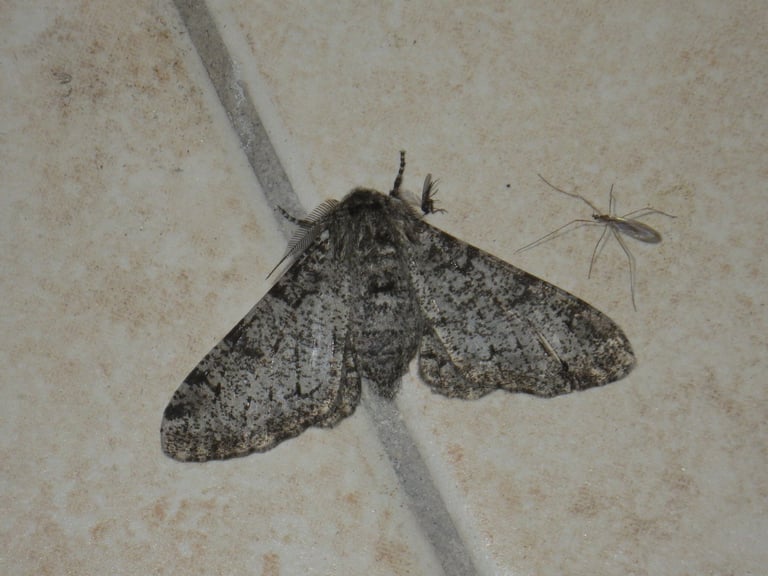
The species can be confused with several other swallowtails, including Papilio machaon, Papilio hospiton, Papilio alexanor and the North American Protographium marcellus, so the combination of tiger-striped forewings and long tails is the best way to separate it from its relatives.
Distribution and Habitat
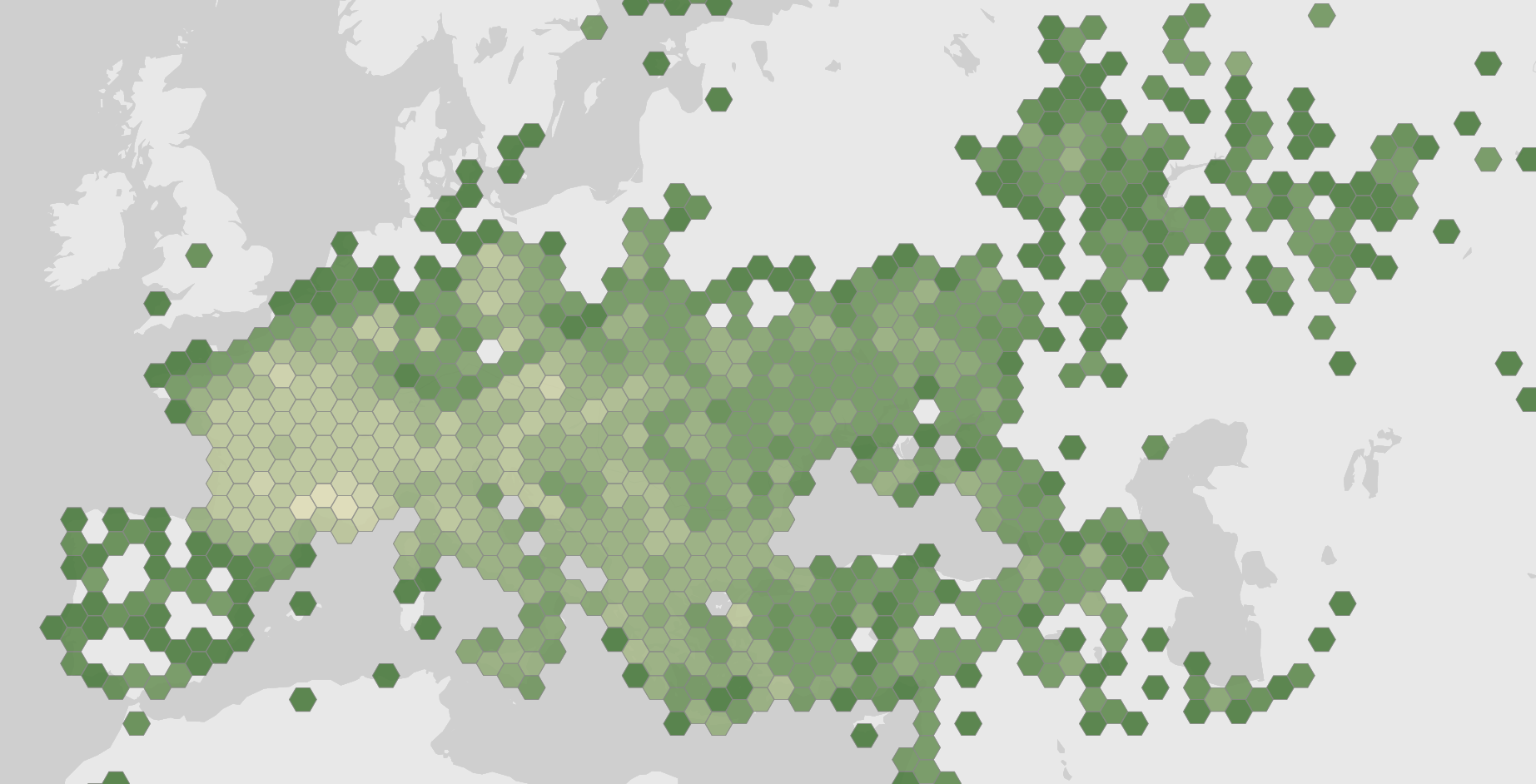
The scarce swallowtail is widespread across the East Palearctic and most of Europe, though it is absent from the far north. Its range extends northward to Lower Lusatia and central Poland, and eastward through Asia Minor and Transcaucasia to the Arabian Peninsula, Pakistan, India and western China. Occasional individuals have turned up in central Sweden and the United Kingdom, but these appear to be strays rather than established migrants.
It uses a broad range of habitats, from gardens and towns to open countryside, fields and open woodland. It shows a particular fondness for places with sloe thickets and orchards. In the Alps it can be found up to altitudes of 2,000 meters, though it more typically favors foothills and lower elevations.
In the floodplain of the Morava River in Slovakia, the presence of this species has been used as an indicator of well-preserved xerothermic grasslands with forest-steppe vegetation that has never been cut, pointing to its value as a marker of intact habitat.
Observation records through the year show very low counts in winter months, rising sharply through spring to a clear peak around midsummer before falling off again by autumn, consistent with seasonal adult flight activity rather than year-round presence.
Diet and Feeding Habits
The scarce swallowtail feeds at flowers as an adult, drawing nectar from a variety of plants including oregano (Origanum vulgare), China aster (Callistephus chinensis), viper's bugloss (Echium vulgare) and cow parsley (Anthriscus sylvestris).
Its caterpillars, however, are closely tied to woody plants in the rose family. Recorded host plants include plum (Prunus domestica), hawthorn (Crataegus monogyna), peach (Prunus persica), St Lucie cherry (Prunus mahaleb), pear (Pyrus communis) and wild cherry (Prunus avium). This reliance on orchard and hedgerow trees such as blackthorn relatives explains why the species is so strongly associated with orchards and sloe thickets across its range.
Conservation and Threats
The scarce swallowtail is assessed as Least Concern by the IUCN, and in places such as Armenia it shows a stable population trend. In some years it can be quite abundant, but it is becoming rarer in areas where blackthorn bushes, an important host plant resource, are being cleared.
The species is protected by law in several countries, including the Czech Republic, Slovakia, Germany, Hungary, Luxembourg, Russia, Ukraine, Poland and Macedonia. It is considered rare and endangered in some provinces of Austria, and its status elsewhere in Europe is not consistently assessed. Although some authorities have referred to it as "vulnerable," it remains unlisted on the global IUCN Red List.
Cultural Significance
The scarce swallowtail carries a double dose of Greek myth in its scientific name. The genus Iphiclides recalls Iphicles, half-brother of Heracles, while the species name podalirius evokes Podalirius, a legendary physician linked to the Trojan War alongside his brother Machaon.
This mythological pairing has made the butterfly a recurring reference point for writers describing it, with its black-rimmed wingbeats described as evoking the memory of these two figures from the Trojan War narrative.
Fun Facts
- The genus name Iphiclides honors Iphicles, the half-brother of the hero Heracles in Greek mythology.
- The species name podalirius refers to Podalirius, a physician figure connected to the Trojan War alongside his brother Machaon.
- The plant genus Podalyria in the pea family Fabaceae was also named after Podalirius, linking the butterfly's namesake to botany as well as entomology.
Photos
Photographs from via iNaturalist, licensed under CC0 1.0., by Umut Nuri Erdoğan via iNaturalist, licensed under CC BY 4.0., by Fred Derks via iNaturalist, licensed under CC BY 4.0., by glomik via iNaturalist, licensed under CC BY 4.0., by Paolo Zucca via iNaturalist, licensed under CC BY 4.0., by Louis Aureglia via iNaturalist, licensed under CC BY 4.0., by Matthieu Le Goïc via iNaturalist, licensed under CC BY 4.0., by Karol Ox via iNaturalist, licensed under CC BY 4.0., by Sylvain Eichhorn via iNaturalist, licensed under CC BY 4.0., by Timéo Gosciniak via iNaturalist, licensed under CC BY 4.0., by Emil Jantke via iNaturalist, licensed under CC BY 4.0., and by NoahM via iNaturalist, licensed under CC BY 4.0., credited on each photo.
Ecology and classification
Classification
- Phylum
- Arthropoda
- Class
- Insecta
- Order
- Lepidoptera
- Family
- Papilionidae
- Genus
- Iphiclides
- Species
- Iphiclides podalirius
Sources
- GBIF Species names and classification
- iNaturalist Photos
- Wikidata Common names and conservation status
- Wikipedia Summary extract
- GloBI What it eats, what eats it, parasites and pollinators
- trophiCH
- Schwarz et al. 2021
- EuPPollNet