The fungus that quietly destroys a conifer's strength from the inside works by causing brown rot, breaking down cellulose in the wood until the tree's base becomes brittle enough to snap. This slow, hidden damage is the defining trait of Phaeolus schweinitzii, known variously as the velvet-top fungus, dyer's polypore, dyer's mazegill, or pine dye polypore.
A member of the Polyporales order within the Basidiomycota, this species is a fungal plant pathogen that attacks conifers rather than a free-living decomposer of fallen wood alone. Its unusual growth habit and destructive relationship with living trees make it a fungus worth understanding beyond its appearance.
Fruiting Body and Identification
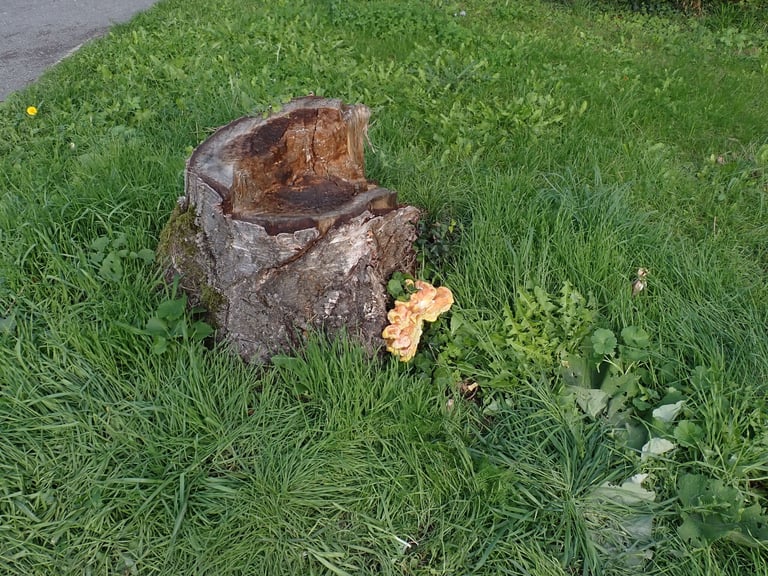
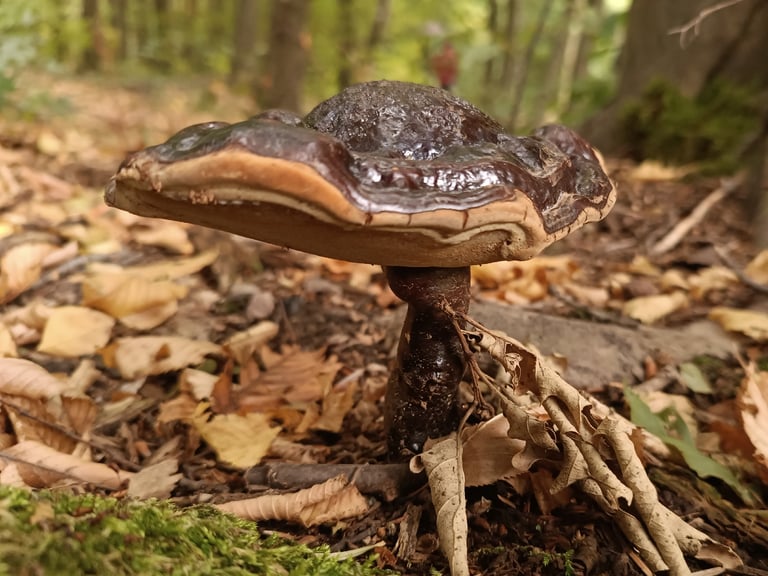
Unlike typical bracket fungi, Phaeolus schweinitzii often produces a fruiting body that looks terrestrial, emerging from the roots or base of its host tree rather than from a wound higher up the trunk. This ground-level habit is one of its most reliable identifying features.
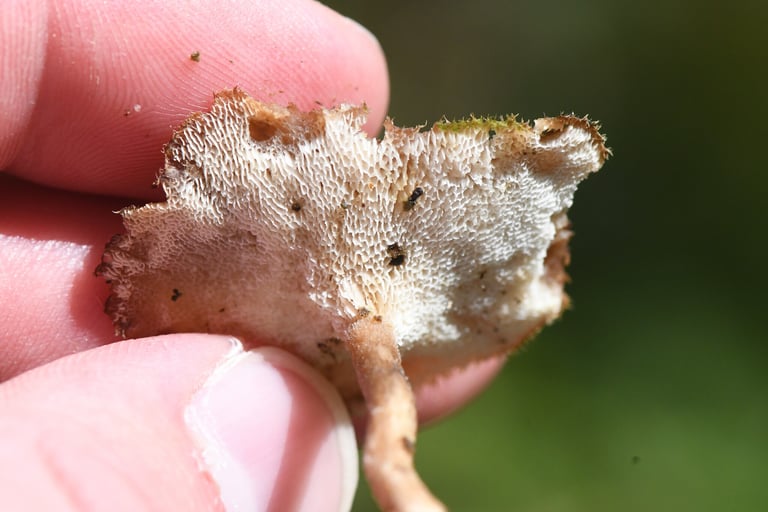
The fruiting bodies appear in late summer or fall and commonly grow around blades of grass, twigs, or fallen pine needles, which become incorporated into the cap as it develops. Young specimens show a tannish surface with darker brown centers and orange to pale margins; the whole structure can exceed 25 centimeters (10 inches) across. As the fungus ages, the pore surface shifts from yellow to greenish yellow, the cap darkens further, and the yellow-brown flesh hardens into a wood-like texture. The pores bruise brown when handled, and the spore print is white, with spores that are elliptical, smooth, and inamyloid.
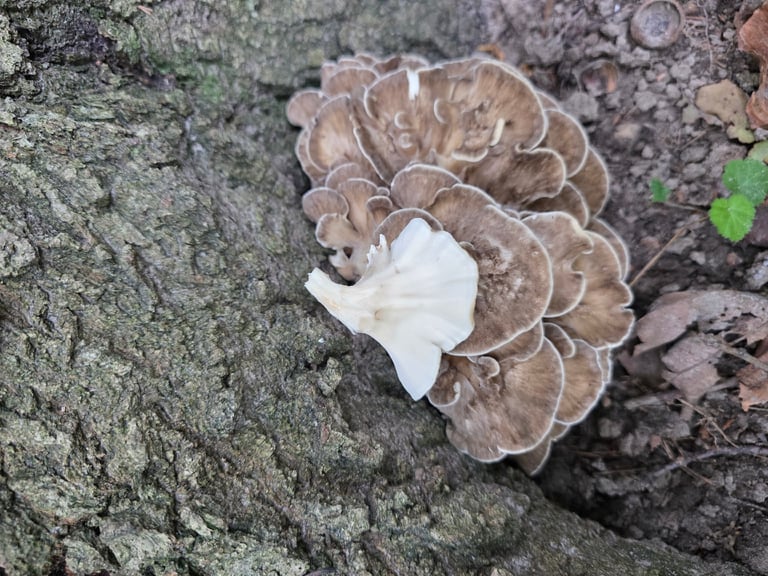
Several other polypores can resemble P. schweinitzii, including Heterobasidion irregulare, H. occidentale, Inonotus dryophilus, and Onnia tomentosa. Distinguishing among these species typically relies on close examination of pore color changes, flesh texture, and the host tree, since general appearance alone can overlap between them.
Distribution and Habitat
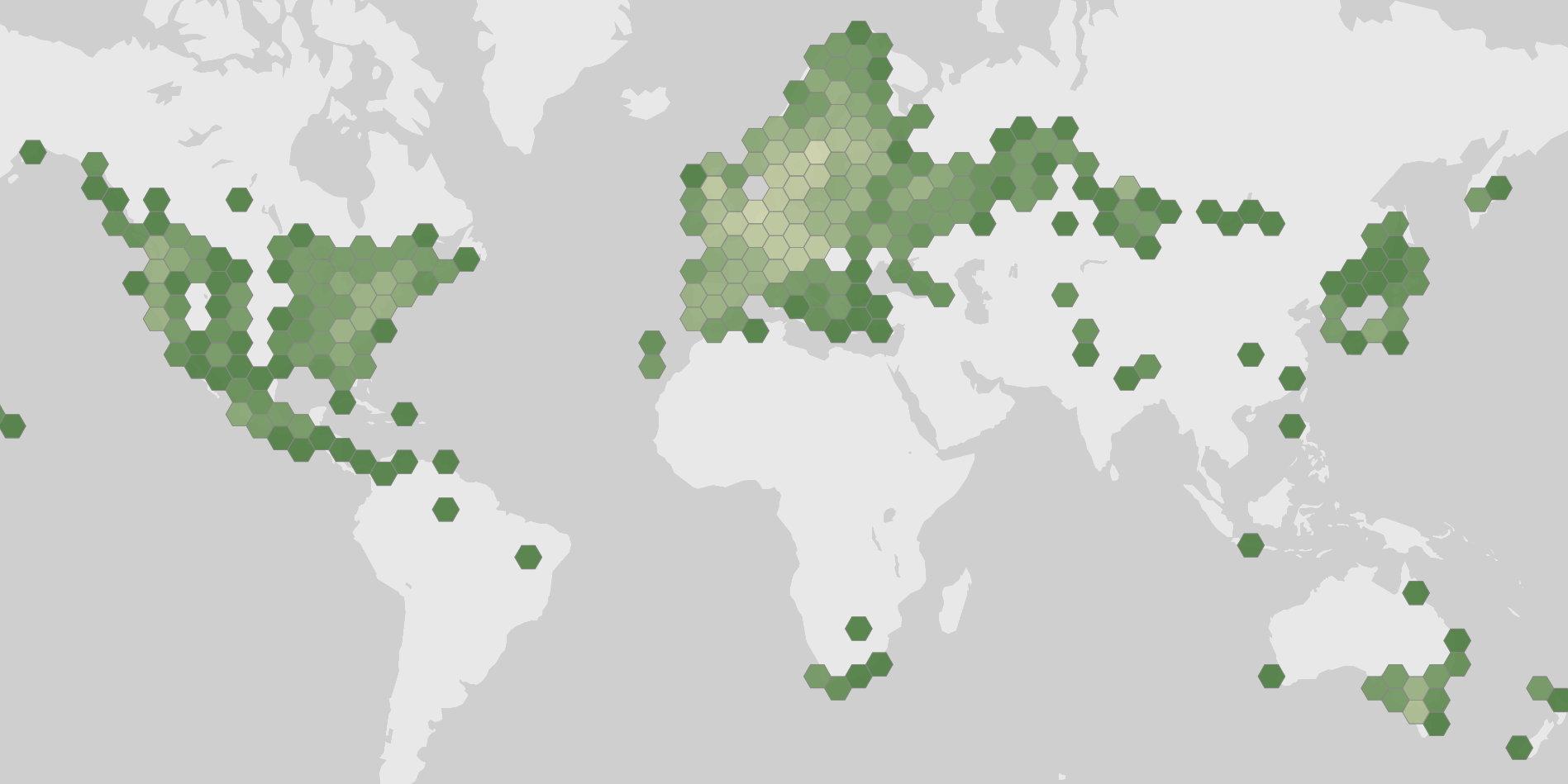
Phaeolus schweinitzii is native to Eurasia and causes butt rot in a range of conifers, including Douglas-fir, spruce, fir, hemlock, pine, and larch. It has also become established as an introduced species well outside its native range, having been identified in New Zealand, Australia, and South Africa.
Presence records compiled by GBIF show a strong seasonal pattern, with observations climbing sharply from a few hundred per month in winter and spring to a peak of over 16,000 in October, following a rise through August and September. This pattern lines up with the fungus's known late-summer-to-fall fruiting period, though these figures reflect where and when observers have recorded the species rather than its actual abundance or the full extent of its range.
Uses and Cultural History
The most notable human use of Phaeolus schweinitzii is as a natural dye source. Depending on the material being dyed and the mordant used, the fungus yields shades of green, yellow, gold, or brown, which has earned it the common names dyer's polypore and dyer's mazegill among dye enthusiasts and textile workers.
The species is explicitly not edible, so its practical value to people lies entirely in this dyeing tradition rather than in any culinary use.
Fun Facts
- The species epithet schweinitzii honors Lewis David von Schweinitz, a Pennsylvania-born mycologist, while the genus name Phaeolus comes from Ancient Greek words meaning "dark" or "obscure."
- Forestry workers and traditional loggers have long treated the appearance of this fungus as a warning sign, using it as a visual indicator of hidden rot and potential tree instability before felling or working near affected trees.
Ecology
Habitat
- Forest
- Woodland