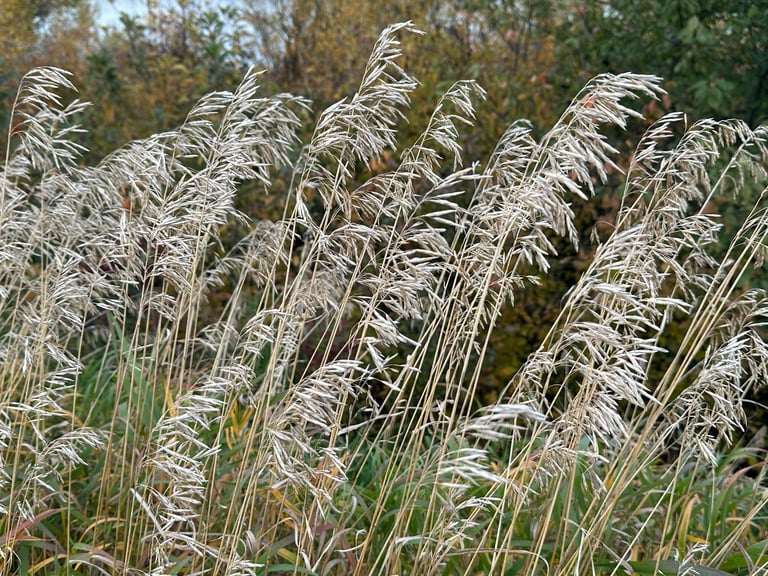
Poa compressa, the Canada bluegrass or flattened meadow-grass, is a perennial grass that is native to Europe and now grows almost everywhere as an introduced species. It belongs to the family Poaceae and is closely related to common meadow-grass, Poa pratensis.
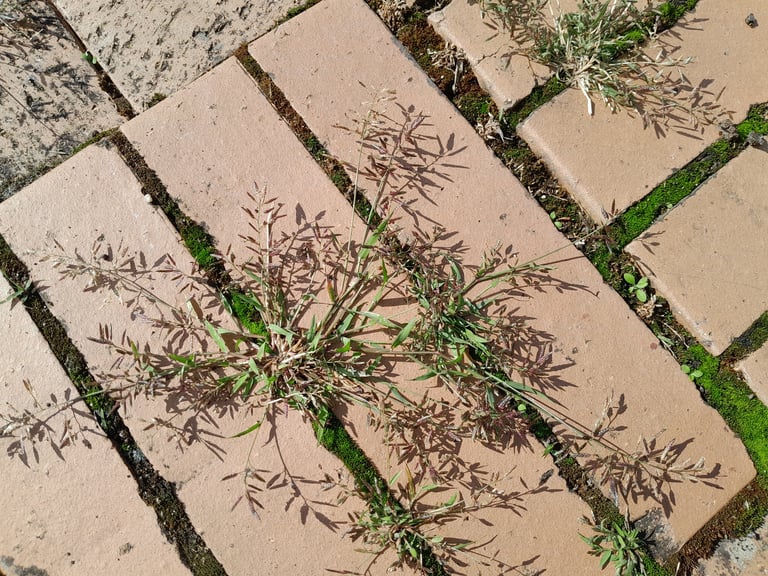
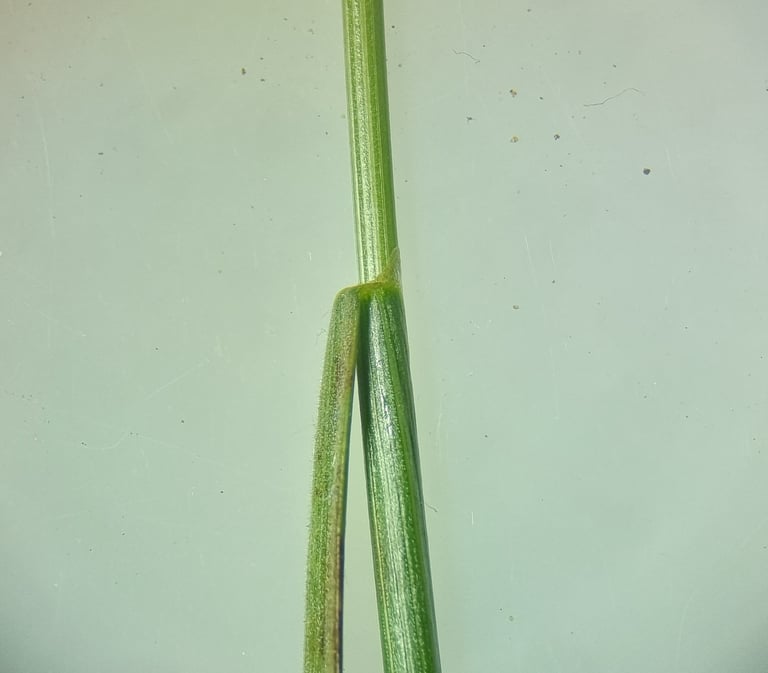
The grass is easy to recognize by its flattened stem and its close, one-sided panicle. The panicle is grey-green with purple florets. It grows in old wall tops, cracks in pavement, dry stony grassland and many kinds of wild habitat.
Distribution and Habitat
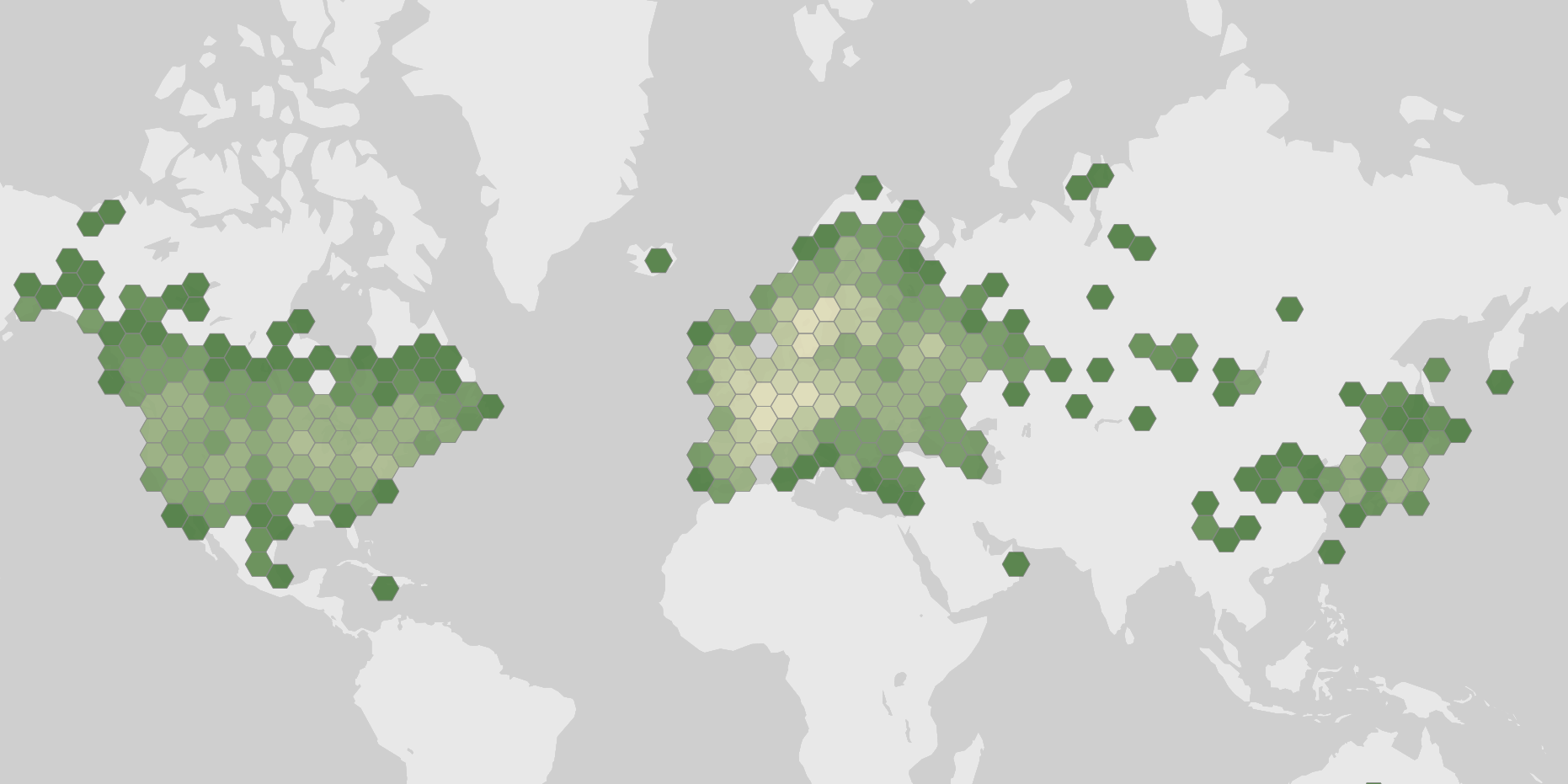
Poa compressa is native to Europe, from the Mediterranean region to China. Its native range includes Spain, France, Germany, Italy, Greece, Ukraine, Norway and Sweden, along with parts of Iran, Kazakhstan and northern China.
Outside its native range, the grass has spread widely as an introduced species. It is established across much of North America, including most of the United States and Canada, and it also occurs in Hawaii, Japan, New Zealand, Tasmania, southern South America and parts of Africa.
In its native range it grows in moist grassy places in forests. Across North America it is found in forest, woodland, prairie, grassland and mountain meadow habitats, and it grows on disturbed ground in many other places. It is also a frequent plant of old walls and paved areas.
Sightings of the grass are most frequent in June and July.
Growth and Form
Poa compressa is a perennial graminoid, which means it is a grass-like plant that lives for several years. It has a moderate growth rate.
The flattened stem typically stands 23–30 cm tall, and the mature height reaches about 0.6 m. The stem is flat rather than round, which gives the plant its common name.
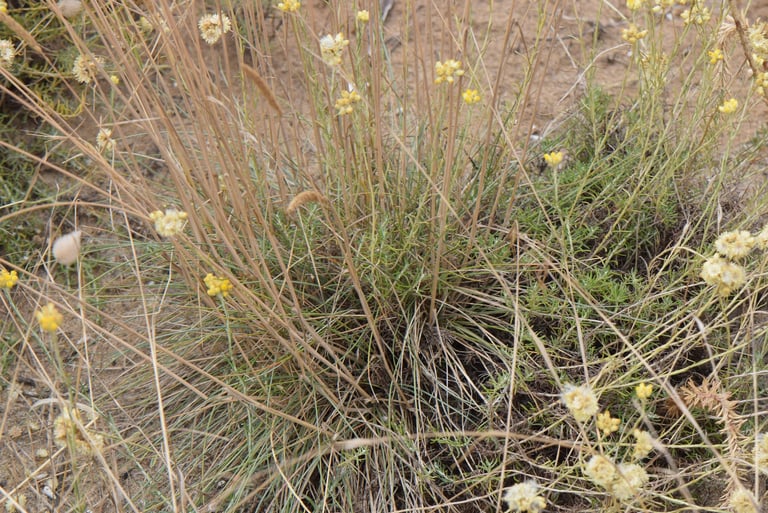
The plant forms tufts and persists through many seasons once established.
Ecology and Relationships
Poa compressa is a food source for a wide range of animals. Grasshoppers of the order Orthoptera feed on its leaves, as do many true bugs and moth caterpillars. Among birds, songbirds such as the skylark (Alauda arvensis) and the common redpoll (Acanthis flammea) are main consumers, and gamebirds of the order Galliformes also feed on it. Smaller numbers of pigeons, flies and ducks eat it as well.
The grass forms partnerships with soil fungi. The arbuscular mycorrhizal fungus Rhizophagus intraradices is a main partner of its roots, which helps the plant take up nutrients from the soil.
Poa compressa grows best where other grasses struggle. It cannot compete with other grasses on good soils, so it develops best on soils of low fertility or poor drainage. It tolerates moderate drought and salinity but does not tolerate shade well.
Cultivation and Care
Poa compressa grows in soils with a pH between 5 and 7. It prefers sunny sites, because its shade tolerance is low, and it tolerates moderate drought once established.
The plant is hardy in cold climates and survives winter temperatures down to about −39 °C. Its yellow flowers appear in mid spring.
In gardens and lawns, the grass suits poor, dry or acid soils where more demanding grasses do not thrive. On rich soils it tends to be outcompeted by other grasses.
Photos
Photographs from via iNaturalist, licensed under CC0 1.0., by Carter Ertel via iNaturalist, licensed under CC BY 4.0., by Dave Richardson via iNaturalist, licensed under CC BY 4.0., by Мирослав Соболев via iNaturalist, licensed under CC BY 4.0., by Z via iNaturalist, licensed under CC BY 4.0., and by Kaden Slone via iNaturalist, licensed under CC BY 4.0., credited on each photo.
Ecology and classification
Classification
- Phylum
- Tracheophyta
- Class
- Liliopsida
- Order
- Poales
- Family
- Poaceae
- Genus
- Poa
- Species
- Poa compressa
Sources
- GBIF Species names and classification
- iNaturalist Photos
- Wikidata Common names and conservation status
- Wikipedia Summary extract
- Encyclopedia of Life Habitat, diet and behavior traits
- Plants of the World Online Native range, life form and climate (WCVP)
- USDA Plants US plants: growth habit and growing conditions
- GloBI What it eats, what eats it, parasites and pollinators
- trophiCH
- GlobalAMFungi