The rhizome of Polypodium vulgare contains a compound, osladin, that is roughly 500 times sweeter than sugar by weight, yet the plant has long been used as a purgative rather than a sweetener.
Known as the common polypody, this evergreen fern belongs to the family Polypodiaceae and takes its name from the Greek poly- ("many") and pous, podos ("foot"), a reference to its many-footed rhizome. It grows across northern temperate regions, favoring shaded rocks, old walls, and mossy tree trunks throughout Northern Europe and parts of Asia.
What makes Polypodium vulgare worth a closer look is its adaptability: it can complete its life cycle equally well rooted in soil, wedged into rock crevices, or perched high in a tree's branches as an epiphyte, a flexibility that has helped it spread across a wide range of climates and terrains.
Identification and Appearance
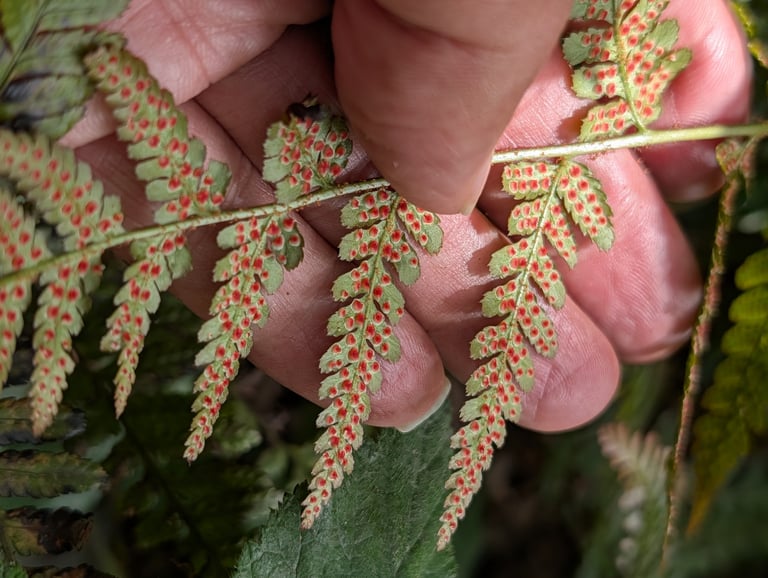
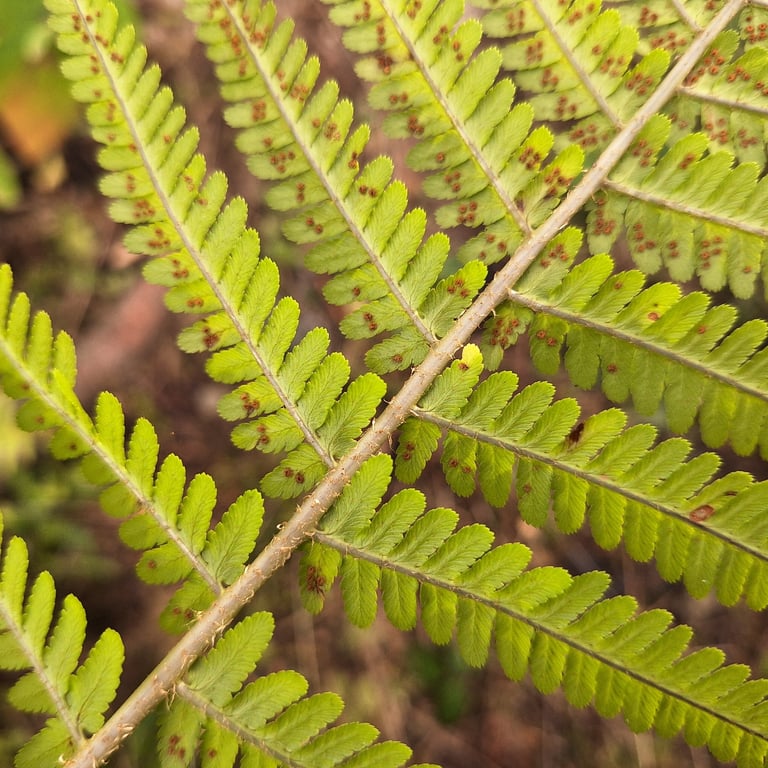
The clearest field marks are the leathery, deeply divided fronds and the circular sori on their undersides, which shift from bright yellow or orange to dark grey as the spores mature. Fronds grow singly along a horizontal rhizome rather than in a dense tuft, and each measures 10 to 50 centimeters long.
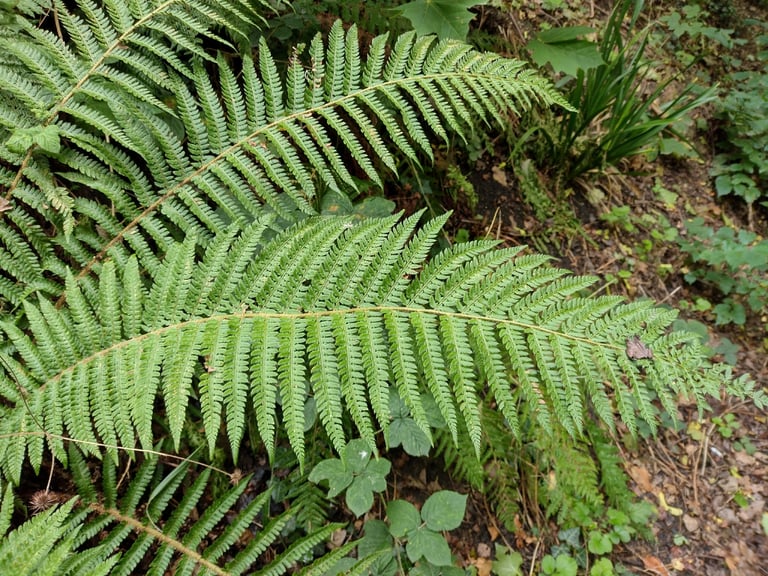
Each frond is divided nearly to its central stem into 10 to 18 pairs of leaflets, which measure 10 to 20 centimeters long and 5 to 7 centimeters wide. The leaflets are broader at the base, where neighboring pairs often touch, and are arranged in a slightly alternating pattern rather than directly opposite one another. They shorten noticeably toward the tip of the frond and are typically whole-edged or only slightly toothed. The petioles bear no scales, a detail useful for distinguishing this species from close relatives.
A further identifying feature is the venation: the lateral veins fork three to four times, a pattern that, combined with the leathery texture and circular sori, helps separate Polypodium vulgare from other members of its genus. Sporulation occurs from July to September, and spores disperse by wind.
Identification within the genus Polypodium is genuinely difficult, since subtle variation among species blurs the boundaries. Only four surviving clades are recognized within P. vulgare itself, likely the result of past divergence driven by geographic isolation, and this species holds the most northern range of any Polypodium.
Distribution and Habitat
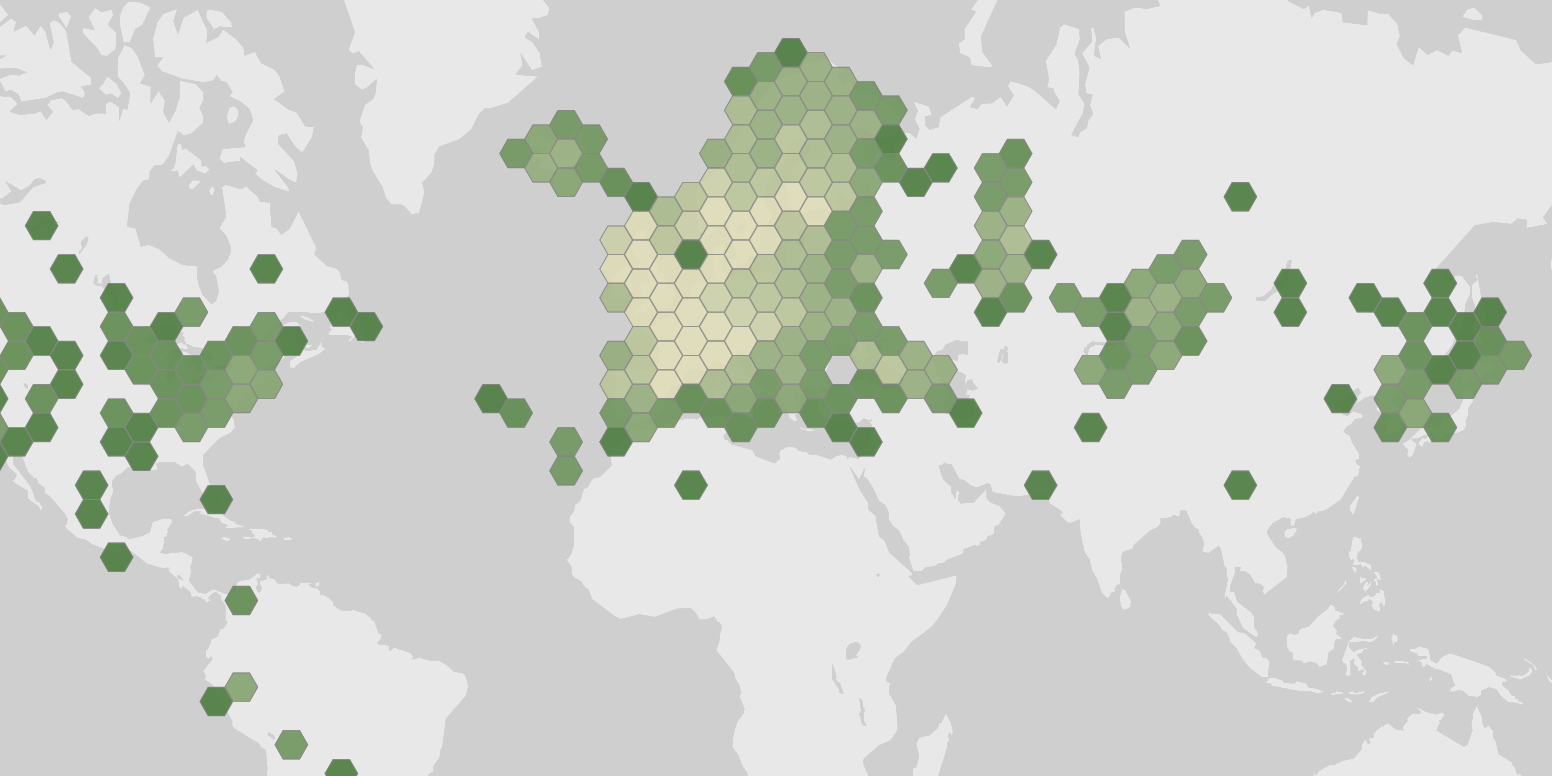
Common polypody occurs throughout western Europe and North Africa, and is widespread across Britain and Ireland except in the drier parts of eastern England. It reaches its greatest abundance in the humid uplands of the west and north, occurring from sea level up to 760 meters in Britain, and up to 2,000 meters in France, where it is very common. The species is also frequent in Scandinavia and the Carpathian Mountains, and has been introduced to New Zealand, where it has begun spreading into the wild as an invasive plant.
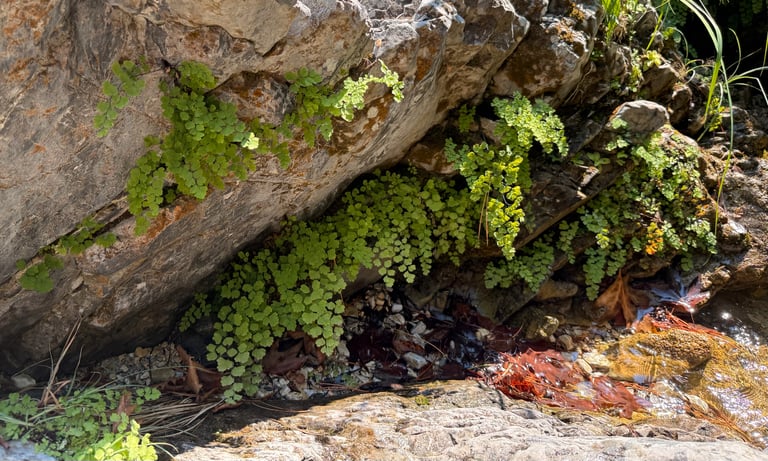
Within this range, the fern favors shaded and semi-shaded sites: it grows as a lithophyte on rocks, in moss on old walls and cliffs, in rocky undergrowth, and as an epiphyte on mossy tree trunks and branches. It can reach maturity equally well growing on the ground or perched in a tree, though it benefits most when established in the crotch of a forking branch, where water, sunlight, and minerals collect most readily.
Monthly presence-observation counts peak sharply between May and August, rising from around 31,600 in April to a high near 63,500 in July before falling back to roughly 6,400 by December. This pattern likely reflects when the evergreen fronds and fertile sori are most conspicuous and most often recorded, rather than a true seasonal absence, since the foliage persists through the year and helps the plant capture light in deciduous forests when overhead cover is otherwise scarce.
Uses and Human Relationships
Historically, the rhizome of Polypodium vulgare was valued in cooking for its bittersweet, aromatic flavor and was used in confectionery such as nougat. Its sweetness comes from osladin, a saponin discovered in the roots in 1971 that is around 500 times sweeter than sugar by weight, though the plant's culinary role has always been a minor, flavoring one rather than a staple food.
In herbal medicine, the dried rhizome has served as a purgative and vermifuge, properties attributed to phytoecdysteroids it contains; this traditional use is recognized by the European Medicines Agency. The fronds also contain phenolic acids and flavonoids reported to aid wound healing and cell regeneration. Beyond medicine, the species carries symbolic weight in various cultures as a token of magic and protection believed to ward off negative energies, with its habit of growing as an epiphyte on large trees linked to ideas of renewal and rebirth.
The species has also had a notable role in plant science: it was central to early research by the Otto Lange group at the University of Würzburg into how fern stomata open and close in response to humidity, work that shaped later studies of stomatal-humidity-temperature dynamics and the metabolic energy that powers stomatal movement.
Fun Facts
- Polypodium vulgare holds the most northern natural range of any species in the genus Polypodium.
- Only four surviving genetic clades exist within this species, likely a result of past divergence caused by geographic isolation.
- In 18th-century Europe, sailors reportedly carried the dried rhizome aboard ships to treat "bilious fevers" on long voyages, though it offered no real protection against scurvy.
- In the 19th century, chemists Pierre-Joseph Pelletier and Joseph Bienaimé Caventou identified saponins in the plant, an early step toward isolating its active compounds.
- In various folk traditions, the fern is regarded as a symbol of magic and protection, believed to ward off negative energies.
Ecology
Habitat
- Forest
- Woodland
- Mountain
- Cave
Growth habit
- Fern