The pink waxcap is a gilled mushroom that stands out for its colour. Its cap is pale rose-pink to lilac-pink, and it is the only European waxcap that is pink with a pointed cap.
The species belongs to the family Hygrophoraceae and has a European distribution. It grows mainly in agriculturally unimproved grassland, and the IUCN lists it as Vulnerable.
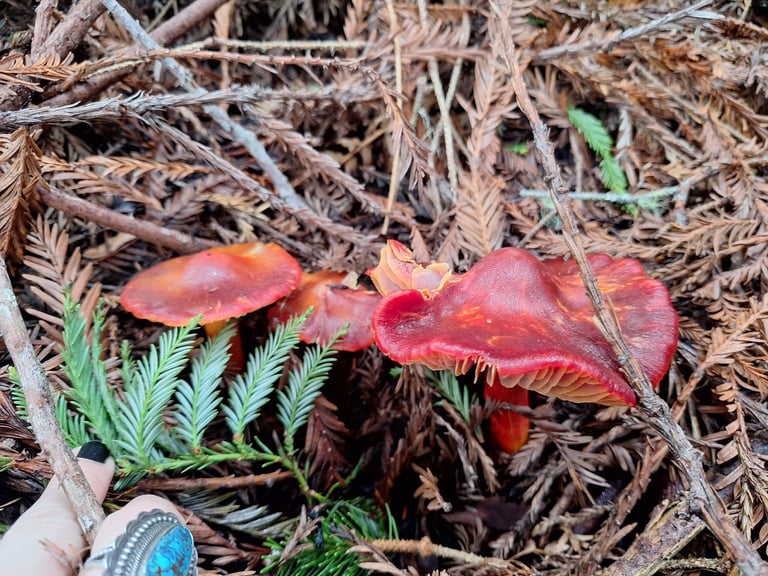
It is also known as the ballerina waxcap and the salmon waxy cap. A similar but as yet unnamed species occurs in North America.
Fruiting Body and Identification
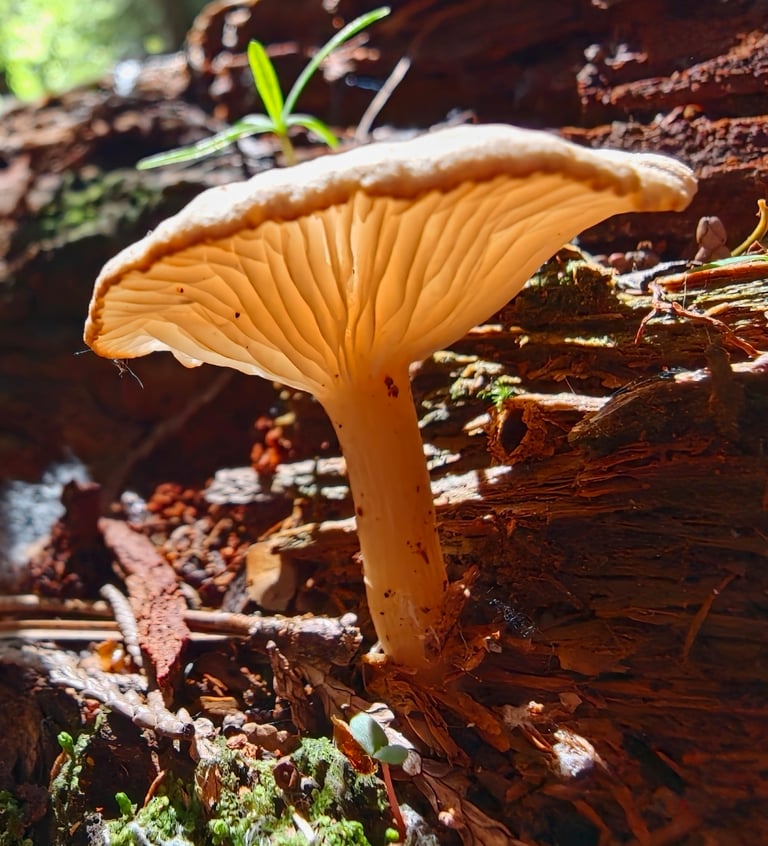
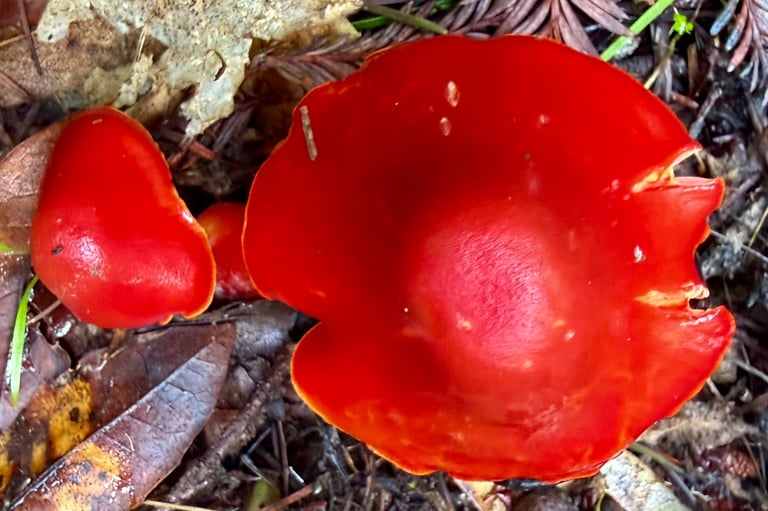
The cap is the easiest feature to use for identification. It starts narrowly conical and keeps a sharp umbo when it expands, reaching up to 7.5 centimetres (3 inches) across. It often splits as it opens, and its margins turn upward.
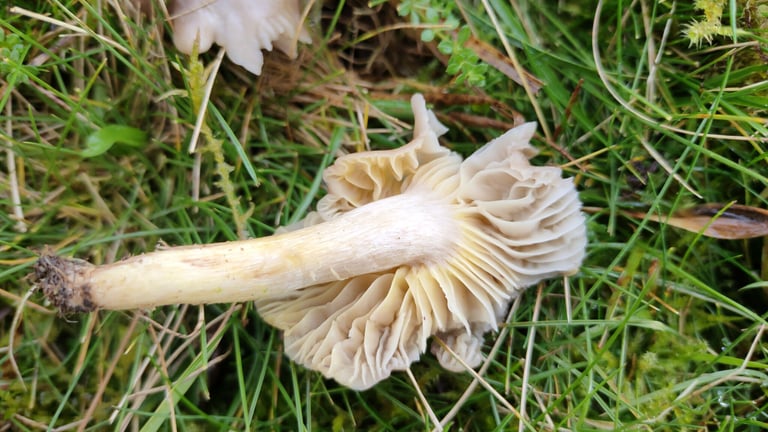
The cap surface is smooth to fibrillose and slightly shiny or greasy. It is pale rose-pink to lilac-pink, though it is occasionally white. The gills are widely spaced and waxy, and they match the cap colour or are whiter.
The stipe can reach 16 centimetres (6¼ inches) long. It is smooth, white to pale cap-coloured, and has no ring. The spore print is white, and the smooth, ellipsoid spores measure about 6.5 to 8.0 by 4.5 to 5.5 micrometres.
Distribution and Habitat
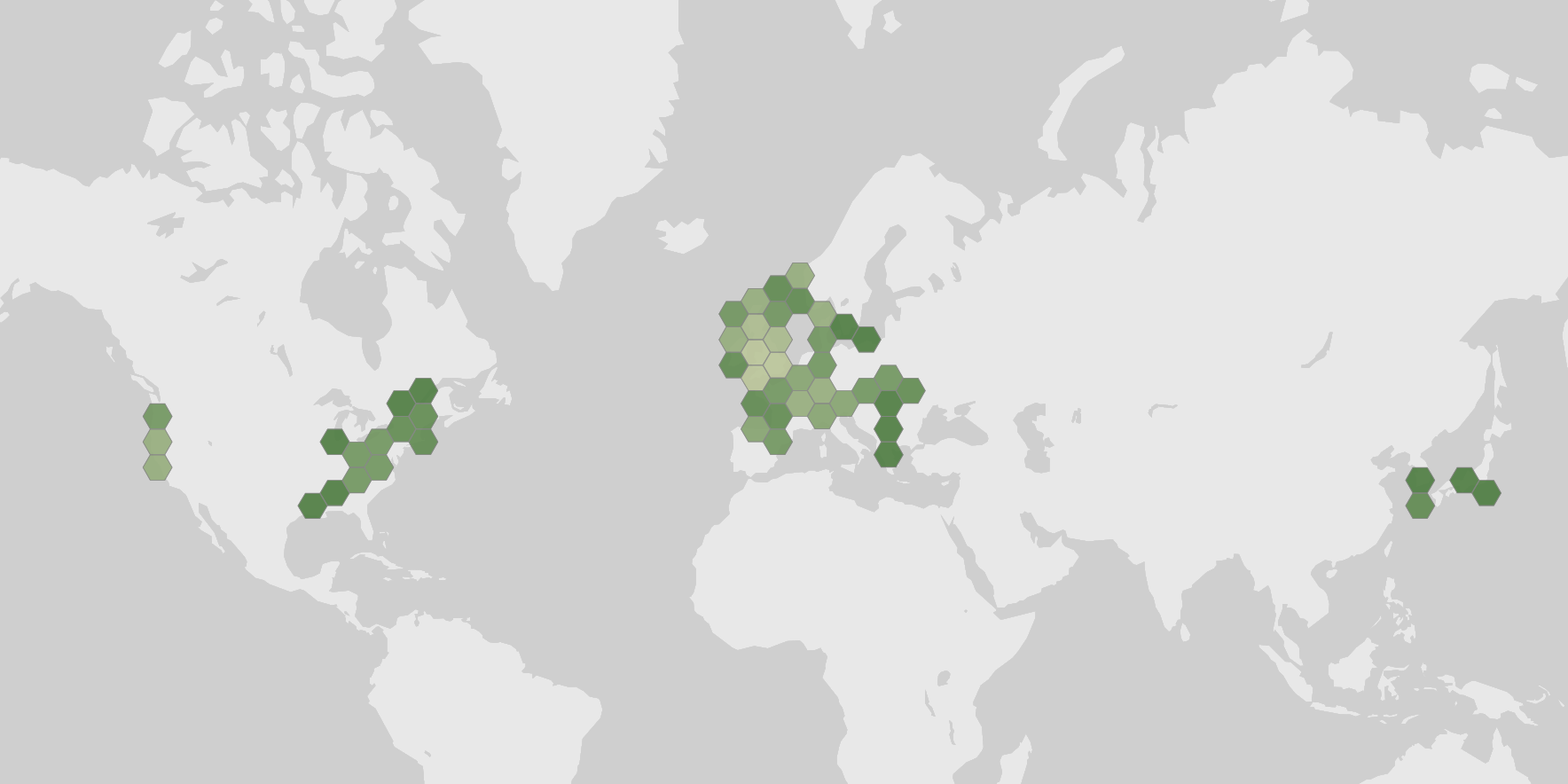
The pink waxcap is widespread but generally rare across Europe. Its stronghold is the United Kingdom, where it is not uncommon.
Like other waxcaps, it grows in old grassland that has not been treated with fertilizers, including pastures and lawns with short turf. Reports from North America exist, but DNA-sequenced specimens from there are not the same as the European species.
In the monthly observation data, the species peaks in autumn, with the strongest presence in October and November.
Uses and Cultural History
The pink waxcap is reportedly edible. Its use as food is the main human connection the evidence describes.
Conservation and Threats
The pink waxcap is listed as Vulnerable on the IUCN Red List of Threatened Species. It depends on waxcap grasslands, which are declining as agricultural practices change.
The main pressure is the loss of that grassland habitat. Changing farming methods have reduced the old, unimproved pastures the species needs.
It is one of 33 larger fungi proposed for international protection under the Bern Convention. It also appears on official or provisional national red lists of threatened fungi in Austria, Bulgaria, the Czech Republic, Denmark, France, Germany (Bavaria), Hungary, Italy, Poland, Slovakia, Spain, and Switzerland.
Photos
Photographs from via iNaturalist, licensed under CC0 1.0., by Alfie Felton via iNaturalist, licensed under CC BY 4.0., by Arthur Rowan M. via iNaturalist, licensed under CC BY 4.0., by Matthew Flood via iNaturalist, licensed under CC BY 4.0., by Dave via iNaturalist, licensed under CC BY 4.0., by Mark Breaks via iNaturalist, licensed under CC BY 4.0., by Mark Costello via iNaturalist, licensed under CC BY 4.0., by Alex via iNaturalist, licensed under CC BY 4.0., and by Shane Austin via iNaturalist, licensed under CC BY 4.0., credited on each photo.
Ecology and classification
Habitat
Classification
- Phylum
- Basidiomycota
- Class
- Agaricomycetes
- Order
- Agaricales
- Family
- Hygrophoraceae
- Genus
- Porpolomopsis
- Species
- Porpolomopsis calyptriformis
Sources
- GBIF Species names and classification
- iNaturalist Photos
- Wikidata Common names and conservation status
- Wikipedia Summary extract