Few trees have shaped both forest and orchard as much as Prunus avium, the wild cherry whose fruit has fed people and wildlife for thousands of years and whose genes underlie nearly every sweet cherry sold today.
It is a deciduous flowering tree in the rose family, Rosaceae, native to western Eurasia and now naturalized in parts of North America, New Zealand, and Australia. The IUCN lists it as Least Concern, a status reflecting its wide range and abundance. Beyond its familiar blossom and fruit, the species is also the parent of the sour cherry, Prunus cerasus, making it a quiet architect of the cherries eaten around the world today.
Identification and Appearance
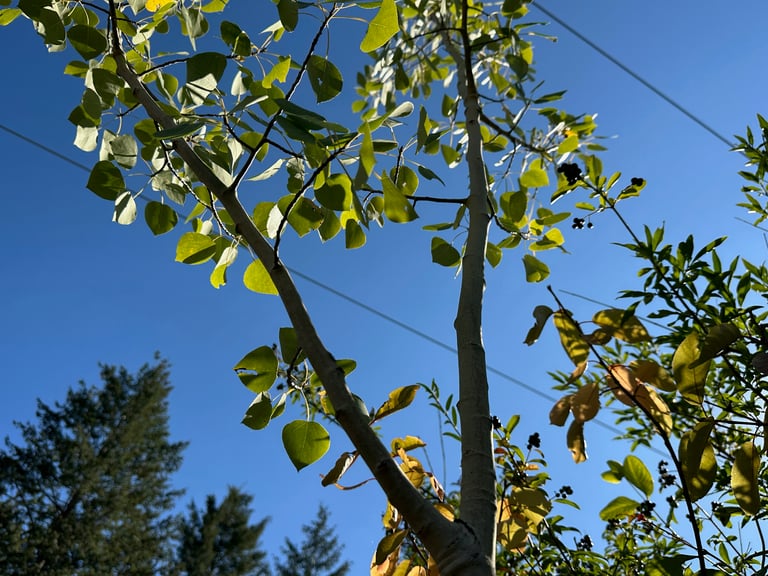
The clearest field mark is the bark: smooth reddish-brown on young trees, banded with prominent horizontal grey-brown lenticels, and becoming thick, dark blackish-brown and deeply fissured with age.
Mature trees reach 5 to 25 meters in height with trunks up to 1.5 meters in diameter. Young specimens show strong apical dominance, growing a straight trunk topped by a symmetrical, conical crown; older trees lose this neat shape and become rounded or irregular.
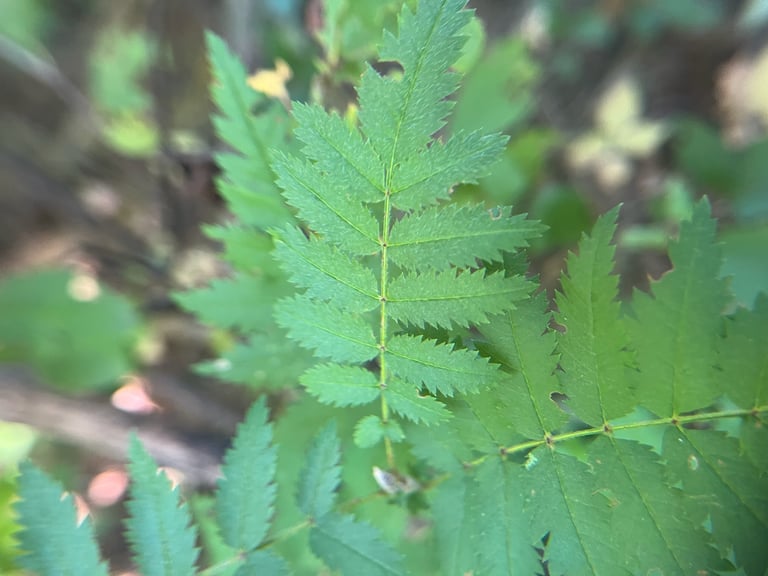
The leaves are alternate, simple, ovoid with a pointed acuminate tip, 7 to 14 centimeters long and 4 to 7 centimeters wide, glabrous and matte to slightly shiny green above with variable fine down beneath. Their margins are serrated, and each serration tip, along with the reddish or green 2 to 3.5 centimeter petiole, carries small red glands. In autumn the foliage turns orange, pink, or red before dropping. Flowers appear in early spring alongside the new leaves, borne in clusters of two to six, each pendent on a 2 to 5 centimeter stalk, 2.5 to 3.5 centimeters across, with five pure white petals and yellowish stamens. The fruit that follows is a drupe 1 to 2.5 centimeters across, ripening bright red to dark purple by midsummer, with taste ranging from sweet to somewhat astringent and bitter, and it contains a single grooved, hard-shelled stone 8 to 12 millimeters long.
Distribution and Habitat
Prunus avium is native across western Eurasia, from the British Isles south to Morocco and Tunisia, north to the Trondheimsfjord region of Norway, and east through the Caucasus to northern Iran, with a small isolated population in the western Himalaya.
Outside this native range the species has been widely cultivated and has become naturalized in North America, New Zealand, and Australia, extending its footprint well beyond western Eurasia.
Monthly observation data show a strong seasonal pattern, with counts climbing sharply from around 21,700 in March to a peak near 76,900 in April, staying high through the summer months before falling back below 13,000 by November. This pattern most likely reflects when the tree's white blossom and foliage make it easiest for observers to notice and record, rather than any true change in the size of the population; as presence records, these counts say nothing about abundance or the full extent of its native range.

Ecology and Relationships
Birds and mammals that eat the ripe fruit play a central role in the tree's life cycle, digesting the flesh and dispersing the seeds in their droppings across the landscape. Some rodents and a few birds, notably the hawfinch, go further and crack open the hard stones to reach the kernel inside.
The foliage supports other wildlife too, feeding Lepidoptera such as the case-bearer moth Coleophora anatipennella. When the bark is wounded, the tree exudes a gum that seals the injury, helping to keep out insects and fungal infection.
Prunus avium is also thought to be one of the parent species of Prunus cerasus, the sour cherry, arising from ancient crosses with Prunus fruticosa where their ranges overlapped; all three species remain capable of interbreeding, though P. cerasus has since stabilized into a distinct species in its own right.
Uses and Human Relationships
Wild cherries have fed people for millennia: stones recovered from Bronze Age sites across Europe, including a dated core sample from Desenzano del Garda in Italy at roughly 2077 BCE, show the fruit was already being eaten before formal cultivation began. Cultivation followed in Asia Minor by 800 BCE, spreading soon after to Greece, and today the species is the primary ancestor of most of the world's commercial sweet cherry cultivars, alongside the sour cherry Prunus cerasus.
Beyond food, the tree's hard reddish-brown wood is prized for woodturning, cabinetry, and musical instruments, and cherry wood is widely used in North America for smoking meats to add flavor. The aromatic gum that seeps from bark wounds has been chewed as a substitute for chewing gum, and the plant's stalks have been used to prepare an astringent, antitussive, and diuretic remedy; a green dye is also made from the plant.
Ornamentally, the tree is planted in parks and occasionally as a street tree, most often as the double-flowered cultivar 'Plena' rather than the wild single-flowered form; 'Plena' has received the Royal Horticultural Society's Award of Garden Merit. Wild cherry is also used across Europe for afforesting former agricultural land and for wildlife and amenity plantings, with several European countries running dedicated gene conservation and breeding programs for it.
Fun Facts
- Cherry stones from this species have been found in Bronze Age settlement deposits across Europe, including a site near Lake Garda in Italy dated to around 2077 BCE.
- In ancient Irish law, the wild cherry was ranked in the second-highest class among the 'Commoners of the Wood,' reflecting its high esteem.
- In Greek mythology, cherries were linked to love and fertility, with one myth tracing the first cherry tree to the spilled blood of Adonis.
- The hawfinch is one of the few birds strong enough to crack open the cherry's hard stone to reach the kernel inside.
Conservation status
- LC
- NT
- VU
- EN
- CR
Least Concern
Ecology
Growth habit
- Tree