Its common name comes from the long, wedge-shaped tail, but many people know this seabird as a muttonbird. The wedge-tailed shearwater is a medium-large shearwater in the family Procellariidae, and it can live up to .
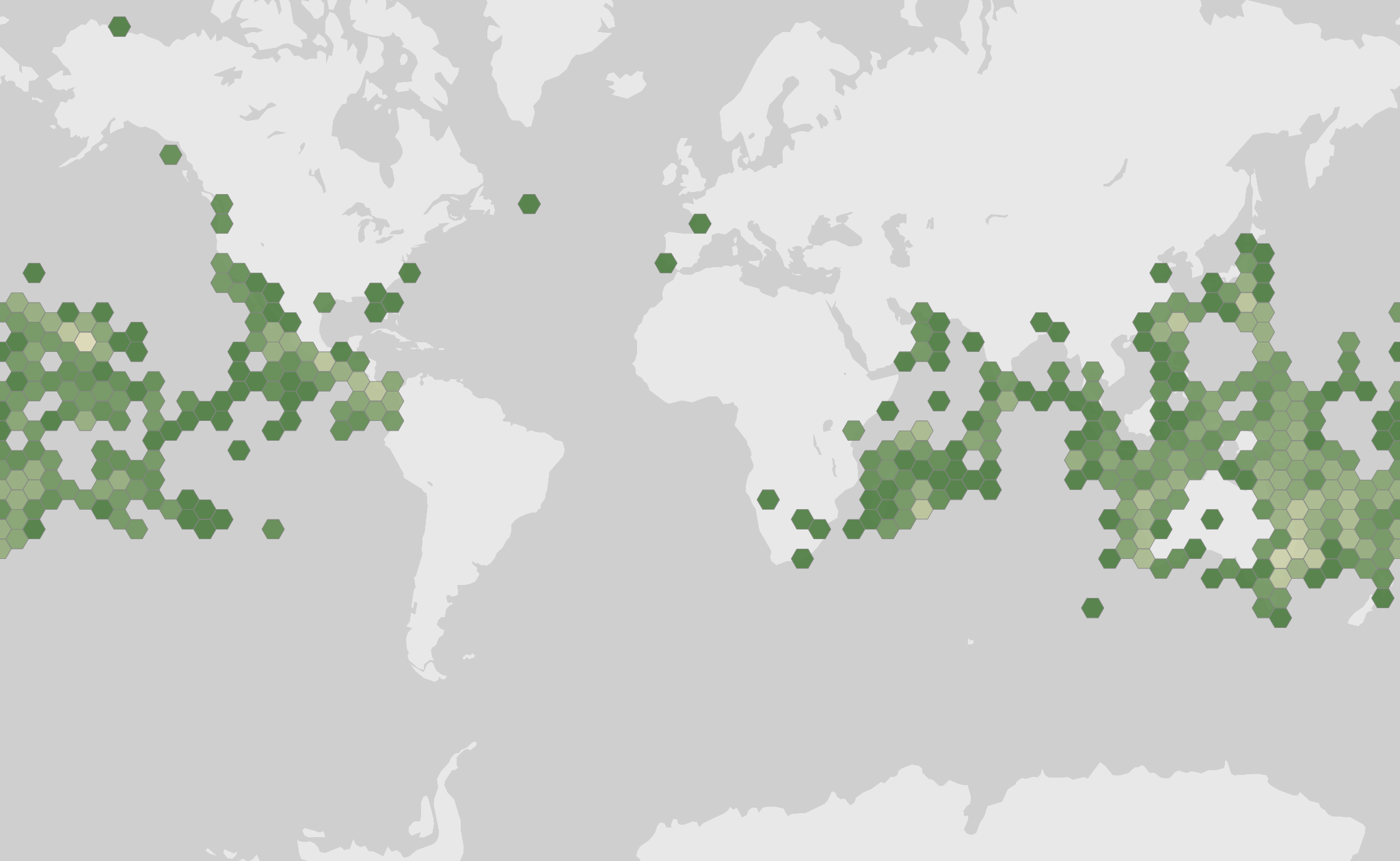
It is found throughout the tropical Pacific and Indian Oceans, roughly between 35°N and 35°S, across a range of about . It breeds on islands off Japan, on the Islas Revillagigedo, in the Hawaiian Islands, the Seychelles, the Northern Mariana Islands, and off eastern and western Australia.
It shares the muttonbird name with the sooty shearwater of New Zealand and the short-tailed shearwater of Australia. Its life at sea, far from land for most of the year, makes it a bird of open ocean and remote islands.
Identification and Appearance
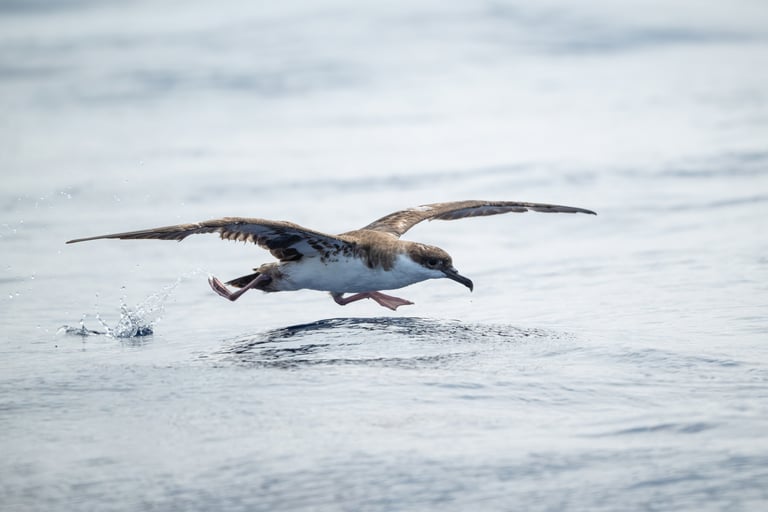
The wedge-shaped tail is the most useful field mark. It gives the species its common name, and it is the largest of the tropical shearwaters, weighing about .
The species comes in two colour morphs. The pale morph has grey-brown plumage on the back, head and upper wing, with whiter plumage below. The dark morph is dark grey-brown over the whole body. Pale birds are more common in the North Pacific, and dark birds are more common elsewhere. Both morphs occur in every population, and the morph has no link to sex or breeding condition.
The bill is dark, and the legs are salmon pink. The legs are set far back on the body, as in other shearwaters, which suits swimming.
Buller's shearwater is a closely related species of the Pacific. It also has a wedge-shaped tail and a thin, black bill, but its colour pattern differs much from this species.
Distribution and Habitat
The wedge-tailed shearwater lives over open ocean in the tropical Pacific and Indian Oceans. It spends most of its life at sea, and it comes ashore only to breed on small tropical islands.
The species breeds on islands off Japan, on the Islas Revillagigedo, in the Hawaiian Islands, in the Seychelles, in the Northern Mariana Islands, and off eastern and western Australia. Colonies are spread across these widely separated island groups, so birds from different regions meet mainly at sea.
Its range extends roughly from 35°N to 35°S, which covers both hemispheres. Breeding timing differs between these hemispheres, as described in the nesting section.
Hunting and Diet
The wedge-tailed shearwater hunts at sea for fish, squid and crustaceans. About two-thirds of its diet is fish, and goatfish is the fish most often taken.
For a long time, the species was thought to feed mainly by taking food from the surface. Observations of feeding birds suggested that contact-dipping, in which birds flying close to the surface snatch prey from the water, was the most common method. A 2001 study that used maximum depth recorders showed a different picture. It found that 83% of wedge-tails dived during foraging trips, with a mean maximum depth of 14 m (46 ft), and that some birds reached 66 m (217 ft).
Nesting and Breeding
Wedge-tailed shearwaters breed in colonies on small tropical islands, and the timing depends on location. Northern Hemisphere birds begin breeding around February, and Southern Hemisphere birds begin around September. Birds return to their natal colony and start breeding at the age of four.
The birds are monogamous, and a pair bond can last several years. A pair divorces after a breeding season that ends in failure. Both sexes dig a burrow or repair the one they used the year before. Some nest in the burrows of other species, and they can also nest on the surface under cover. Pairs call often, both to reinforce the bond and to warn intruders away. Parents also call to their chicks. The call has a long inhaling part, written OOO, and an exhaling part, written err. Its Hawaiian name, 'ua'u kani, means moaning petrel.
Both sexes leave the colony for a prelaying exodus of about 28 days to build up energy reserves. The female lays a single egg, and if that egg is lost, the pair does not try again that season. The male usually takes the first incubation stint, and both sexes share incubation in stints of up to 13 days. Incubation takes around 50 days.
After hatching, a parent broods the chick for up to 6 days, until it can regulate its own body temperature. Then the chick is left alone in the nest while both parents hunt. At first the chick is fed stomach oil, a rich, waxy oil made from digested prey, and later it receives both solids and stomach oil. Parents alternate short foraging trips of 1–4 days with long trips of about 8 days. The chick grows to 560 g (20 oz), heavier than the adults, and then drops to around 430 g (15 oz) before it fledges. Fledging occurs after 103–115 days, and the young bird is then independent of its parents.
Photos
Photographs from via iNaturalist, licensed under CC0 1.0. and by Tristan Jobin via iNaturalist, licensed under CC BY 4.0., credited on each photo.
Ecology and classification
Classification
- Phylum
- Chordata
- Class
- Aves
- Order
- Procellariiformes
- Family
- Procellariidae
- Genus
- Puffinus
- Species
- Puffinus pacificus
Sources
- GBIF Species names and classification
- iNaturalist Photos
- Wikidata Common names and conservation status
- Wikipedia Summary extract
- AnAge Longevity
- AVONET Bird mass, habitat, migration, diet and range size
- GloBI What it eats, what eats it, parasites and pollinators
- Wardeh et al. 2015 (EID2)
- HWML Parasite Collection