The common pear is a tree native to central and eastern Europe and western Asia, and its natural range runs from Europe to northern Iraq. It belongs to the rose family, Rosaceae, and is classed as Least Concern by the IUCN.
People have grown it for centuries, and it is one of the best-known fruit trees in temperate regions. Its fruit, its cultivars and its long association with orchards make it a rewarding species to read about.
Distribution and Habitat
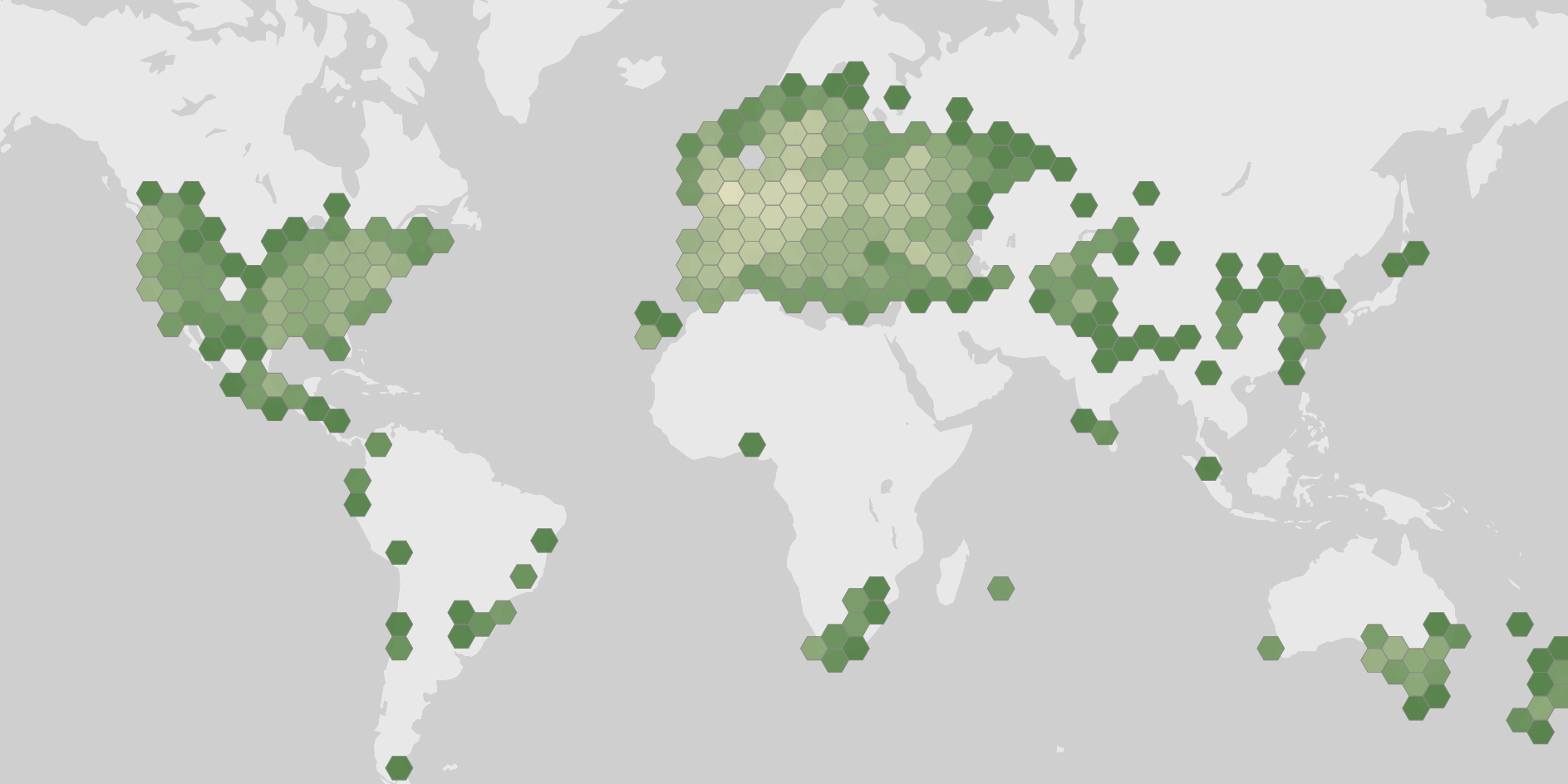
The common pear is native to Europe and western Asia, from central and eastern Europe through the Balkans, Italy, Spain and France to the Caucasus, Turkey, Ukraine and northern Iraq. Its native climate is temperate.
Outside that range, it has spread widely. It now grows across much of the United States, including California, New York, Texas and Oregon, and it is established in southern Canada, British Columbia, Great Britain, Ireland, Denmark, Sweden and Portugal. It also grows in parts of Asia, South Africa, South Australia, Mexico and Ecuador.
Observation records cluster in the warmer part of the year. They rise sharply from April, peak from May through August, and fall away by November. These records show where people have seen the tree, not how abundant it is.
Growth and Form
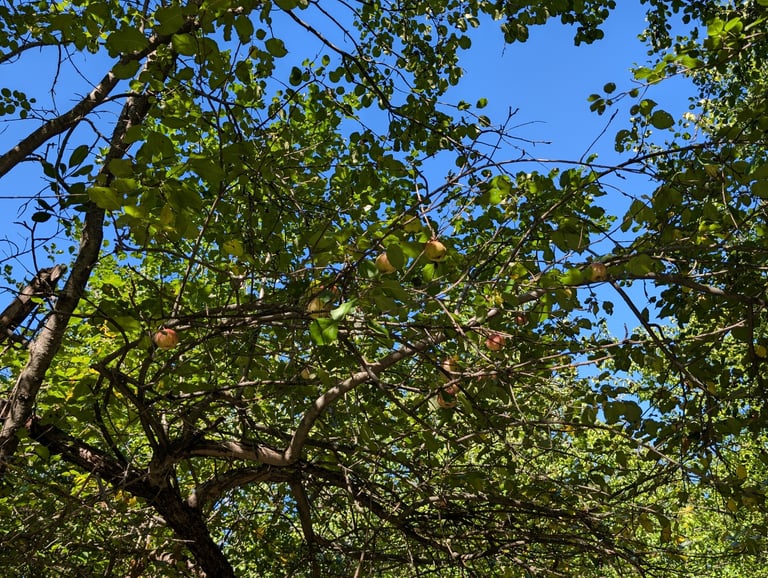
The common pear grows as a tree and is perennial, living for many years once established. It grows rapidly and can reach a mature height of about 15 meters.
Its rapid growth means a young tree can build a sizeable frame in a short time. Growers and gardeners plan for that vigor when they choose a site.
Ecology and Relationships
Caterpillars of several moths and butterflies are among the most common feeders on pear trees, and many of them feed on the leaves. Beetles and true bugs are also common on the tree. Weevils and longhorn beetles, such as Anthonomus pomorum and Anaglyptus mysticus, are among the insects that feed on its wood and foliage. Sheep also graze on the tree.
Honeybees and bumblebees, including Apis mellifera and Bombus terrestris, visit its white spring flowers. Several solitary bees also visit the blossoms, but less often. Their visits do not make these insects the tree's main pollinators in the account of this profile.
The bacterium Erwinia amylovora is the main disease agent of the tree and can damage its shoots and fruit. Other microbes and insects, including the codling-type moth Carposina sasakii, also attack it less often.
Cultivation and Care
The common pear needs full sun and cool, well-drained soil. It tolerates soil with a pH between about 5.2 and 6.7, which is slightly acid to nearly neutral.
It is hardy, surviving winter temperatures down to about -28 °C. It needs a period of winter chilling before it can produce fruit, so it does poorly in mild, frost-free climates.
The tree has high shade tolerance but low drought tolerance, so it needs regular moisture, especially while it grows quickly. Its flowers are white and open in early spring.
Uses and Human Relationships
People have grown the common pear for its fruit for a very long time. Pears are eaten fresh, cooked as a dessert, baked into pies and sometimes served with meat.
Pears are also fermented into a drink called perry, and perry can be distilled into a pear brandy. These drinks are an important part of the tree's cultural history in Europe.
Nearly all commercial pears come from a small set of cultivars. About 20–25 European and 10–20 Asian cultivars make up virtually all pears of commerce. Most European cultivars arose as chance seedlings or selections in western Europe, mostly France, while the Asian cultivars originated in Japan and China. 'Bartlett' is the most common pear cultivar in the world and represents about 75% of US pear production.
Photos
Photographs from via iNaturalist, licensed under CC0 1.0., by Katrina Gaibisels via iNaturalist, licensed under CC BY 4.0., by Marcin Dyderski via iNaturalist, licensed under CC BY 4.0., by Николай Соболев via iNaturalist, licensed under CC BY 4.0., by Barry Stewart via iNaturalist, licensed under CC BY 4.0., by Coralie via iNaturalist, licensed under CC BY 4.0., by Ondřej Křivan via iNaturalist, licensed under CC BY 4.0., and by L. Eaton via iNaturalist, licensed under CC BY 4.0., credited on each photo.
Ecology and classification
Growth habit
- Tree
Classification
- Phylum
- Tracheophyta
- Class
- Magnoliopsida
- Order
- Rosales
- Family
- Rosaceae
- Genus
- Pyrus
- Species
- Pyrus communis
Sources
- GBIF Species names and classification
- iNaturalist Photos
- Wikidata Common names and conservation status
- Wikipedia Summary extract
- Plants of the World Online Native range, life form and climate (WCVP)
- USDA Plants US plants: growth habit and growing conditions
- GloBI What it eats, what eats it, parasites and pollinators
- trophiCH
- Wardeh et al. 2015 (EID2)
- DoPI
- EuPPollNet