The red deer is the only deer species native to Africa, with a population of Barbary stags surviving in the Atlas Mountains of Morocco, Algeria, and Tunisia — an unlikely outpost for an animal otherwise spread across Europe and western Asia.
Cervus elaphus is one of the largest deer species alive today, ranking behind only the moose, elk, and sambar deer in size. It ranges across most of Europe, the Caucasus, Anatolia, Iran, and parts of western Asia, and has been introduced far beyond its native range, from New Zealand to Argentina. The IUCN lists it as Least Concern.
Few large mammals combine such a wide range with such a dramatic breeding display: the autumn roar of a rutting stag, echoing through forest and glen, has made this animal a fixture of European folklore for millennia.
Identification and Appearance
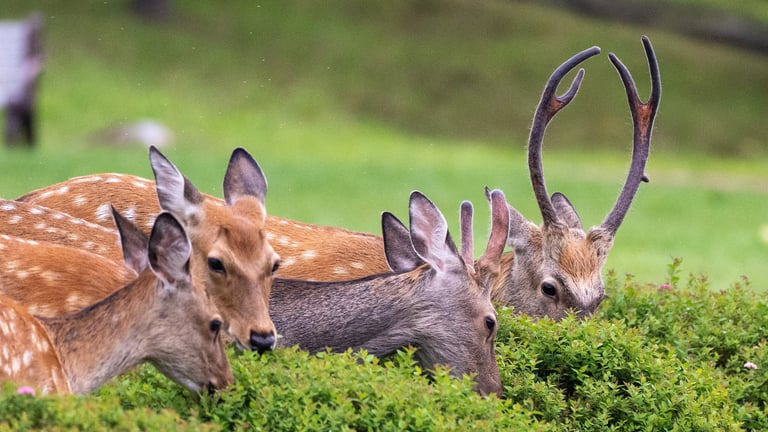
The single best field mark for a mature stag is its set of branching antlers, which form a distinctive "crown" or "cup" where the fourth and fifth tines meet — a shape unique to European red deer among the world's deer. Only males grow antlers, and they are shed and regrown every year: growth begins in spring, can reach 2.5 centimeters a day, and a full rack typically measures around 71 centimeters and weighs about 1 kilogram, though exceptional antlers reach 115 centimeters and 5 kilograms.
Stags measure 175 to 250 centimeters from nose to tail base and weigh 160 to 240 kilograms, standing roughly 95 to 130 centimeters at the shoulder. Hinds are noticeably smaller, at 160 to 210 centimeters long and 120 to 170 kilograms. Coloring is a reddish-brown coat, often with a paler rump patch, and calves are born with creamy spots that fade by late summer, though some adults retain a few spots on their summer coats.
Size varies considerably by subspecies and region. The Carpathian red deer (C. e. elaphus) can weigh up to 500 kilograms despite relatively modest antlers, while the Corsican red deer (C. e. corsicanus) weighs only 80 to 100 kilograms and carries smaller antlers lacking the radial tines seen in larger forms. Many males, especially in Britain and Norway, grow a short neck mane in autumn, though Caspian and Spanish stags typically do not. Hinds never grow neck manes or antlers, making sex identification straightforward in adults.
Distribution and Habitat
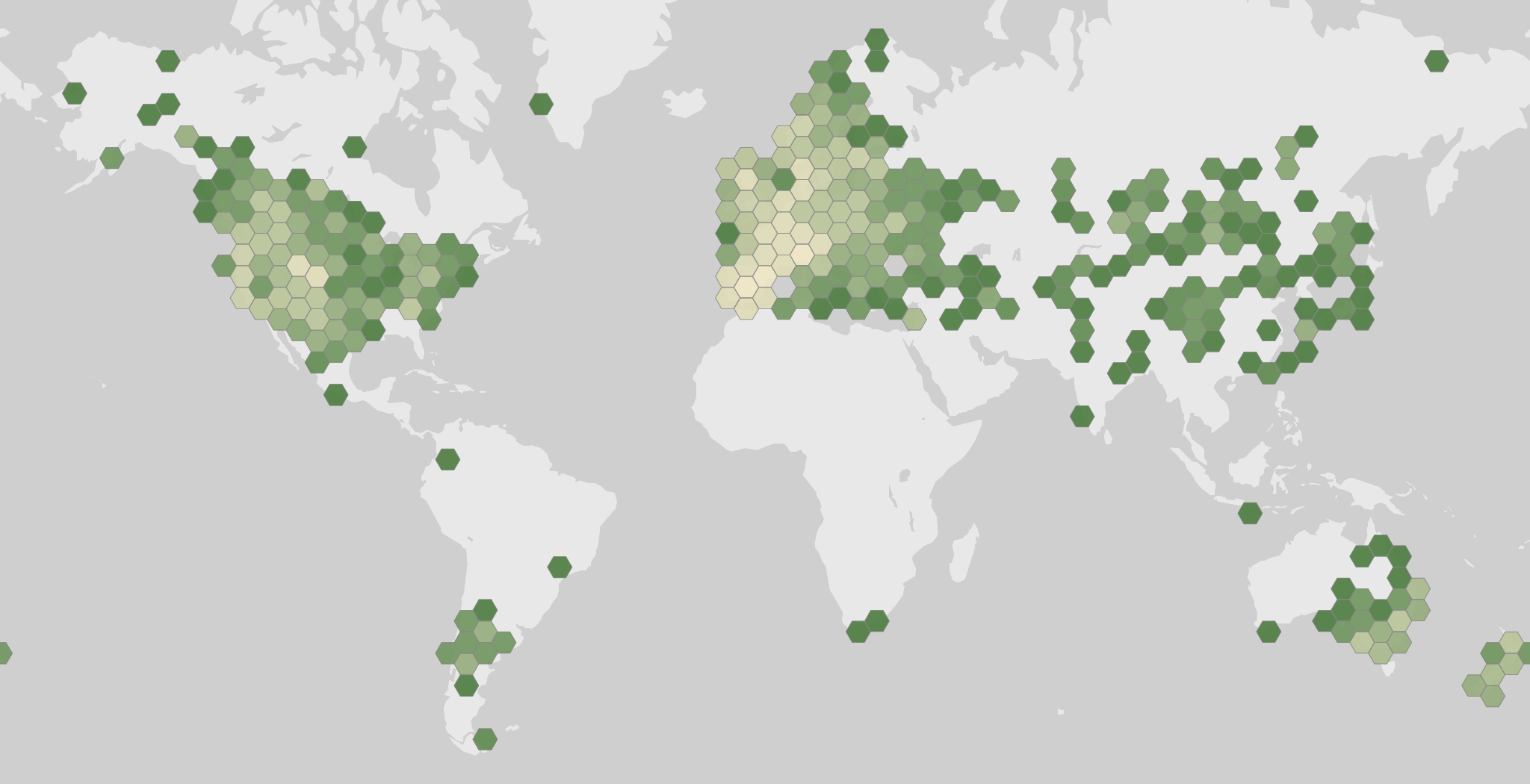
Red deer occupy a broad native range spanning most of Europe, the Caucasus, Anatolia, Iran, and parts of western Asia, plus the Atlas Mountains of North Africa. Ireland holds a genetically distinct population, and Scotland, the Lake District, and Exmoor in England retain populations descended largely from indigenous stock, though some have been supplemented with released farm deer. In the Netherlands, roughly 3,000 red deer live in the Oostvaardersplassen reserve, and France's population grew from about 30,000 in 1970 to around 160,000 by 2014, expanding into higher-altitude forests than before.
The species has also been introduced well outside its native range, including Australia, New Zealand, the United States, Canada, Peru, Uruguay, Chile, and Argentina, often descending from deer originating in Scottish or English parks.
Red deer favor open woodlands over dense unbroken forest, using coniferous and hardwood forests, clearcuts, grasslands, and shrublands, and occurring from sea level up to elevations near 3,000 meters. Monthly observation data show a pronounced late-summer peak, with counts nearly doubling in one month compared to the surrounding period — likely reflecting increased visibility during the pre-rut season rather than a true population surge, since these figures record sightings, not total numbers.
Behavior and Lifestyle
Red deer spend most of the year in single-sex groups, with hinds forming herds of up to several dozen individuals and stags forming separate bachelor groups once they shed their antlers. This segregation breaks down each autumn during the rut, when mature stags compete fiercely for access to hinds, challenging rivals by roaring and pacing in parallel before, if neither backs down, clashing antlers in fights that can cause serious injury.
Dominant stags gather harems of up to twenty hinds, following and guarding them from August into early winter while urinating on themselves as a scent display. Holding a harem is costly: stags rarely feed during the rut and can lose up to 20 percent of their body weight, so breeding success favors stags in prime condition, typically peaking around eight years of age. Younger and older males are usually relegated to the periphery of larger harems rather than holding their own.
Outside the rut, red deer follow seasonal elevational movements, generally staying higher in summer and dropping to lower ground in winter. After the rut, hinds form large herds of up to fifty animals with constant vocal contact between mothers and calves, and one or more herd members typically stand watch for predators — mainly grey wolves and, occasionally, brown bears — while the rest feed or rest.
Communication
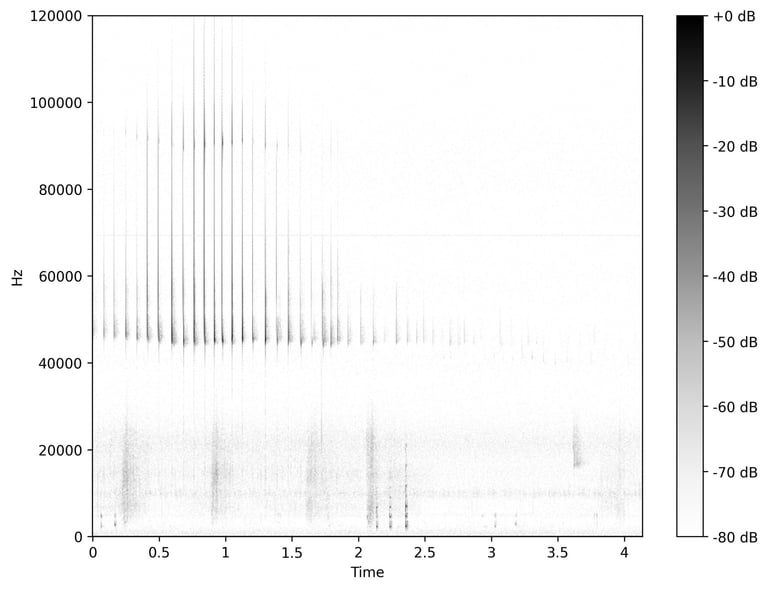
Red deer are considered among the noisiest of all deer, relying heavily on sound alongside scent, sight, and touch. Newborn calves bleat and squeal, hinds bark, grunt, and squeal to stay in contact with their young, and stags produce a deep, resonant roar during the rut that can carry over long distances.
The stag's roar serves multiple purposes: it helps hold a harem together, attracts hinds who favor males that roar most often and loudest, and signals dominance to rival males without the need for physical combat. Roaring peaks at dawn and dusk, matching the species' generally crepuscular activity pattern.
Scent also plays a role in rut behavior, as dominant stags urinate on themselves to advertise their status to both rivals and potential mates.
Diet and Nutrition
Red deer are grazers and browsers whose diet shifts with the seasons. In summer they feed mainly on grasses, sedges, and forbs such as dandelions, clover, hawkweed, and violets, taking advantage of nutrient-rich, easily digested growth.
As winter approaches and herbaceous plants die back, red deer switch to woody browse, including twigs and bark from species such as cedar, hemlock, sumac, and maple, occasionally supplementing this with mushrooms. Being ruminants, they regurgitate and re-chew their food as cud, an adaptation that allows them to extract more nutrition from fibrous winter forage.
Mineral intake matters as much as bulk forage: red deer visit natural mineral licks to obtain sodium, magnesium, and sulfur, and these compounds help buffer the plant defense chemicals and tannins found in some forage, supporting digestion during seasonal diet shifts and periods of high nutritional demand such as antler growth and lactation.
Reproduction and Raising Young
The breeding season, or rut, begins in late September or early October, when stags shed the velvet from their antlers and begin competing for access to hinds. Dominant stags gather harems of roughly six hinds along with their yearling calves, defending a mobile territory around the group and advertising their status through roaring; fights between rival males can be intense enough to cause injury, exhaustion, or occasionally death.
Mating itself often requires a dozen or more attempts before the first successful copulation, and a stag may mate several more times within his harem before moving on. Both sexes reach sexual maturity around sixteen months, though hinds in their second autumn typically produce their first calf, and young males rarely secure a harem until several years older.
Gestation lasts 240 to 262 days, and hinds almost always give birth to a single calf weighing about 15 kilograms, with twins being rare. Newborns are born spotted, with soft hooves, and mother and calf remain isolated from the herd for the first weeks of life. The calf can rejoin the herd at around sixteen days old and is fully weaned within 60 days, but continues to stay close to its mother for almost a full year, until she is about to give birth again.
Population and Ecological Role
Red deer play an outsized role in shaping the plant communities where they live, as their sustained browsing pressure influences which grasses, shrubs, and tree seedlings can persist in a landscape. In turn, they serve as an important seasonal prey source for large predators such as brown bears, and, in Europe, for grey wolves.
Because their impact on vegetation is tied directly to local herd density, red deer populations function as a visible link between predator communities and the wider plant community, making them a key species in the ecosystems they inhabit rather than a passive presence within them.
Conservation and Threats
Red deer carry no special conservation status and are assessed as Least Concern by the IUCN, reflecting a healthy overall population across their wide range. This global picture, however, masks a history of serious regional decline: excessive hunting and habitat loss nearly extirpated many populations in the 19th century, and the eastern North American subspecies, Cervus elaphus canadensis, is now extinct.
Habitat modification and unregulated hunting remain the main historical threats, though in recent decades conservation efforts led by private landowners and wildlife agencies have reversed many of these declines, allowing populations to expand significantly in parts of their range. Today red deer are managed as a game species, subject to limited legal hunting, and are also farmed for meat in some regions.
No formal international protections apply: the species holds no special status under CITES or major national endangered species lists, since its overall numbers are considered secure.
Conservation status
- LC
- NT
- VU
- EN
- CR
Least Concern
Cultural Significance
Few animals loom larger in European folklore than the red deer: when historical texts refer simply to "deer," they usually mean this species rather than roe deer or other natives. It carries symbolic weight as a representation of the untamed spirit of the forest, and in ancient Irish mythology stags were often depicted as mystical creatures embodying strength and nobility.
The species' cultural presence stretches back tens of thousands of years: red deer appear in European cave art dating to at least 40,000 years ago, during the Upper Paleolithic, and later feature on Pictish stones from early medieval Scotland, typically shown as prey animals. In medieval hunting culture, the mature stag — known in England as a "hart" — was considered the most prestigious quarry a hunter could pursue.
Beyond its symbolic role, the species has long held practical value for people, providing food, hides, antlers, and teeth, and today it continues to support hunting, meat production, and ecotourism across much of its range.
Fun Facts
- Red deer stags roar rather than bugle during the rut, an adaptation suited to dense forest, unlike the open-country "bugle" call of their North American relative, the elk.
- New Zealand's red deer population traces back to just a handful of animals released starting in 1851; between 1851 and 1926, some 220 separate liberations introduced over 800 deer to the islands.
- One nature reserve in the Netherlands, the Oostvaardersplassen, supported a herd of about 3,000 red deer as of a 2012 count.
- France's red deer population multiplied roughly fivefold in under fifty years, growing from about 30,000 animals in 1970 to around 160,000 by 2014.
- Red deer are among the mammal species in which homosexual behavior has been documented.
- All red deer calves are born with pale spots on their backs and sides, a pattern that fades by late summer — though some adults keep a few spots into their summer coat.
Ecology
Habitat
- Forest
- Woodland
- Mountain
- Grassland
Behavior
- Territorial
- Social
- Migratory
- Crepuscular
Diet
- Herbivore
Photos
SourcesGBIFiNaturalistWikidataWikipediaEncyclopedia of LifeAnimal Diversity WebAnAge