The red fox is the most widely distributed member of the entire order Carnivora, with a natural range covering nearly 70 million square kilometers across the Northern Hemisphere. That success has a dark side: despite being classified as Least Concern by the IUCN, Vulpes vulpes also appears on the list of the world's 100 worst invasive species because of the damage it does after being introduced to places like Australia.
It is the largest species in the genus Vulpes, a true fox rather than a wolf or dog relative, and it occupies everything from Arctic tundra to farmland, forest, desert, and city parks. Its range has grown alongside human settlement rather than shrunk because of it, a rare pattern among medium-sized carnivores.
What makes the red fox worth a closer look is exactly this contradiction: a species secure enough to be unremarkable across most of its range, yet destructive enough in Australia to have driven declines in native marsupials like bilbies, numbats, and several bettong species.
Identification and Appearance
The single most useful field mark is the fox's long, fluffy tail, which measures more than 70 percent of its head-and-body length and drags nearly to the ground when the animal stands still. Combined with an elongated body on relatively short legs, this gives the red fox a low, stretched-out silhouette very different from a dog's.
Adults stand 35 to 50 centimeters at the shoulder and measure 45 to 90 centimeters in body length, with tails adding another 30 to 55.5 centimeters. Weights vary enormously with geography and sex, ranging from about 2.2 to 14 kilograms; vixens typically run 15 to 20 percent lighter than males (locally called tods). The largest fox on record, a male shot in Aberdeenshire, Scotland, in 2012, measured 1.4 meters long and weighed 17.2 kilograms.
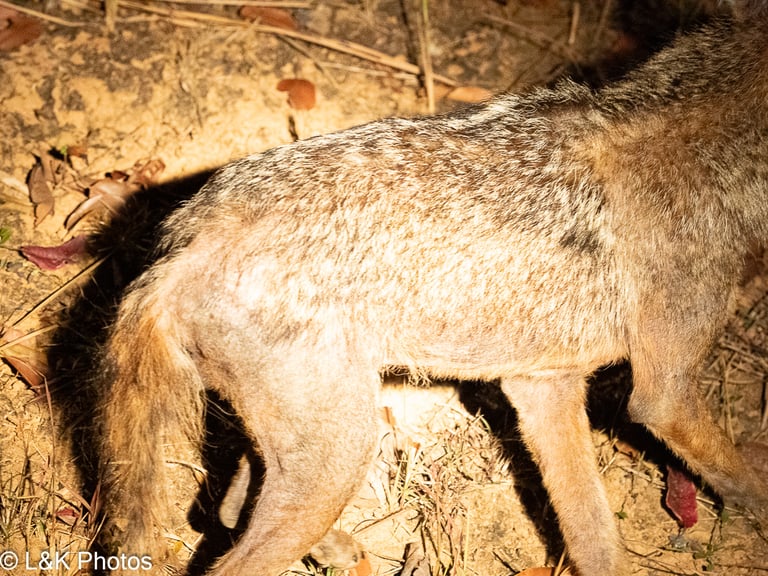
The classic red morph has a bright rust-colored coat with yellowish tints, a faint darker stripe running down the spine and shoulders that can form a rough cross pattern, and a lower back mottled with silvery hairs. The flanks are paler than the back, while the chin, lower lips, throat, and upper chest are white. Two other color morphs exist, silver/black and cross, alongside the typical red.
Red foxes can be told apart from dogs by their skulls: narrower muzzles, less crowded premolars, more slender canines, and a concave rather than convex facial profile. Their eyes also give them away at a glance, since the pupils are oval and vertically oriented rather than round like a dog's. Sexual dimorphism shows mainly in the skull, with females having smaller skulls overall but wider nasal regions and larger canines relative to skull size.
Distribution and Habitat
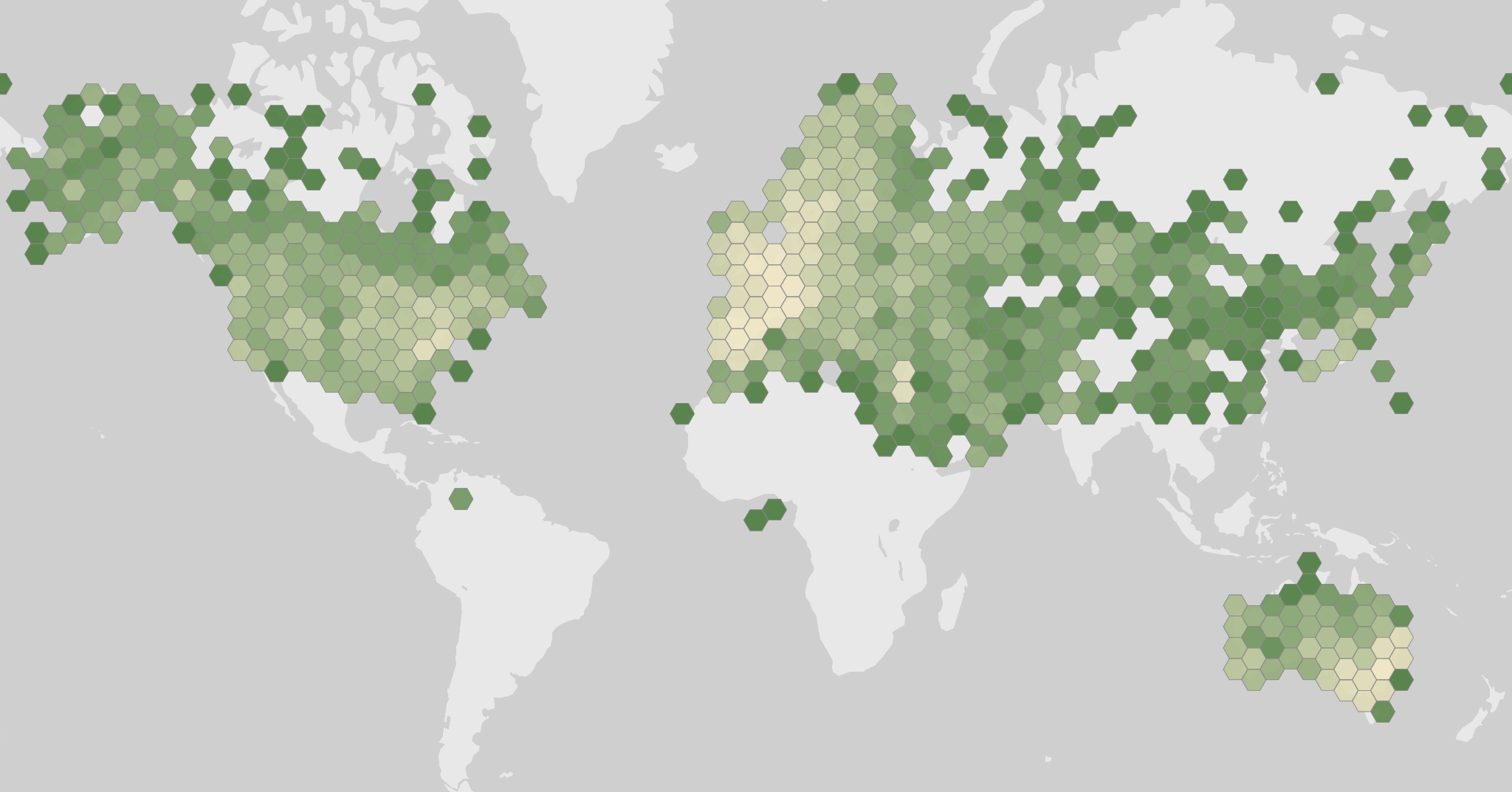
The red fox occupies nearly every biome across the Northern Hemisphere, from sea level up to 4,500 meters elevation, and is absent only from Arctic islands, the coldest parts of central Siberia, and true desert cores. Within Europe, Asia, North Africa, and North America, it uses forest, tundra, prairie, desert, mountains, farmland, and urban habitats alike, though it consistently favors mixed landscapes over uniform ones.
Edge habitat is the common thread: foxes seek out the boundary zones between woodlots, cropland, pastureland, and stream bottoms rather than dense unbroken forest, which they generally avoid. In agricultural regions, shelterbelts and fencerows double as hiding cover and travel corridors, and the species readily uses parks, golf courses, cemeteries, and large gardens in suburban settings.
Outside its native range, the red fox was deliberately introduced to Australia in the 1830s and 1840s by settlers wanting to preserve the tradition of fox hunting, and it now numbers in the millions across the continental mainland; a 2012 estimate put the Australian population above 7.2 million. It never established permanently on Tasmania until an apparent accidental introduction around 1999–2000 triggered an active eradication program.
Monthly observation data show fox sightings peaking in spring, climbing from roughly 148,000 in January to a high of about 158,000 in May, before falling to a low near 82,000 in September. These are presence records rather than population counts, but the spring peak likely reflects increased daytime visibility of adults during denning and early pup-rearing season rather than a true rise in numbers.
Behavior and Lifestyle
Red foxes are solitary hunters that do not form packs, though they are not truly asocial: a territory is typically held by one adult male and one or two adult females along with their young, and home ranges of 5 to 12 square kilometers in good habitat (up to 20 to 50 square kilometers in poor habitat) are defended at least partially against neighboring foxes. Activity is nocturnal or crepuscular, with animals resting through much of the day near dens connected by regular pathways to hunting grounds and food caches.
Family groups sometimes include subordinate foxes, from one or two up to as many as eight, that help raise the dominant vixen's kits by guarding, grooming, and provisioning them even though they do not breed themselves. Young foxes that have a good chance of establishing their own territory will disperse in autumn, sometimes traveling only 10 kilometers but occasionally journeying nearly 400 kilometers; those with poorer prospects delay dispersal and remain with their parents.
Dens are usually dug in well-drained soil on slopes, riverbanks, or in ravines, with a main passage running 40 to 45 degrees downward for up to 17 meters and side tunnels branching off a chamber 0.5 to 2.5 meters deep. The same den can be reused across generations, and foxes will abandon a den outright during mange outbreaks, apparently to limit disease spread. They are agile enough to clear 2-meter fences and swim competently, and a top running speed of about 48 to 50 km/h lets them cover ground quickly when hunting or evading danger.
Where red foxes overlap with Arctic foxes, they dominate outright, pushing the smaller species toward marginal food sources like lemmings and beach-cast carrion, and both species will kill each other's kits given the chance.
Communication
Red foxes communicate through an unusually wide combination of sound, scent, and body posture, with researchers having cataloged roughly 28 distinct vocalizations, split into about 12 adult calls and 8 calls made by kits. Most fall into two categories: contact calls, whose pitch and pattern shift with distance between individuals, and interaction calls, which vary with the level of aggression involved.
The most familiar contact call is a three- to five-syllable bark transcribed as "wow wow wow," heard most often between December and February and sometimes mistaken for a tawny owl's territorial call; kits start making a version of it at 19 days old when seeking attention. Aggressive encounters produce a throaty, ratchet-like sound called "gekkering," typically exchanged between rival males or vixens rejecting a suitor during the courting season, while a long, drawn-out "waaaaah" is thought to be a vixen summoning males during the breeding period.
Scent plays just as large a role: foxes mark territory and empty food caches with urine released through up to 12 different postures that let them place the scent with precision, along with secretions from the anal sac, the supracaudal gland, and glands near the lips, jaw, and foot pads. Body language layers on top of this, with ear position, tail height, and posture signaling everything from playful curiosity to submission, aggressive dominance, or fear.
Hunting and Diet
A red fox hunting mice relies on patience rather than speed: it stands motionless, listening and watching intently until it pinpoints a target by sound alone, then leaps high into the air and drives its forelimbs straight down to pin the animal to the ground. This mouse-pouncing technique is one of the species' most distinctive hunting behaviors.
Beyond rodents, the diet is broadly omnivorous and includes eastern cottontail rabbits, insects, other small mammals, birds, reptiles, fruit, and carrion when available. An adult typically eats between 0.5 and 1 kilogram of food per day, an amount that shifts with prey availability across seasons and habitats.
Red foxes also cache surplus food and are notably skilled at relocating their own stashes later, a behavior that helps them cope with the unpredictable availability of small prey. The same urine-marking system used for territory is applied to empty cache sites as well, serving as a signal to the fox itself not to waste time revisiting a site it has already emptied.
Reproduction and Raising Young
Mating in red foxes centers on a short, intense breeding window: the female's estrous period lasts only one to six days, occurring anywhere from December to January in southern populations to February through April in the far north. Courtship often includes vocal exchanges and, sometimes, serious fighting between rival males, and copulation itself typically lasts 15 to 20 minutes, during which a copulatory tie can hold the pair together for over an hour.
While many pairs are monogamous, genetic studies have found substantial polygyny in some populations, along with cases of incest and litters with mixed paternity. After mating, the fertilized egg implants 10 to 14 days later, and gestation runs 49 to 58 days. Litters average four to six kits but can range as high as 13, with larger litters more common where fox mortality is high.
Kits are born blind, deaf, and toothless, weighing 50 to 150 grams, and depend entirely on their mother for the first two to three weeks because they cannot yet regulate their own body temperature; during this stage the father or a subordinate vixen brings food to the nursing mother. Eyes open at 9 to 15 days, ears become erect and coat color shifts to the adult reddish pattern over the following weeks, and pups begin leaving the den to try solid food at 3 to 5 weeks old.
Weaning is complete by 8 to 10 weeks, and young foxes stay with their parents at least until autumn of their birth year, sometimes longer, especially females. Sexual maturity arrives around 10 months of age, allowing some vixens to produce their first litter at just one year old, while wild lifespans rarely exceed 5 years even though captive individuals can live considerably longer.
Population and Ecological Role
Red foxes function as a natural check on the rodent and rabbit populations they prey on, and by eating fruit they also disperse seeds across the landscapes they occupy, giving them a genuine role in shaping plant and small-mammal communities. This dual role as predator and seed disperser makes them more than a background presence in the ecosystems where they occur.
The species also carries substantial disease significance: red foxes are the most important rabies vector in Europe and can transmit or carry leptospirosis, tularemia, listeriosis, spirochetosis, brucellosis, and tick-borne encephalitis, along with hosting dozens of internal parasite species, including tapeworms, nematodes, and the mite responsible for sarcoptic mange. Mange outbreaks can be severe enough that an infected fox loses most of its fur and up to half its body weight within about four months of infection.
These ecological connections mean fox population health has knock-on effects well beyond the species itself, influencing prey numbers, seed distribution, and disease dynamics for other wildlife and, in the case of rabies, for humans and domestic animals as well.
Conservation and Threats
The red fox is assessed as Least Concern by the IUCN Red List, reflecting populations that are considered stable overall and a range that has expanded alongside human land-use change rather than contracted. Three subspecies are listed on CITES Appendix III, a category used to regulate trade in species that a particular country wants help protecting under its own laws, but there is no special protected status under frameworks like the US Federal List.
Unlike many species facing habitat loss or persecution, the red fox's conservation story is essentially one of resilience: it has adapted to agricultural land, suburban parks, and cities as readily as to forest and tundra, which has kept its numbers secure even as it has become a management problem in places like Australia where it does not belong.
Cultural Significance
The red fox has long symbolized cunning and trickery across a striking range of cultures. In Greek mythology, the Teumessian fox, a child of the monster Echidna, was a gigantic vixen destined never to be caught, while medieval European folklore built an entire literary tradition around Reynard the Fox, a trickster who first appeared in the 1150 poem Ysengrimus and later in Pierre Saint Cloud's Le Roman de Renart and Chaucer's The Nun's Priest's Tale.
East Asian folklore gives the fox supernatural dimensions: Chinese huli jing and Korean kumiho are fox spirits said to grow up to nine tails, while Japanese kitsune are shape-shifting spirits whose magical power increases with age, sometimes portrayed as tricksters and sometimes as loyal guardians or spouses. Arab folklore instead paints the fox as cowardly and deceitful, said to feign death by bloating its belly to lure unwitting prey, an image echoed in the Bible's use of
Fun Facts
- The red fox is the largest species in the genus Vulpes, yet its limb bones weigh about 30 percent less per unit of bone area than those of a similarly sized dog.
- Despite its Least Concern status, the red fox is included on the list of the world's 100 worst invasive species because of the damage its introduced populations have done to native Australian wildlife.
- More red foxes are raised on fur farms than any other wild fur-bearing mammal.
- A red fox den can have as many as 19 separate entrances, as documented in Alaska, and the same den network can be used by successive generations for decades.
- Captive red foxes sleep an average of 9.8 hours per day.
- One of the fox's vocalizations, a long, drawn-out shriek, is often described as sounding like a person screaming.
Photos
Photographs from via iNaturalist, licensed under CC0 1.0., by Jason E. Farabaugh via iNaturalist, licensed under CC BY 4.0., by Drace via iNaturalist, licensed under CC BY 4.0., by froggymum via iNaturalist, licensed under CC BY 4.0., by Marc-Olivier Beausoleil via iNaturalist, licensed under CC BY 4.0., by Samuel Lüthi via iNaturalist, licensed under CC BY 4.0., by Robbie via iNaturalist, licensed under CC BY 4.0., by Teo Albert via iNaturalist, licensed under CC BY 4.0., by Dmitry Trutsko via iNaturalist, licensed under CC BY 4.0., by Iona Cowell via iNaturalist, licensed under CC BY 4.0., and by Yves Bas via iNaturalist, licensed under CC BY 4.0., credited on each photo.
Ecology and classification
Classification
- Phylum
- Chordata
- Class
- Mammalia
- Order
- Carnivora
- Family
- Canidae
- Genus
- Vulpes
- Species
- Vulpes vulpes
Sources
- GBIF Species names and classification
- iNaturalist Photos
- Wikidata Common names and conservation status
- Wikipedia Summary extract
- Encyclopedia of Life Habitat, diet and behavior traits
- Animal Diversity Web Animal habitat, behavior and diet
- AnAge Longevity