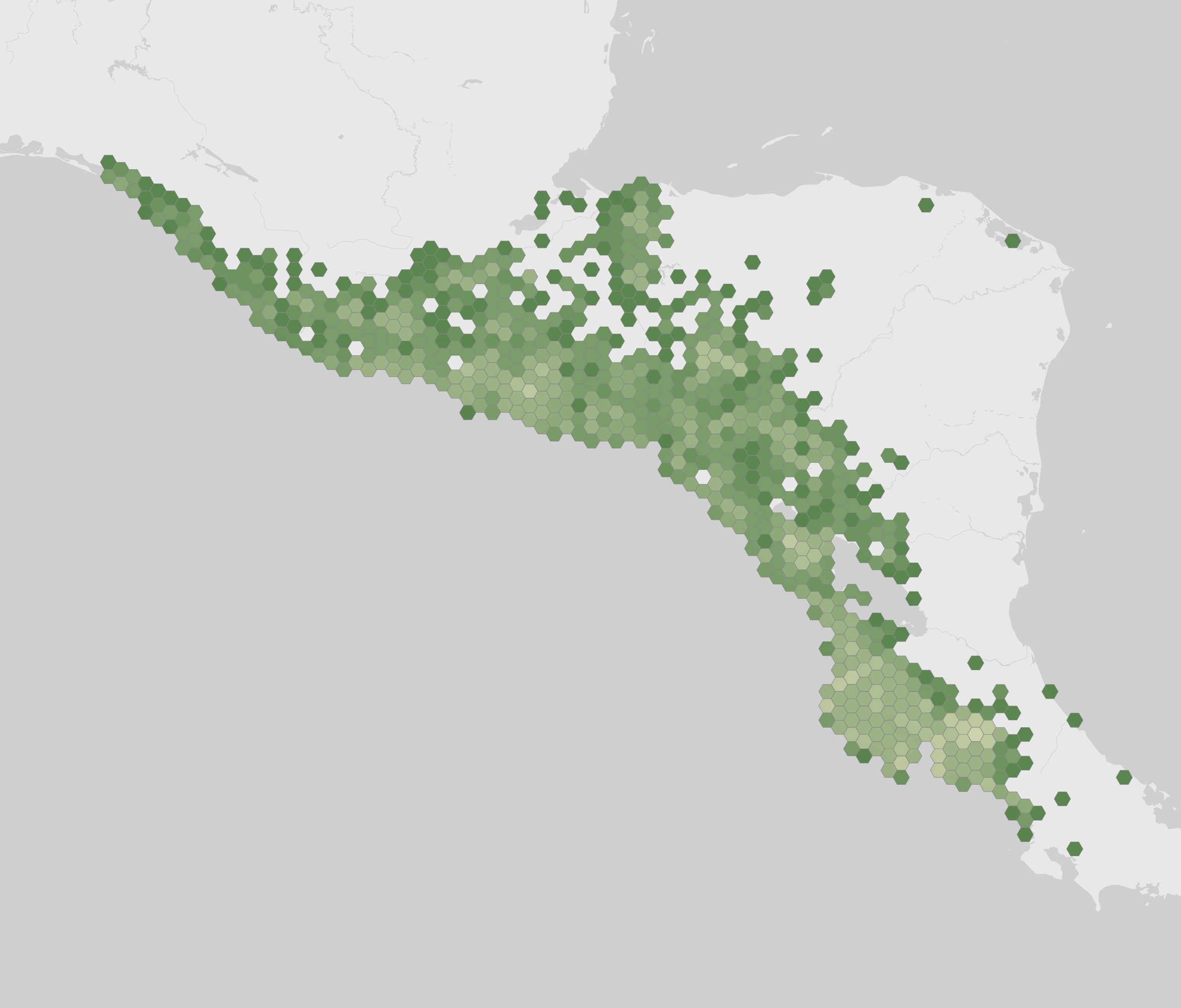
The rufous-backed wren is a songbird whose range covers about , from southwestern Mexico to northwestern Costa Rica. It belongs to the wren family, Troglodytidae, and it is a resident breeder that nests within its range year-round.
The IUCN classifies the species as Least Concern. Six subspecies are recognized, and they differ only slightly in appearance, so one description covers the group.
This large wren is common in dry lowlands and foothills, where its active foraging, its song and its habit of nesting near wasps make it a species worth knowing.
Identification and Appearance
The rufous nape and cinnamon to chestnut upper parts, streaked with black and white, are the most useful marks. The black crown and eyestripe are separated by a white eyebrow stripe, and the rump shows the strongest streaking.
Adults measure 17 cm (6.7 in) in length and weigh between 29 and 42 g (1.0 to 1.5 oz). Their wings and tail are barred black and grayish-white, while the underparts are plain white.
Juveniles are duller above and have buff-colored underparts, which separates them from adults.
Distribution and Habitat
The species lives in the Pacific lowlands and interior of Central America. Six subspecies divide its range. C. c. nigricaudatus occupies the Pacific coastal plain from southwestern Chiapas, Mexico, into Guatemala, while C. c. capistratus lives on the Pacific coastal plain from Guatemala south into El Salvador.
Other subspecies occupy inland areas. C. c. xerophilus is found in the Motagua Valley of Guatemala, C. c. castaneus ranges from interior Guatemala east to Honduras and Nicaragua, and C. c. nicaraguae lives in the interior of western Nicaragua. C. c. nicoyae is confined to the Nicoya Peninsula of northwestern Costa Rica.
In Costa Rica it occurs from sea level up to 800 m (2,600 ft), and in El Salvador it reaches as high as 1,400 m (4,600 ft). It favors dry forest, open woodland, scrub, second growth and savanna, and it is most common on the Pacific side of the central mountain ranges.
Communication
The song is built from phrases of melodic, pure-tone syllables that rise and fall through several frequency shifts. This core structure is shared across the subspecies.
Individual birds vary their calls considerably, and the variation is greater within some subspecies than between them. Recordings from Costa Rica, Mexico and other parts of the range show these differences in phrasing.
Diet and Nutrition
The rufous-backed wren is an insectivore. It forages actively in low vegetation, searching mainly for insects and other invertebrates, and it usually works in pairs or family groups.
The species has adapted well to people and will occasionally take table scraps near homes. Its feeding is not limited to natural food sources.
When it catches prey, the wren thrashes the item against its beak before swallowing it.
Nesting and Breeding
Each nest is a spherical structure lined with seed down and has a side entrance. Pairs place it 1.5 to 8 m (4.9–26.2 ft) above the ground in thorny trees or shrubs, and bull's-horn acacias are a favored choice.
Some pairs nest near active wasp nests, a link that appears to offer considerable protection from predators. The female alone incubates the eggs, which number three to five per clutch. They are white or greenish and spotted with brown or black, and they hatch after about two weeks.
Outside the breeding season, family groups roost together in dormitory nests built in the same way as breeding nests.
Conservation and Threats
The IUCN has assessed the rufous-backed wren as Least Concern. The population has not been quantified since the species was split into its current subspecies, but it is suspected to be stable.
No substantial threats to the species are known, and no declines have been identified.
Photos
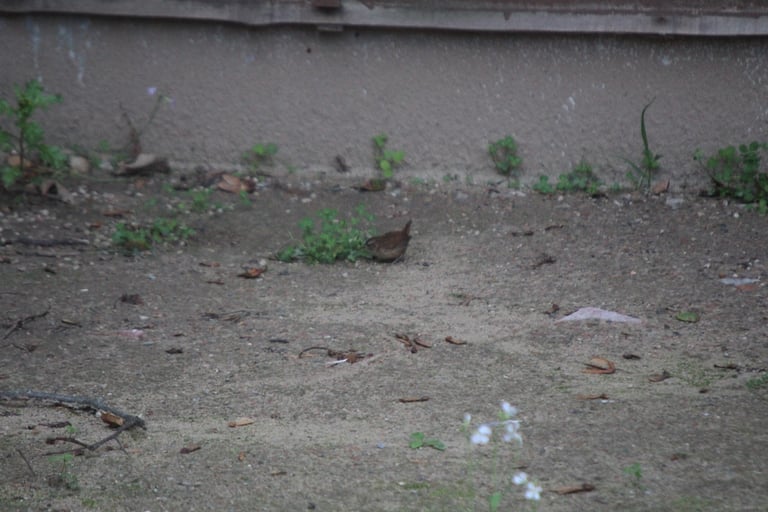
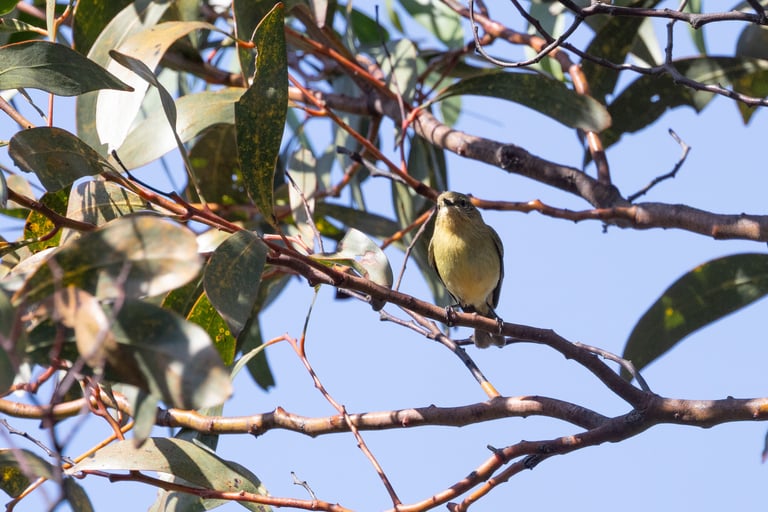
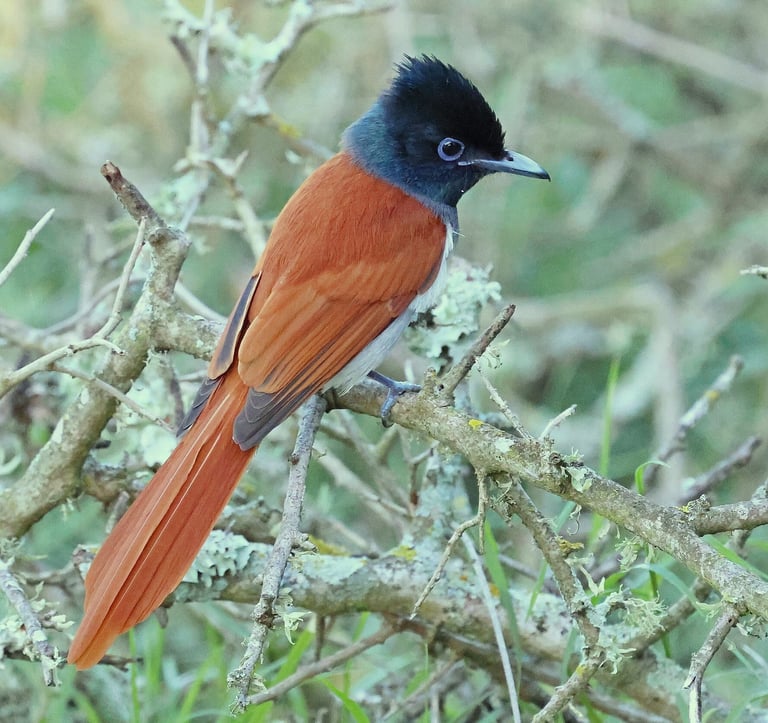
Photographs from via iNaturalist, licensed under CC0 1.0., by Jane Weeden via iNaturalist, licensed under CC BY 4.0., by Tom Field via iNaturalist, licensed under CC BY 4.0., and by Alex Novarro via iNaturalist, licensed under CC BY 4.0., credited on each photo.
Ecology and classification
Classification
- Phylum
- Chordata
- Class
- Aves
- Order
- Passeriformes
- Family
- Troglodytidae
- Genus
- Campylorhynchus
- Species
- Campylorhynchus capistratus
Sources
- GBIF Species names and classification
- iNaturalist Photos
- Wikidata Common names and conservation status
- Wikipedia Summary extract
- AVONET Bird mass, habitat, migration, diet and range size