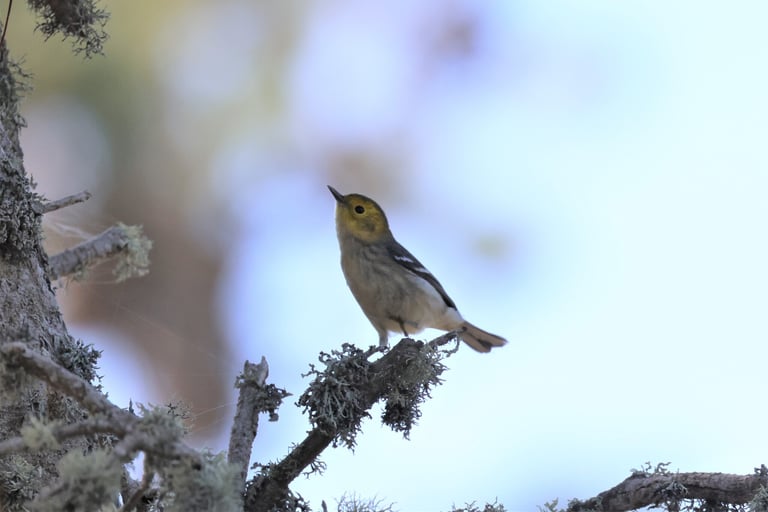
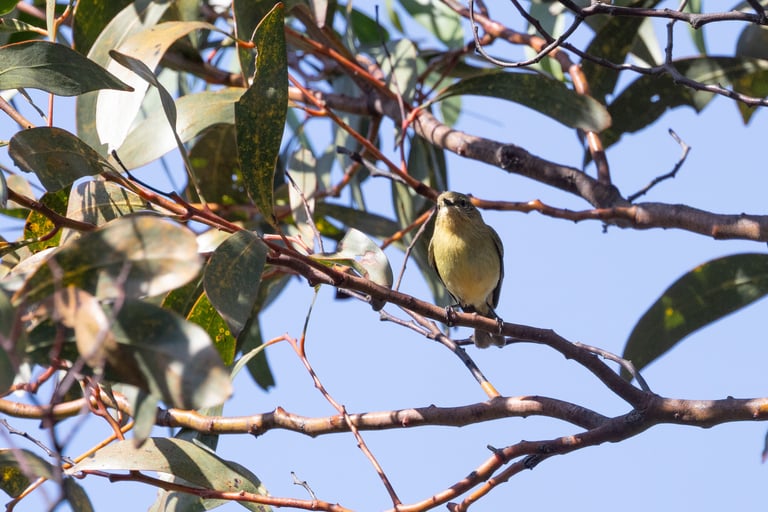
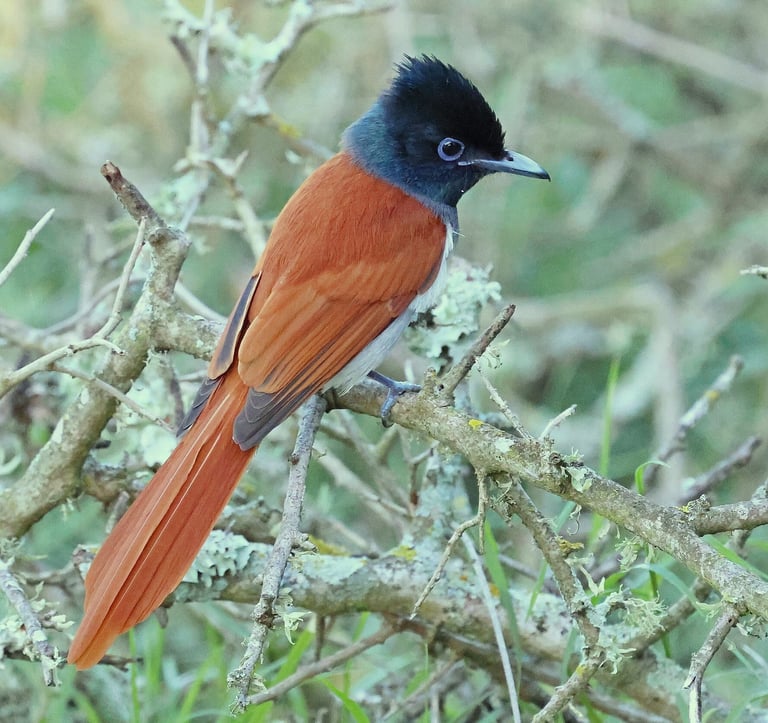
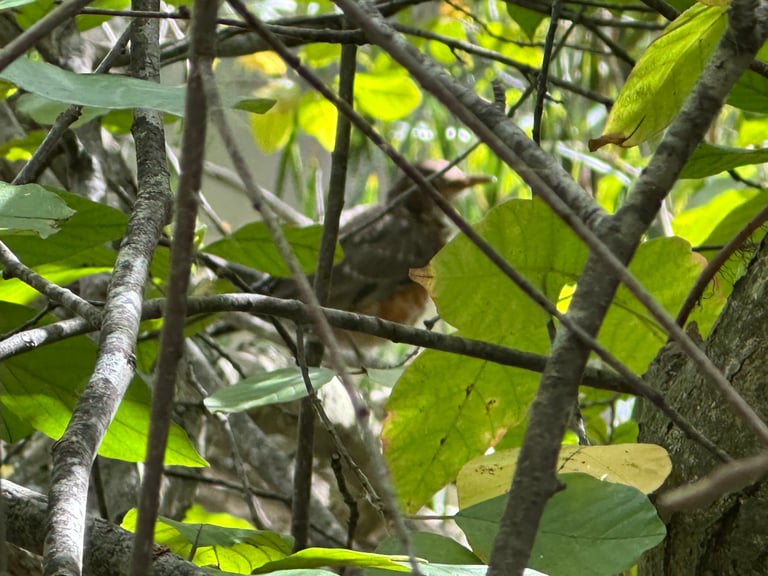
The rufous-capped warbler stands out among New World warblers for its bold facial pattern: a rufous crown and ear coverts split by a long white eyebrow stripe, set against black lores. It belongs to the family Parulidae within the order Passeriformes, and lives mostly in Mexico, Guatemala, and Belize, with occasional visits to Arizona and Texas in the United States.
The IUCN lists it as Least Concern, reflecting its tolerance of scrubby and second-growth habitats rather than dense, undisturbed forest.
Its sedentary lifestyle, preference for brushy edges over forest interior, and distinctive oven-shaped nest make it a rewarding bird to learn to recognize, even for those who only glimpse it along a canyon bottom in the American Southwest.
Identification and Appearance
The combination of a rufous crown and ear coverts framed by a long white supercilium is the quickest way to identify this bird. It measures about 13 cm (5.1 in) long and weighs between 7 and 16 g (0.25 to 0.56 oz).
Adults of the nominate subspecies show a grayish nape, olive-gray upperparts, and dusky gray wings and tail edged in yellow-green. The chin is white, the throat and upper breast lemon yellow, the lower breast and belly brownish white, and the flanks and undertail coverts washed with olive-buff. The sexes look alike.
Juveniles differ noticeably, with an olive-brown head, warmer brown crown, and olive-brown upperparts. Their greater and median upperwing coverts show buff tips forming two wing bars, and their underparts are pale olive-buff fading to yellowish white on the belly.
Five subspecies vary subtly in tail length and the shade of rufous or gray on the head: B. r. caudatus and B. r. dugesi have the longest tails and paler or more olive upperparts, B. r. jouyi is grayer above, and B. r. salvini shows a breast that fades from yellow to yellowish white lower down. All subspecies share a dark iris, blackish bill, and pinkish legs and feet.
Distribution and Habitat
The rufous-capped warbler occurs from southern Mexico through Guatemala and into Belize, with regular visits by the subspecies B. r. caudatus to southeastern Arizona and to Texas in the Big Bend area, the lower Rio Grande Valley, and the Edwards Plateau, where it has occasionally bred. Its range covers roughly 968,000 square kilometers.
It favors dry, open to semi-open landscapes: scrublands, open woodlands, hedgerows, young secondary forest, shade coffee plantations, and the edges of mature forest, while avoiding forest interiors. Elevation ranges from sea level up to 3,000 m (9,800 ft), though south of Mexico it is most common between about 450 and 2,150 m (1,500 to 7,100 ft).
Different subspecies occupy distinct regions within this range, from B. r. caudatus in northwestern Mexico's Sonora and Chihuahua to B. r. salvini along the Gulf and Caribbean slope into Guatemala and Belize. In the United States, sightings are confined to canyon bottoms surrounded by scrubland.
Monthly observation counts show somewhat higher numbers from January through April compared to the middle months of the year, though these figures reflect presence records rather than actual population size.

Behavior and Lifestyle
This warbler is a sedentary, year-round resident across nearly all of its range, with only occasional vagrants reaching the southwestern United States. It lives alone or in pairs for most of the year rather than in flocks.
During courtship, males call to females with a chick-like "chit-chit-chit-chit" and sometimes a higher-pitched "tsi." Its lifestyle is insessorial, spending much of its time perched and gleaning within dense brush.
Its perception relies on visual, tactile, acoustic, and chemical cues, consistent with a bird that forages by sight and movement detection within thick vegetation rather than in the open.
Communication
Both males and females sing, producing a fast-paced trill built from repeated syllables, rendered as "tsip-tsip-tsip-three'three'three'sea'sea'tawhee!" This shared singing by both sexes is notable among songbirds.
Its call note is a hard "tcheck," which can extend into a harsh chatter when the bird is agitated, likely signaling alarm or territorial defense.
Diet and Nutrition
The rufous-capped warbler forages by searching through dense brush for insects and spiders, its main food source. It hunts by scanning close to the ground, watching for sudden movements that betray hidden prey.
This close-to-the-ground, brush-level foraging style matches its preference for scrubby, semi-open habitat over open ground or forest canopy, keeping it within cover while it searches for invertebrates.
Nesting and Breeding
Breeding spans at least April through July, though the full extent of the season is not precisely defined. Courtship involves the male calling the female with a chattering "chit-chit-chit-chit" song.
The nest is a domed structure with a side entrance, built from plant fibers and lined with softer, shredded material. It is placed on the ground or tucked into steep banks, among rocks, fallen logs, or occasionally in a niche along a high ravine, well hidden within leaf litter.
The clutch holds two to four white eggs heavily marked with reddish or cinnamon spots and streaks. Incubation lasts about 12 to 14 days, and chicks fledge after roughly 9 to 12 days.
Pairs can raise one or two broods in a single breeding season.
Conservation and Threats
The IUCN Red List classifies the rufous-capped warbler as Least Concern, and it holds no special status under the US Federal List or CITES. It is considered common in Mexico and fairly common in Belize and Guatemala.
Its preference for scrubby habitats and second growth means that habitat loss is not considered a serious problem for the species, since it tolerates disturbed and regenerating landscapes better than forest-interior specialists.
No dedicated conservation efforts have been undertaken for this species, though numerous museum specimens exist and continue to be studied by taxonomists, with much of this research concentrated in Mexico.
Fun Facts
- Its name comes from the uniquely patterned rufous crown that sets it apart from other warblers.
- Adult plumage colors are very similar to those of young birds, unlike many songbirds where juveniles look markedly different.
- Males and females look nearly identical, making the sexes difficult to distinguish by plumage alone.
Photos
Photographs from via iNaturalist, licensed under CC0 1.0., by Alfonso Xavier Rolon Perez via iNaturalist, licensed under CC BY 4.0., by Masked Lynx via iNaturalist, licensed under CC BY 4.0., by Javier Hernandez via iNaturalist, licensed under CC BY 4.0., by Carlos Domínguez-Rodríguez via iNaturalist, licensed under CC BY 4.0., by JR Ferrer-Paris via iNaturalist, licensed under CC BY 4.0., by SustentabilidadConciencia via iNaturalist, licensed under CC BY 4.0., by Tristán Franco via iNaturalist, licensed under CC BY 4.0., by Tenoch Cuauhtémoc Perez via iNaturalist, licensed under CC BY 4.0., by Alberto Alcalá via iNaturalist, licensed under CC BY 4.0., by cello caruso-turiello via iNaturalist, licensed under CC BY 4.0., and by Giovana A. Valencia via iNaturalist, licensed under CC BY 4.0., credited on each photo.
Ecology and classification
Classification
- Phylum
- Chordata
- Class
- Aves
- Order
- Passeriformes
- Family
- Parulidae
- Genus
- Basileuterus
- Species
- Basileuterus rufifrons
Sources
- GBIF Species names and classification
- iNaturalist Photos
- Wikidata Common names and conservation status
- Wikipedia Summary extract
- Encyclopedia of Life Habitat, diet and behavior traits
- Animal Diversity Web Animal habitat, behavior and diet
- AVONET Bird mass, habitat, migration, diet and range size