Male sand lizards flash brilliant green flanks each spring, a color that fades again by late summer once the mating season ends. This burst of color is not just decoration: brighter, more intense green has been linked to greater body mass and fighting ability in males.
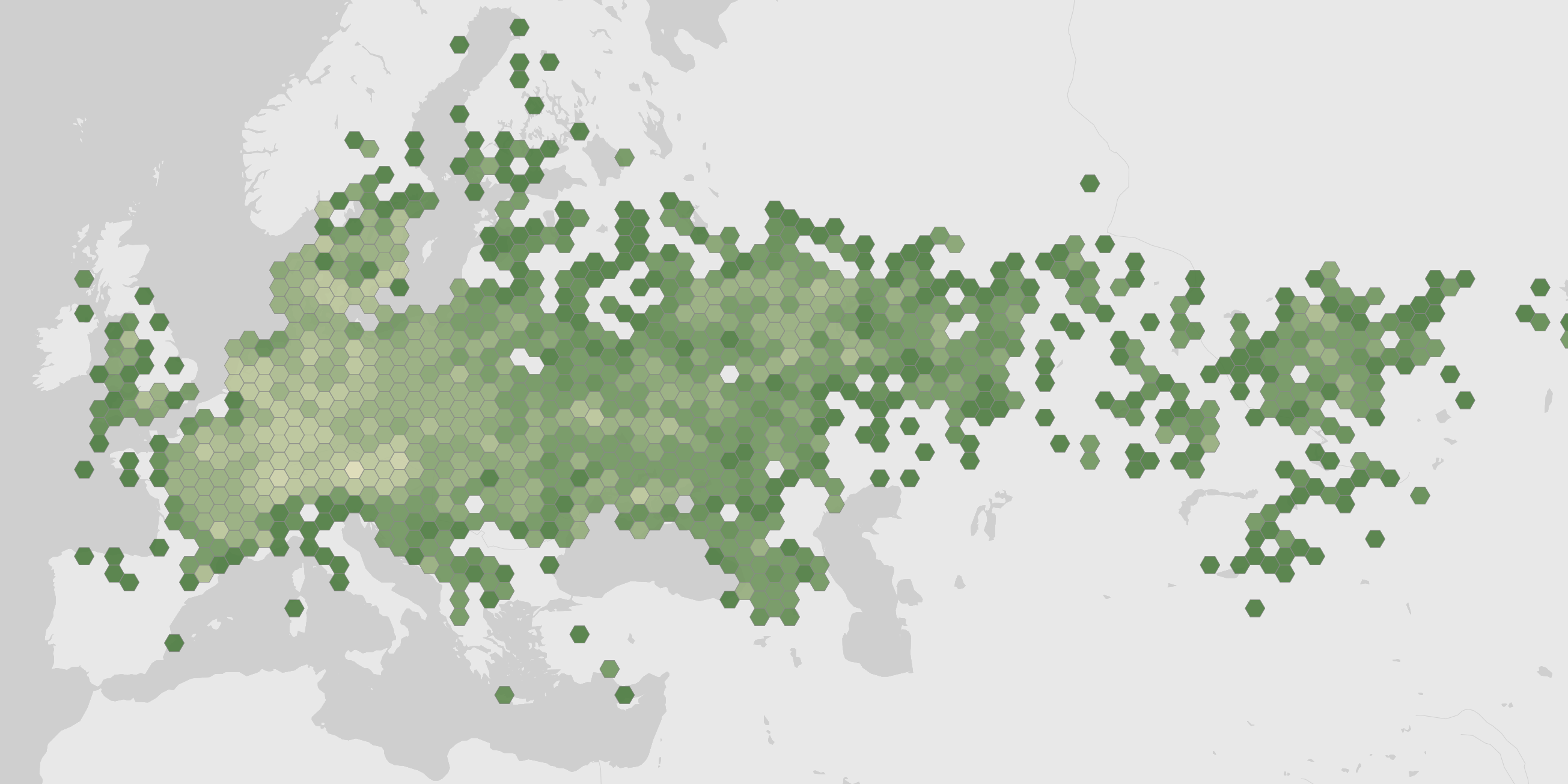
Lacerta agilis is a member of the lizard family Lacertidae, found across much of Europe and Asia, from lowland heaths in Britain to sandy habitats deep into Russia. Several subspecies exist, including L. a. agilis, L. a. argus, and L. a. exigua, each with somewhat different coloring and range. Globally the species is assessed as Least Concern, though it holds strict legal protection in the UK and much of Europe. Beyond its color-changing males, the sand lizard is worth knowing for its intense mating battles, its dependence on sun-warmed sand for laying eggs, and its ability to shed its own tail to escape a predator's grip.
Identification and Appearance
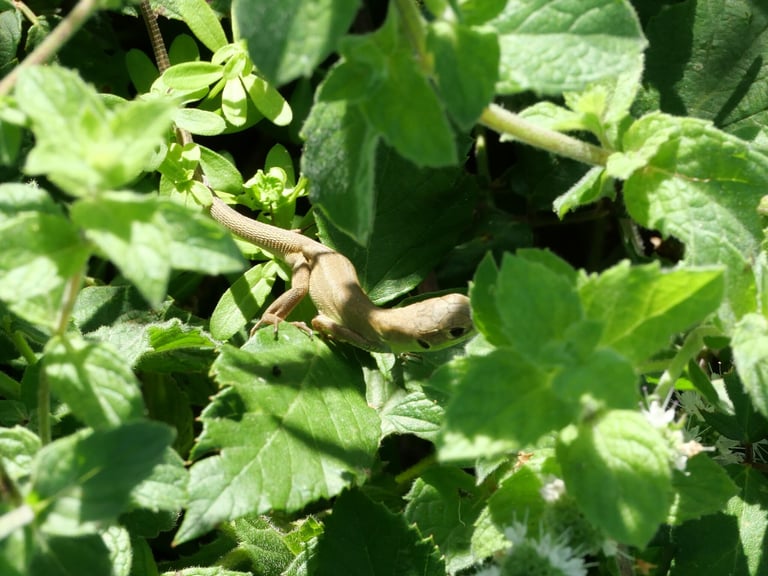
The clearest field mark is the pattern of dark, pale-centered eye-shaped spots (ocelli) running in stripes along the back and flanks, present in both sexes throughout the species' range in northwest Europe. Adults are modestly sized: males reach up to 19.3 cm in total body length, females slightly less at up to 18.5 cm.
Coloration differs sharply between the sexes and across the year. Males carry finer markings than females and develop bright green flanks during the spring breeding season, a color that fades by late summer. Females stay grey to brown year-round and, from May to August, can be recognized by large, bulging bellies swollen with developing eggs.
Geographic variation adds further complexity. In the two western subspecies, L. a. agilis and L. a. argus, the dorsal stripe is thin, broken into segments, or absent altogether, and only the males' flanks turn green in the breeding season; L. a. argus also has a plain red- or brown-backed color phase with no dorsal markings at all. In the eastern subspecies, mainly L. a. exigua, males can turn wholly green, even outside the breeding period, making them visually distinct from their western relatives.
A sand lizard missing part or all of its tail is not necessarily injured or diseased: the species can self-amputate its tail as a defense mechanism, known as autotomy, and regrown tails never reach more than about 80 percent of their original length.
Distribution and Habitat
Sand lizards favor dry, open ground with a mix of sun-exposed sand and dense low cover. Classic habitats include lowland heathland and coastal sand dunes, where dense heather and marram grass offer shelter and temperature variety while patches of unshaded sand provide sites for burrowing and egg-laying.
Across continental Europe the species uses a broader range of dry habitats, including outcrops, fields, hills, beaches, and rock gardens. In colder regions such as Great Britain, however, populations depend heavily on sand to incubate their eggs and are consequently restricted to coastal habitats where that resource is available.
Space use differs markedly between the sexes. Male home ranges overlap extensively with one another, while females hold much smaller ranges, generally under 100 square meters, that sit beside each other's territories; females will sometimes even share burrows or basking spots. Lizards of both sexes are most active in structurally varied areas, since these create a mosaic of microclimates they can move between to regulate their body temperature.
Monthly observation records show a sharp rise in sightings from spring into early summer, peaking around May, before tapering off through autumn and dropping to very low levels in winter. This pattern most likely reflects seasonal activity and basking behavior rather than actual population size, since the lizards become far less visible during colder months.
Behavior and Lifestyle
Sand lizards structure their day around long basking sessions, emerging and warming themselves before breaking to forage and then returning to bask again. Logs are a favored basking spot, likely because they absorb and slowly release heat while also giving the lizard a vantage point to watch for predators and prey. In poor weather, lizards emerge later and bask less throughout the day, and they generally avoid basking directly on open sand or soil, preferring vegetation instead.
Sociality is limited: lizards rarely share basking sites, and males in particular avoid basking alongside other males, only occasionally tolerating a female nearby. This spacing reflects a broader pattern of avoiding direct competition outside the short, intense mating period.
Male mating behavior is markedly aggressive. The breeding season lasts just 17 days a year, during which a male can mate with at most about six females, and a single mate-guarding session can consume up to 18 percent of the entire season. Males compete through ritualized displays, rising on all four limbs and turning to intimidate rivals; if neither backs down, the contest escalates into biting combat aimed at the head and other vulnerable areas, sometimes causing deep wounds to jaw muscle and tissue. Equally matched males fight longer than mismatched pairs, and lizards appear to recognize repeat rivals, ending later encounters more quickly once the likely outcome is established.
Females use their own signal to reject unwanted mating attempts outside their brief receptive window: a distinctive head-bobbing display. During receptivity itself, however, females show little discrimination among available males.
Reproduction and Life Cycle
Breeding follows hibernation, when adult males become intensely aggressive and compete to mate with as many females as possible during the short mating window. Both sexes draw on stored body fat, along with reserves from the liver and the base of the tail, to fuel this energetically costly period. Females reach reproductive readiness, marked by the onset of vitellogenesis, at around 45 days of age across the population.
A female typically lays a single clutch per year, containing six to fifteen eggs, in loose sand in a sunny spot where ground warmth incubates them. Clutch timing varies between individuals but stays fairly consistent for the same female from year to year; the earliest-laying females tend to be larger and in better condition, and their offspring are correspondingly larger, more successful, and more likely to survive.
Clutch size trades off against offspring size: larger clutches produce smaller individual eggs, while smaller clutches yield fewer but larger offspring. When food is abundant, clutch sizes rise significantly, suggesting resource availability, along with the physical space available for laying, shapes this balance. Reproductive success also increases with age, though this appears driven mainly by the larger body size that comes with maturity rather than accumulated experience.
Females that mate with multiple males create the conditions for sperm competition within their reproductive tract, and evidence suggests females preferentially use sperm from less closely related males, likely reducing the risks of inbreeding. Even so, malformed offspring have been observed in the wild, most likely linked to inbreeding among close kin, a risk heightened by the species' relatively long lifespan and polygynous mating system.
Population and Ecological Role
Sand lizards sit within a food web of varied predators, including mustelids, foxes, badgers, birds of prey, and snakes, as well as domestic animals such as cats, chickens, and pheasants. Their locomotor speed and agility play a direct role in evading these threats, and their capacity for tail autotomy, dropping the tail to distract a predator, lets them escape more effectively, since lizards that shed a tail run faster afterward while being pursued.
Parasite loads add another layer to their ecological role: sand lizards commonly carry ticks, along with trematodes, metacercariae, cestode larvae, nematodes, and acarines within the alimentary tract. Males with larger home ranges tend to carry heavier tick loads, particularly during the breeding season when their mobility peaks, linking the species' mating system directly to disease and parasite exposure risk.
Conservation and Threats
The sand lizard is assessed as Least Concern globally, but this masks significant regional pressure: it is strictly protected under UK law and across most of Europe, in contrast to the eastern subspecies L. a. exigua, whose Russian name simply translates as the "common lizard," reflecting its comparatively secure status there.
The main threats are habitat loss and degradation: destruction, fragmentation, lack of active habitat management, inappropriate management practices, and climate change all affect populations across the species' range. In Sweden, populations are highly fragmented and have been declining by an estimated 20 to 40 percent over roughly the twenty years leading up to 2017, a trend linked to increased inbreeding and reduced genetic diversity in isolated groups.
Conservation responses include coordinated action in the UK, where the Amphibian and Reptile Conservation Trust runs a captive-breeding and reintroduction program; the sand lizard is one of only six native reptile species in Britain, which has driven habitat studies and specific management recommendations to maintain suitable conditions. Sweden similarly manages the species under a national protection plan, and while sand dunes are a hallmark habitat, Swedish populations as far north as Värmland and Dalarna show that sand itself is not always essential.
Conservation status
- LC
- NT
- VU
- EN
- CR
Least Concern
Cultural Significance
No cultural, mythological, or symbolic associations for the sand lizard itself are documented in the available material; the references at hand instead concern the constellation Lacerta, a separate and unrelated subject in the night sky introduced in modern times without ties to ancient mythology.
Fun Facts
- Males can mate with a maximum of about six females during the entire breeding season, which lasts just 17 days a year.
- A single mate-guarding episode, in which a male stays with a female after mating, can take up 18 percent of the whole breeding season.
- A regrown tail after autotomy never reaches more than about 80 percent of its original length.
- Female sand lizards actively favor sperm from less closely related males when multiple males have mated with them, a mechanism thought to reduce inbreeding risk in their offspring.
- Sand lizards rarely bask together, and males go out of their way to avoid sharing a basking spot with another male.
Ecology
Habitat
- Coastal
- Shrubland
- Mountain
- Grassland
Behavior
- Solitary
- Territorial
- Aggressive
- Diurnal