The common earthball carries a nickname that says it all: pigskin poison puffball. That name, along with Scleroderma citrinum's other common names of common earthball and common earth ball, signals both its tough, hide-like skin and its reputation as a poisonous look-alike of edible puffballs.
This fungus belongs to the kingdom Fungi, in the class Agaricomycetes, order Boletales, and family Sclerodermataceae. It is widespread and considered the most familiar earthball species in its range, though no formal conservation status has been established for it.
What makes Scleroderma citrinum worth a closer look is less its rarity and more its role as a common but frequently misidentified fungus, one that anyone walking through temperate woodland is likely to encounter underfoot.
Fruiting Body and Identification
The single most reliable feature separating Scleroderma citrinum from true puffballs is how it releases its spores: rather than venting them through a single pore at the top, the earthball's outer skin simply cracks and breaks apart. This distinguishes it from look-alikes such as Apioperdon pyriforme, the edible pear-shaped puffball.
Fruiting bodies reach up to 10 centimeters across and 6 centimeters high. The peridium, or outer skin, is thick and firm, typically ochre yellow and covered in irregular warts. Unlike puffballs, S. citrinum has noticeably firmer flesh, and its interior gleba turns dark much earlier in development.
The species has no true stem. Instead, it anchors itself to the soil through mycelial cords that run from the base of the fruiting body into the surrounding substrate.
Distribution and Habitat
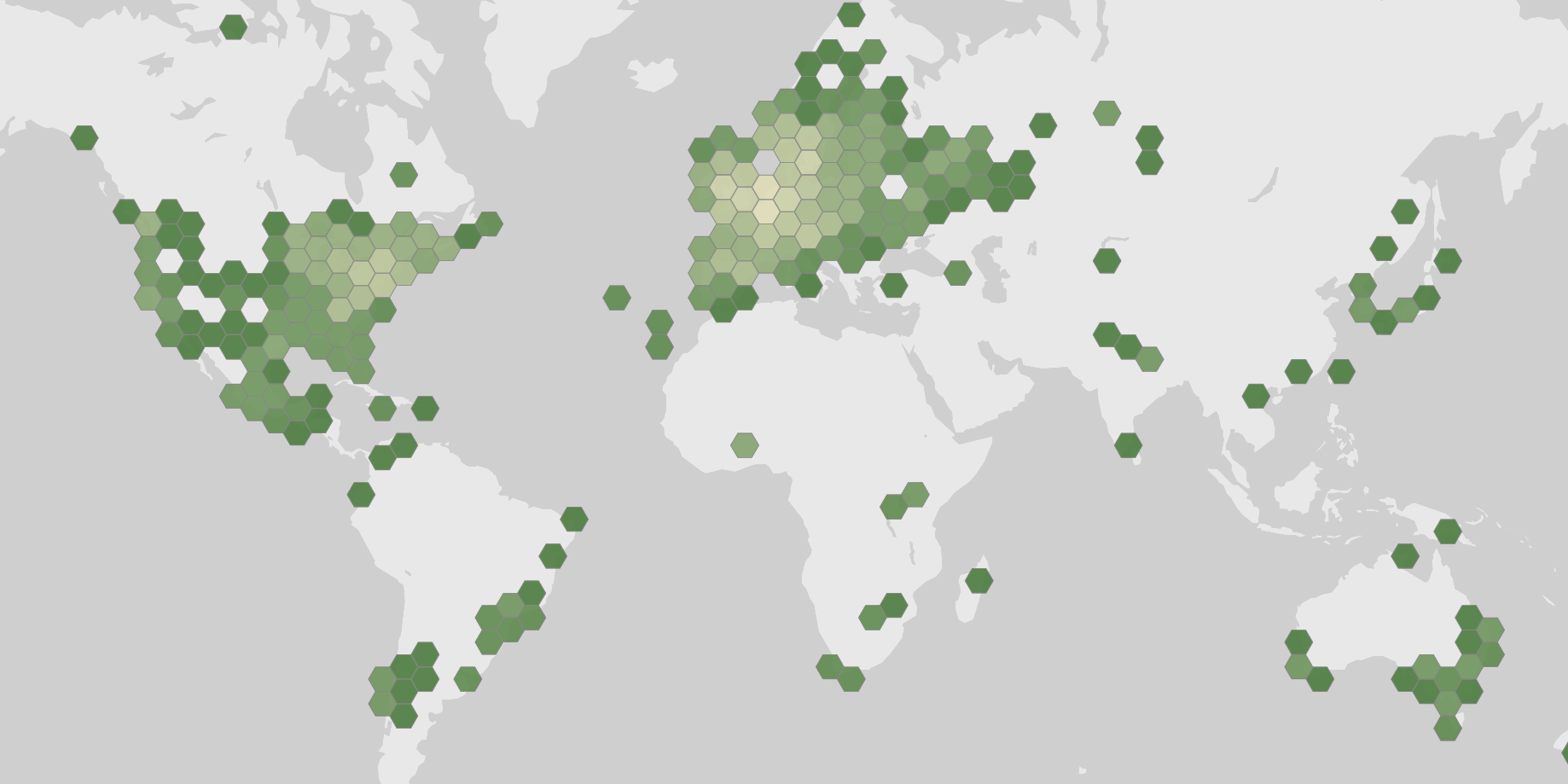
Scleroderma citrinum occurs across Europe and North America and is recorded as the most common earthball species in the United Kingdom. It grows widely in woods, on heathland, and in short grass.
Fruiting follows a seasonal pattern from autumn into winter. Monthly observation data support this pattern, with counts climbing sharply from a low base in spring and early summer to a pronounced peak in September and October before tapering off through the winter months.
These observation counts reflect where and when the species has been recorded, not its overall abundance or the full extent of its range, since they come from presence records rather than systematic population surveys.
Ecology and Relationships
Scleroderma citrinum is an ectomycorrhizal fungus, forming symbiotic partnerships with tree roots. Through this relationship it can influence the diversity of bacterial communities in the soil beneath certain host tree species.
The earthball is not immune to exploitation itself: it can be parasitized by another fungus, Pseudoboletus parasiticus, which grows directly on its fruiting bodies.
Its ecological presence spans the same woodland, heathland, and grassy habitats where it fruits, placing it at the interface between tree roots, soil microbial life, and at least one specialized fungal parasite.
Uses and Cultural History
Scleroderma citrinum is poisonous, and its resemblance to truffles has led inexperienced mushroom hunters to mistake it for a culinary find. Ingestion causes gastrointestinal distress in both humans and animals.
Beyond ingestion, simply handling or disturbing the fruiting body can cause problems: exposure to its spores has been linked to lacrimation, rhinitis, rhinorrhea, and conjunctivitis in some individuals.
Chemically, the fruiting body contains distinctive pigments, including sclerocitrin, norbadione A, xerocomic acid, and badione A, which contribute to its characteristic coloration.
Fun Facts
- Scleroderma citrinum has two recognized synonyms: Scleroderma aurantium and Scleroderma vulgare.
- It has no stem at all; instead, mycelial cords anchor the fruiting body directly to the soil.
- Its coloring comes from a specific set of pigments, including sclerocitrin, norbadione A, xerocomic acid, and badione A.
- Despite being toxic, it is frequently confused with truffles by inexperienced foragers, a mix-up that can lead to real poisoning risk.
Ecology
Habitat
- Woodland
- Shrubland
- Grassland