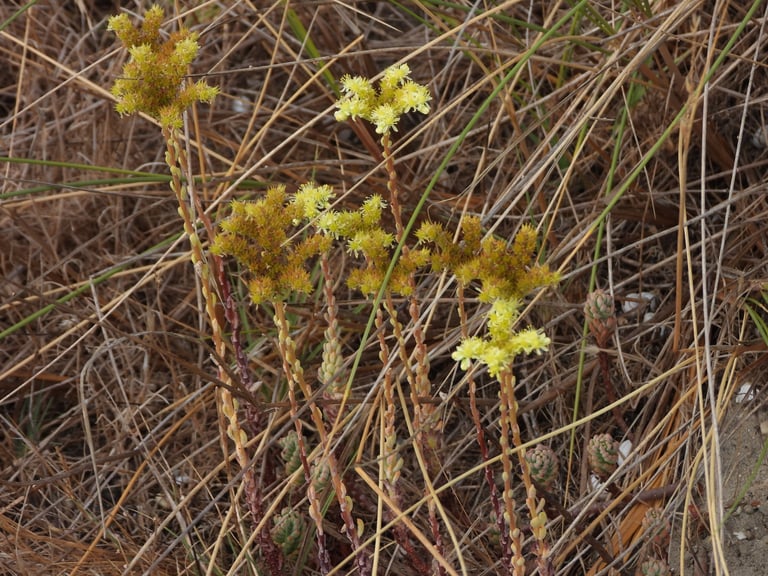
The English stonecrop, Sedum anglicum, is a flowering plant of the family Crassulaceae. It is named for its English common name and belongs to the large genus Sedum, the stonecrops.
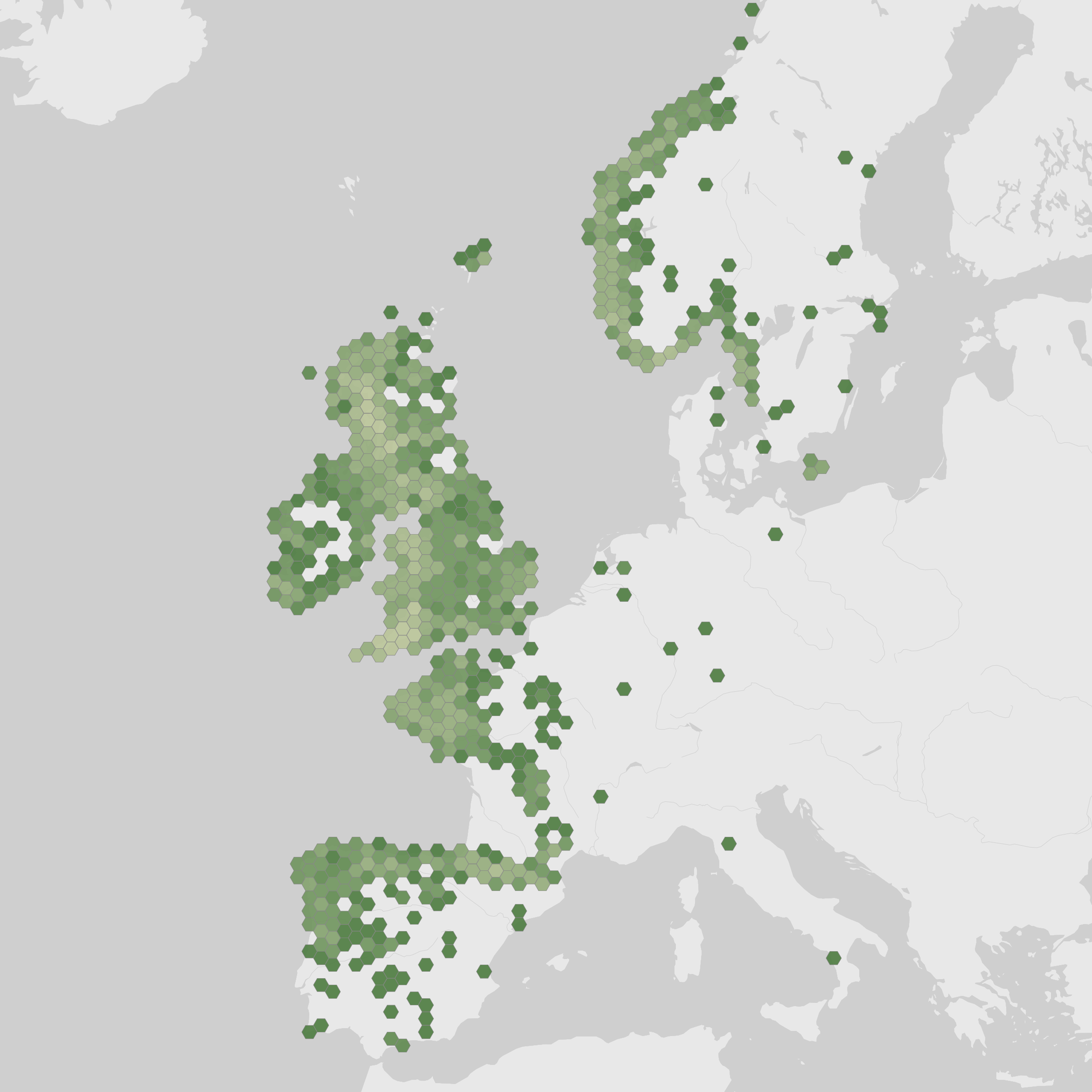
This succulent grows across western Europe, from Norway and Sweden south to France, Portugal and Spain, and also in Ireland and Great Britain. It clings to harsh, open places where few other plants thrive.
Its small size and tough, fleshy leaves make it a distinctive plant of rocks, walls and coastal dunes.
Identification and Appearance
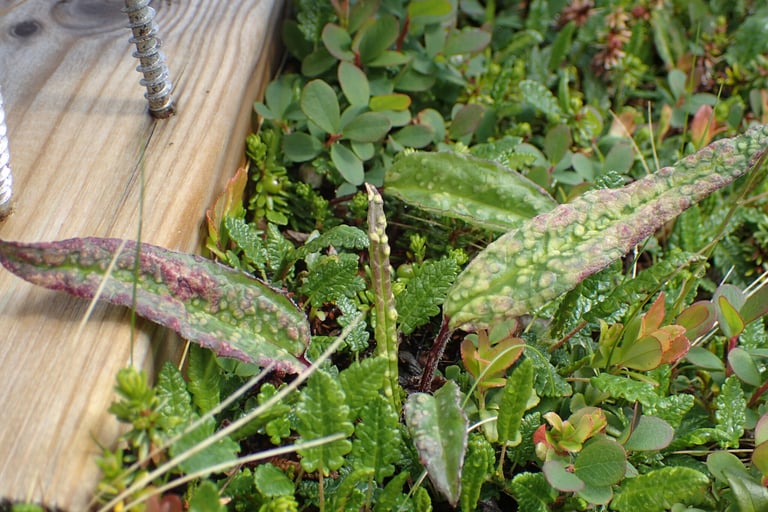
The most useful field mark is the stubby, succulent leaf. The leaves are untoothed, arranged alternately along the stem, and often greyish-green.
In dry conditions the leaves may turn pink, so the same plant can look quite different from one season or spell of weather to the next.
The flowers are short-stalked and star-like, usually white and sometimes tinged with pink. Each has ten contrasting stamens and five carpels.
The fruits are red.
Distribution and Habitat
Sedum anglicum occurs in western Europe, including Norway, Sweden, Ireland, Great Britain, France, Portugal and Spain. It is also recorded as introduced in Denmark.
It is usually found on dry rocks, walls and sand dunes, often near the sea. It thrives in rock crevices and on cliffs.
Inland, it grows on walls and hedge banks. It prefers thin, acidic soils.
In Great Britain, it is much more common in the west of the country than in the east.
Growth and Form
Sedum anglicum is a low-growing succulent subshrub. Its fleshy, stubby leaves store water, which suits the dry rocks and walls where it grows.
Ecology and Relationships
Many insects feed on Sedum anglicum. Moths and aphids are among its main grazers, along with sheep. Caterpillars of several moth species eat its leaves, and bugs of the order Hemiptera also feed on the plant.
Its star-shaped flowers attract flies, bees and other insects. Hoverflies of the order Diptera are the most frequent visitors, while bees and wasps visit less often. These insects visit its flowers but are not known to be its main pollinators.
Small birds of the order Passeriformes also eat it.
Photos
Photographs from via iNaturalist, licensed under CC0 1.0., by Matthew Flood via iNaturalist, licensed under CC BY 4.0., by D. Rafael S. Fernandes via iNaturalist, licensed under CC BY 4.0., by Andrejus Gaidamavičius via iNaturalist, licensed under CC BY 4.0., by Jon Davies via iNaturalist, licensed under CC BY 4.0., by Hilary Rose Dawson via iNaturalist, licensed under CC BY 4.0., by Joss Carr via iNaturalist, licensed under CC BY 4.0., and by Susan Marley via iNaturalist, licensed under CC BY 4.0., credited on each photo.
Ecology and classification
Growth habit
- Subshrub
Classification
- Phylum
- Tracheophyta
- Class
- Magnoliopsida
- Order
- Saxifragales
- Family
- Crassulaceae
- Genus
- Sedum
- Species
- Sedum anglicum
Sources
- GBIF Species names and classification
- iNaturalist Photos
- Wikidata Common names and conservation status
- Wikipedia Summary extract
- Plants of the World Online Native range, life form and climate (WCVP)
- GloBI What it eats, what eats it, parasites and pollinators
- trophiCH
- DoPI