Canada goldenrod (Solidago canadensis) is a perennial herb that forms dense colonies of upright stems topped with many small yellow flowers. It belongs to the daisy family, Asteraceae, and is native to northeastern and north-central North America.
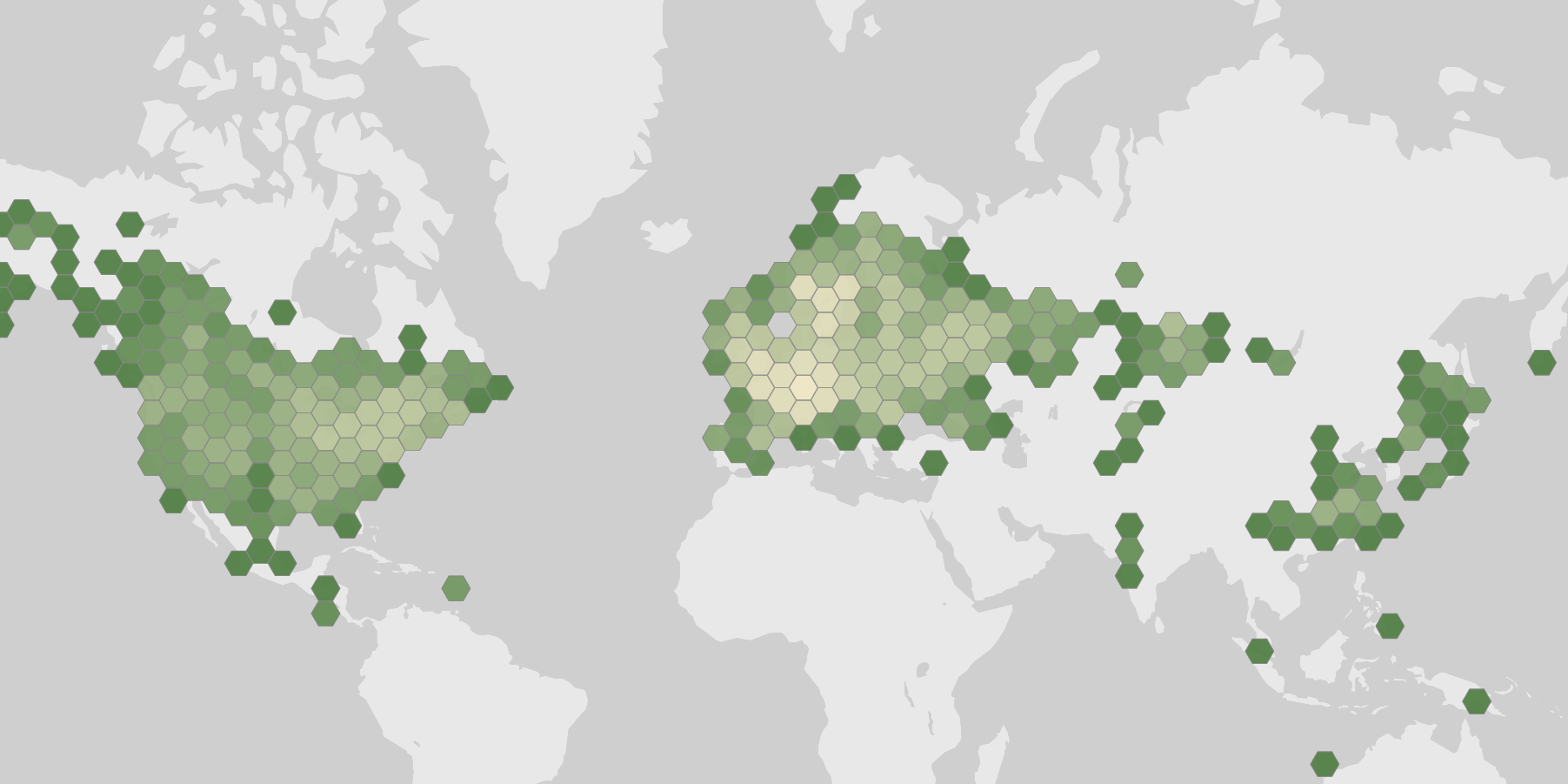
The plant is known as an invasive species in many other parts of the world. It has spread across much of Europe, Japan and China, where it competes with native plants. Its wide range and aggressive spread make it a useful species for understanding how plants move into new landscapes.
Identification and Appearance
The most useful field mark is the branching, pyramid-shaped cluster of small yellow flower heads held above the leaves in late summer and autumn. The yellow rays surround the flower heads, which are arranged along the upper stem.
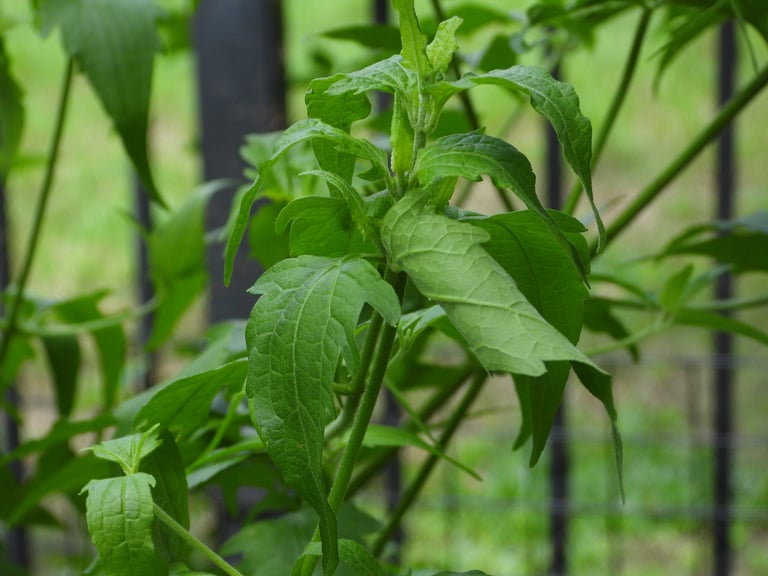
The stems usually grow 60 to 120 centimeters tall, and some reach about 180 centimeters. Lines of white hairs run along the stems. The leaves are lanceolate to broadly linear, arranged alternately along the stem, and typically 10 to 15 centimeters long and about 2.5 centimeters wide. The leaf undersides are downy, and the margins are often sharply toothed.
Several varieties exist across its wide range, and their appearance varies noticeably. This variation can make the plant look different from one population to another.
Some native goldenrods look similar, and confusion with them is a known concern. Careful attention to hairiness, leaf shape and flower cluster form helps separate them.
Distribution and Habitat
Canada goldenrod is native to northeastern and north-central North America, from Alaska and British Columbia across much of the United States and into eastern Canada. It occurs in most of the ecosystem types and plant communities mapped for North America.
It grows in a broad range of habitats. It occupies abandoned farmland, infrequently grazed pastures, waste areas, roadsides and fence lines. It also grows in dry open fields, open woods, damp meadows and tallgrass prairies. It is sometimes dominant in disturbed forest understories and may dominate or codominate Midwestern prairies.
The plant tolerates a wide range of soil fertility and texture, though it is most often found in fairly moist soil. It is rarely found on waterlogged sites or very dry ones. Among its common understory companions are red clover, Virginia creeper and bracken fern.
In occurrence records, the most observations fall in August, with activity also high in July and September.
Growth and Form
Canada goldenrod is a perennial that grows quickly once established. It spreads by running rhizomes as well as by seed, which allows it to build large colonies of genetically identical plants. Its tough root system helps it persist.
It typically reaches about 1.1 meters tall at maturity. Plants that were pulled out before freezing and left on the soil surface have survived winter temperatures down to -26 degrees Celsius, which shows how hardy its roots are.
Ecology and Relationships
Canada goldenrod is an important nectar and pollen source for many insects. Bumblebees and paper wasps strongly favor it, and honeybees and some butterflies, such as monarchs, also visit its flowers. Flower visitors include the honeybee and the hoverfly Eristalis tenax, both of which visit it frequently. Its flowers are visited by many other insects, but these visits do not make them its main pollinators.
Birds feed on its seeds, and passerine songbirds such as redpolls and goldfinches are among its consumers. Caterpillars of moths and true bugs also eat its foliage. Deer sometimes browse the plant, and it provides fair to good forage for cattle and horses.
Many gall-forming insects live inside its stems, flowers and buds. Wasps, flies and moths form galls on the plant, and several species of gall midges and moths are closely associated with it. Its roots also partner with arbuscular mycorrhizal fungi, including Diversispora aurantia and Acaulospora koskei.
Cultivation and Care
Canada goldenrod grows in sun or shade, since it tolerates shade well. It handles a wide range of soil pH, from acidic soil around 4.8 to alkaline soil near 7.5. It copes with dry conditions moderately well and is hardy in USDA zones 3 to 9.
Its rapid spread through rhizomes means it needs room to grow or regular division to keep it contained. Because it can outcompete other plants, gardeners should plant it where it can spread without invading neighboring beds.
Photos
Photographs from via iNaturalist, licensed under CC0 1.0., by Carter Ertel via iNaturalist, licensed under CC BY 4.0., by bnickle via iNaturalist, licensed under CC BY 4.0., by Николай Соболев via iNaturalist, licensed under CC BY 4.0., and by Stanislav Murashkin via iNaturalist, licensed under CC BY 4.0., credited on each photo.
Ecology and classification
Growth habit
- Herb
Classification
- Phylum
- Tracheophyta
- Class
- Magnoliopsida
- Order
- Asterales
- Family
- Asteraceae
- Genus
- Solidago
- Species
- Solidago canadensis
Sources
- GBIF Species names and classification
- iNaturalist Photos
- Wikidata Common names and conservation status
- Wikipedia Summary extract
- Encyclopedia of Life Habitat, diet and behavior traits
- Plants of the World Online Native range, life form and climate (WCVP)
- USDA Plants US plants: growth habit and growing conditions
- GloBI What it eats, what eats it, parasites and pollinators
- trophiCH
- Wardeh et al. 2015 (EID2)
- DoPI
- GlobalAMFungi
- Schwarz et al. 2021
- EuPPollNet