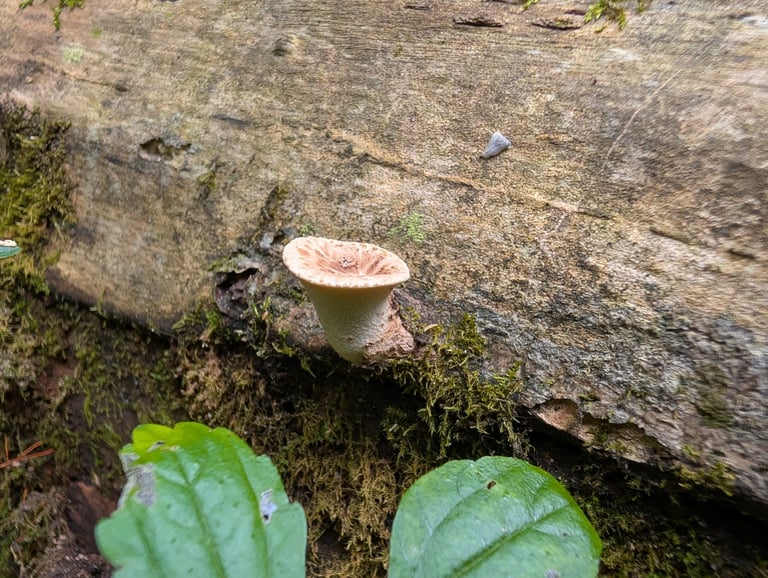
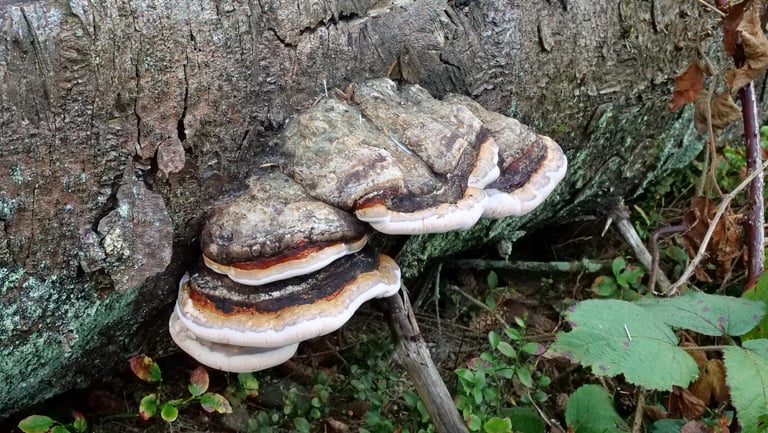
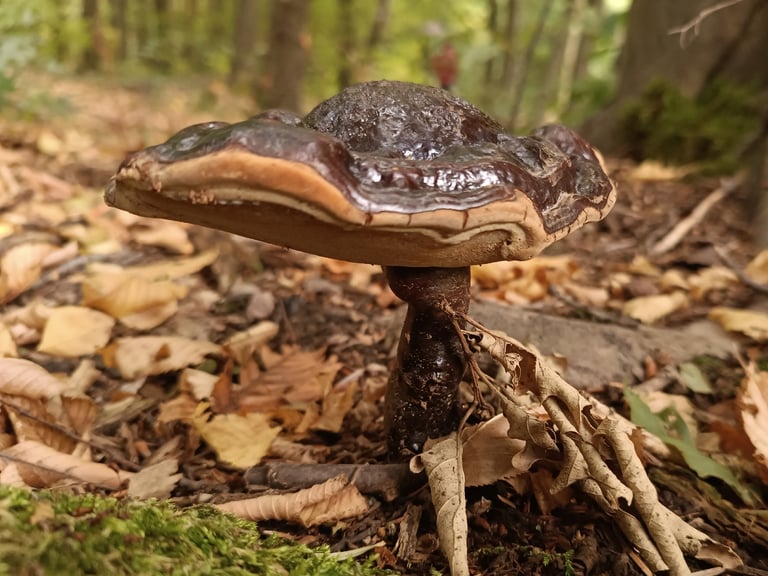
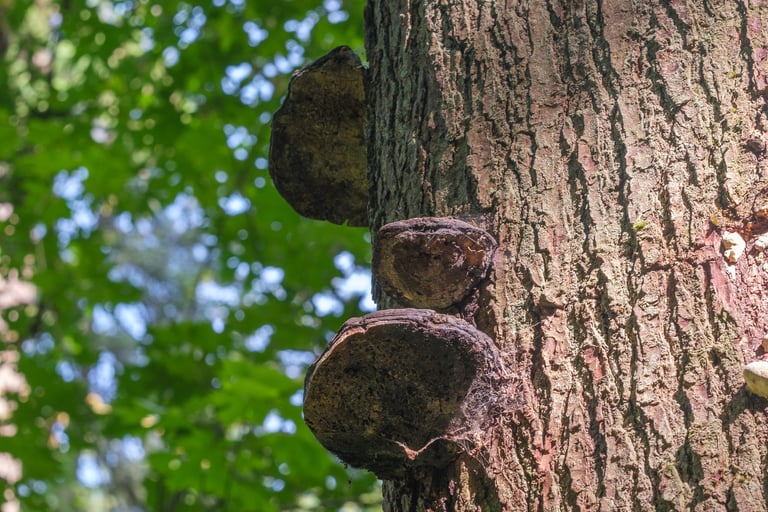
A single fruiting body of Sparassis crispa can grow up to 24 centimeters across and weigh 14 kilograms or more, forming a tangled globe of pale, wavy lobes at the foot of a conifer trunk.
Known commonly as the cauliflower fungus or cauliflower mushroom, Sparassis crispa belongs to the family Sparassidaceae within the order Polyporales, in the kingdom Fungi. It grows in temperate woodlands, most often where conifers stand.
Beyond its striking shape, the species draws interest for its dual identity: a sought-after wild edible in parts of Europe and a subject of culinary and medicinal attention in Japan.
Fruiting Body and Identification
The most reliable identifying feature of Sparassis crispa is its overall form: an entangled globe made of flattened, wavy lobes that resemble sheets of lasagna pasta, colored white to creamy yellow. These lobes carry the spore-bearing surface across their flattened faces rather than on gills or pores in the usual sense.
Young specimens are tough and rubbery, but the flesh softens with age. The odor is pleasant and the taste mild, and the tissue is monomitic, containing clamp connections throughout. The spore print is cream-colored, with smooth, oval spores measuring 5 to 7 micrometers by 3.5 to 5 micrometers.
Several related species can be confused with it. S. brevipes, found in Europe, has less crinkled, more zoned folds and lacks clamp connections. In the Pacific Northwest of North America, S. radicata (possibly a synonym of S. crispa) appears from August to November, while S. spathulata takes its place in eastern North America.
None of these distinguishing features should be treated as a guide for deciding whether a specimen is safe to eat; identification based on written description alone is not sufficient for that purpose.
Distribution and Habitat
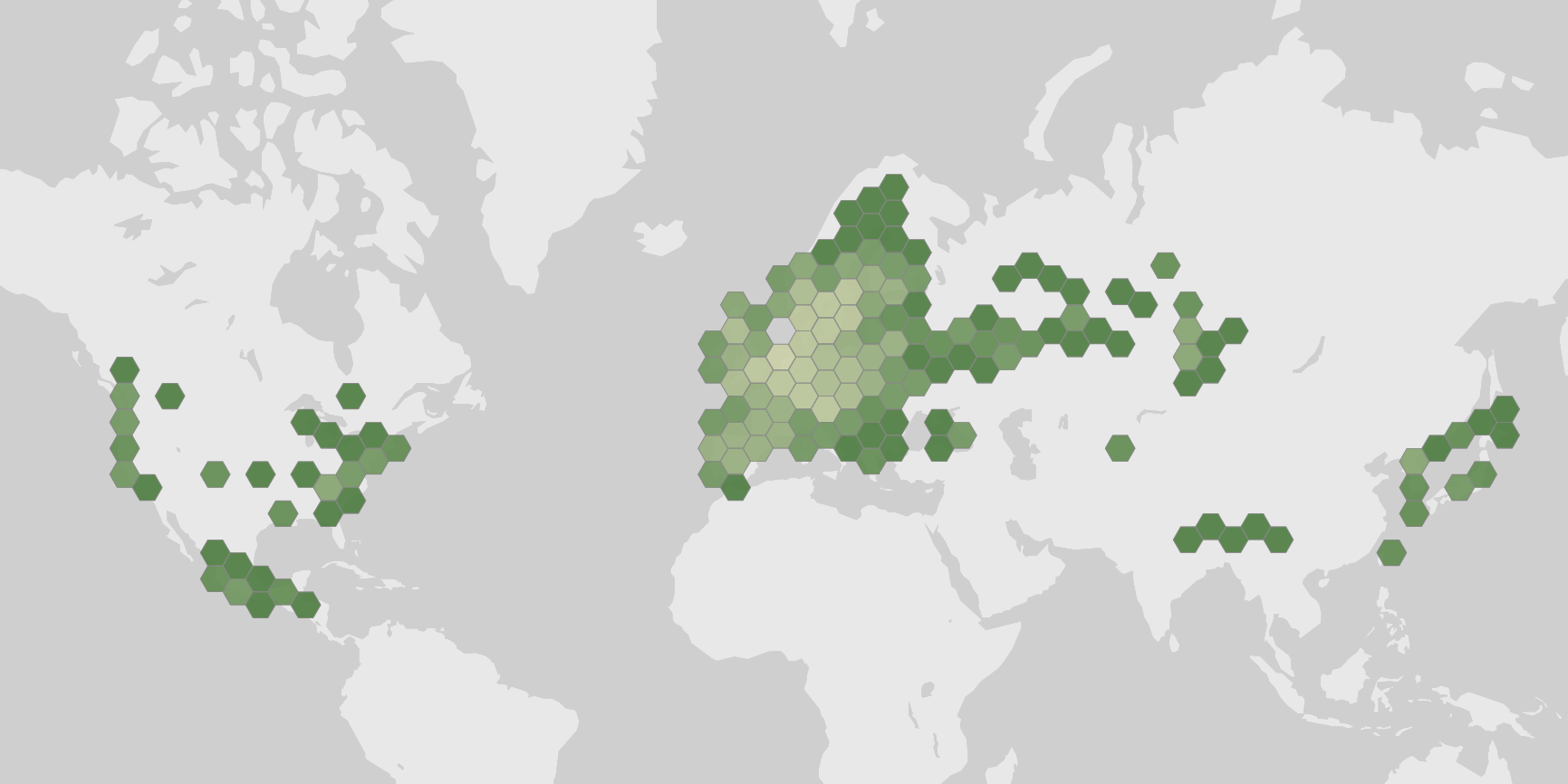
Sparassis crispa is fairly common in Great Britain and across temperate Europe, though it is absent from the boreal zone. Fruiting bodies typically appear from July to November.
The species behaves as a brown rot fungus, growing parasitically at the base of conifer trunks. Pines are its most frequent hosts, but it is also recorded on spruce, cedar, and larch, among other conifers.
Monthly observation counts show a sharp rise beginning in July, peaking in October with over 15,000 records, and tapering through November and December. This pattern lines up with the July-to-November fruiting window described for the species, though the counts reflect presence observations only and should not be read as a measure of abundance or a complete picture of its range.
Uses and Cultural History
Sparassis crispa is considered a good edible fungus when young and fresh, though it is notoriously difficult to clean: a toothbrush and running water are recommended to work grit, pine needles, and grubs out of the jumbled mass of flesh. One French cookbook offering four recipes for the species advises blanching it in boiling water for two to three minutes before adding it to a dish, then cooking it slowly. It can also be preserved in oil, kept in cold water, or dried, though stored specimens may attract maggots.
Cultural traditions around the mushroom run deep in several regions. In Polish and Russian folklore it was called the "witch's brain" for its gnarled, twisted appearance. In Japan, where it is known by a name referencing fire, it holds cultural significance as both a culinary ingredient and a medicinal species.
Fun Facts
- Researchers sequenced the genome of Sparassis crispa (called Hanabiratake in Japan), work published in Scientific Reports in 2018, linking the species to its beneficial uses.
- A 1,3-β-glucan compound with antitumor activity has been studied from cultured Sparassis crispa, part of the research supporting its medicinal reputation in Japan.
Photos
Photographs from via iNaturalist, licensed under CC0 1.0., by Nicole Kearney via iNaturalist, licensed under CC BY 4.0., by Marius K. via iNaturalist, licensed under CC BY 4.0., by Marc Hermann via iNaturalist, licensed under CC BY 4.0., by eightpictures via iNaturalist, licensed under CC BY 4.0., and by Katrin Simon via iNaturalist, licensed under CC BY 4.0., credited on each photo.
Ecology and classification
Habitat
Classification
- Phylum
- Basidiomycota
- Class
- Agaricomycetes
- Order
- Polyporales
- Family
- Sparassidaceae
- Genus
- Sparassis
- Species
- Sparassis crispa
Sources
- GBIF Species names and classification
- iNaturalist Photos
- Wikidata Common names and conservation status
- Wikipedia Summary extract